Garbage Disposal Humming but Not Turning On

Clara Townsend
Clara Townsend is an interior stylist, vintage furniture enthusiast, and the creative voice behind Velvet Abode. With over a decade of experience transforming both cramped city apartments and sprawling fixer-uppers, she believes that a beautiful home is built on personal stories rather than massive budgets. When she isn't hunting for the perfect brass sconce at a local flea market, she can usually be found rearranging her living room for the third time this month.
That low, stubborn hum from your garbage disposal is oddly dramatic for something that lives under the sink. The good news is that a humming disposal often means it still has power. The not-so-good news is that something is stopping the motor from turning, most often a jam, an overheated unit, or a failed internal part.
I’ll walk you through the fixes in the order I’d do them in my own kitchen, with safety first and minimal fuss.
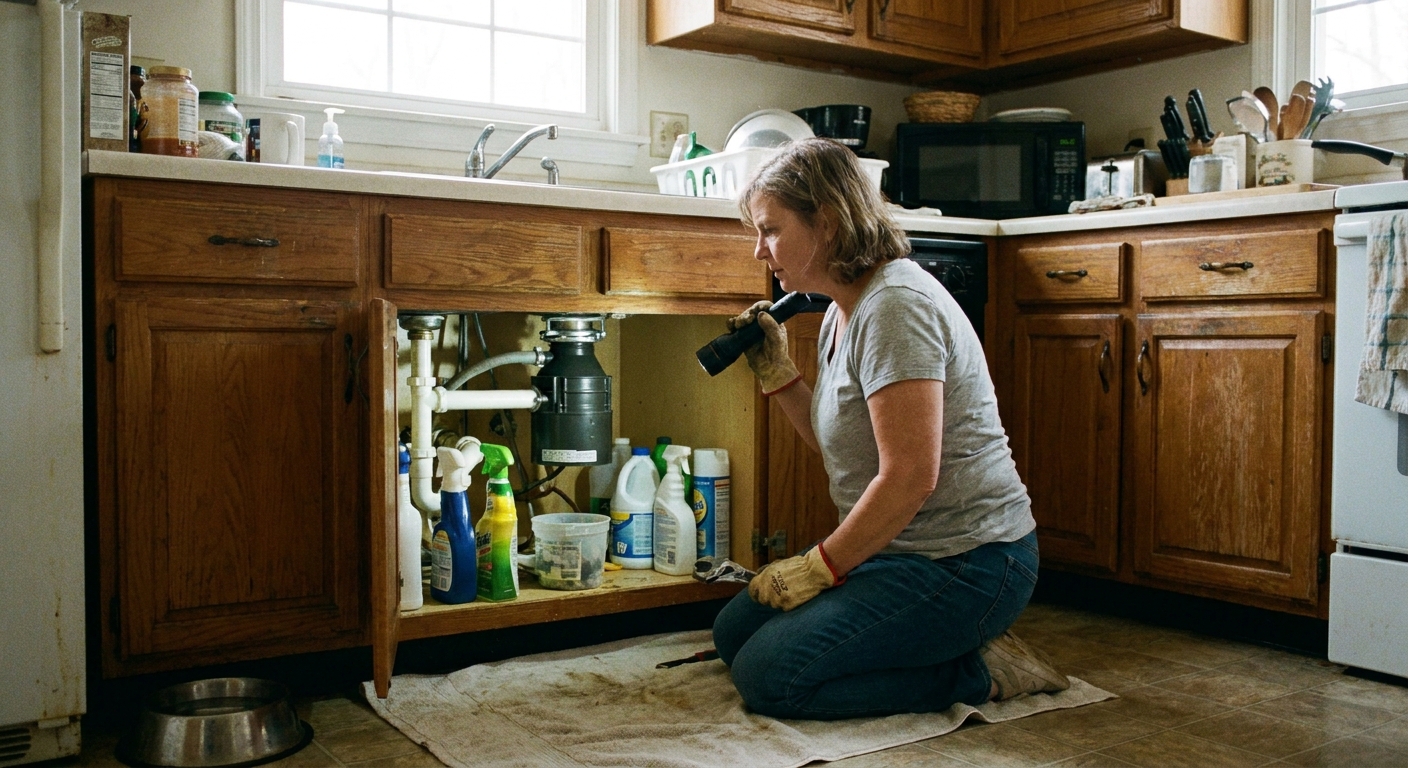
First, make it safe
Before you touch anything under the sink, set yourself up to avoid the two classic mistakes: powering it on accidentally or sticking your hand where it does not belong.
- Turn the disposal switch off.
- Unplug the unit under the sink if it’s plugged in. If it’s hardwired, turn off the correct breaker.
- Never put your hand inside the disposal, even if it is unplugged.
- Use a flashlight so you can actually see what’s going on.
If the sink is backed up with standing water, bail out enough water to see into the throat of the disposal. A turkey baster works in a pinch.
If the sink is fully backed up and you cannot see or access the chamber at all, avoid running the dishwasher and avoid using that sink until you clear the blockage. If the clog is in the trap or branch line (not the disposal), you may need a plumber.
Why it hums but won’t spin
Here’s what that hum usually tells you: the motor is trying to turn, but something is stopping the turntable (the spinning plate) or the motor cannot get past its starting torque.
- A jam from a utensil, fruit pit, bone, or hardened food.
- Overheat protection after a jam or heavy load. This often happens after it hummed for a bit, then went completely silent.
- Electrical issue such as a loose connection or failing switch that delivers inconsistent power (less common, but possible).
- Failed internal parts such as motor windings or start components (on some models), especially as disposals age.
Fix #1: Stop the hum and clear the jam
If it is humming right now, turn it off immediately. A humming disposal is often a stuck disposal, and letting it hum can overheat the motor fast.
With power off, start with the simplest jam check.
Look for the obvious jam (no hands)
Shine a flashlight down into the disposal. You are looking for anything that shouldn’t be there.
- Common culprits: spoons, bottle caps, twist ties, bones, fruit pits, and chunks of glass from a broken dish.
- Use tongs or needle-nose pliers to remove objects you can see.
If you remove something and it still hums, the turntable is likely still wedged. That’s when you manually free it from below (or with the proper jam tool).
Fix #2: Unjam it from below
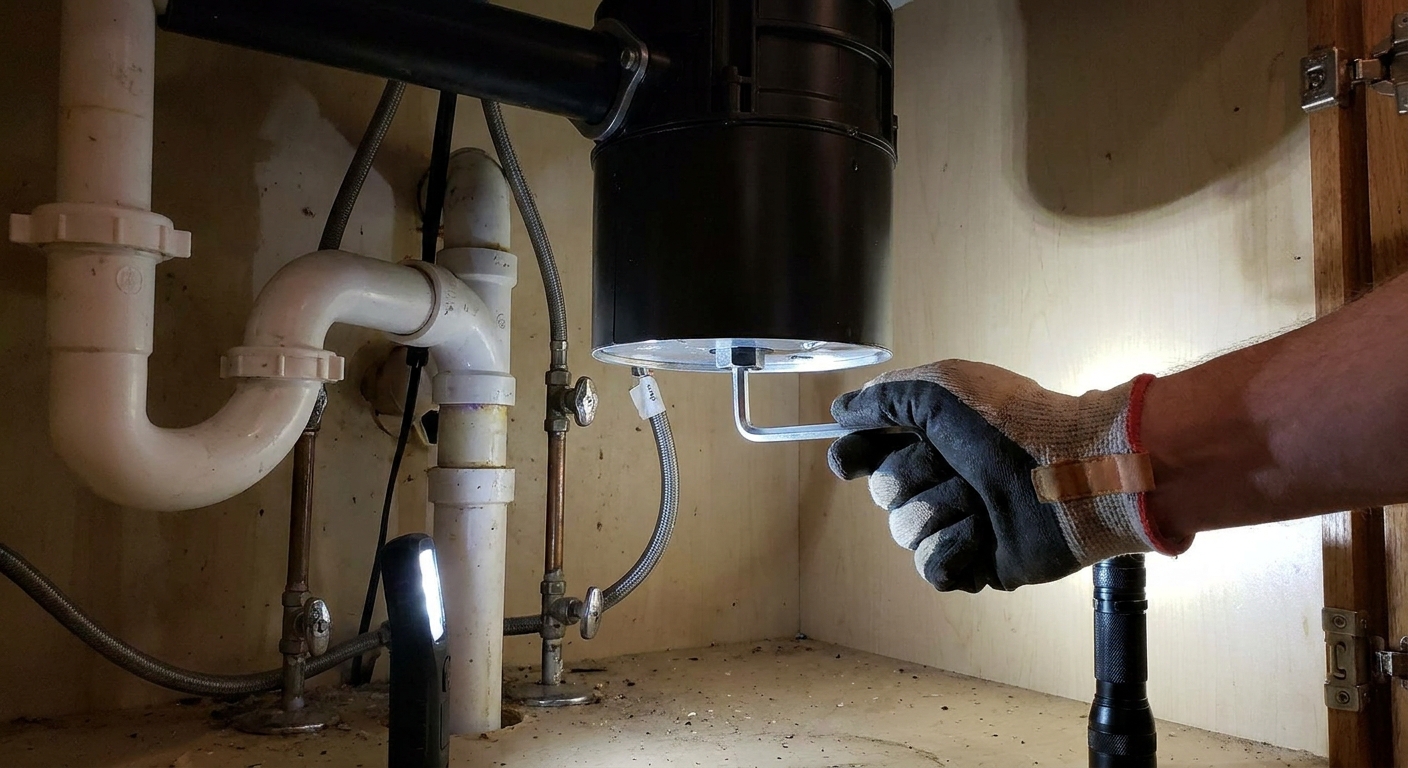
Many disposals have a hex socket on the bottom center that you can turn with an Allen wrench. Some units came with one originally, and a common size is often 1/4-inch Allen (but not always).
- Keep the disposal unplugged or breaker off.
- Insert an Allen key into the hex socket on the bottom of the unit.
- Turn it back and forth (either direction is fine) until it moves freely. You’ll often feel a tight spot loosen, like a stuck jar lid finally giving in.
- Remove the key, restore power, run cold water, and test the disposal in short bursts.
If it spins again, run cold water for 20 to 30 seconds to clear the chamber.
No Allen socket? Some brands use a small “jam-buster” tool (sometimes called a wrenchette) that fits the underside or side of the unit. If yours came with one, use it instead of forcing a tool that does not fit.
Fix #3: Unjam it from above
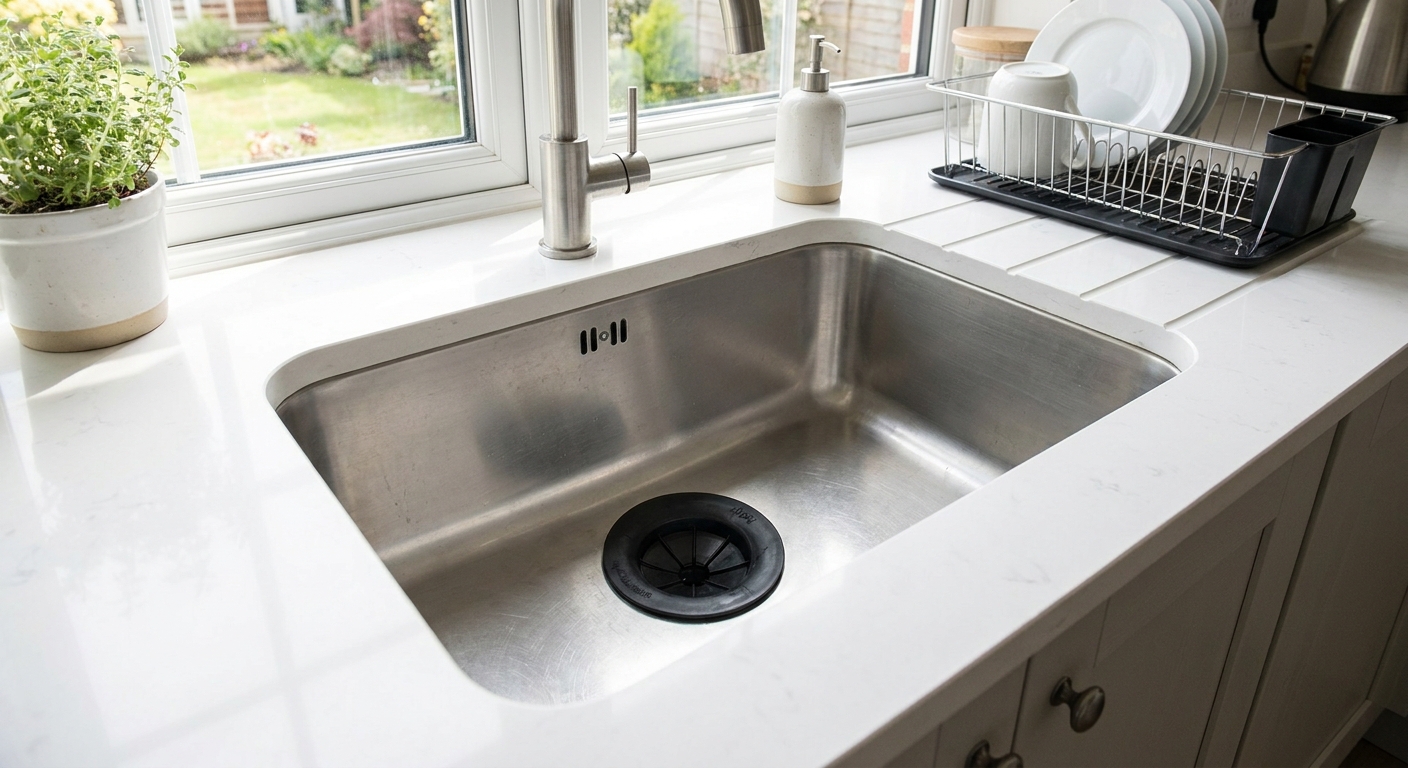
If your model does not have the Allen-key socket, you can sometimes free a jam from the sink opening, as long as you do it safely.
- Confirm power is off (unplugged or breaker off).
- Use the handle of a wooden spoon or a broom handle. Keep your hands out of the opening.
- Press the wood gently against the turntable (the round plate at the bottom) and work it back and forth to help it rotate. Do not force it, and do not pry against parts you cannot clearly see.
- Once it moves freely, restore power, run cold water, and test in short bursts.
Skip metal tools here. Wood is less likely to damage parts or slip dangerously.
If you cannot identify safe leverage points, or it feels truly locked solid, stop and move on. This is the moment where a pro saves you a lot of trouble.
Fix #4: Press the reset button (when it goes silent)
The reset button is most useful when the disposal stops humming and goes completely dead after overheating. If yours is actively humming, it typically has not tripped yet.
- Keep power off.
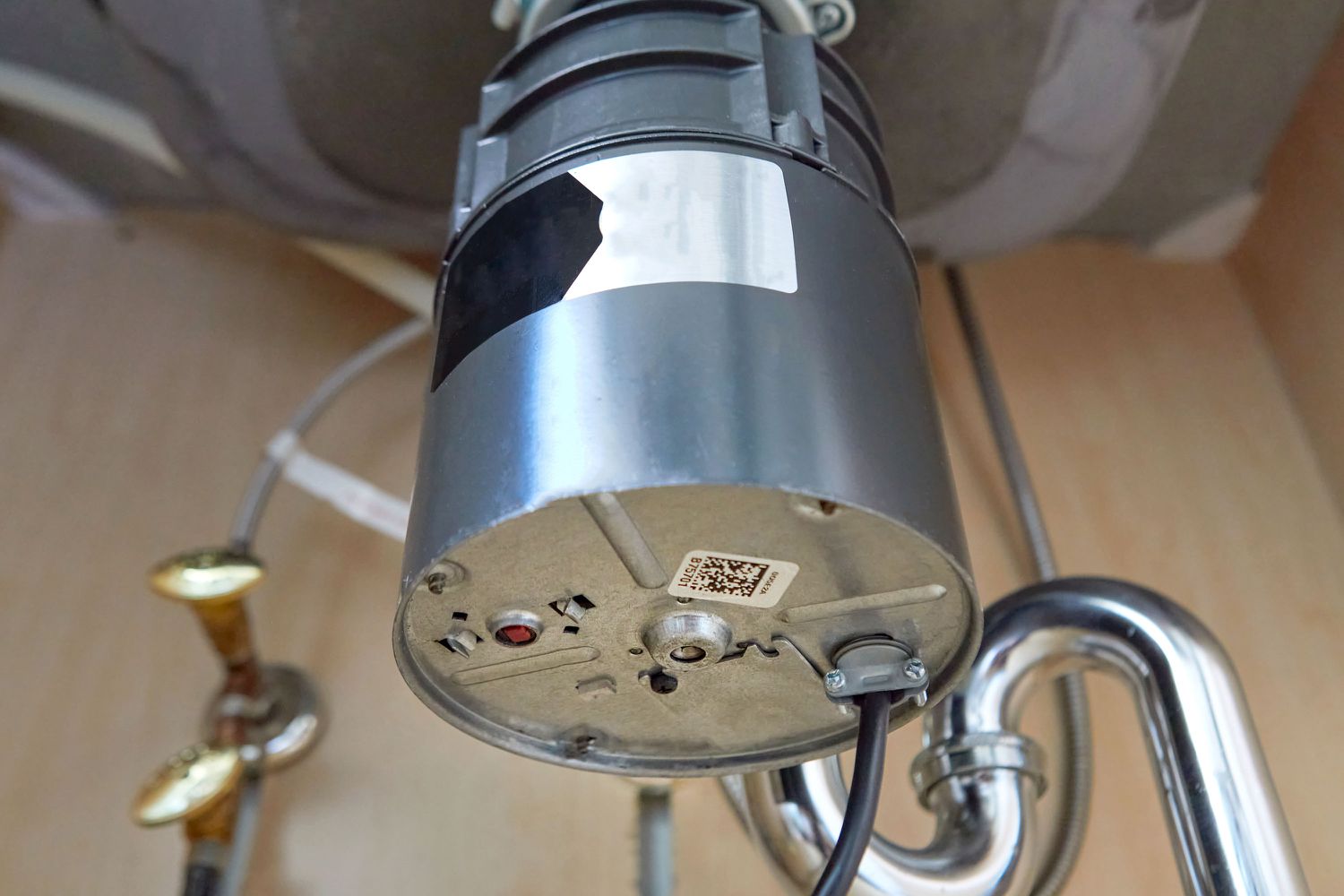
- Find the small red reset button on the bottom of the disposal.
- If it’s popped out, press it back in until it clicks.
- Wait 5 to 10 minutes if the unit feels warm. Then restore power and test with cold water in short bursts.
If it hums again, turn it off immediately and go back to jam-clearing steps.
Fix #5: Check power if it does nothing
If nothing happens, no hum, no movement, confirm it still has power.
- Plug connection: Make sure the cord is firmly plugged into the outlet under the sink.
- GFCI outlet: Press the reset button on the outlet if it has one.
- Breaker: Check your electrical panel for a tripped breaker.
- Wall switch: If the switch feels loose or intermittently works, it may be failing.
If you are not comfortable diagnosing wiring or switches, bring in an electrician or plumber. A disposal that behaves oddly due to wiring is not just a kitchen inconvenience.
Call a pro now
Stop troubleshooting and call a pro promptly if you notice any of the following:
- Burning smell, smoke, or heat that seems excessive
- Repeated breaker or GFCI trips
- Water dripping onto wiring, the cord, an outlet, or an open junction box
- Visible sparking or buzzing from an outlet or switch
- Leaks from the bottom housing (often internal seal failure)
What not to do
- Do not keep flipping the switch while it hums. You can burn out the motor.
- Do not pour drain cleaner into a disposal that’s jammed or full of standing water. It can damage parts and create a chemical hazard for whoever has to take it apart.
- Do not reach inside even if it’s unplugged. Use tongs, pliers, or a tool with distance.
- Do not rely on hot water to “help.” Use cold water when testing. Hot water can melt grease so it flows, then it can re-solidify farther down and contribute to clogs.
When it’s time to replace it
Sometimes humming is your disposal’s way of saying, “I’m done.” Consider replacement if:
- You can free it, but it jams repeatedly within days or weeks.
- It hums and will not turn even after you can see it rotate freely by hand with the Allen key or jam tool.
- You notice burning smells or the unit trips the reset constantly.
- There are leaks from the bottom housing.
- It’s 8 to 12+ years old and performance has been declining.
If the unit turns freely by hand but still only hums when powered, failed motor windings or failed start components (on some models) are likely. Those are typically not cost-effective DIY repairs on standard residential models.
Simple prevention
I love a vintage moment, but disposals are not the place for romantic suffering. Keep yours happier with a few gentle habits:
- Run cold water before, during, and for 10 to 20 seconds after use.
- Feed slowly, especially fibrous scraps.
- Best avoided: grease, pasta, rice, potato peels, celery, corn husks, coffee grounds, eggshells, bones. Small amounts may be tolerated in some kitchens, but these are the usual repeat offenders.
- Freshen without drama: a few ice cubes and a small squirt of dish soap, then run cold water.
And if you do hear that hum again, treat it like a smoke alarm for your sink: turn it off, then troubleshoot. The fastest fix is usually the safest one.
Quick checklist
- Hums: Turn off immediately.
- Remove visible jam: Use tongs or pliers.
- Manually turn: Allen key underneath, jam tool, or wood handle from above.
- Then reset: Use the bottom red button if it went silent after overheating.
- Test properly: Short bursts with cold water.
- Still humming: Likely internal failure, call a pro or replace.