Garbage Disposal Humming but Not Turning On

Clara Townsend
Clara Townsend is an interior stylist, vintage furniture enthusiast, and the creative voice behind Velvet Abode. With over a decade of experience transforming both cramped city apartments and sprawling fixer-uppers, she believes that a beautiful home is built on personal stories rather than massive budgets. When she isn't hunting for the perfect brass sconce at a local flea market, she can usually be found rearranging her living room for the third time this month.
There are a few household sounds that instantly spike your stress, and a garbage disposal that hums but refuses to actually turn on is right up there. The good news is that a hum is often a sign the motor is getting power and trying. Something is just stopping the grinding plate from spinning.
Think of it like a vintage drawer that sticks: the hardware is fine, it just needs a gentle, specific nudge in the right place. Let’s walk through the safest way to troubleshoot, fix, and decide whether you are looking at a simple jam or a disposal that is ready to retire.
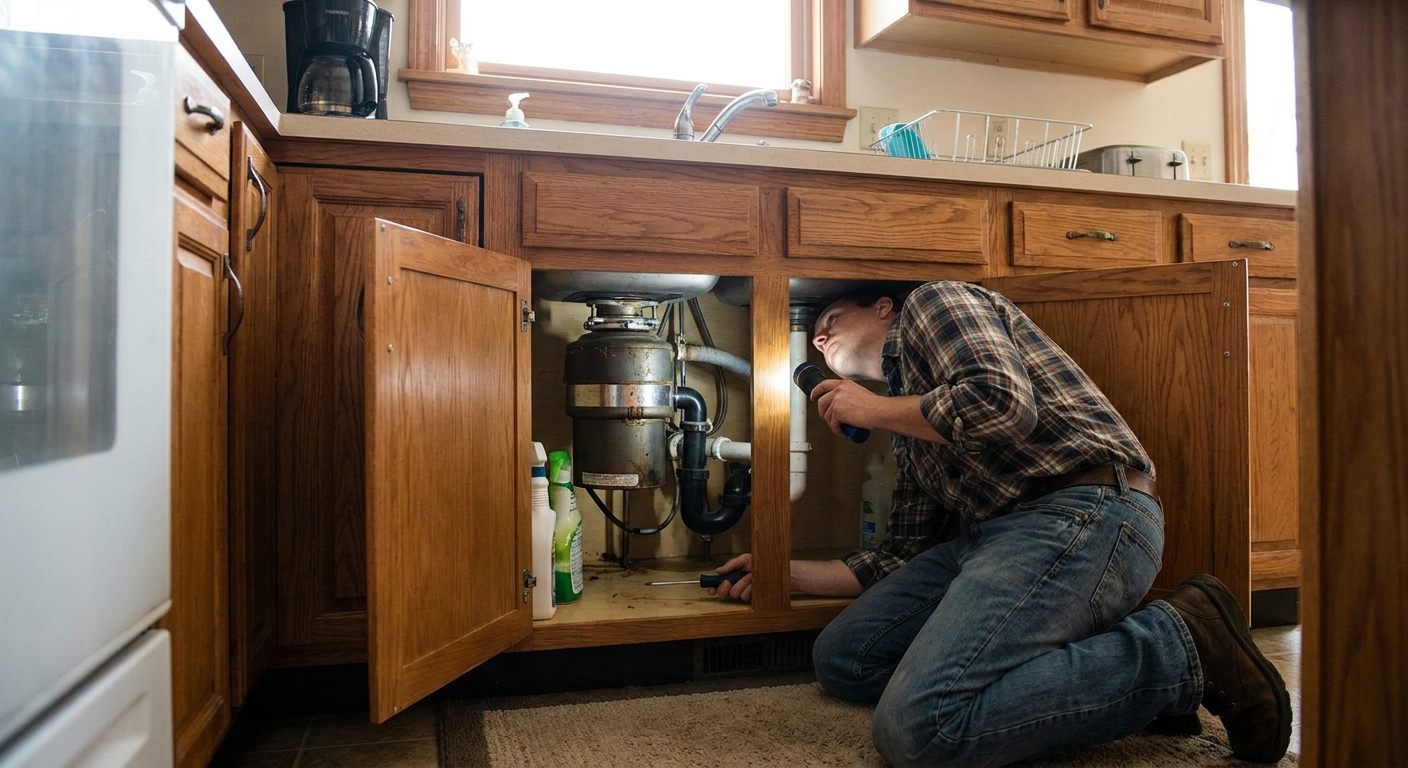
What the humming usually means
When a disposal hums but does not spin, one of these is almost always the culprit:
- A jam (utensil, bone, fruit pit, glass fragment, or a stubborn clump of fibrous scraps) is preventing the impeller plate from moving.
- The motor is getting power but cannot start because it is mechanically stuck, the bearings are worn, or the start components are failing (more likely in older units).
- Partial movement plus friction from buildup or debris can create a stall that sounds like a hum and quickly overheats the motor if you let it run.
- A wiring or switch issue is less common when you hear humming, but it can still happen, especially if the unit is miswired or the switch is failing.
Important distinction: A humming disposal has power. A disposal that is completely silent points more toward a tripped reset button, a tripped GFCI, a tripped breaker, a loose plug, or a dead motor.
Safety: the two rules I want you to tattoo on your brain
- Never put your hand into the disposal. Even if it is off. Even if you are “just checking.”
- Cut power first. Turn the wall switch off and unplug the disposal under the sink. If it is hardwired, switch off the correct breaker.
If you are unsure whether you have cut power, stop and confirm before doing anything else.
Quick fix checklist (in the order that actually works)
1) Look for the obvious jam with a flashlight
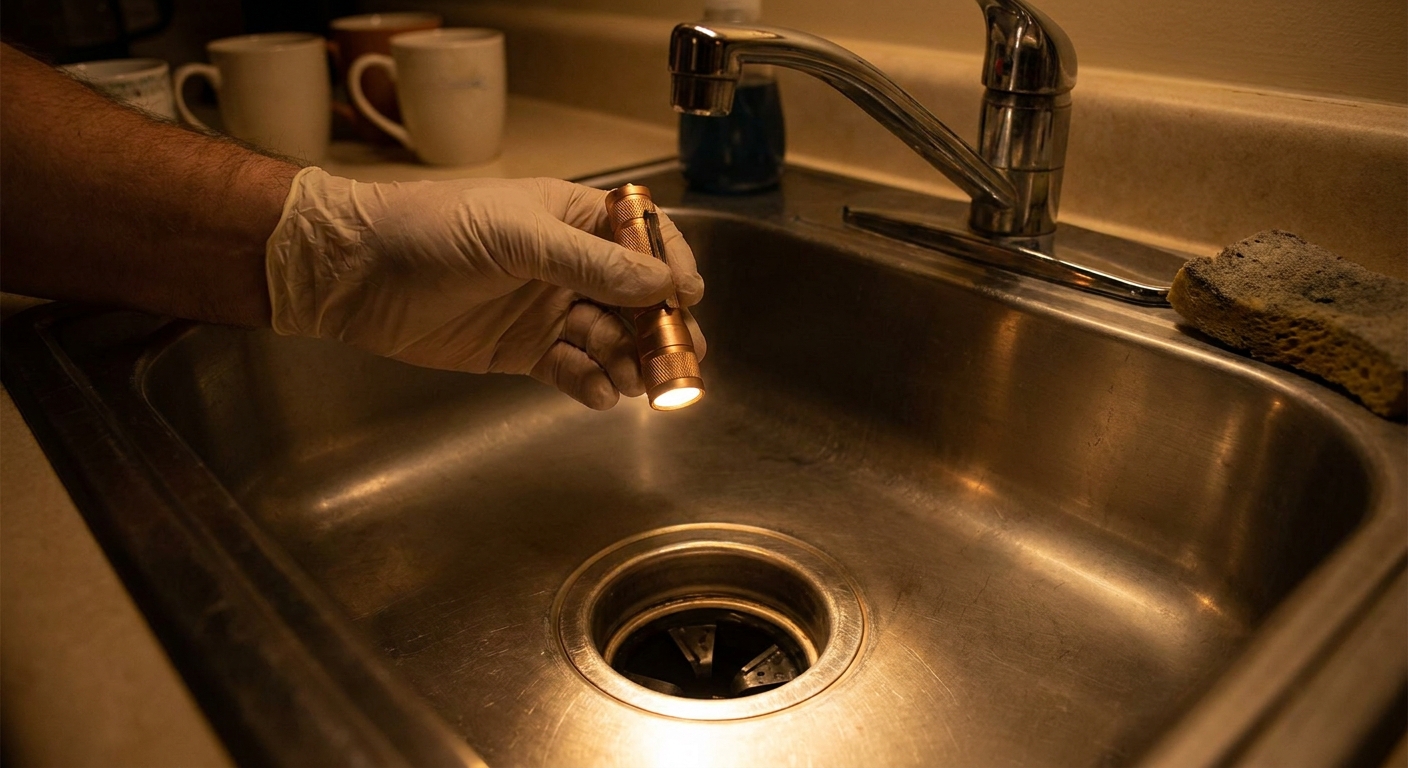
With the power off, shine a flashlight down into the sink opening. You are looking for anything that does not belong: a spoon handle, a shard of glass, a twist tie, a bottle cap.
- Use tongs or pliers to remove anything you can see and grab safely.
- Do not use your fingers, even if it seems “right there.”
2) Try the built-in unjam method (Allen key from underneath)
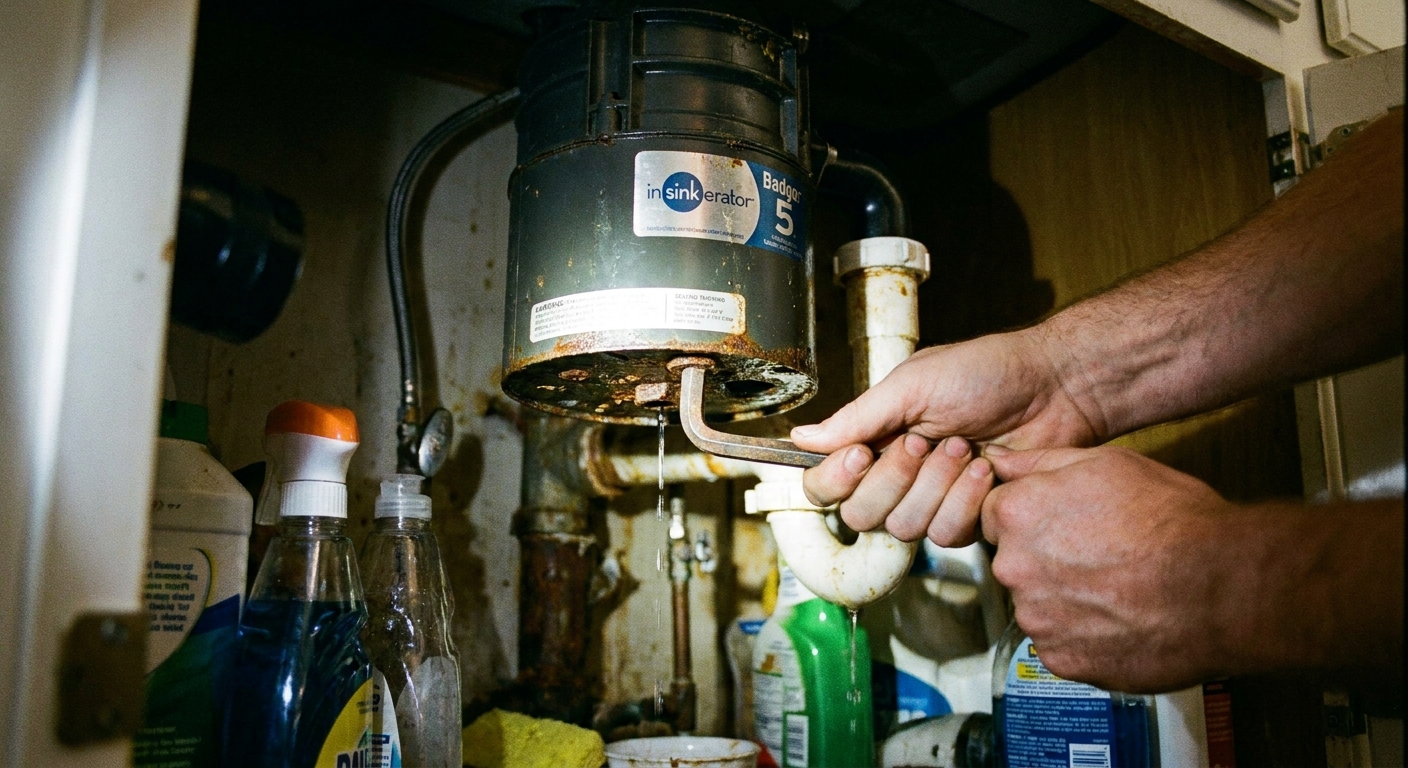
Most disposals have a hex socket on the bottom center. You insert an Allen wrench (often 1/4 inch, and many units come with one) and work it back and forth to free the stuck plate.
- Power off and unplugged.
- Insert the Allen key into the bottom socket.
- Turn it back and forth until it moves freely. You may feel the jam “give.”
If your model does not have a hex socket, you can often use a wooden spoon handle from the top to gently nudge the impeller plate. Again, no hands.
3) Press the reset button
Once the jam is cleared (or if you suspect the unit shut itself down from heat), find the small reset button on the bottom of the disposal. It is often red and slightly recessed.
- Press it firmly. You may feel a click.
- If the unit feels hot, wait 5 to 10 minutes before testing.
4) Restore power and test the right way
Plug it back in (or flip the breaker on), then:
- Run a thin stream of cold water.
- Turn the disposal on for 1 to 2 seconds.
- If it spins normally, let it run for 10 to 20 seconds with water to flush out debris.
If it still hums, turn it off immediately. Continuous humming can overheat the motor fast.
If it still hums: what to check next
Double-check for a stubborn jam
If you still hear humming after the Allen key step, assume there is still something binding the plate. Work the Allen key again, wider back and forth, until it turns smoothly through a full range.
Listen for clues
- Hums then clicks off: the disposal is overheating and shutting itself down. This usually means it is still jammed or the motor is failing.
- Hums steadily and gets hot: stop and unplug. This can damage the motor.
- It turns with the Allen key but will not start: the unit may be worn out or have a failing start component. That is a good point to consider replacement.
If it is silent instead
If your disposal is not humming at all, that is when power checks matter:
- GFCI outlet: If your disposal is plugged into a GFCI outlet under the sink or nearby, press “reset” on the outlet. A tripped GFCI usually means no sound from the disposal.
- Reset button: Press the disposal’s reset button (again, silence is the typical clue here).
- Breaker or plug: Confirm the plug is fully seated, or check the correct breaker if it is hardwired.
- Wall switch: If the switch feels loose or crackly, stop here and consider an electrician.
Common causes (and how to prevent a repeat)
Fibrous foods that love to wrap and stall
Celery strings, onion skins, corn husks, artichoke leaves, and a lot of potato peels can tangle around the impeller plate like linen thread around a button. Compost those if you can.
Hard objects that instantly jam
Fruit pits, bones, shells, and accidental silverware are the usual suspects. If you hear a sudden clank followed by humming, assume a hard jam.
Grease and starchy buildup
Grease can coat the chamber. Starches can create a paste. Together they form a sticky trap that catches everything else.
- Run cold water when using the disposal.
- Do not pour grease down the sink.
- Grind small amounts at a time, not a whole plate scrape in one go.
When to call a plumber or replace the disposal
Sometimes the most comforting choice is to stop wrestling the problem and let a professional handle it, especially if any of the following are true:
- The disposal hums even after unjamming and resetting.
- You smell burning or see any smoke.
- It leaks from the body (not just a loose connection).
- The unit is 10 to 12+ years old and has repeated jams or sluggish starts.
- You hear metal-on-metal grinding even when empty.
- Your sink backs up and clearing the disposal does not restore normal draining (could be a clog in the trap or line).
Replacement is often straightforward, and in many homes it is a better spend than repeated service calls on a tired motor.
A simple “next time” routine
My favorite home fixes are the ones that quietly prevent drama later. Try this:
- Before you flip the switch, run cold water for a few seconds.
- Feed scraps gradually.
- Let it run 10 to 20 seconds after the grinding sound stops, still with cold water.
- Once a week, grind a handful of ice cubes to help knock debris loose, followed by cold water. If you like, add a small squeeze of dish soap while it runs.
Your kitchen should feel like a soft landing, not a mechanical mystery. If you try the steps above and the hum refuses to turn into a whirl, that is a valid sign to bring in help or plan a replacement with confidence.