Futon, Tri-Fold, and Daybed Care

Clara Townsend
Clara Townsend is an interior stylist, vintage furniture enthusiast, and the creative voice behind Velvet Abode. With over a decade of experience transforming both cramped city apartments and sprawling fixer-uppers, she believes that a beautiful home is built on personal stories rather than massive budgets. When she isn't hunting for the perfect brass sconce at a local flea market, she can usually be found rearranging her living room for the third time this month.
If your futon is your sofa, your guest bed, and your “I just need to lie down for a second” spot, you already know the truth: small-space furniture works harder than anything else in the home.
Futons, tri-fold mattresses, and daybeds are their own category of care. They breathe differently than pull-out couches , and they collect different kinds of mess than floor cushions. The good news: a few small habits keep them fresh, supportive, and genuinely pleasant to sleep on, even in a studio where last night’s ramen aroma loves to linger.

Know what you are caring for
Before you grab the nearest cleaner, take ten seconds to identify what you have. It changes what you can safely wash, how fast it dries, and how much moisture it traps.
- Futon mattress: Typically cotton, foam, innerspring, or a blend. Often tufted and designed to fold with the frame.
- Tri-fold mattress: Usually foam (sometimes memory foam) in a removable cover, designed to fold into thirds for storage.
- Daybed mattress: Can be a standard twin mattress, a thinner “daybed” style, or a foam option. Often sits on slats or a platform.
Quick rule: The thicker and more foam-heavy it is, the more it benefits from frequent airing and careful moisture control.
Your small-space care schedule
In compact homes, “clean” and “does not smell like last week” are basically the same goal. Here is a realistic routine that works even if you are busy.
Daily (30 seconds)
- Fold back the bedding so body heat and moisture can escape for at least 15 minutes.
- Crack a window if weather allows, even briefly.
Weekly (10 to 15 minutes)
- Vacuum the mattress surface using an upholstery attachment. Get seams, tufts, and folds.
- Wipe the frame arms and rails where hands, hair products, and snacks leave residue.
- Rotate or flip if the design allows (details below).
Monthly (30 to 60 minutes)
- Deep air-out session: stand a futon mattress on edge, or unfold a tri-fold completely and let it breathe.
- Deodorize with baking soda (method below), then vacuum thoroughly.
- Check the frame for loosening hardware and early squeaks.
Seasonally (2 to 3 hours, mostly “waiting to dry” time)
- Wash removable covers and protectors.
- Spot-clean any stains you have ignored like they were not happening.
- Do a full hardware tighten and lubrication check on the frame.
Airing it out: the best habit
Most “mystery futon smell” is trapped moisture plus everyday life. In small apartments, ventilation is everything.
How to air out each type
- Futon mattress: If possible, remove it from the frame and stand it on its long edge. If it is heavy, fold it loosely so air can reach between the layers.
- Tri-fold: Unfold it flat for 30 to 60 minutes, then flip each panel so both sides get air. If you store it in a closet, let it “reset” outside the closet monthly.
- Daybed mattress: Pull bedding off and prop the mattress slightly so the underside can breathe. If it is on slats, this is easier. On solid platforms, aim for more frequent flipping.
Small-space tip: Run a fan aimed across the surface to maximize evaporation. Pair it with an open window or a dehumidifier if your place tends to hold humidity.
Avoid steam on foam: Skip steam cleaners on foam mattresses and most tri-folds. The heat and moisture can get trapped in the core, break down materials over time, and create prime conditions for mold.
Spot-cleaning without a soggy mattress
Mattresses hate being soaked. The goal is to lift the stain with minimal moisture, then dry fast.
Basic spot-clean method
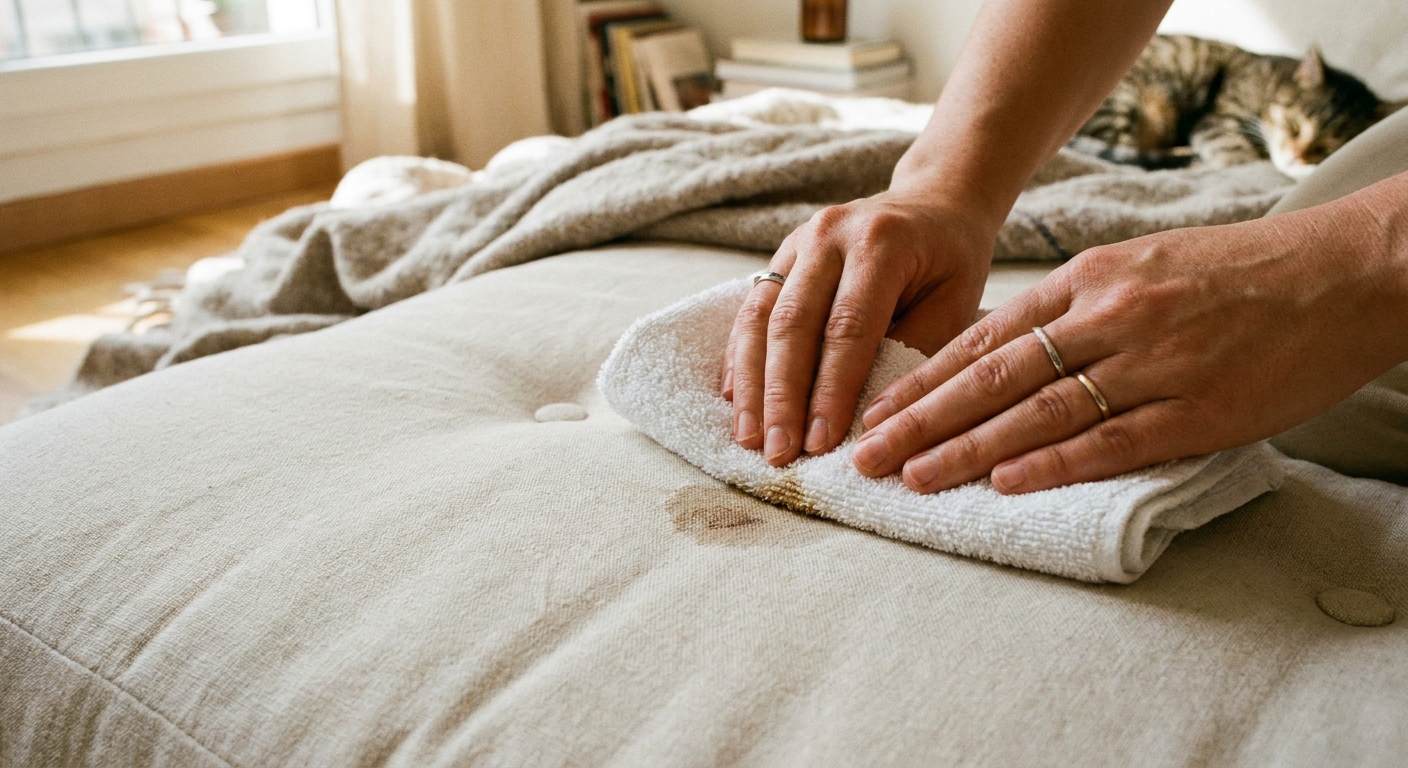
- Blot immediately with a clean towel. Do not rub.
- Mix a gentle solution: a few drops of clear dish soap in cool water.
- Dampen a cloth (not dripping), dab the stain from the outside in.
- Rinse by dabbing with a second cloth lightly dampened with plain water.
- Press with a dry towel to pull moisture out.
- Dry thoroughly with airflow: fan plus open window, or fan plus dehumidifier if you have one.
For protein stains (sweat, blood): Use cool water. Heat can set these.
For oil-based marks (lotion, hair oil): Sprinkle baking soda or cornstarch first, let it sit 30 minutes, vacuum, then spot-clean.
For pet accidents: An enzyme cleaner is usually the most effective for odor. Choose one that is fabric-safe, use as little liquid as you can, and dry aggressively. If it is a foam core and the accident soaked through, treat it like a moisture emergency (more on that below).
Odor control for studio living
When your bed is also your couch, odors can build quickly. A layered approach wins: absorb, then air, then prevent.
Baking soda refresh (monthly or as needed)
- Vacuum the surface first.
- Sprinkle a light, even layer of baking soda.
- Let sit 30 to 60 minutes (longer if you can).
- Vacuum slowly and thoroughly, especially seams and tufts.
Important: For foam tri-folds, keep the layer light and vacuum very well. You are trying to avoid fine residue lingering in knit covers, seams, or foam-adjacent pores where it is annoying to fully remove.
Vinegar? Use it carefully
White vinegar can help neutralize some odors on some fabrics, but it is still moisture and it is not universally fabric-friendly. If you use it, dilute it (1:1 with water), test a hidden spot first, mist lightly (do not soak), and commit to strong airflow until fully dry. If you have a latex layer, a delicate cover, or you live in a humid, low-ventilation space, skip vinegar and stick with baking soda plus ventilation.
Prevention in one sentence
Use a washable protector under your cover or sheets, especially if this is your primary bed.
Cover washing
Removable covers are wonderful until you wash them once and they return noticeably smaller like a rebellious cotton sweater.
How to avoid shrinkage
- Read the tag first. “Spot clean only” means the fabric or backing may not tolerate soaking.
- Cold wash, gentle cycle. Hot water is a shrinkage accelerator.
- Mild detergent. Skip bleach unless the label explicitly allows it.
- Air dry whenever possible. Dryers shrink covers fast, especially cotton and cotton-linen blends.
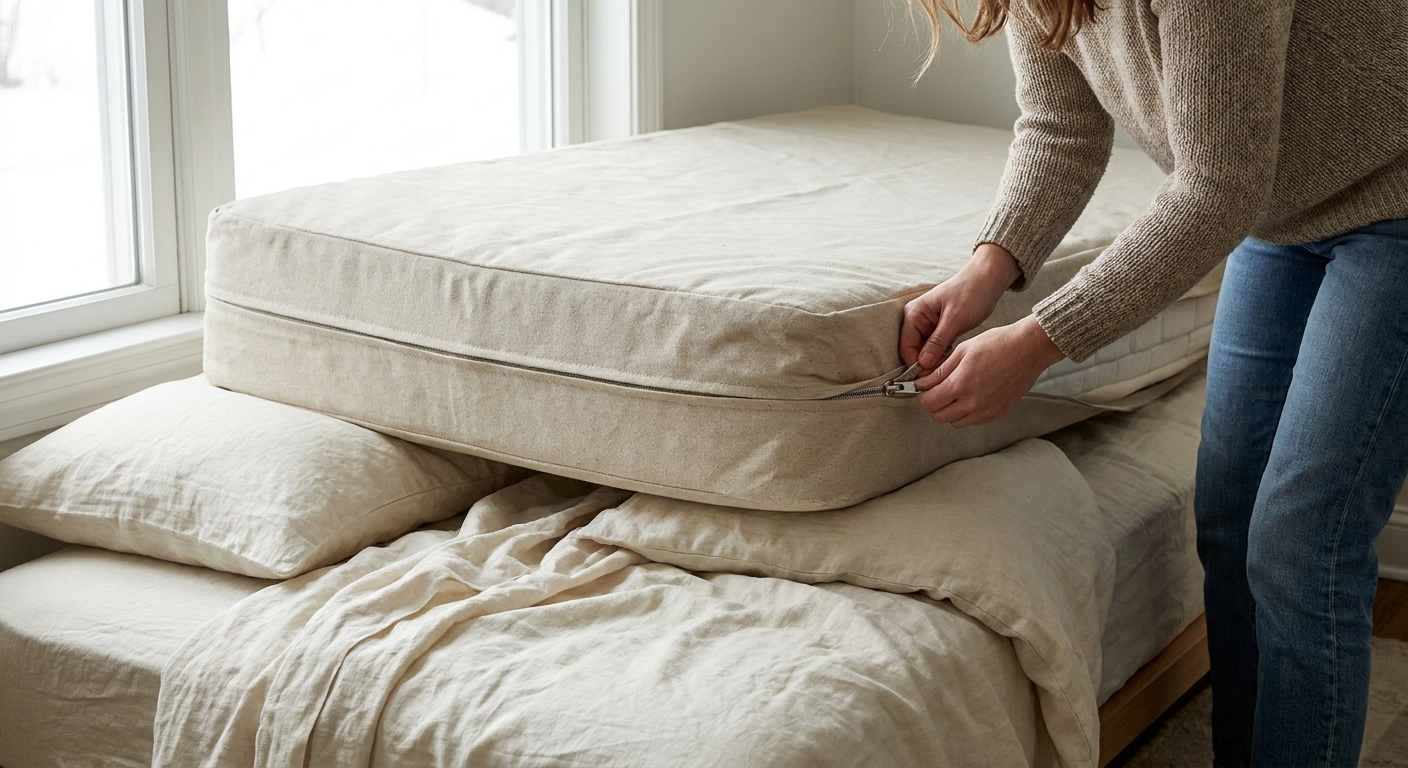
- Reinstall slightly damp. This is my favorite trick. If the cover is just barely damp, it stretches back onto the mattress more easily and then finishes drying in place.
Zipper and seam protection
- Zip the cover closed before washing to protect the teeth.
- Wash inside out if the exterior has texture or piping.
- Use a mesh laundry bag for smaller covers or pillow-style daybed bolsters.
Reality check: If your cover is older and already tight, consider professional cleaning or hand washing. A single hot dryer cycle can turn “snug” into “impossible.”
Rotate and flip
Futons and tri-folds wear unevenly because we tend to sit in the same spot and sleep in the same direction.
Futon mattress
- Rotate head-to-foot monthly if possible.
- Flip only if the construction is truly two-sided. Many have a “top” designed for comfort and a “bottom” designed to flex with the frame. When in doubt, check the tag or brand instructions.
- Address early dips: Add a supportive topper if the core is still healthy but comfort has flattened.
Tri-fold mattress
- Swap panel positions if the design allows (some covers are stitched to panel shapes, so you may be limited).
- Rotate the whole mattress if you always sleep with your head on the same panel.
Daybed mattress
- If it is a standard twin, follow standard rotation guidance.
- If it is a thin daybed-specific mattress, rotate more often since the comfort layers are minimal.
Hygiene upgrades
I am not here to make you feel weird about living small. I love living small. But small spaces do amplify moisture, dust, and cooking odors. These upgrades make a huge difference.
My three-piece “clean sleep” stack
- Water-resistant, breathable protector: Goes directly on the mattress. It is your insurance policy. Look for a polyurethane (PU) membrane style if you want something that blocks spills without feeling like a crinkly raincoat.
- Washable cover: The pretty layer. Wash seasonally.
- Sheets or throw blanket barrier: If your daybed is a couch, keep a dedicated throw or coverlet on top that you can wash weekly.
If you eat on it (no judgment)
- Keep a small handheld vacuum nearby.
- Use a tray so crumbs stay contained.
- Spot-clean immediately. Old food stains are the ones that become permanent.
Dust and allergies
Vacuuming weekly is not just aesthetics. Dust mites do best in warm, humid bedding and mattresses that collect skin flakes. A HEPA vacuum, or a vacuum with a good sealed filter, is especially helpful in studios where everything is in one air zone.
Pest check (quick, not paranoid)
Because futons and tri-folds often sit closer to the floor, it is smart to do a fast visual check when you change sheets: seams, tufts, and the edge closest to the wall. If you live in a high-risk building or you travel often, consider a full encasement (bed-bug-rated, zippered) for the mattress, plus a washable protector over it for comfort.
Frame care
A mattress can be perfectly fine while the frame quietly sabotages your sleep. Futon and daybed frames tend to squeak because they move, fold, and flex.
Monthly 10-minute frame check
- Tighten hardware: Use the correct Allen key or wrench. Do not overtighten to the point of stripping.
- Check slats: Look for cracked or bowed slats. Replace sooner rather than later.
- Add felt pads: Where wood meets wood or metal meets metal, felt can reduce noise and friction.
Lubrication basics
- Metal hinges and joints: A silicone-based lubricant is usually safe and less messy than oil.
- Wood joints: Wax-based solutions can help where wood rubs. Avoid anything that will stain fabric or attract dust.
Squeak detective tip: Sit, bounce lightly, and listen. Put a hand on different joints to feel the vibration. The loudest point is your culprit.

Mold and moisture safety
There is “my place is a little stuffy” and then there is “this is a health problem.” If you smell mildew, see spotting that returns, or the mattress was truly soaked, take it seriously.
- Do not sleep on a mattress with active mold. If it smells musty after drying attempts or shows visible mold growth, replacement is often the safer call, especially with foam cores where moisture can hide deep inside.
- Act fast after a soak: Strip everything, blot, then run high airflow plus a dehumidifier for as long as it takes. If the core stayed wet for more than a day in a humid room, odds go up that it will never fully recover.
Sunlight: a little is fine
A short stint in indirect sun or bright daylight can help freshen fabrics. Avoid prolonged, harsh direct sun, especially for memory foam or latex, since UV and heat can degrade materials and fade covers.
Tri-fold storage
Tri-fold mattresses get funky most often in storage. The rules are simple, but they matter.
- Store it fully dry. If you deodorized or spot-cleaned, give it extra dry time before folding it up.
- Keep it off the floor. A shelf, a low bench, or even a clean pallet-style platform helps reduce moisture and pest access.
- Avoid sealing it in plastic if there is any moisture risk. Breathable storage is your friend.
When to replace
Care can do a lot, but it cannot reverse a broken core. Here are the signs I take seriously.
- You can feel the frame or slats through the mattress even after rotating.
- Foam stays visibly compressed and does not rebound.
- Innersprings poke, creak, or feel uneven.
- Odor returns immediately after thorough deodorizing and airing, especially if there has been water damage or a mildew smell.
If you are not ready for a full replacement, a high-quality topper and a washable protector can buy time, especially on a daybed that doubles as seating.
What this is not
This page is specifically for futons, tri-fold mattresses, and daybeds, the hardworking small-apartment classics that fold, stack, and live a double life.
- If you have a hidden mattress inside a couch mechanism, look for care guidance specifically for sleeper sofas and pull-out beds.
- If your seating is primarily floor-based and filled with beads or loose fiber, follow care tips for bean bags and floor pillows.
Different construction, different cleaning risks, different routines. You deserve instructions that match what you actually own.
My simplest reset (15 minutes)
- Strip bedding and open a window.
- Vacuum the mattress surface and seams.
- Sprinkle baking soda lightly, wait 10 minutes while you wipe the frame and arms.
- Vacuum again, slowly.
- Remake the bed with a clean top layer that can be washed weekly.
It is not glamorous, but it is the kind of small ritual that makes a home feel cared for. And in a small space, that feeling matters.