Furniture Dents in Wall-to-Wall Carpet

Clara Townsend
Clara Townsend is an interior stylist, vintage furniture enthusiast, and the creative voice behind Velvet Abode. With over a decade of experience transforming both cramped city apartments and sprawling fixer-uppers, she believes that a beautiful home is built on personal stories rather than massive budgets. When she isn't hunting for the perfect brass sconce at a local flea market, she can usually be found rearranging her living room for the third time this month.
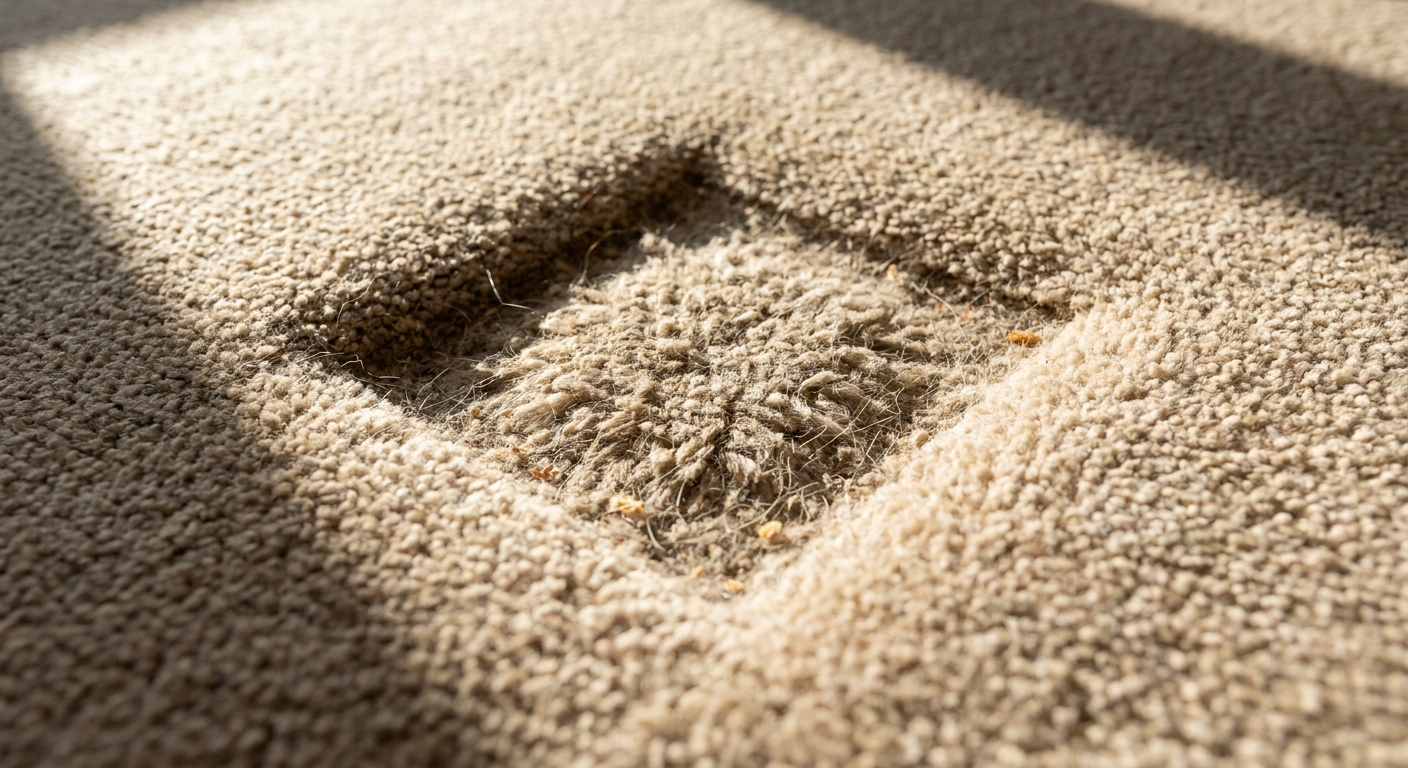
Nothing makes a room feel temporarily haunted like moving a sofa and finding four perfect little craters staring back at you. The good news: in many cases, furniture indentations in wall-to-wall carpet are just crushed pile, not permanent damage. With a bit of moisture, gentle heat, and the right kind of fluffing, you can often coax those fibers upright again without doing anything a landlord would side-eye.
Before you start: what you are dealing with
Carpet dents happen for a few different reasons. Knowing which one you have saves time and helps you avoid over-wetting.
- Crushed pile (most common): Fibers are bent over from weight. This is often fixable.
- Compressed pad underneath: The cushion layer below the carpet has squished. The carpet may lift a little, then sink right back down.
- Possible backing damage: Rare, but if the carpet backing looks rippled, split, or loose near the dent, stop and document.
Quick test
- Run your fingers across the dent. If you can feel some springiness beneath the carpet, it is likely just the pile.
- If it feels thin and flat like the padding is gone, you might be dealing with an underlay issue.
- If the area looks shiny, matted, or discolored, you may have wear or a stain issue in addition to indentation.
Renter-safe method 1: the ice cube trick
This is my favorite for bedrooms and living rooms because it is low drama, low risk, and uses gentle moisture over time.
What you need
- Ice cubes (2 to 6 depending on dent size)
- Clean white towel or microfiber cloth
- Spoon, coin, or the edge of a plastic card
- A soft brush: a clean nail brush, soft upholstery brush, or even a wide-tooth comb
Steps
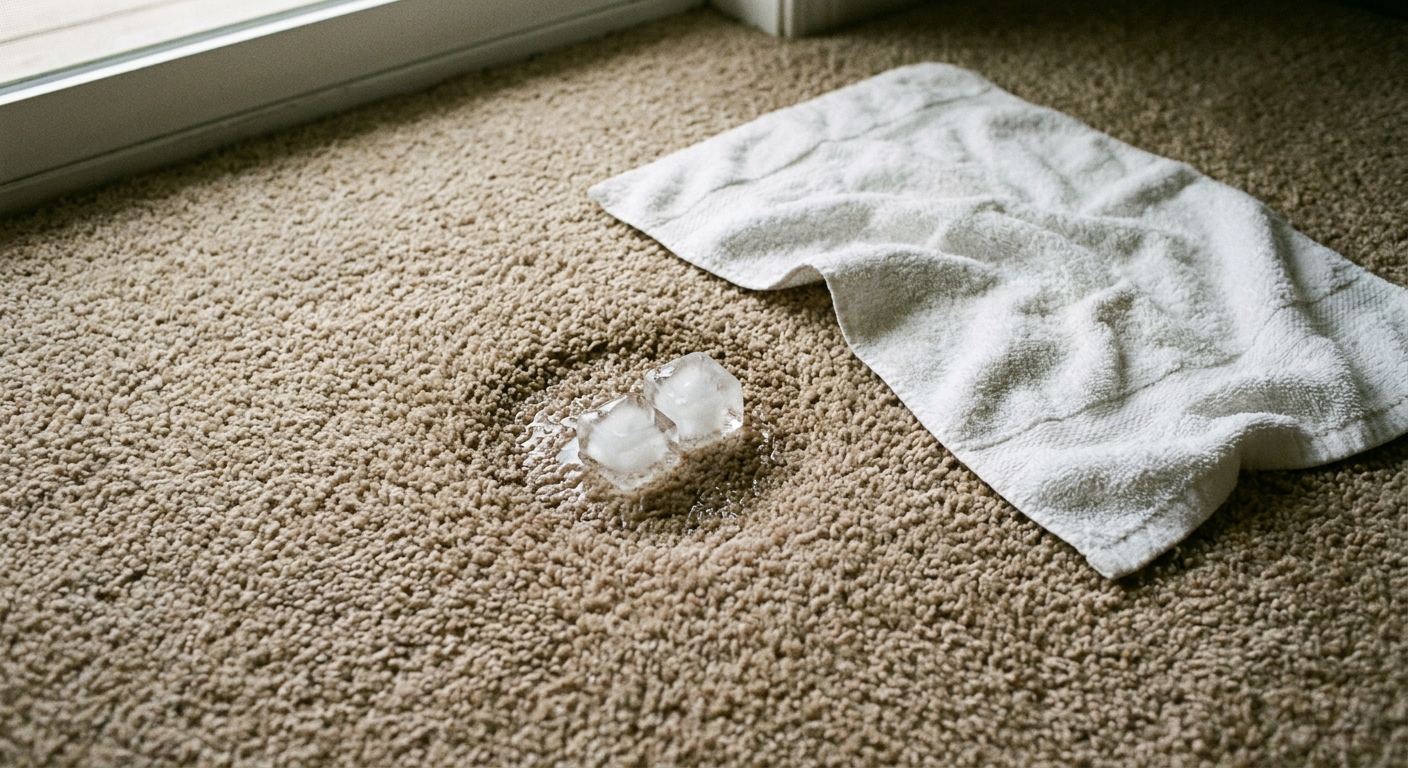
- Place ice cubes directly in the dent. For small leg marks, one cube per dent is usually plenty.
- Let them melt completely. This can take 1 to 3 hours. The goal is to rehydrate the fibers, not flood the backing.
- Blot, do not rub. Press a towel into the area to lift excess water.
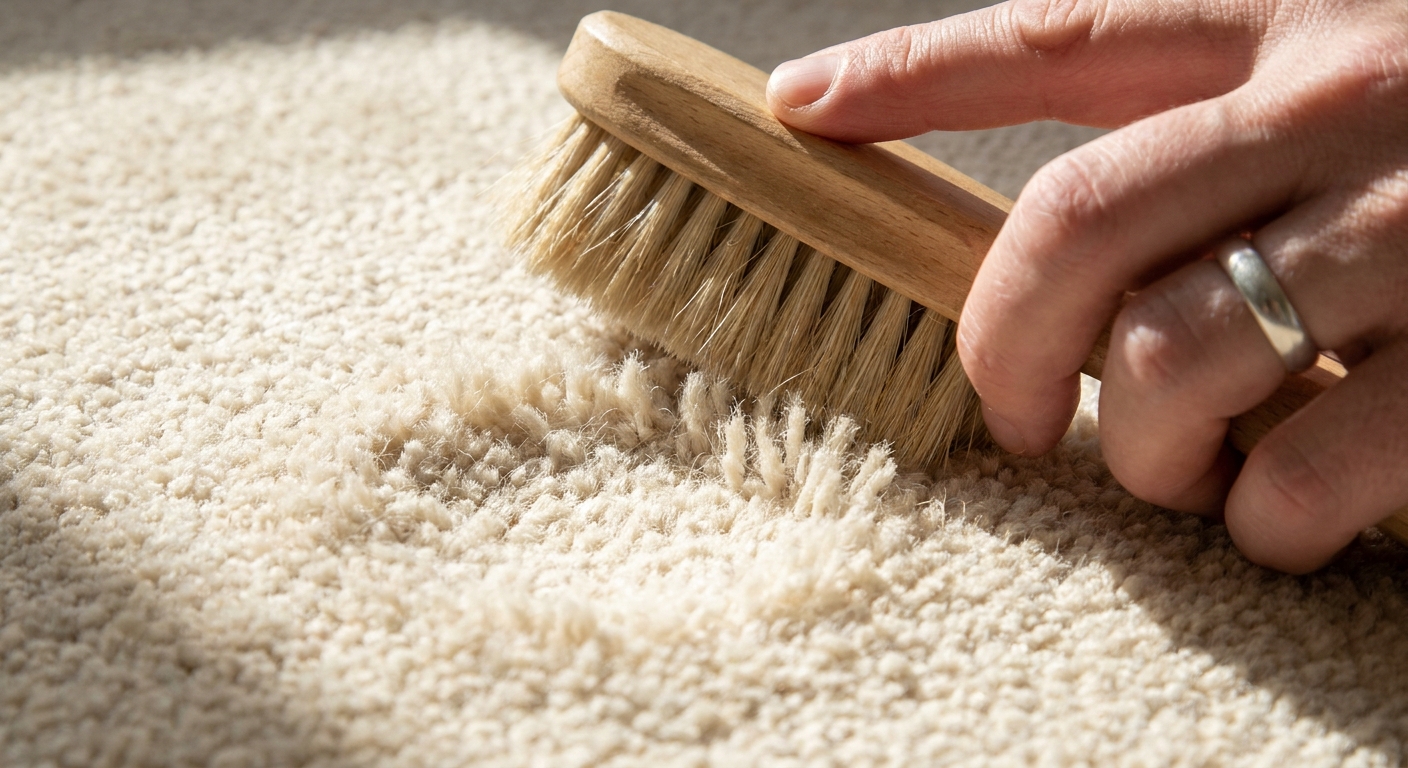
- Lift the pile. Use the edge of a spoon or plastic card to gently tease fibers up, then brush them in the direction of the surrounding carpet.
- Let it dry fully. Keep the area ventilated. If you have a fan, aim it across the spot for faster drying.
Note: If your carpet is a loop pile (think berber style), skip aggressive brushing. Loops can snag. Use your fingers and a very soft brush instead.
Renter-safe method 2: gentle steam
Steam is the faster option when dents are older, deeper, or in high-traffic fibers that like to stay flattened. The key word is gentle. Too much heat or too much water can leave rippling, damage fibers, or create that damp, basementy smell if the pad gets soaked.
What you can use
- Garment steamer: Best control and least risk.
- Steam iron (steam only): Works, but keep it hovering. Do not set it down on carpet.
- Handheld carpet or upholstery steamer: Use the lowest setting and keep passes brief.
Steps
- Vacuum first. You want the fibers clean so you are lifting pile, not grinding in dust.
- Test a hidden spot. If you can, try a quick pulse in a corner or closet edge first.
- Steam from above. Hold the steamer a few inches over the dent and pulse steam for 5 to 10 seconds.
- Blot any moisture. A towel should pick up dampness, not dripping water.
- Groom immediately. Use a soft brush to lift fibers upright. Work slowly and match the surrounding pile direction.
- Repeat in short rounds. It is better to do two or three light passes than one long, soggy one.
Safety reminders
- Never press a hot iron plate onto carpet fibers.
- Avoid steaming over seams or edges where carpet is tucked.
- If your carpet is glued down (common in some apartments and basements), go extra light on steam and moisture. Too much heat and water can cause bubbling or loosening.
- Keep kids and pets off the damp spot until it is fully dry.
- If you smell a damp odor later, the pad may have gotten too wet. Increase airflow and stop adding moisture.

Grooming: the secret step
Moisture helps fibers relax. Grooming is what makes them stand up and blend back in. If you skip this part, the dent can dry in a weird little swirl that catches light differently.
Match the pile direction
- Look at the carpet from different angles. Most cut-pile carpets have a visible nap that looks slightly darker when brushed one way.
- Brush the dent to match the surrounding nap so it does not show as a patch.
- For plush carpets, use your fingers to separate and lift fibers before a final light brush.
If the dent edges look sharp
Use the back of a spoon to softly round the transition by nudging fibers from the dent outward, then brush everything into alignment.
Do not do this
- Do not soak the area to speed things up. That is how you end up with odor, slow drying, and possible backing issues.
- Do not use boiling water.
- Do not scrape with a knife or anything sharp that can cut loops or snag fibers.
- Do not dump cleaners on a dent unless you are also treating a stain and you know the product is carpet-safe.
Prevent dents from coming back
If you are renting, prevention is the move-out gift you give your future self. The goal is to spread weight over a larger surface area so the pile is not crushed in four tiny points.
Options that work
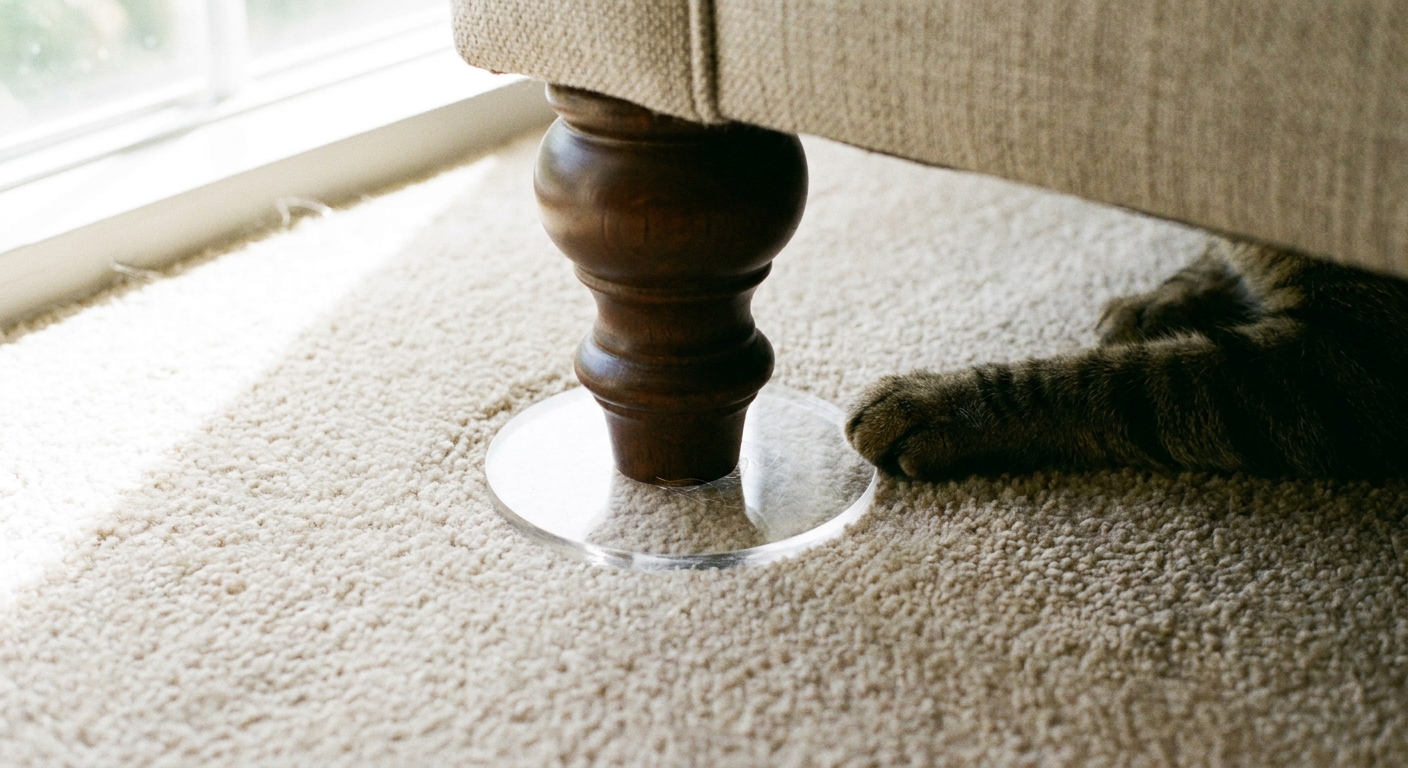
- Furniture coasters (clear or felt-bottom): Great for sofas and beds. Choose wide ones for heavy pieces.
- Caster cups for rolling legs: If your bed frame or chair has small wheels, cups keep them from digging in.
- Wide felt pads: Helpful for lighter furniture, side tables, and accent chairs.
- Area rug plus rug pad: For desks or reading corners, a rug helps distribute weight and protects carpet from daily compression.
How big should pads be?
As a rule of thumb, pick a pad that is at least 2 to 3 times wider than the furniture leg. A tiny sticky felt dot on a heavy sofa leg is basically a polite suggestion, not protection.
When the pad might be the problem
Sometimes you revive the fibers beautifully, and a day later the dents are back like they never left. That is your clue to look deeper.
Signs the carpet pad may be compressed
- The area feels thinner or harder than the surrounding floor.
- The dent returns quickly even after steam and grooming.
- You see a broader low spot rather than a precise leg mark.
- The carpet looks slightly rippled or loose when you walk across it.
If you suspect padding issues in a rental, it is usually not something you can truly fix with surface methods. At that point, your best move is documentation and a calm, clear message to your landlord or property manager.
Material notes
- Loop pile: Be gentle. Avoid aggressive brushing that can snag loops.
- Shag or very high pile: It can take longer to dry and may need extra finger-lifting before brushing so it does not look clumpy.
- Wool: Wool can respond beautifully to gentle steam and grooming, but it hates harsh scrubbing. Use lower heat, minimal moisture, and a very soft brush.
- Carpet tiles: Be careful with steam and soaking. Some tiles are installed with adhesive that can soften with heat or water.
When to stop and call it in
- You see seam separation, fraying, or visible backing tears.
- The carpet is rippling more after you add moisture.
- The low spot is widespread or feels like a dip in the floor.
- You suspect a glued-down install and the area looks like it is bubbling or lifting.
Move-out friendly documentation
If you are close to move-out, or if the dents are extreme, do a quick paper trail. This is not about being dramatic. It is about being organized.
What to capture
- Wide shot: Show the piece of furniture and its location in the room.
- Close-up: Show each indentation clearly in good light.
- Context: Include a photo after you have attempted a reasonable fix (ice or gentle steam and brushing), especially if the dent rebounds.
What to say (simple script)
“Hi, I noticed indentations in the carpet where the bed or sofa has been. I tried standard pile-lifting (ice or gentle steam and brushing) but the low spot returns quickly, which makes me think the pad may be compressed. Could you advise on next steps?”
Troubleshooting
How long does it take for dents to disappear?
Light dents can improve within an hour or two (especially with steam). Deeper dents may take a day of drying plus a second grooming session.
Can I use a hair dryer?
It can help with drying, but it does not add the moisture that actually relaxes fibers. If you use one, keep it on low heat and keep it moving.
Should I soak the area to speed it up?
No. Think damp and steamy, not wet.
A soft landing
Carpet dents are one of those quiet renter anxieties no one warns you about. But most of the time, they are fixable with patience and a light touch. Do the gentle reset (ice or steam), groom the fibers back into their natural direction, then add a simple coaster or pad so your furniture can sit pretty without leaving evidence.
And if the dents keep coming back no matter what you do, that is not a personal failure. It is often a padding issue, and that is exactly what documentation is for.