Foraged Thanksgiving Tablescape

Clara Townsend
Clara Townsend is an interior stylist, vintage furniture enthusiast, and the creative voice behind Velvet Abode. With over a decade of experience transforming both cramped city apartments and sprawling fixer-uppers, she believes that a beautiful home is built on personal stories rather than massive budgets. When she isn't hunting for the perfect brass sconce at a local flea market, she can usually be found rearranging her living room for the third time this month.
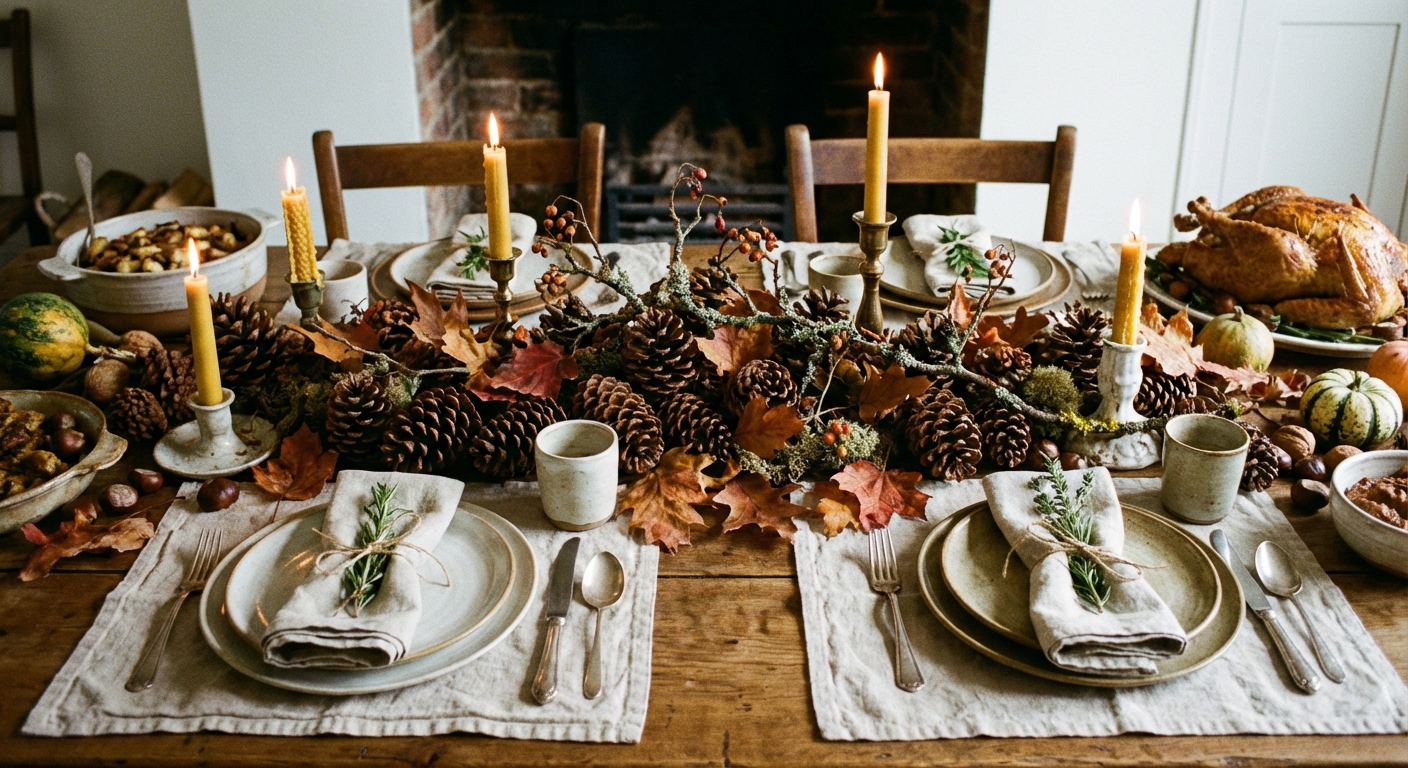
If you've ever looked at those perfectly styled Thanksgiving tables and thought, “Sure, if I had a styling budget and a florist,” I'm here to lovingly call you back to earth. The prettiest tables I've ever set were built from what I could carry home in my tote bag: a handful of branches, a pocketful of leaves, and a few pinecones that practically begged to be part of the party.
This is my step-by-step method for a breathtaking Thanksgiving tablescape using foraged natural elements. It's cozy, personal, and budget-friendly. The secret isn't buying more. It's layering textures and letting nature do the heavy lifting.
Before you forage
Foraging is free, yes, but it should also be respectful and safe. A few guidelines I follow every single time:
- Take only what has fallen when possible: dropped branches, leaves, and pinecones are ideal.
- Avoid protected areas: many parks and preserves prohibit collecting, so check your local rules.
- Steer clear of roadsides: leaves and branches near traffic can hold grime and pollutants.
- Know what you're bringing inside: skip anything with visible mold, bird droppings, or heavy sap.
- Leave plenty behind: wildlife uses pinecones, seed heads, and leaf litter.
If you can't forage outdoors, you can get the same look from the “free aisle” of your neighborhood: ask a friend with a yard, check a local Buy Nothing group, or request pruned branches from a florist or garden center.
What to gather (and how much)
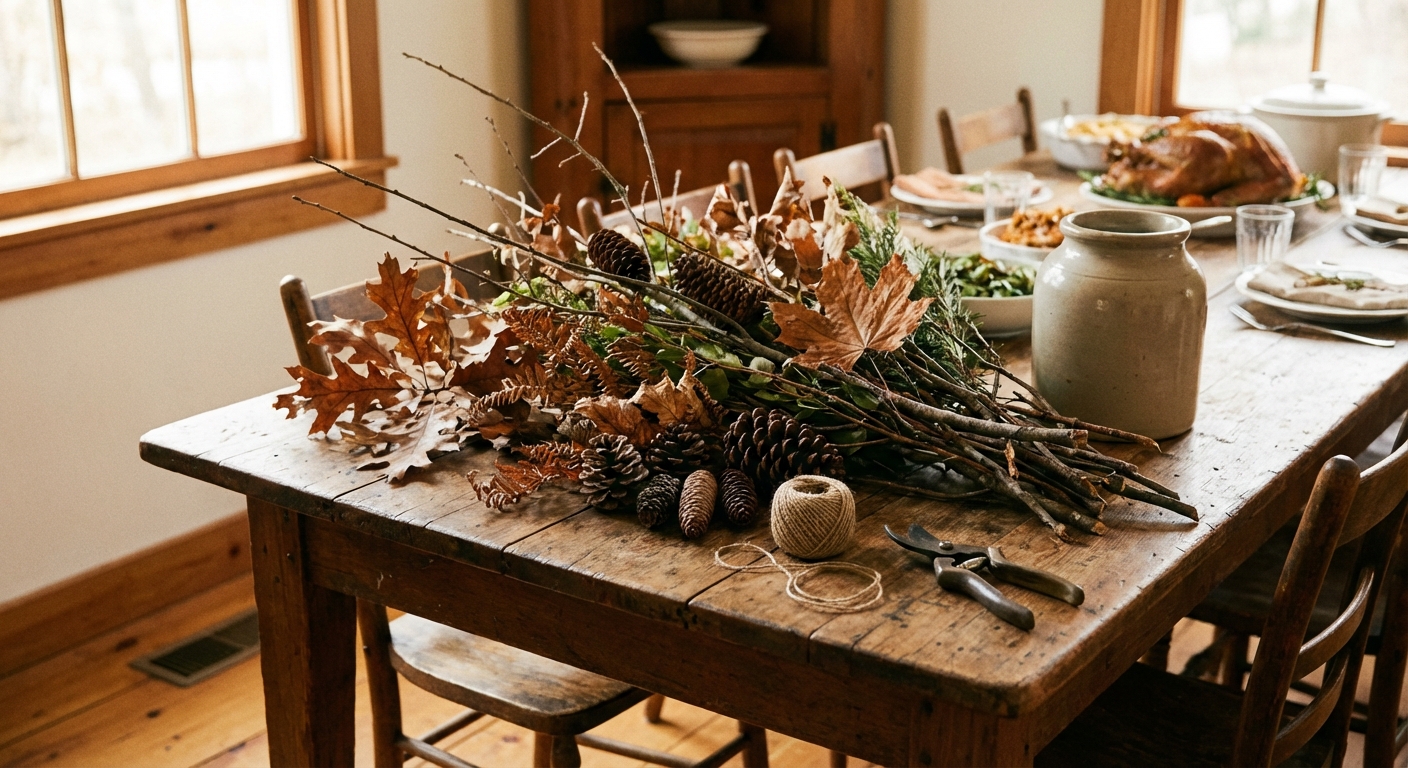
Think in three layers: base, texture, and height. This creates that lush, abundant look without buying a giant centerpiece.
Your foraged shopping list
- Pinecones: 10 to 20 for a standard 60 to 72 inch (150 to 180 cm) table (more if they're small).
- Dried leaves: a generous armful. Mixed shapes look more natural.
- Seasonal branches: 6 to 12 stems, depending on length and fullness. Great options include maple, oak, dogwood, olive (if available), and any bare branch with interesting movement.
- Optional extras: acorns, seed pods, eucalyptus (store-bought is fine), rosemary sprigs, dried hydrangea, or a few persimmons and small apples from the market for color.
For scale: for a 6 to 8 person table, I like a runner of “stuff” that's about 4 to 6 inches wide down the center. Full, but not so full that passing the gravy becomes an obstacle course. If your table is narrow, aim closer to 3 to 4 inches. If it's wide, you can go 6 to 8 inches and still leave plenty of elbow room.
Clean and prep
I know, not glamorous. But this is the difference between “rustic and charming” and “why is there a bug in my napkin ring.”
Pinecones
- Shake them outside to release debris.
- Optional quick bake to dry and remove bugs: place on a foil-lined sheet pan at 200°F (about 95°C) for 20 to 40 minutes. Resinous cones can ooze sap or smell strongly as they warm up, so keep them away from heating elements and check them every 10 minutes. If one starts smoking or smells intensely resinous, pull it and discard it.
- Cool completely before styling.
Leaves
- Choose already-dry leaves for the most reliable results.
- Press them flat between paper towels inside heavy books for 24 to 48 hours if they're curling.
- Skip glossy spray finishes if you have open flames. Matte and natural looks better anyway.
Branches
- Rinse and wipe with a damp cloth.
- Trim ends with pruners so they sit cleanly in a vase, crock, or bottle.
- Let them dry if they're wet from rain or dew.
Clara tip: If your branches feel too “yard,” you can wipe them with a tiny bit of oil on a rag to deepen the color and make them look intentional. Use the lightest hand, test first, and keep oil away from linens and any surface you do not want smudged. If you're worried about transfer or dust sticking later, skip it, or use a barely-there wipe of mineral oil instead.
Quick sensitivity note: If anyone you're hosting is sensitive to strong botanicals or allergies, go easy on scented greens like eucalyptus and rosemary, and make sure everything is fully dry before it comes inside.
Choose a simple palette
Nature is already doing a lot, so your job is to edit. Pick one main neutral, one warm tone, and one deep accent.
Three palettes that always feel Thanksgiving
- Oatmeal + amber + deep brown: linen, brass candlelight, walnut tones.
- Cream + rust + olive: vintage stoneware, terracotta, moody greens.
- White + copper + burgundy: crisp plates, metallic warmth, a little drama.
Once you choose, repeat it: in napkins, candles, glassware, or even fruit. Repetition is what makes “found objects” read as “designed.”
Step-by-step: build it
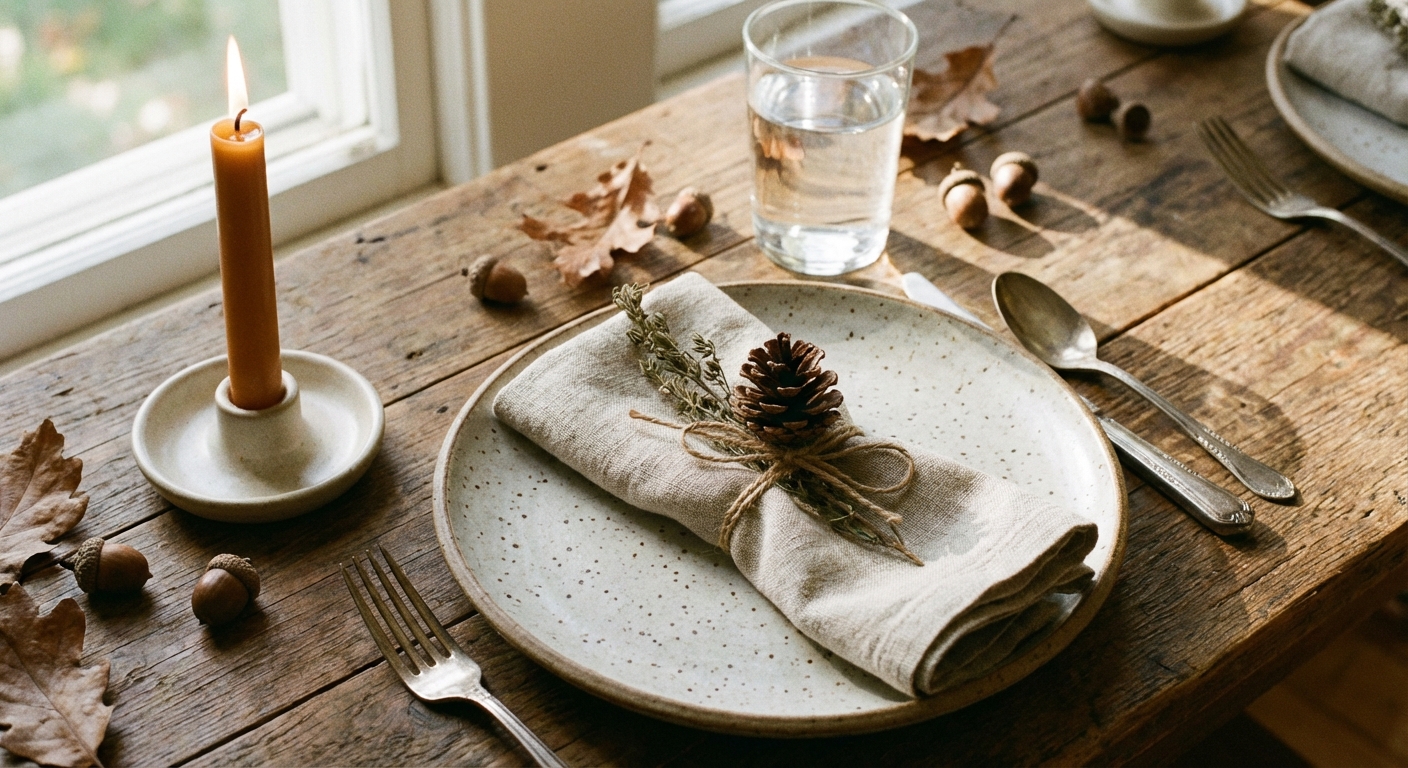
This is the exact order I use when I style, whether I'm styling for photos or for my own slightly chaotic family dinner. We'll start big and work smaller.
Step 1: Start with a base layer
If you have a table runner, great. If you don't, use what you own:
- a linen tablecloth
- a piece of thrifted yardage
- kraft paper for a casual, cozy look
- nothing at all if your table is beautiful, especially wood
The goal is to give your centerpiece a “stage” so the foraged elements feel grounded. (And if your wood table is precious, this is also your first line of defense against sap and wax.)
Step 2: Place your branches first
Lay branches down the center like a loose, winding path. Let them overlap and cross. You want movement, not a straight line. If you're using vessels, stagger a few small vases or bottles and tuck branches in so they arc over the table slightly.
Keep it guest-friendly: branches shouldn't poke people in the face or block sightlines. Think low and sweeping, not tall and spiky.
Step 3: Add leaves as the soft filler
Tuck dried leaves under and between branches. I like to vary direction so it feels like they naturally drifted there. This is also where your palette starts to shine, especially if you mix a few deeper leaves among lighter ones.
Step 4: Scatter pinecones for texture
Place pinecones in small clusters of 2 to 3. Odd numbers often look more natural. Keep them closer to the centerpiece line so plates and glasses still have breathing room.
Step 5: Bring in candlelight
Candlelight is the quickest way to make a table feel like a hug. Use what you have:
- Tapers for height and elegance
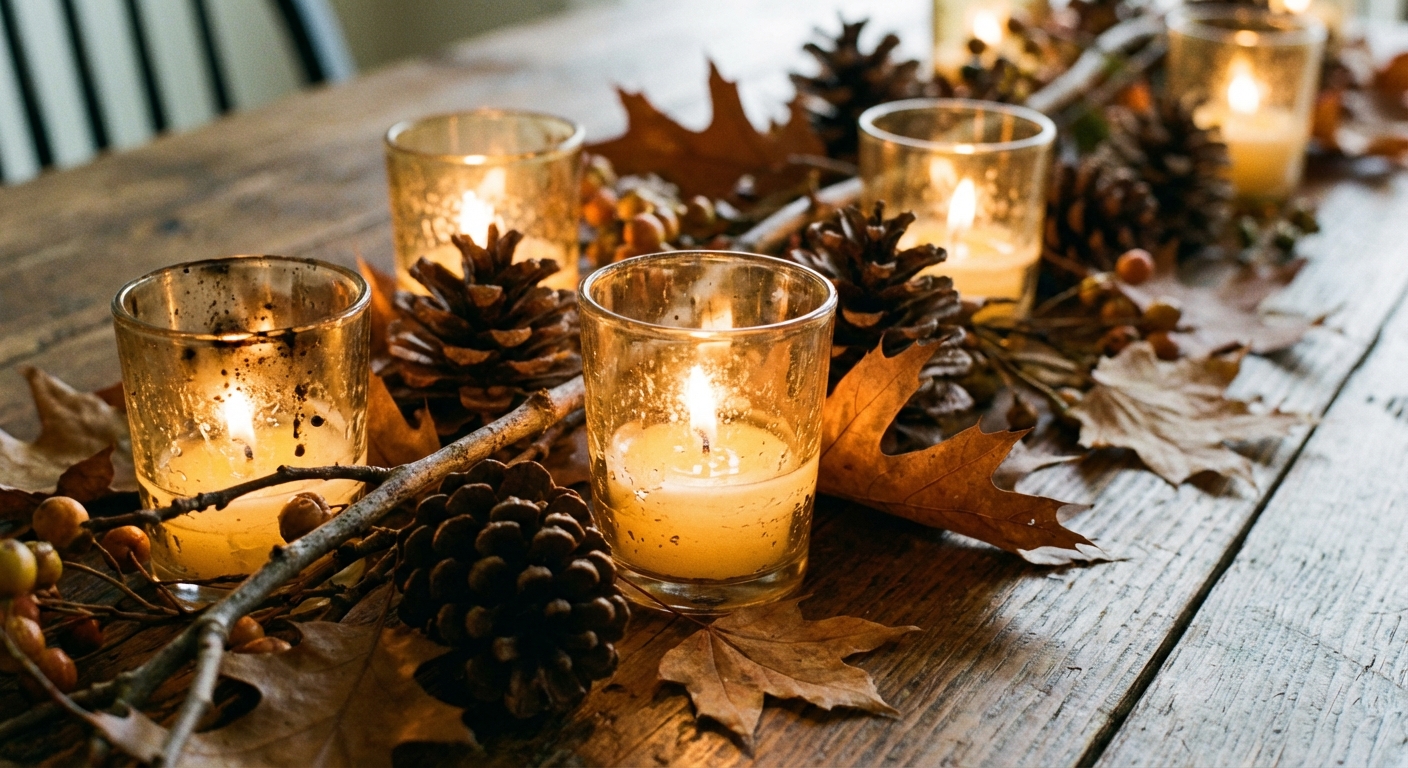
- Votives for a warm glow and safer flames
- LED candles if you have kids, pets, or lots of dry leaves
Fire safety, always: keep open flames away from dried leaves and branches. I prefer glass votives nestled among the pinecones, then a few taller tapers in sturdy holders where nothing can brush against them. If you're worried about wax on wood, set candleholders on small coasters or a slim tray.
Place settings
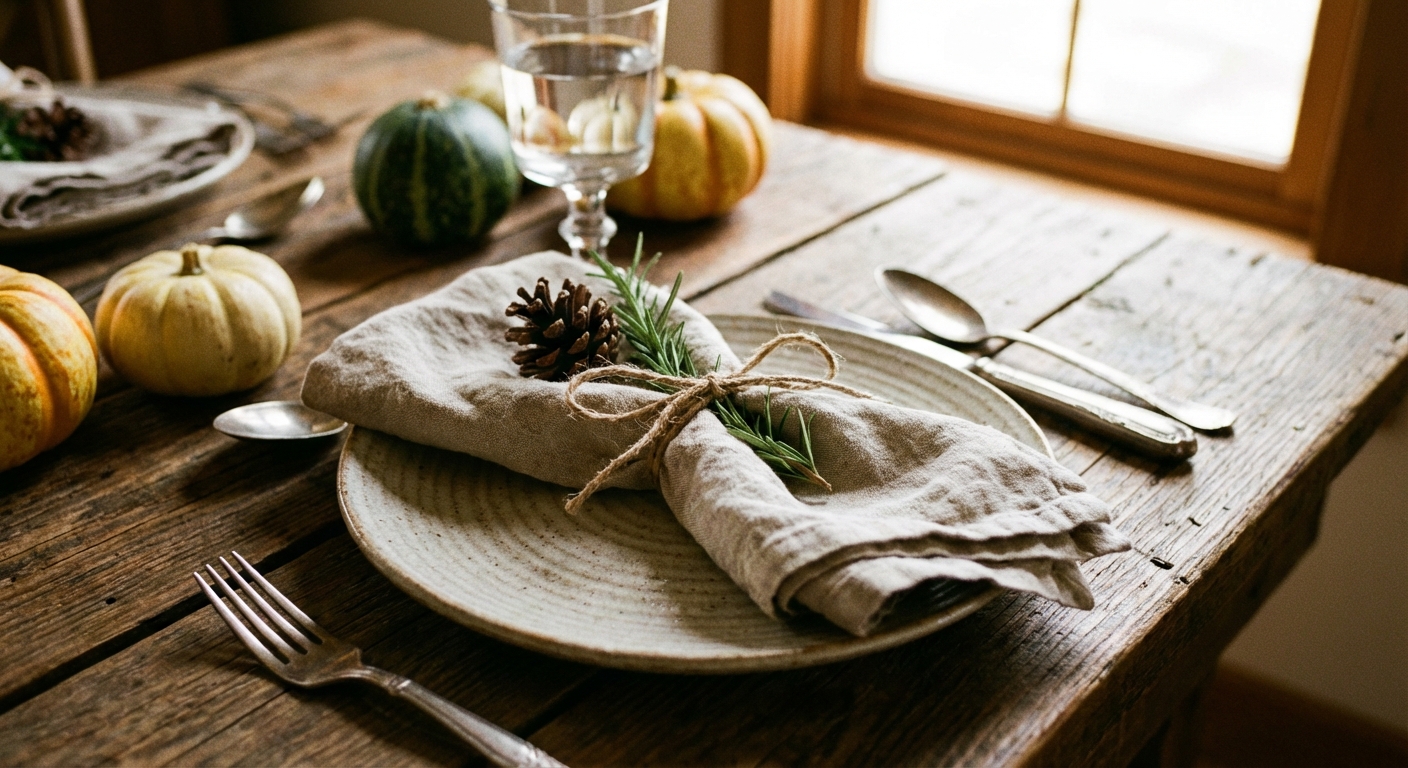
My favorite place settings are a mix of old and new. A thrifted plate with a modern glass. A mismatched vintage fork with a crisp linen napkin. The magic is in the layering.
My go-to formula
- Base plate: whatever you have, even simple white.
- Top layer: salad plate or bowl in a slightly different tone.
- Napkin: linen or cotton. Soft, not stiff.
- One small natural element: a pinecone, a leaf, or a tiny sprig of rosemary.
Want it to feel extra thoughtful? Add a handwritten name card tucked into a pinecone. Keep it simple and personal.
Pet note: if you have a curious chewer, skip eucalyptus or keep it fully out of reach. It's toxic to many pets if ingested.
Three centerpiece options
Same foraged ingredients, different mood. Choose the one that fits your home and your energy level.
1) The effortless runner
Branches down the center, leaves tucked in, pinecones scattered, votives dotted throughout. This is my default because it's fast and forgiving.
2) The gathered meadow
Keep everything lower and denser: skip tall branches, focus on a thick layer of leaves and pinecones with lots of candlelight. Perfect for long farmhouse-style tables where you want guests to see each other easily.
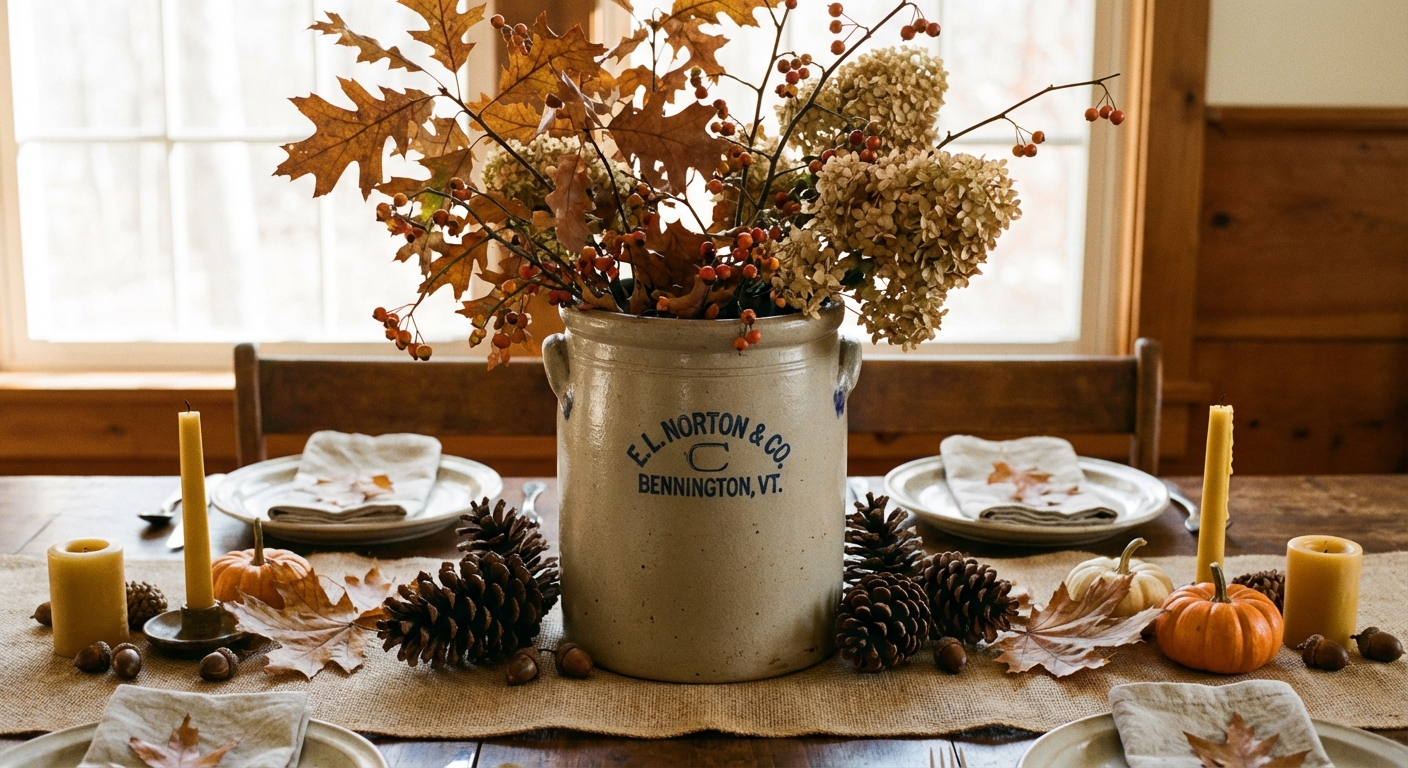
3) The vintage urn moment
Use one large vessel you already own, like a crock, pitcher, or thrifted urn, and create a branch arrangement in the center. Then echo the same elements in a slimmer runner down the table so it feels connected, not like a lonely bouquet.
Quick fixes
“It looks messy, not styled.”
Edit. Pull out about 20 percent of what you added, then group the remaining elements in little clusters. Messy becomes intentional fast when you create pockets of focus.
“My table feels too brown.”
Try one lighter element: cream napkins, white plates, or pale candles. A few pears or small white pumpkins can also brighten things up without fighting the natural vibe.
“The centerpiece is in the way.”
Make it lower. Swap tall tapers for votives, shorten branches, and keep the design hugging the center line.
“The leaves are curling.”
Press them overnight, or embrace the curl and use them sparingly as accents instead of a full layer.
Make it last
Thanksgiving isn't a photoshoot. It's a living, passing, laughing, spilling kind of meal. Here's how to keep your table beautiful and functional:
- Build your centerpiece in sections so you can lift a portion out if you need more serving space.
- Keep serving dishes in mind: leave open zones where platters can land.
- Use a tray for candles if you're worried about wax or stability.
- Plan for water glasses: they take up more room than you think.
After dinner, I like to gather pinecones and branches into a bowl on the coffee table. The table may be cleared, but the cozy can stay.
If your foraged pieces are untreated (no paint, glitter, or spray), compost them or return them outdoors where appropriate. Anything oily or waxy should be tossed, because nobody needs a mystery mess in the compost.
A final note
The best Thanksgiving tables are the ones that feel like your home, not a catalog. Let the leaf that's slightly torn stay. Let the mismatched glasses clink. Let the patina on the brass candlestick glow like it's got stories to tell. A foraged tablescape is beautiful because it's imperfect, and because you made it.
If you try this, take a photo right before everyone sits down. That little moment, candlelight flickering, pinecones scattered like punctuation, is always my favorite.