Faux Leather and Vinyl Couch Care

Clara Townsend
Clara Townsend is an interior stylist, vintage furniture enthusiast, and the creative voice behind Velvet Abode. With over a decade of experience transforming both cramped city apartments and sprawling fixer-uppers, she believes that a beautiful home is built on personal stories rather than massive budgets. When she isn't hunting for the perfect brass sconce at a local flea market, she can usually be found rearranging her living room for the third time this month.
Faux leather and vinyl couches are the unsung heroes of real life. They handle movie nights, pet paws, and that one friend who always shows up with takeout. But they have a few specific needs that are totally different from genuine leather. The goal is simple: keep the surface clean and flexible without leaving a tacky film or stressing the topcoat.
This guide covers whole-sofa care for PU faux leather and vinyl, including gentle cleaner options, what to avoid, a simple care schedule, and how to tell the difference between a cleanable surface issue and a material issue like bonded-leather peeling.
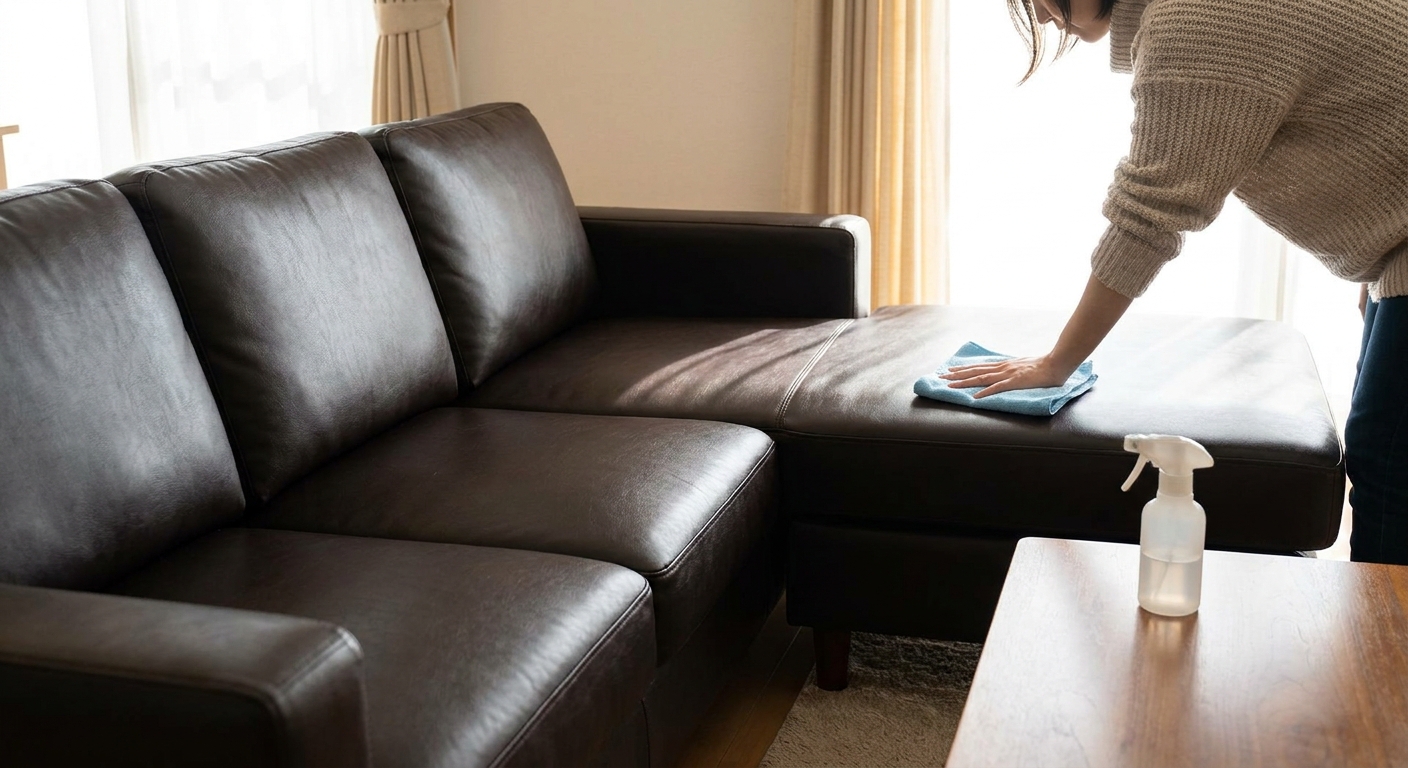
First, check the tag
Before you clean: look for a care tag, manual, or brand care page. Faux leather and vinyl do not always use the same W, S, WS codes as fabric upholstery, but many manufacturers still give specific do and do not instructions. If the tag recommends a specific product type, follow that over general advice.
If you cannot find guidance, the safest default is mild, non-abrasive, non-solvent cleaning plus thorough rinsing and drying.
Know what you have
“Faux leather” gets used as a catch-all, but couches typically fall into a few categories. Knowing which one you have helps you choose products that will not cause cloudiness, cracking, or residue.
Quick ID checklist
- PU faux leather (polyurethane): Often feels slightly softer and warmer than vinyl and may have a more natural-looking grain. Common on mid-range sofas.
- Vinyl (PVC): Often feels slicker or cooler to the touch. Common on budget-friendly couches, dining benches, and commercial furniture.
- Bonded leather: A mix of shredded leather fibers and polyurethane binders on a backing. It can look great at first, but it is the most prone to peeling and flaking with age.
Two more tells that help
- Check the underside or back panel (if accessible): vinyl and PU often have a fabric backing that looks like a knit or felt. Bonded leather may show a paper-like or fibrous layer when it starts failing.
- Look at worn spots up close: if you see a thin “film” lifting or flaking off in chips, that is usually a failing top layer (often bonded leather, sometimes low-quality PU), not removable dirt.
If your couch is shedding little “chips” or the top layer is lifting like dried paint, that is usually bonded leather deterioration, not a cleaning issue. Cleaning can remove grime, but it will not reattach a failing top layer.
Weekly routine
If I could bottle one habit and hand it to every faux-leather owner, it would be this: dust and wipe lightly, often. Fine grit acts like sandpaper. Over time, it dulls the finish and contributes to micro-cracks, especially on seat edges and armrests.
Weekly: 5 to 10 minutes
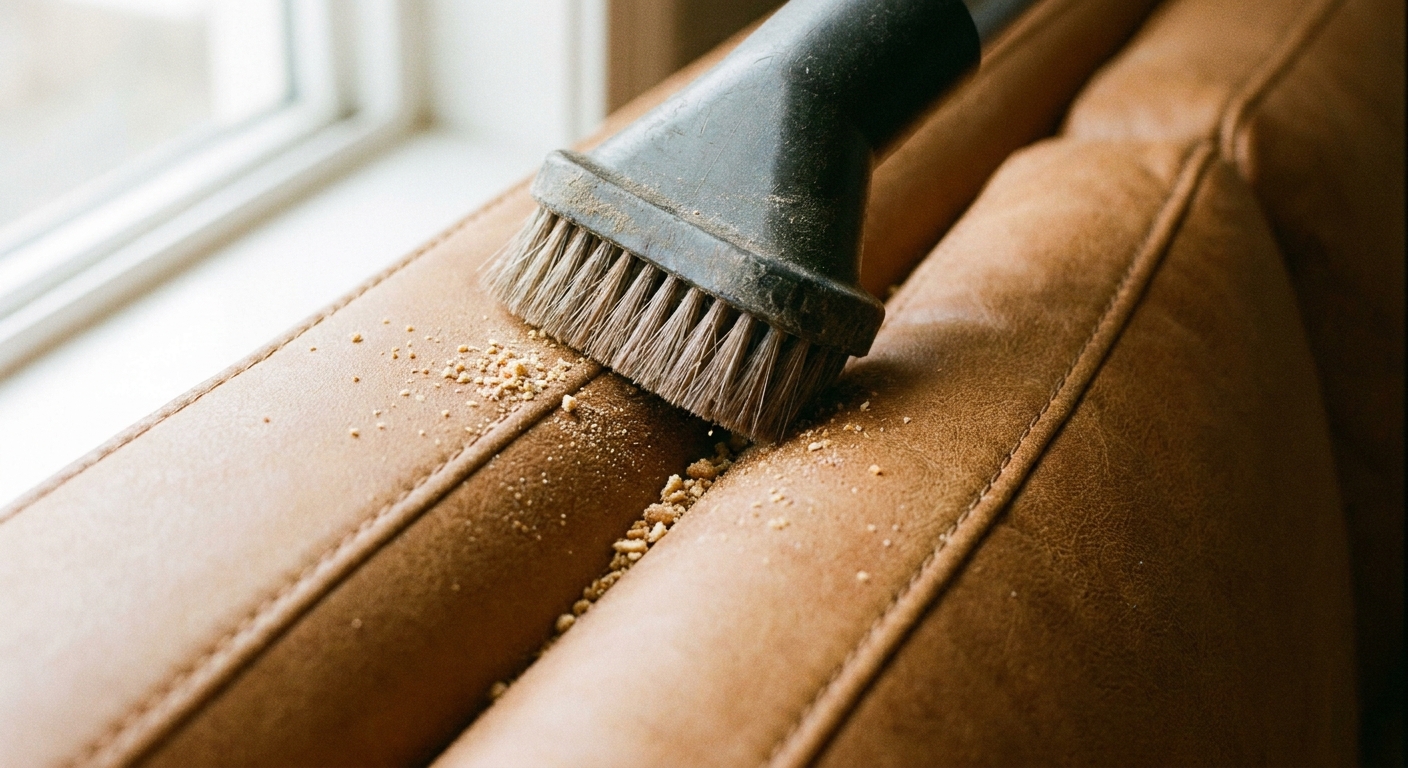
- Vacuum with a soft brush attachment, including seams and under cushions.
- Wipe with a barely damp microfiber cloth (water only).
- Dry buff with a second clean microfiber cloth to prevent water spots and streaks.
That last step matters more than it sounds. Faux leather does not absorb water the way real leather can, so moisture can sit on top and leave a hazy look if you let it air dry.
Deep cleaning
When your couch needs more than a quick wipe, reach for a gentle, “least intense first” approach. Faux leather and vinyl have a protective topcoat. Your job is to clean the grime on top of that layer, not strip it off.
Before you start
- Test first in an inconspicuous spot and let it dry fully.
- Do not saturate: excess moisture can creep into seams, piping, and tufting.
- Ventilate: open a window or run a fan so the surface dries quickly.
What to use (safe options)
- Warm water + a tiny amount of mild dish soap (a couple drops in a bowl). This is often enough for body oils and everyday smudges.
- Gentle upholstery cleaner labeled safe for vinyl or PU. If the label mentions “pH-balanced” or “gentle,” great, but the key is that it is non-solvent, non-abrasive, and made for coated upholstery. Avoid heavy fragrance and “high-shine” claims.
- Fragrance-free, very mild baby shampoo in very diluted form can work in a pinch, but formulations vary. If you are unsure, stick with dish soap instead, and always rinse well.
Step-by-step
- Make a mild solution in a bowl. Do not apply soap directly to the couch.
- Dampen, do not soak a microfiber cloth. Wring it out well.
- Wipe in sections, turning the cloth often so you are not smearing oils around.
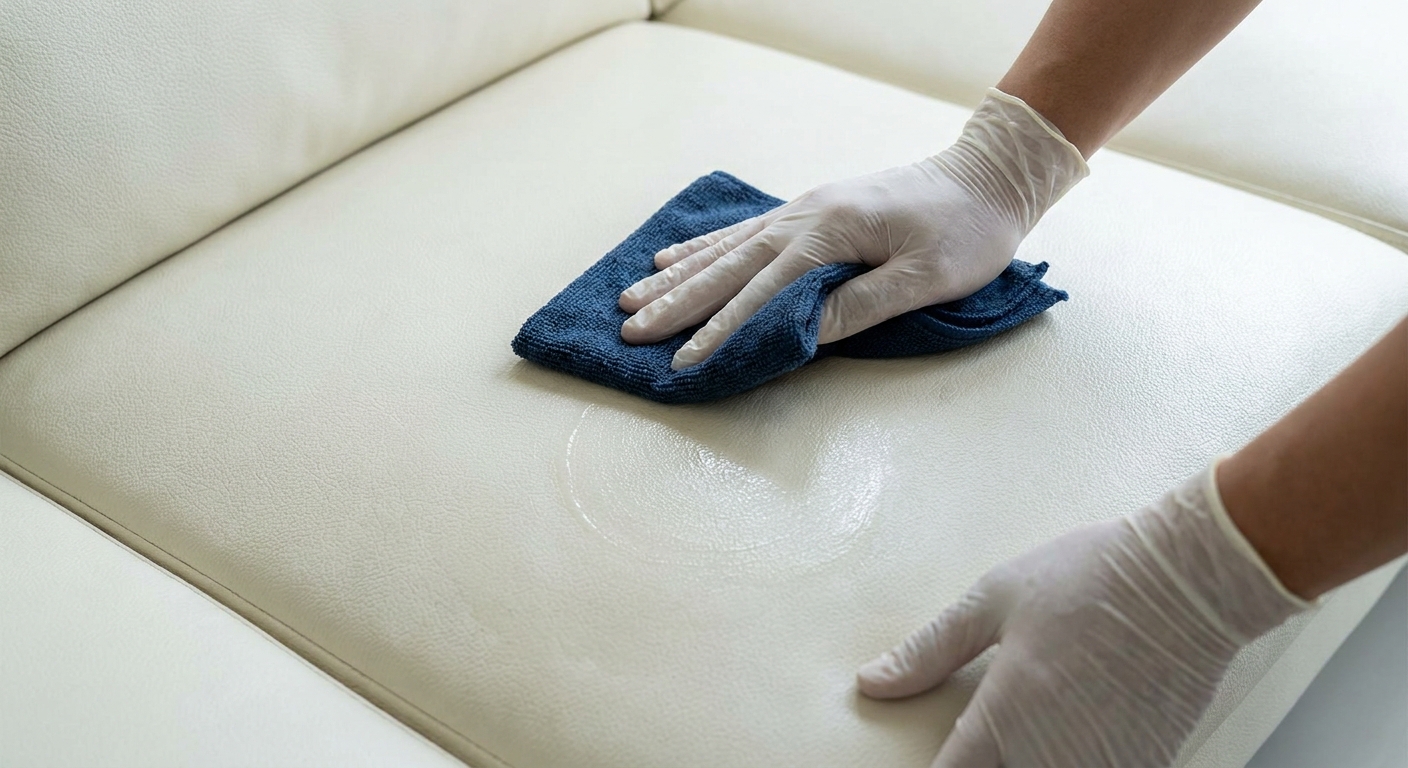
- Rinse pass: wipe again with a fresh cloth dampened with plain water to remove residue.
- Dry immediately with a clean towel, then let it air out for 30 to 60 minutes before sitting.
If you do only one “extra” step, make it the plain-water rinse wipe after the cleaner. Most sticky problems are not dirt. They are leftover product.
The rinse and buff rule
If you remember nothing else, remember this: cleaners are easy to apply and easy to leave behind. A quick plain-water wipe plus a dry buff is what keeps faux leather from feeling tacky or looking cloudy.
- Rinse with a cloth dampened in clean water.
- Buff dry with a fresh microfiber until the surface feels smooth, not grabby.
Sticky residue
A sticky faux leather couch is usually buildup. The culprit is often too much soap, a cleaner that leaves polymers behind, DIY oils, or a well-meaning “conditioner” meant for real leather.
Gentle de-tack method
- Warm water wipe first to remove surface grime.
- Use a diluted mild soap (a couple drops in water). Wipe lightly.
- Rinse with a cloth dampened with plain water. Repeat the rinse step if needed.
- Dry buff until the surface feels smooth.
If it is still sticky
Step up in this order, stopping as soon as the residue lifts:
- Try a commercial vinyl or PU upholstery cleaner that is specifically labeled safe for your material, then do the rinse and buff.
- As a last resort, try diluted vinegar: start with 1 part white vinegar to 4 parts water on a cloth (not sprayed on the couch). Wipe lightly, then follow with a plain-water wipe and dry buff. Spot test first, use rarely, and do not let it sit.
Avoid: straight vinegar, aggressive degreasers, and abrasive scrub pads. You can trade “sticky” for “dull and patchy” fast.
Cracks and dryness
Unlike genuine leather, faux leather and vinyl do not “drink” conditioner. They stay comfortable and flexible when their topcoat stays intact and the material is not stressed by heat, UV, friction, or harsh cleaners.
What actually prevents cracking
- Keep it out of direct sun if possible. Use curtains during peak afternoon light or rotate cushions.
- Avoid heat sources like radiators and space heaters nearby.
- Clean off body oils regularly, especially on headrests and armrests.
- Reduce friction in high-wear spots. A soft throw over the seat edge can make a difference if you tend to perch in one place.
Do you need to condition faux leather?
Most of the time, no. Many leather conditioners contain oils and waxes that can leave faux leather slick, sticky, or blotchy, and they can attract more dirt.
If you want a protective step, look for a product specifically labeled as a vinyl protectant or PU protectant with a matte or natural finish. Use it lightly, and always test first. Your couch should feel clean and soft, not shiny like a dashboard.
Seams and tufting
Seams and tufted areas need a slightly different approach because moisture can linger in creases and loosen adhesive over time.
How to clean details safely
- Vacuum first so you are not pushing grit deeper into seams.
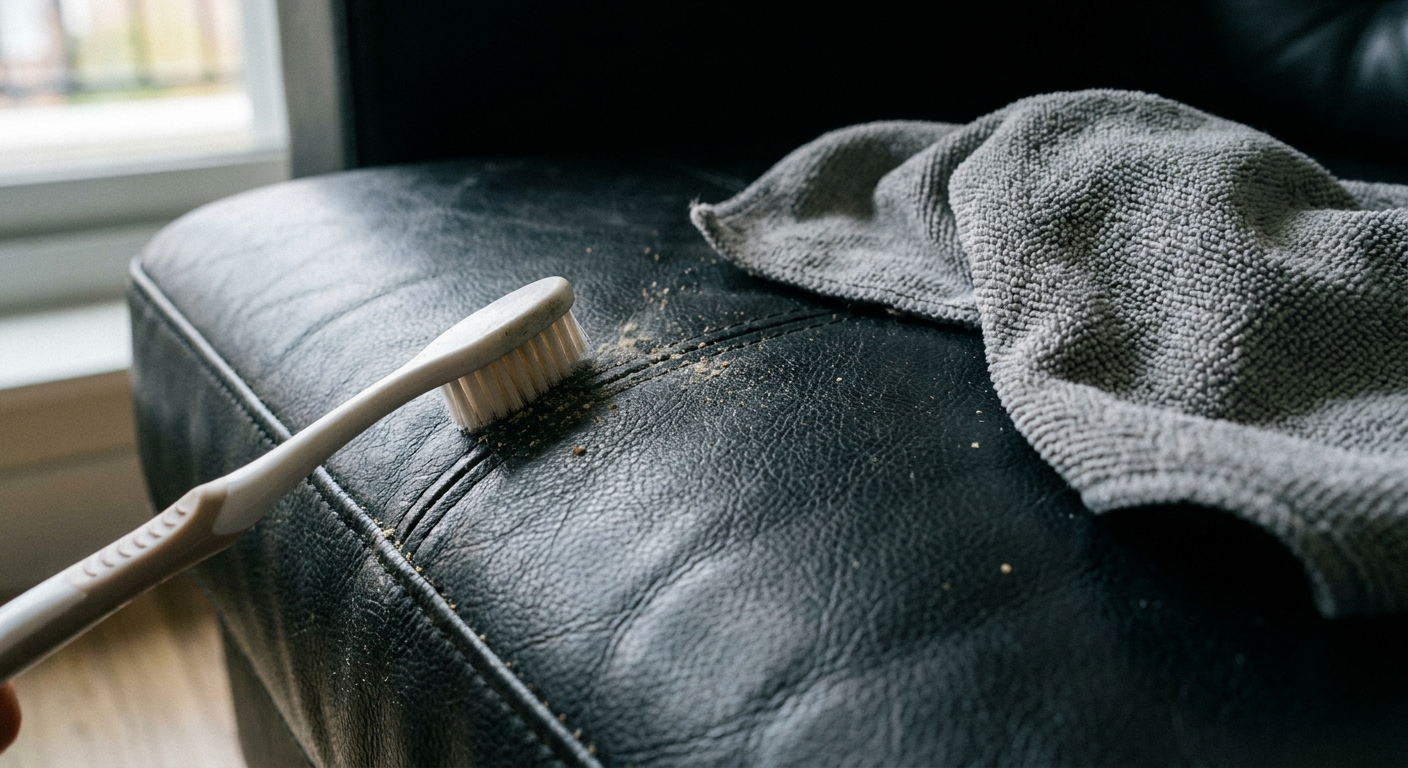
- Use a soft toothbrush or soft detailing brush with a tiny bit of mild solution on the bristles, not poured onto the couch.
- Wipe with a barely damp cloth to lift what the brush loosens.
- Dry thoroughly, especially around piping and tuft buttons.
What to avoid
When faux leather goes cloudy, cracks, or feels tacky, it is often not “age.” It is product mismatch.
- Bleach and ammonia: too harsh and can weaken or discolor the topcoat.
- Acetone and nail polish remover: can melt or permanently mar vinyl and PU.
- Undiluted rubbing alcohol: can dry and dull the finish fast.
- Abrasive pads and magic-eraser style sponges: they work by micro-abrasion and can remove the protective layer.
- Oils (olive oil, coconut oil): can create a sticky film and attract grime.
- Silicone-heavy “high shine” sprays: can leave slippery residue and make future cleaning harder.
Stains and spills
Time matters. Faux leather is forgiving, but some pigments can migrate into the top layer if left long enough.
Everyday spills
- Blot, do not rub.
- Wipe with a damp cloth (water).
- If needed, follow with mild soap solution, then rinse and dry.
Dye transfer
Dye transfer is common on light faux leather. Start with warm water and mild soap, then do the rinse and buff.
If it persists, step up to a commercial vinyl or PU cleaner labeled for dye transfer, used exactly as directed, then rinse and dry.
If you still see the mark, use a small amount of isopropyl alcohol diluted with water on a cloth, dab lightly, and stop as soon as the mark lifts. Then rinse with water and dry. Overdoing alcohol is how you get dull spots, so treat it like a last resort.
Ink
Ink is tricky. Dab, do not scrub. If a gentle cleaner does not lift it, check your manufacturer guidance or consult a professional upholstery cleaner, especially on lighter colors.
Disinfecting
If you want to disinfect (for example after illness or a messy pet situation), do it carefully. Many disinfectants are hard on coated upholstery.
- Best option: use a disinfectant that the couch manufacturer explicitly approves, or a product labeled safe for vinyl or PU upholstery.
- Use lightly: apply to a cloth, not directly to the sofa, avoid seams, and do not soak.
- Rinse and dry: after the dwell time on the label, follow with a plain-water wipe and dry buff to prevent residue.
Avoid bleach, ammonia, and strong solvent-heavy disinfectants unless the manufacturer specifically says they are safe for your exact material.
Peeling and flaking
If your couch is peeling in sheets, cracking in a way that reveals fabric underneath, or leaving flakes on your clothes, you are likely dealing with bonded leather breakdown or a failing top layer on PU.
At that stage, cleaning helps hygiene, but it cannot reverse structural failure. Your realistic options are:
- Stabilize and cover: a fitted cover or a throw in high-wear zones.
- Repair kits: vinyl and leather repair compounds can cosmetically patch small spots, but big areas tend to re-fail.
- Reupholster or replace: often the most cost-effective for heavy peeling.
If you want to go deeper on that specific situation, look for our bonded leather peeling resource on Velvet Abode. It is a different beast than everyday faux leather cleaning.
Care schedule
- Weekly: vacuum seams, water wipe, dry buff.
- Monthly: mild soap deep clean, rinse, dry thoroughly.
- Seasonally: shift the sofa to reduce sun exposure patterns, rotate cushions, and check for early wear on armrests and seat edges.
If your couch feels worse after cleaning, it is almost always leftover product. Rinse, then dry buff until it feels smooth.
FAQ
Can I use wipes on a faux leather couch?
Unscented, alcohol-free wipes can work for quick spot cleanup, but many wipes leave residue that builds tackiness over time. If you use them, follow with a damp water cloth and dry buff.
Why does my vinyl couch look cloudy after cleaning?
Cloudiness is usually residue or micro-scratching. First try wiping with plain water and drying thoroughly. Avoid abrasive sponges and “power degreasers.”
Is steam cleaning safe for faux leather?
Generally, I would avoid it. Heat can soften adhesives and stress the top layer, especially near seams and piping. If your manufacturer explicitly allows low-steam or extraction for your exact sofa, follow their limits closely and keep moisture minimal.