Exposed Brick in Rentals

Clara Townsend
Clara Townsend is an interior stylist, vintage furniture enthusiast, and the creative voice behind Velvet Abode. With over a decade of experience transforming both cramped city apartments and sprawling fixer-uppers, she believes that a beautiful home is built on personal stories rather than massive budgets. When she isn't hunting for the perfect brass sconce at a local flea market, she can usually be found rearranging her living room for the third time this month.
Exposed brick is one of those rental “wins” that feels like instant character. It is also, occasionally, a tiny crumbling roommate that leaves a fine orange dust on your books, your plants, and your dark sofa like it is trying to redecorate behind your back.
The good news: you can usually get exposed brick under control with gentle, reversible routines that keep your lease happy and your lungs happier. This page is about dust, that mysterious white powder called efflorescence, and cleaning methods that do not involve aggressive acids or sealing the wall like you are preserving a museum artifact.

Why exposed brick feels dusty
Brick is porous. Mortar is porous. Older brick, especially, can shed a bit as it dries out, gets bumped, or cycles through humid summers and dry winters. In rentals, the brick is often “left as is” for vibe, not because it was perfectly prepared for low-dust living.
Common dust sources
- Loose surface grit from old brick faces and aged mortar.
- Previous patching or sanding that left fine residue in the texture.
- General household dust that simply clings to rough surfaces more than smooth painted drywall.
- Efflorescence, which looks like dust but is actually mineral salts migrating out of the masonry.
If you wipe brick like you wipe a countertop, you can accidentally turn surface dust into a muddy film that dries chalky. Brick rewards the slow approach: dry first, damp only when needed.
Dry brushing vs damp wiping
If you remember one thing, let it be this: start dry. Dry methods remove loose material without pushing it deeper into pores.
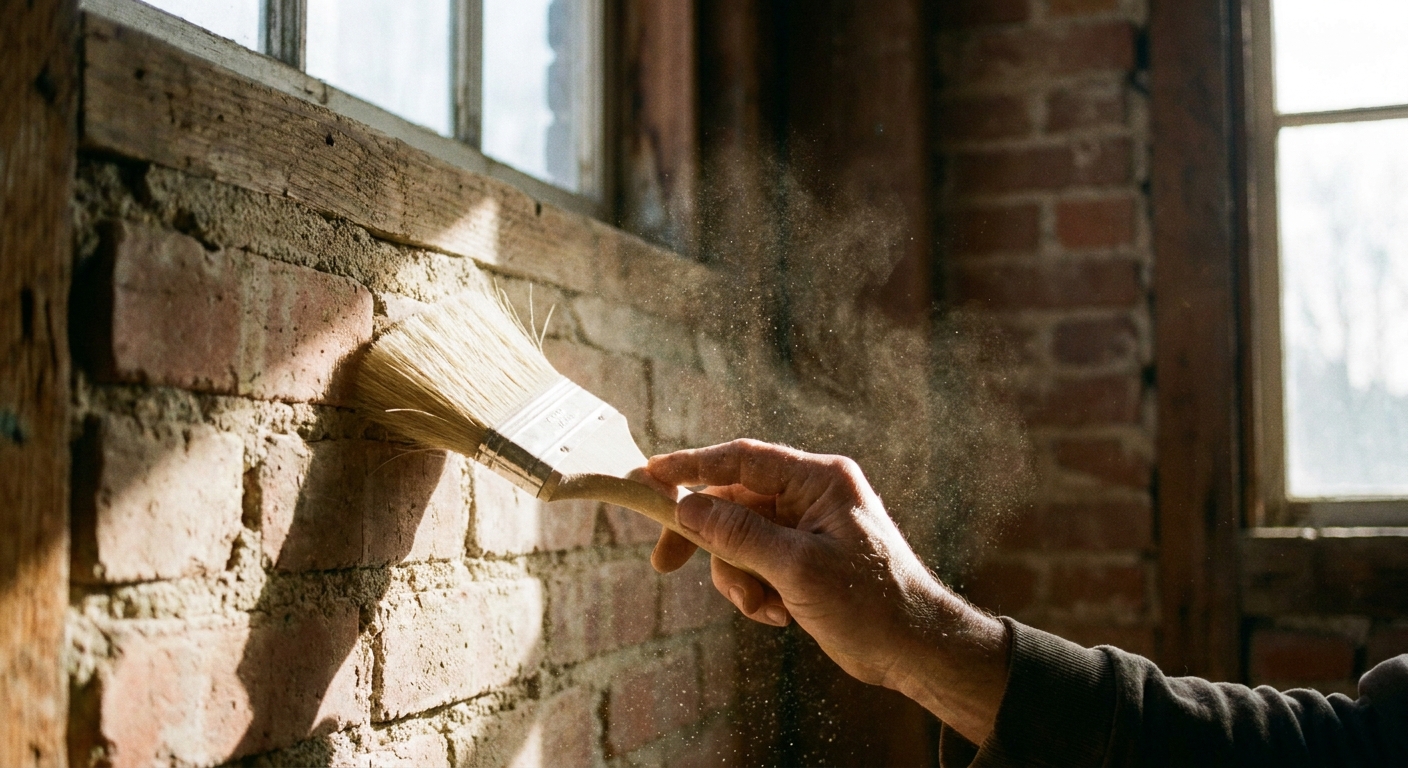
Dry brushing
Dry brushing is my favorite renter move because it is quiet, controlled, and unlikely to anger a landlord.
- Tool: a soft to medium nylon bristle brush, or a clean, dry microfiber cloth for very delicate brick.
- Technique: brush from the top down in small sections, letting dust fall to the floor where you can vacuum it up.
- Eyes: wear safety glasses if the wall sheds, or at least keep your chin tucked and look down as you work. Fine masonry dust has a talent for finding eyeballs.
- Pressure: light. If you see mortar grains breaking free, back off.
- Frequency: once a month for “shedder” walls, once a season for calmer walls.
Tip from many a flea market lamp dusting session: hold your vacuum nozzle nearby (not scraping the brick) to catch the dust as you brush.
Damp wiping
Damp wiping is for fingerprints near light switches, a mystery splash behind the dining table, or areas where dust has bonded into a thin film.
- Use: plain water first, applied to a cloth, not sprayed onto the wall.
- Wring it out: you want “barely damp,” not dripping.
- Work small: wipe a 1–2 sq ft area, then immediately buff with a dry cloth.
- Spot test: choose an inconspicuous corner. Some brick darkens when damp and can dry unevenly if overly wet.
Avoid soaking brick in a rental. Repeatedly introducing water, especially if the wall stays damp, can contribute to more salts migrating to the surface over time.
HEPA vacuum notes
If your brick wall is the dusty type, a vacuum with a HEPA filter can make a noticeable difference, especially if anyone in the home has allergies or asthma. Brick dust and old mortar particles are exactly the sort of fine stuff you do not want floating back into the room.
How to vacuum exposed brick safely
- Use a brush attachment if you have one. It reduces scraping and helps lift dust out of texture.
- Keep the nozzle slightly off the surface if the brick is fragile or shedding.
- Vacuum top down so you are not re-dusting freshly cleaned areas.
- Change or clean filters on schedule. A clogged filter can leak dust and reduce suction.
If you only have a basic vacuum without HEPA, you can still vacuum the wall, but consider wearing a mask and airing out the room. The goal is to remove dust, not to redistribute it.
That white powder: efflorescence
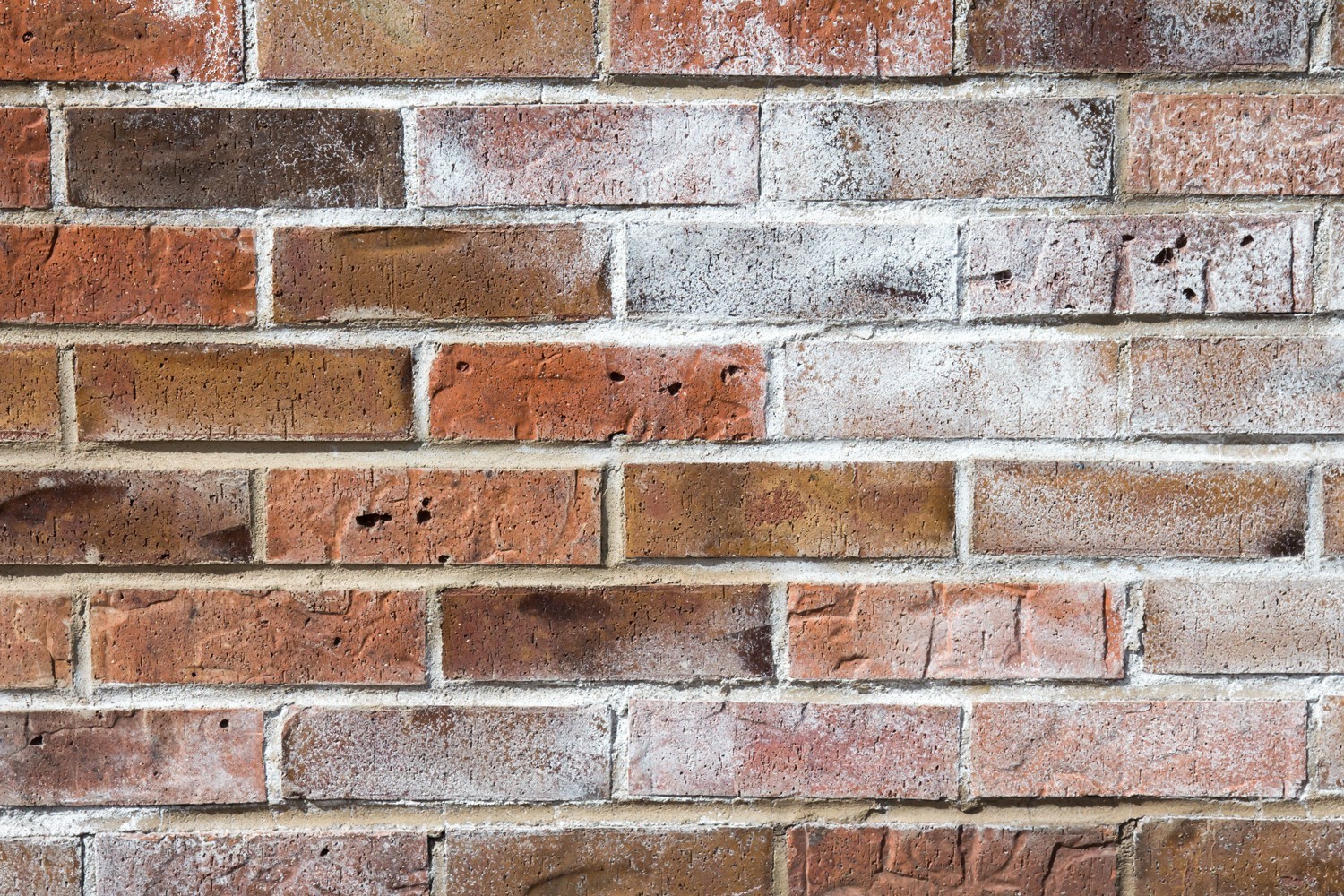
Efflorescence is the white, powdery, sometimes crystalline-looking residue that appears when moisture moves through brick or mortar and carries dissolved mineral salts to the surface. When the water evaporates, the salts are left behind.
How to tell it from ordinary dust
- Color: bright white or pale chalky patches, often in irregular blooms.
- Texture: powdery, sometimes slightly sparkly or crusty.
- Pattern: tends to show up after rain, high humidity, or a plumbing issue, then fade and reappear.
Efflorescence is usually more of a moisture signal than a “dirty wall” issue. In rentals, it can be mild and cosmetic, or it can be a hint that the wall is getting damp from outside, from a leaky window, or from an interior source like a pipe.
What to do when you see it
- Start dry: brush it off and vacuum it up.
- Reduce indoor humidity: run the bathroom fan , crack a window when cooking, consider a small dehumidifier in muggy seasons.
- Watch for clues: peeling paint nearby, musty smell, damp-feeling mortar, or worsening patches after storms.
What not to do: skip aggressive acidic cleaners and DIY “brick brightening” recipes. Yes, diluted acids are used in masonry cleaning in some situations, but indoors and in a rental they are high risk. Only go there if your landlord approves and a pro recommends the right product and dilution for your specific wall.
Gentle cleaning steps
Here is a simple routine that covers most rental brick situations, from “just dusty” to “there are handprints near the entry.”
Step 1: Protect the area
- Lay down an old sheet or drop cloth under the wall.
- Move bedding, curtains, and upholstered pieces a foot or two away if you can. Brick dust loves fabric.
Step 2: Dry brush
- Brush from top to bottom.
- Do corners and mortar lines gently, where dust likes to camp.
Step 3: HEPA vacuum
- Vacuum the wall lightly with a brush attachment.
- Vacuum the drop cloth area last to catch what fell.
Step 4: Spot clean (only where needed)
- Use plain water first.
- If water alone is not enough, try a tiny drop of clear, mild dish soap in a bowl of water and wring the cloth very well. Brightly colored soaps can stain highly porous, light-colored brick.
- Rinse by wiping once with a clean damp cloth, then dry-buff immediately.
If your cloth picks up strong red pigment, stop and stick to dry methods. Some brick faces shed color when wet, and you do not want streaking.
What not to use
If you want a quick way to turn “charming brick” into “why is the wall patchy,” it is usually one of these:
- Wire brushes or abrasive pads that scratch faces and crumble mortar.
- Magic erasers (they are micro-abrasive and can leave uneven spots) .
- Bleach (does not solve efflorescence and can discolor materials nearby).
- Vinegar or acid sprays (etching and mortar damage risk).
- Power washing indoors, which is… a choice, but not a good one.
Do you need to seal brick?
Sealing can reduce dust, but it is also a change to the surface that many leases treat as an alteration. It can deepen color, add sheen, and if there is any moisture issue behind the wall, some sealers (especially non-breathable film-formers) can trap moisture and make efflorescence or flaking worse. This is why I call it “sealing drama.”
In most rentals, you can get 80 percent of the benefits with consistent dry maintenance, a good vacuum routine, and smart furniture placement, without committing the wall to a forever finish.
Low-drama alternatives
- Place a slim console or closed storage along the wall where dust lands most, so you are wiping one surface instead of ten small objects.
- Use washable slipcovers on light upholstery near heavy-shedding brick.
- Add a breathable buffer like a large framed textile or art piece with a small gap off the wall, rather than leaning fabric directly onto brick.
When it is more than dust
Some brick problems are not styling problems. If you see any of the signs below, it is time to document and loop in your landlord or property manager.
Red flags
- Damp patches that feel cool or look darker than surrounding areas for days.
- Efflorescence that returns quickly after dry removal.
- Crumbly mortar that powders easily or falls out in chunks when you brush lightly.
- Musty odor near the wall, especially after rain.
- Flaking paint or bubbling plaster adjacent to the brick.
These can point to water intrusion or maintenance issues that a renter should not DIY.
A quick safety note for older buildings
If your brick is adjacent to older painted trim or walls and you suspect lead paint (common in pre-1978 buildings in the US), avoid aggressive dry brushing that could kick up contaminated dust. When in doubt, ask your landlord about testing and use a HEPA vacuum approach with minimal disturbance.
Brick near fireplaces
Decorative interior brick is one thing. Brick that is part of an active fireplace or chimney can collect soot and residue that does not behave like normal dust. If you are dealing with soot staining, stop before you start smearing it around and ask for landlord guidance or professional cleaning .
Landlord conversation starters
If your goal is to keep things cooperative, focus on moisture and maintenance, not aesthetics. Here are a few messages you can adapt.
For recurring efflorescence
“Hi [Name], I am noticing a white powdery residue appearing on the exposed brick wall, which I understand can indicate moisture moving through masonry. I have been removing it gently with dry brushing, but it keeps returning. Could we schedule a check for possible moisture sources (window seal, exterior wall, plumbing) and confirm the best maintenance approach for this unit?”
For crumbly mortar or heavy shedding
“Hi [Name], the exposed brick wall is shedding a noticeable amount of dust and some mortar grit. I am keeping it clean with gentle dry methods, but I am concerned about the wall condition. Could maintenance assess whether any tuckpointing or stabilization is needed?”
Before using any product
“Hi [Name], I would like to reduce dust from the exposed brick, but I do not want to apply any sealers or cleaners that might violate the lease or affect the masonry. Do you have an approved product or method for cleaning this wall?”
Pro tip: take a few clear photos in good light. A wide shot for location, and a close-up for texture. It speeds up decisions and protects you later.
A simple routine
My ideal rhythm for exposed brick in a rental is uncomplicated.
- Weekly: quick vacuum of the floor edge near the wall, especially behind sofas and beds.
- Monthly: light dry brush and vacuum of the brick surface.
- As needed: spot-clean fingerprints with a barely damp cloth and immediate dry buffing.
Done this way, exposed brick stays what it should be: warm texture, a little history, and that soft golden evening glow that makes even takeout nights feel intentional.