EKTORP Cover Care: Wash, Dry, and Reseat Without Pilling or Gaps

Clara Townsend
Clara Townsend is an interior stylist, vintage furniture enthusiast, and the creative voice behind Velvet Abode. With over a decade of experience transforming both cramped city apartments and sprawling fixer-uppers, she believes that a beautiful home is built on personal stories rather than massive budgets. When she isn't hunting for the perfect brass sconce at a local flea market, she can usually be found rearranging her living room for the third time this month.
EKTORP covers are one of my favorite real-life, truly machine-washable sofa upgrades. But if you’ve ever pulled a freshly cleaned cover from the laundry and thought, “Why does my couch suddenly look lumpy, loose, or weirdly smaller?” you’re not alone. The good news is that most “EKTORP fit problems” usually come down to laundry settings plus reseating order .
This guide walks you through the whole process, from label-reading to re-zipping, with a focus on two things: preventing pilling and avoiding gaps and sagging after laundering.
Before you wash: 6 minutes that save your fit
1) Read the care label like a recipe
EKTORP covers vary by fabric and production run, so the tag is your north star. You’re looking for:
- Wash temperature (cold or warm permitted)
- Tumble dry guidance (often low heat or no tumble)
- Bleach warnings (most covers don’t love bleach)
- Ironing allowance (helpful for crisp seams after air-drying)
If your label says cold wash and line dry, follow it. A “just this once” hot wash is a common way shrinkage happens, and shrinkage is how gaps begin.
2) Take quick photos of each piece on the sofa
I promise you’ll thank yourself. Snap your phone camera at:
- Each cushion’s zipper location
- How the skirt lines up at corners
- Where any Velcro tabs connect
- How the back cushions sit (some people flip the back cushions and then wonder why it looks off)
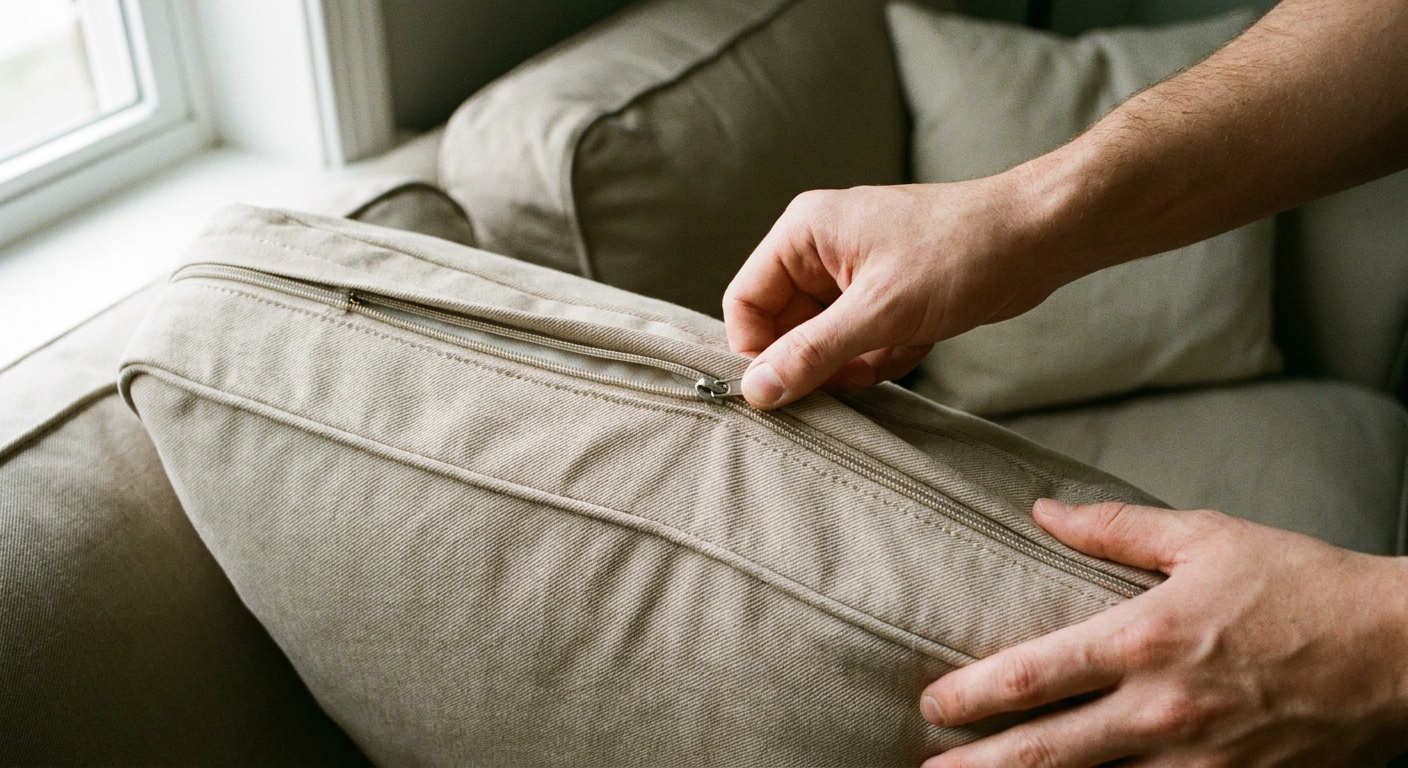
3) Zip everything closed before it goes in
Open zippers can snag and abrade fabric in the wash, which contributes to pilling and those little fuzzy halos along seams. Close zippers fully, and if a piece has ties, loosely tie them so they don’t whip around.
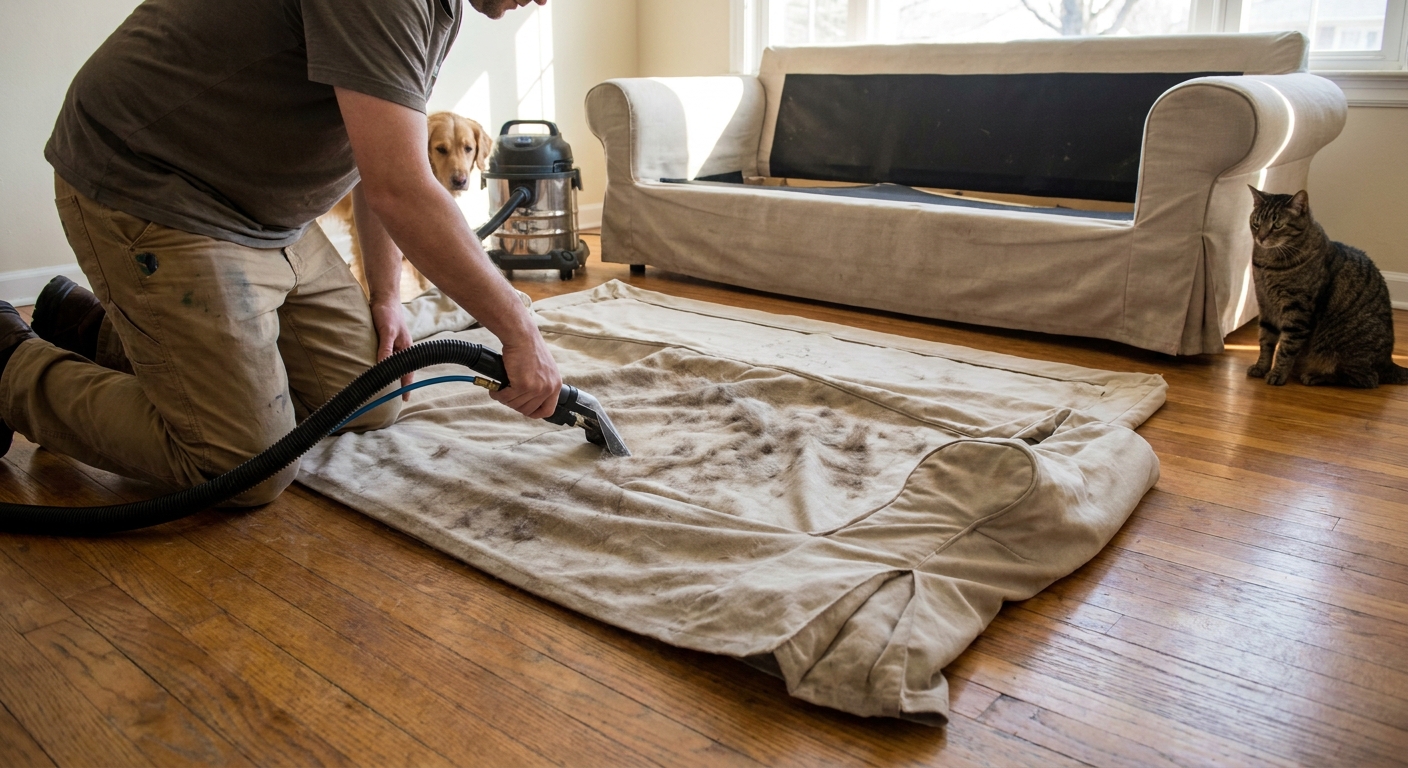
4) Shake out crumbs and pet hair first
Hair and grit act like sandpaper in motion. A quick vacuum or lint roll reduces friction, which is one of the quiet causes of pilling.
Washing rules that prevent pilling and fading
Choose gentle settings on purpose
If you want your cover to come out looking calm and smooth, treat it like a nice cotton shirt, not a load of towels.
- Water: cold (or the coldest temp allowed by the label)
- Cycle: gentle or delicate
- Spin: low to medium (high spin can crease and stress seams)
- Detergent: mild, liquid detergent in a small amount
- Add-ons: if you’re pilling-prone, consider skipping fabric softener. It can leave residue that holds onto lint, especially on textured cotton weaves
Wash covers alone or with other soft items
Don’t toss EKTORP covers in with jeans, hoodies, towels, or anything with zippers and hardware. Heavy items increase abrasion, and abrasion increases pilling. If you must combine loads, pair with other soft cottons and keep the drum from being overstuffed.
Turn pieces inside out when you can
For cushion covers especially, turning them inside out reduces wear on the visible exterior surface. It’s a small step that can make the fabric look newer for longer.
Spot-treat stains before washing, gently
For food or everyday smudges, pre-treat with a tiny amount of mild detergent diluted in water. Blot, don’t scrub. Scrubbing lifts fibers, which can show up later as fuzz.
Quick note on washer size
Some base pieces are bulky. If your machine is on the smaller side, it’s often better to split the load or use a larger-capacity washer so everything can move and rinse properly. Overloading makes cleaning less effective and can increase friction.
Drying: how to avoid the “why is this tight now?” moment
Aim for air-dry, then finish with a short fluff if needed
For most cotton EKTORP covers, the easiest way to preserve fit is air-drying. Heat is a common shrink culprit, and it can rough up some weaves over time. If your cover is a cotton blend, it may be a bit more forgiving, but the care label still wins.
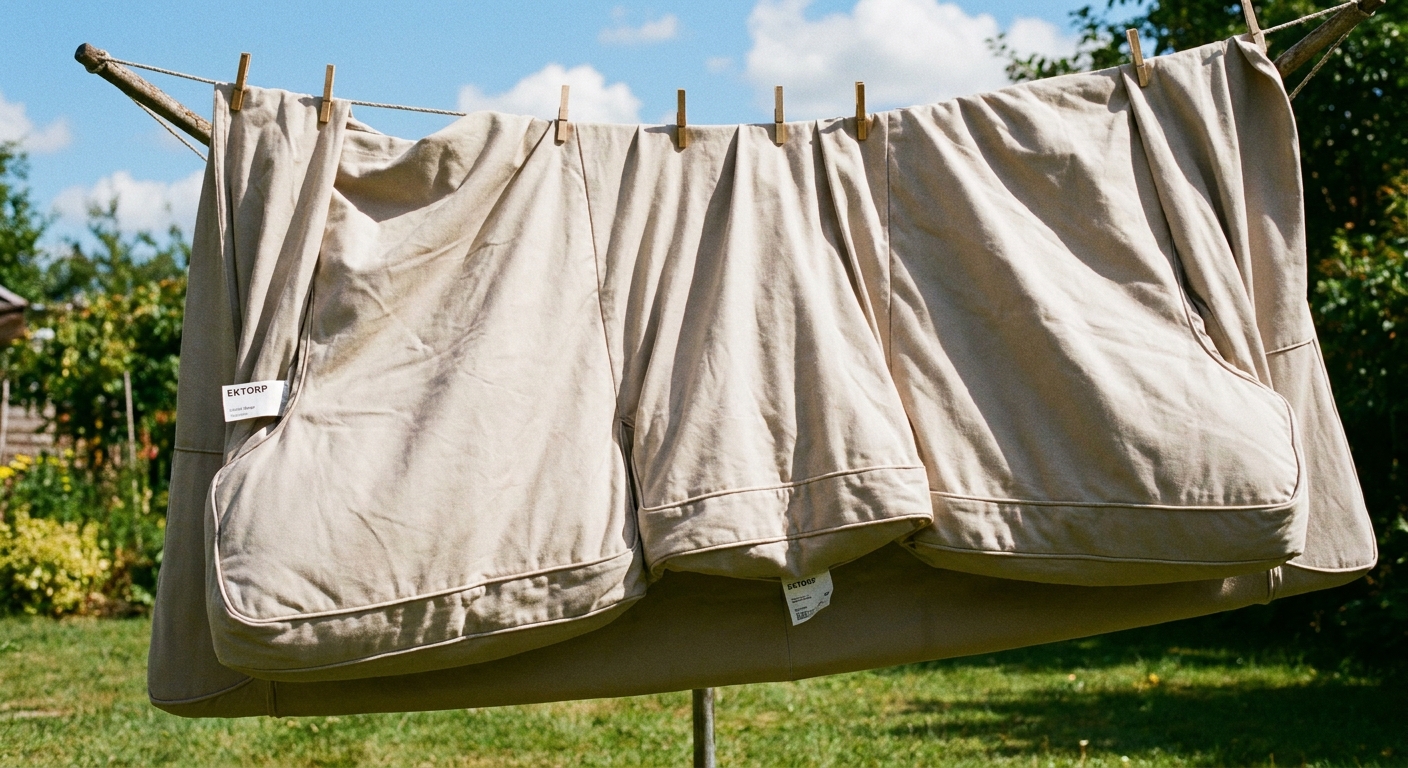
- Best: hang or lay flat to dry, out of direct harsh sun to reduce fading
- If you tumble: low heat only (if allowed), and pull pieces out while they’re still slightly damp
Reseat covers while they’re barely damp
This is my number-one trick, and it usually makes everything easier. A cover that’s about 95 percent dry has enough give to settle smoothly over cushions and frames. Put it on at this stage, then let it finish drying on the sofa for fewer wrinkles and less wrestling.
A quick caution: the first time you try this, watch for dye transfer. If you have a dark cover and light inserts or a light frame, do a simple colorfastness check first (dab an inconspicuous area with a damp white cloth). Also make sure you’ve got good airflow, and don’t leave covers damp for long, especially in humid homes.
Reseating EKTORP covers: the order that prevents gaps
Most loose-fit issues happen because covers get pulled down without the seams being aligned first. Think of it like making a bed with a fitted sheet: corners first, then tension.
Step 1: Start with the base cover and align seams
- Slip the main body cover over the frame.
- Find the center points (front center, back center) and line them up before you tug at corners.
- Work the cover down evenly on both sides so the skirt doesn’t drift.
Step 2: Secure any Velcro and corner anchors
EKTORP pieces often rely on little anchoring points. If you skip them, the cover can migrate and create those annoying side gaps that make the sofa look like it’s wearing its clothes crooked.
Step 3: Cushion covers next, in a consistent orientation
Here’s where people get tripped up. Seat and back cushions can look similar, but they don’t always behave the same once covered.
- Seat cushions: keep the zipper on the same side for all of them (I like the zipper at the back or underside). It creates a more uniform, tailored look.
- Back cushions: match the original orientation so the cushion fills the cover correctly. If one side is slightly fuller, make sure that fullness is placed the same way it was before washing.
Step 4: Get the cushion into the corners before zipping
Don’t zip while the cushion is still bunched at the opening. Instead:
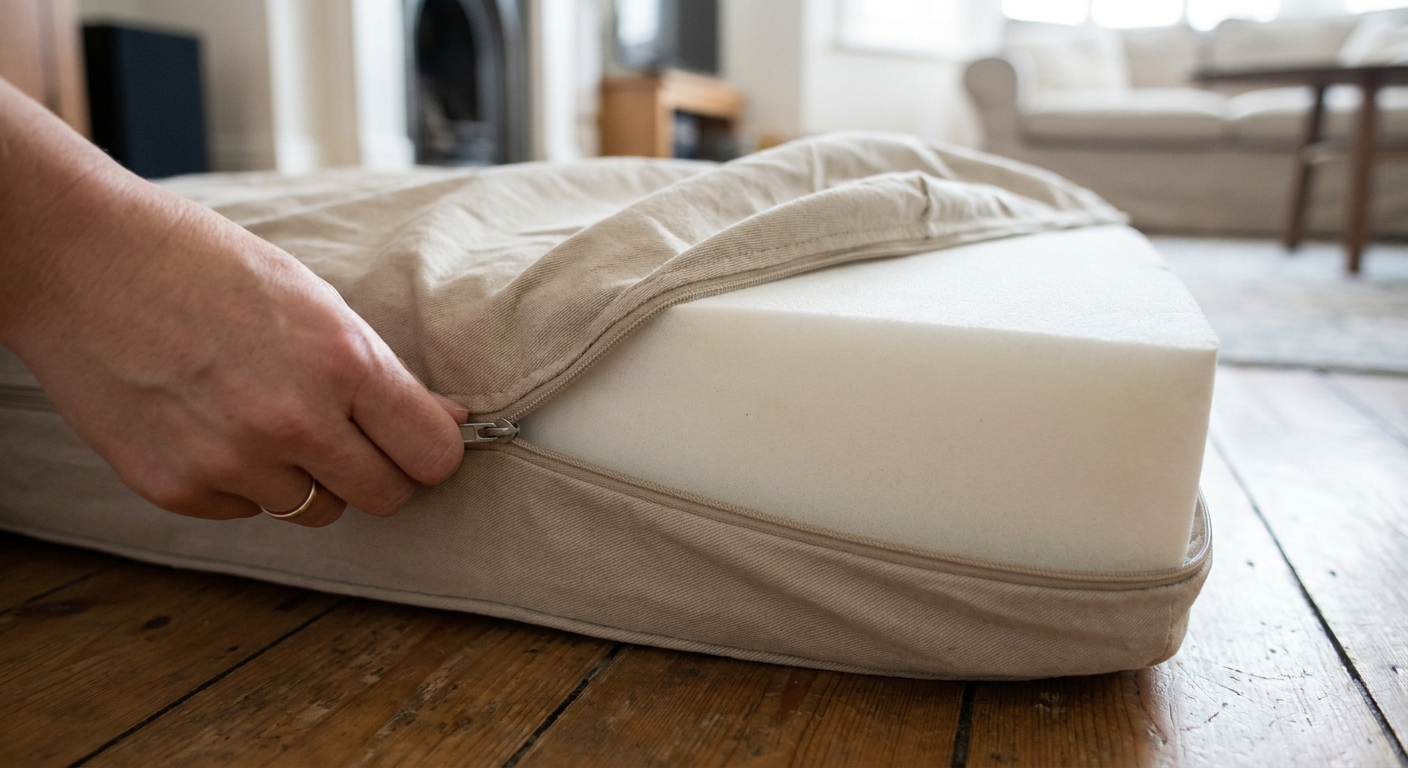
- Fold or taco the cushion gently and slide it in.
- Push the cushion into the far corners first.
- Run your hand along edges to seat the filling evenly.
- Then zip slowly, keeping the fabric flat so it doesn’t twist.
Step 5: Zip with a “center outward” mindset
If your cover has multiple zippers or panels, start by aligning the middle and then work outward so the fabric tension distributes evenly. In most cases, that’s how you avoid one side looking smooth while the other side looks like it gave up.
Quick fixes for loose fit after laundering
Fix 1: Steam and smooth, don’t stretch
If the cover looks baggy right after washing, it’s often just wrinkled and not settled. Light steaming helps the fibers relax. Smooth with your hands in the direction of the weave, then let it sit for a few hours.
Fix 2: Re-seat the cushion insert, especially corners
That empty-corner look is usually the insert not reaching the cover’s corner. Unzip halfway, push the filling into the corners, and zip again. I usually get the best results when the cover is slightly damp.
Fix 3: Add a thin liner to stop shifting
If your seat cushions slide around, try a thin grippy shelf liner between cushion and frame. It’s invisible, inexpensive, and it can make the whole sofa look more intentional.
Fix 4: If it feels tight, pause and rehydrate
If you accidentally overdried and the cover feels too snug, don’t force it aggressively. That can stress seams. Lightly mist the cover with water (especially along seams and corners), let it relax for 10 to 15 minutes, then try again.
Fix 5: Address pilling early
If you notice fuzz or tiny pills:
- Use a fabric shaver lightly, on a flat surface
- Avoid aggressive scraping tools
- Reduce friction in future washes by switching to gentle cycle and washing covers separately
How often to wash EKTORP covers
Think of this as a flexible starting point, not a rule:
- Every 2 to 4 months for a general refresh
- Monthly if you’ve got pets that lounge hard or allergies
- ASAP for spills, but spot-treat first when possible
Frequent washing isn’t automatically bad, but frequent high-friction washing is. Gentle cycles and lower heat are what keep the fabric looking soft, not tired.
Troubleshooting: common EKTORP cover problems
“My skirt is twisting and the seams don’t line up.”
Take the base cover off and reset it by finding the center points first. If you start by pulling down one corner, the whole piece can spiral slightly and the skirt follows.
“There are gaps at the sides of the seat cushions.”
Usually it’s cushion orientation or uneven stuffing distribution. Rotate the insert inside the cover so the fullest area fills the gap side, then re-zip with the cover smoothed.
“My cover feels rougher after washing.”
It’s often too much detergent, too much heat, or too much abrasion. Use less detergent, skip softener residue if it’s not helping, and air-dry when you can. A quick steam can restore a softer hand feel.
“The cover shrank.”
If it’s minor shrinkage, reseat it while lightly damp and let it dry on the sofa with good airflow. If it’s significant, you’re likely dealing with too much heat at some point. Going forward, cold wash and line dry (or tumble low only if the label allows it).
“I’m not sure my cover is the same EKTORP as yours.”
EKTORP comes in multiple pieces and versions (sofa, loveseat, chair, different fabrics, different years). Use this guide for the general method, but always follow the care label and the fit of your specific cover set.

A simple routine for a smooth, no-gap EKTORP
- Vacuum and zip covers closed before washing.
- Cold water, gentle cycle, mild detergent, and avoid heavy mixed loads.
- Air-dry when possible, or tumble low and remove slightly damp if the label allows.
- Reseat the base cover by aligning centers, then corners.
- Insert cushions fully into corners before zipping.
- Steam and smooth to finish, then let everything settle.
Once you’ve done it this way once, it becomes a rhythm. And the payoff is big: your EKTORP looks tailored, cozy, and lived-in in the best way, not like it just went twelve rounds with your washing machine.