Dryer Running but Not Heating: Renter-Safe Checks

Clara Townsend
Clara Townsend is an interior stylist, vintage furniture enthusiast, and the creative voice behind Velvet Abode. With over a decade of experience transforming both cramped city apartments and sprawling fixer-uppers, she believes that a beautiful home is built on personal stories rather than massive budgets. When she isn't hunting for the perfect brass sconce at a local flea market, she can usually be found rearranging her living room for the third time this month.
There are few things more annoying than a dryer that spins confidently and still leaves you with a basket of damp jeans that feel like they have given up on you. The good news is that many “no heat” or “still damp” problems are caused by airflow, overload, or a simple power issue you can spot without tools, without opening walls, and without risking your security deposit.
This guide is strictly about drying performance and heat. If your dryer smells musty, that is usually a separate cleaning track (lint, moisture, and residue buildup) and deserves its own plan.
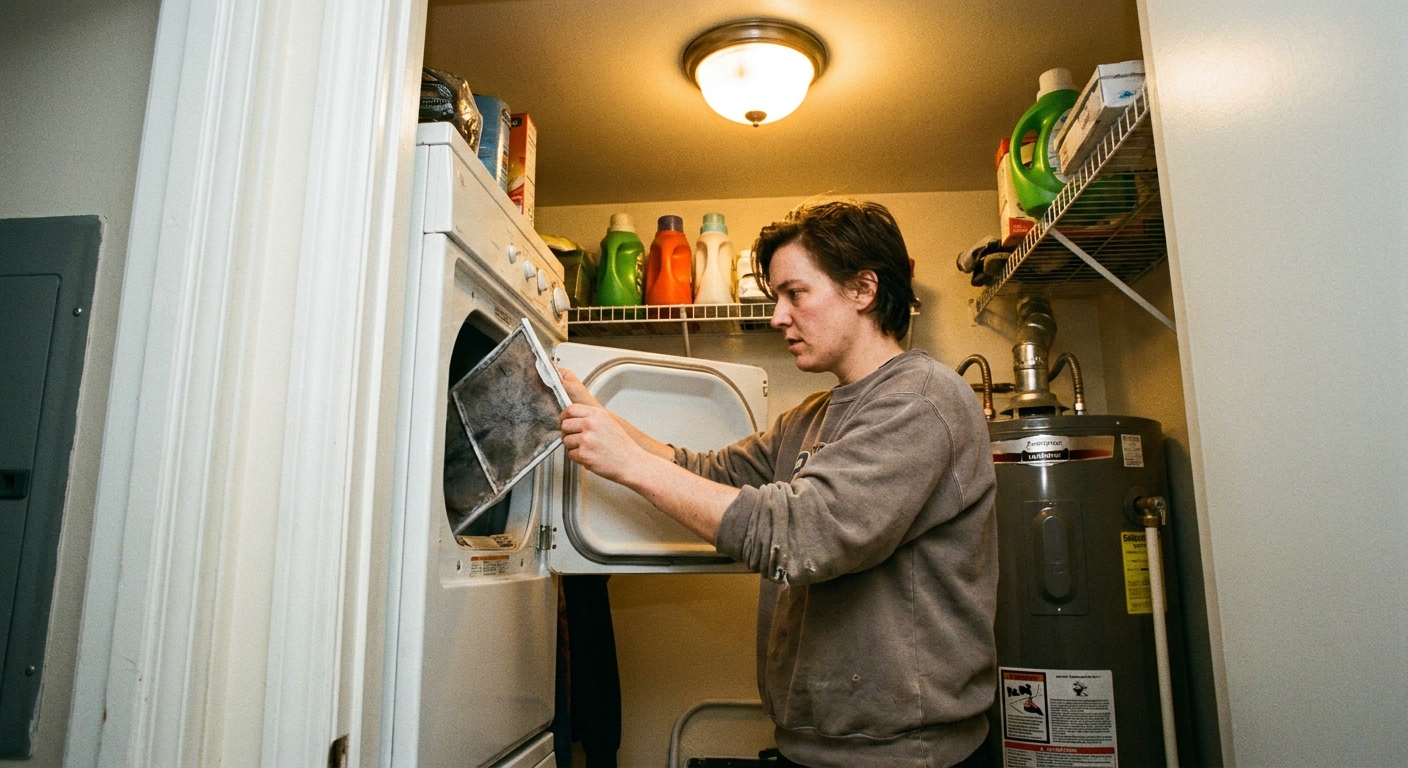
Before you start: safety and renter rules
- Unplug before you reach inside the lint housing or move the dryer.
- Do not remove panels or attempt internal electrical checks. That is maintenance territory.
- Gas smell or burning smell is an immediate stop. Turn the unit off, ventilate the area, and contact your landlord or your gas utility emergency line.
- If you have a shared laundry room, label your items and take photos of any obvious vent damage before reporting it.
Know your symptom
These look similar from the outside, but they point to different culprits.
- No heat: The dryer tumbles, but the air inside never feels warm. Clothes come out cool and damp even after a full cycle.
- Not drying well: The dryer gets warm, but clothes take two or three cycles, or they are dry in some spots and wet in others. This is very often airflow, load size, or a crushed vent hose.
If you are not sure, run the dryer empty on a timed high heat setting for 5 minutes, then open the door. You should feel a clear wave of warm air.
Check 1: Lint screen (and wash it sometimes)
Yes, you have heard this. And yes, it still solves a shocking number of “my dryer hates me” moments. A lint screen that looks clean can still be coated with dryer sheet residue that blocks airflow like a waxy film.
What to do
- Remove the lint screen and peel off the fuzzy layer.
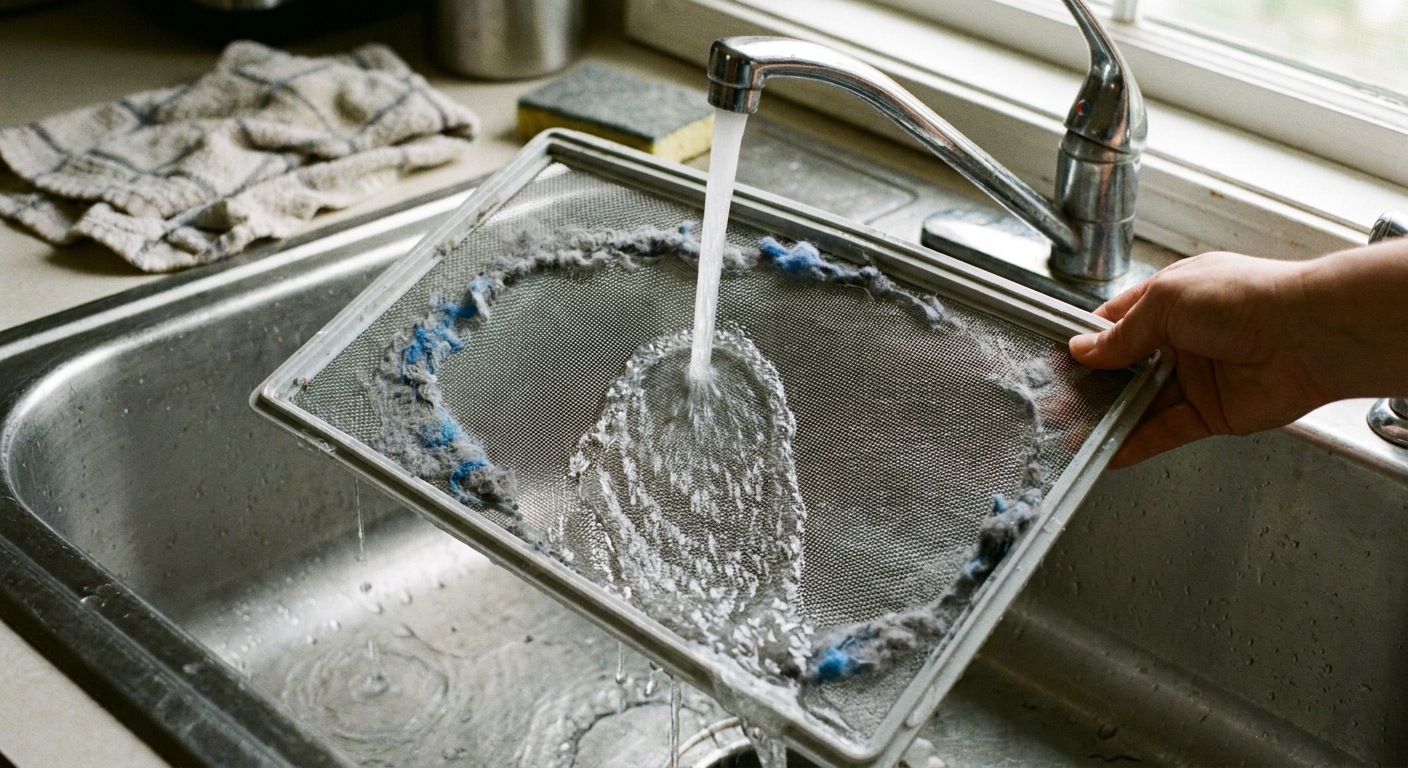
- Wash the screen under warm water with a drop of dish soap. Use a soft brush or your fingers to gently scrub.
- Rinse well and let it dry fully before reinserting.
Quick clue
Hold the screen under running water. If water pools instead of flowing through, it is residue-coated and needs washing.
Check 2: Clean the lint housing
Even if you clean the screen, lint can pack into the slot it slides into. That buildup can choke airflow and trigger overheating safety cutoffs, which can lead to no heat.
Renter-safe method
- Unplug the dryer.
- Use a flashlight to look down into the lint slot.
- Vacuum carefully with a hose attachment, or use a flexible lint brush designed for dryer vents.
- Wipe the top lip where lint tends to cling.
If you pull out a surprising amount of lint, you are not alone.
Check 3: Vent hose behind the dryer
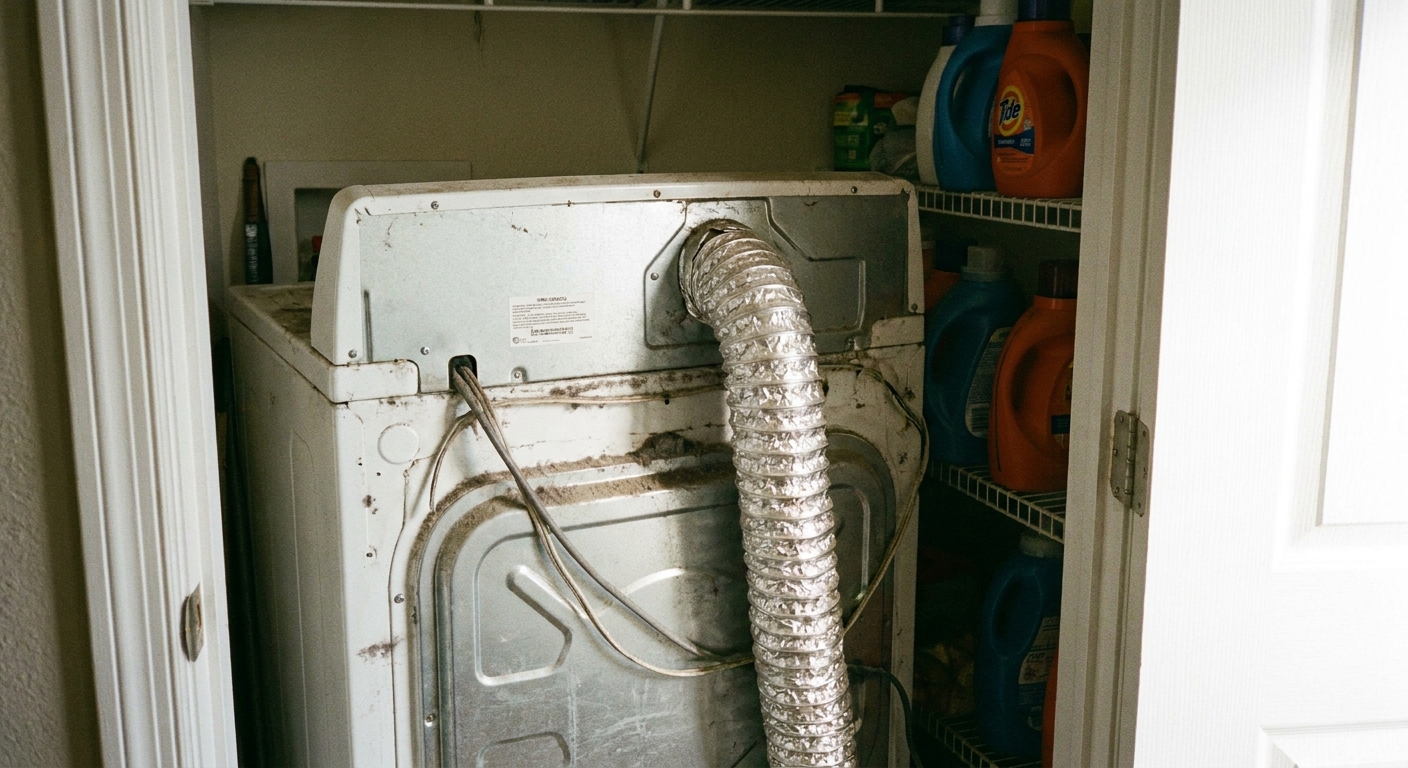
In apartments, dryers are often pushed tight into closets, which can crush the vent hose into a sad accordion. That one bend can turn a normal cycle into a damp marathon.
What to look for
- Kinks, crushing, or sharp bends right behind the dryer.
- Loose connections where the hose meets the dryer or wall vent.
- Foil vent hose that is torn or sagging heavily.
What you can do without tools
- Gently pull the dryer forward a few inches (ask a friend if it is stacked or heavy).
- Straighten the hose so it has a smooth curve, not a hard elbow.
- If the hose has slipped off, you can usually reseat it by hand. If a clamp is missing or broken, that is a maintenance request.
Check 4: Simple airflow test
Your dryer needs two things to dry clothes: heat and airflow. Even with decent heat, poor venting leaves humid air trapped in the drum, and your clothes just steam instead of dry.
Airflow test options
- Outside vent hood test (best if you can access it safely): With the dryer running on high heat, go to the exterior vent. You should feel a steady, warm breeze. A weak puff or no flow suggests a clogged vent line or a crushed hose. Safety note: do not block the vent, and do not attempt risky access (ladders, roof vents). If it is not easy to reach, skip this and call maintenance.
- Wall connection test (shared laundry rooms): If there is an accessible vent hood or vent outlet on the wall behind the dryer, you should feel strong airflow there too.
- Humidity clue: If the laundry closet feels like a tropical greenhouse after a cycle, airflow is likely restricted.
Renter note: If airflow is weak at the exterior vent, that is almost always a landlord or building maintenance issue, because the vent run may be clogged deeper in the wall or ceiling.
Check 5: Load and fabric mix
Dryers are like little weather systems. Pack them too full and the air cannot circulate. And one bulky item can ball up and trap moisture like a wet burrito.
Quick fixes that actually help
- Do not pack the drum. A good rule: the drum should be no more than about two-thirds full when dry clothes go in.
- Separate heavy and light fabrics. Towels and jeans together can mean towels stay damp while jeans hog the heat.
- Watch bulky items (comforters, blankets, thick bath mats). If one item is twisting into a lump, add a few smaller items to help balance it, or dry it alone and pause once to shake it out.
- Untangle sheets. A fitted sheet can create a “pocket” that traps wet clothes inside. Toss in dryer balls to help keep things moving.
- Use timed dry for troubleshooting. Sensor cycles can end early if the sensor bars are coated or if one item dries faster and fools the machine.

Check 6: Settings that sabotage drying
Sometimes the dryer is fine, but the cycle choice is whispering “gentle” when you need “actually dry.”
- Air Fluff / No Heat: Sounds obvious, but it gets bumped accidentally.
- Eco or Low Heat: Great for delicates, not for thick cotton.
- Auto or Sensor Dry: Helpful when it works, frustrating when it does not. For testing, choose Timed Dry + High Heat.
If you are using dryer sheets, consider switching to wool dryer balls for a week while troubleshooting. Sheets can leave residue that affects airflow and moisture sensors.
Check 7: Moisture sensor bars
If your dryer gets hot but the cycle ends early (or acts confused), the moisture sensors may be reading wrong. Many dryers have two metal sensor bars inside the drum, usually near the lint screen area.
Renter-safe fix
- Unplug the dryer.
- Find the two metal sensor bars inside the drum.
- Wipe them with a soft cloth lightly dampened with rubbing alcohol or white vinegar, then dry them.
This is a small step, but it can make sensor cycles behave again.
Check 8: Power clues (electric dryers)
This is the one that feels magical when you catch it: many electric dryers can still tumble even if they are missing part of the 240V supply needed for heat. In plain English, the motor and controls may run on power from one “hot leg,” while the heating element needs the full 240V.
What you can check safely
- Breaker panel: Look for a tripped dryer breaker. Often it is a double breaker with two linked switches. If one side trips, you can lose heat. Flip it fully off, then back on.
- Outlet and plug: If the plug looks loose, scorched, or the outlet cover feels hot, stop and report it.
If it trips again soon after resetting, do not keep trying. That is a sign to call maintenance.
Gas dryer note
Gas models still use electricity for the motor, but heat problems can involve the gas supply or ignition system, which is not renter DIY. If you can clearly see the gas shutoff valve and it looks like it was turned off, do not adjust it unless your lease and landlord explicitly allow it. Instead, report: “Dryer tumbles, no heat, please confirm gas supply and ignition.”
Thermal fuse and high-limit cutoff
If your dryer suddenly stopped heating after a period of long dry times, restricted airflow is often the lead suspect. Many dryers have safety devices (like a thermal fuse or high-limit thermostat) that can cut heat when the unit overheats.
Clues you can observe
- Dryer tumbles but never warms, even on high heat.
- You noticed longer and longer dry times leading up to the failure.
- The laundry area feels extra hot during use, or the dryer cabinet feels unusually warm.
Because replacing fuses or thermostats requires opening the dryer, this is a maintenance call. Your best renter contribution is documenting the airflow issue and cleaning the lint screen and housing first.
When to stop and call maintenance
I love a clever home fix as much as anyone, but dryers are not the place to improvise. Contact your landlord or building maintenance if any of these are true:
- The dryer has no heat after you cleaned the lint screen and housing and confirmed settings.
- You have weak airflow at the exterior vent or the wall vent (if accessible) and you cannot correct it by straightening the hose.
- The breaker keeps tripping.
- You smell burning, see scorching, or the outlet is warm.
- The vent hose is torn, disconnected, or cannot be secured without a clamp or parts.
Helpful script for your request: “Dryer tumbles but clothes stay damp. Lint screen and lint housing cleaned. Vent hose checked and not kinked. Airflow at exterior vent is weak (or normal). Requesting vent cleaning and dryer heat diagnostic.”
Fast recap: renter-safe checklist
- Clean and wash the lint screen (remove residue).
- Vacuum the lint housing slot (unplug first).
- Straighten the vent hose and check for crushing or disconnections.
- Test airflow at the wall or exterior vent (only if safely accessible).
- Reduce load size, separate heavy fabrics, and watch bulky items for balling up.
- Use Timed Dry + High Heat to rule out sensor confusion.
- Wipe moisture sensor bars (unplug first).
- Check the breaker (electric dryers especially).
- Call maintenance for repeated trips, weak building venting, or suspected thermal fuse issues.
If you want, tell me your dryer type (gas or electric), whether it gets warm at all, and what your vent access looks like (laundry closet, stacked unit, shared room). I can help you narrow down which check is most likely to solve it first.