Dog Urine on a Fabric Couch

Clara Townsend
Clara Townsend is an interior stylist, vintage furniture enthusiast, and the creative voice behind Velvet Abode. With over a decade of experience transforming both cramped city apartments and sprawling fixer-uppers, she believes that a beautiful home is built on personal stories rather than massive budgets. When she isn't hunting for the perfect brass sconce at a local flea market, she can usually be found rearranging her living room for the third time this month.
Dog accidents on a fabric couch are uniquely sneaky. They can look like a small spot on the surface, but underneath, urine can travel fast through upholstery and settle into the cushion foam. That is when you get the classic lingering smell that pops back up on humid days or whenever you sit down and warm the cushion.
This is a foam-safe, fabric-friendly workflow to handle odor, bacteria, and that stubborn “why does it still smell?” problem. I will also call out the little differences that matter in a rental or when your cushions are not removable.
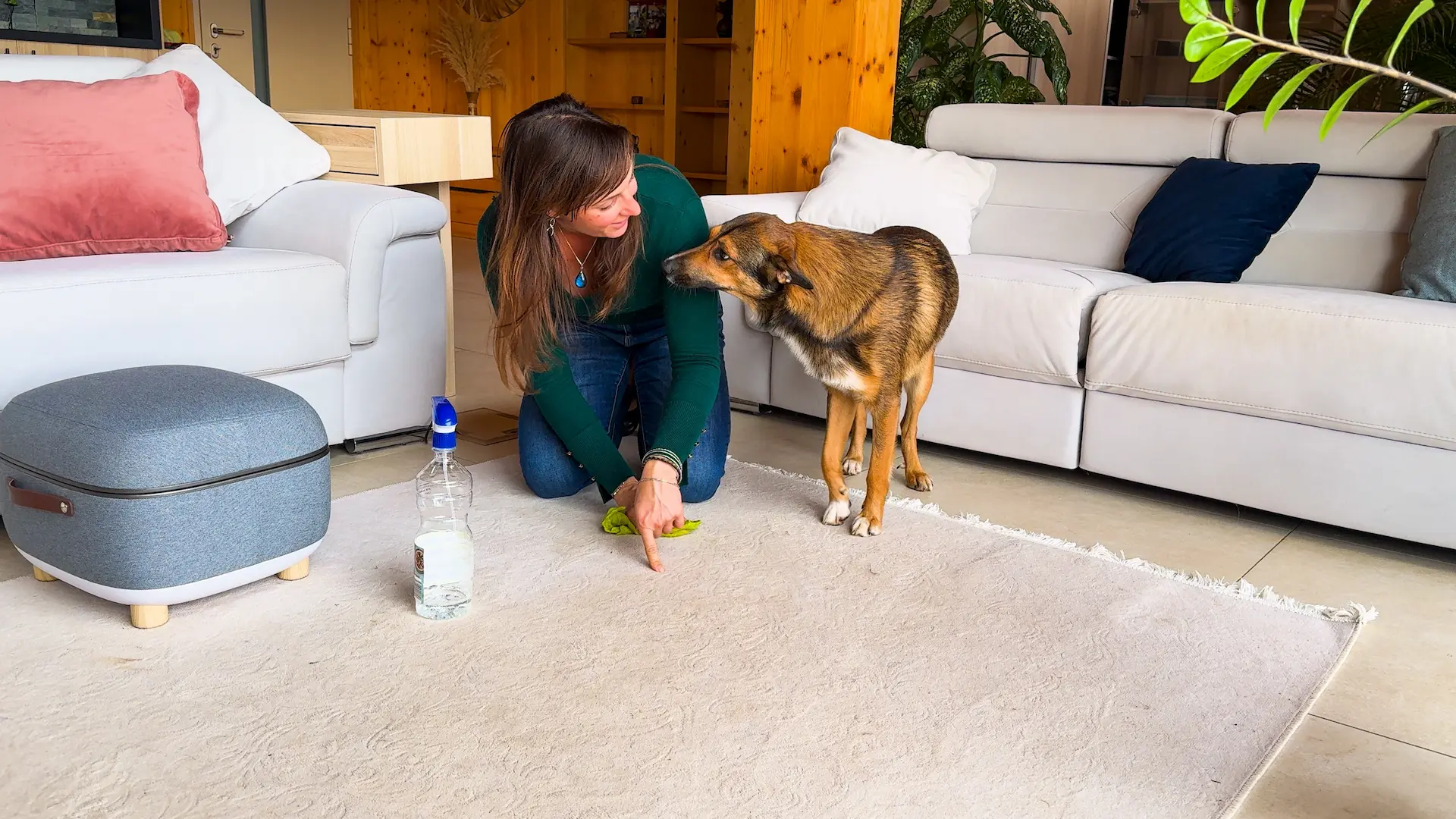
Check the care tag first
Before you put any liquid on your couch, find the upholstery care tag. It is usually under a seat cushion or under the couch. Those codes matter more than any internet advice.
- W: Water-based cleaners are generally OK.
- WS or SW: Water-based or solvent-based cleaners are generally OK.
- S: Solvent-only. Water can cause rings, texture change, shrinkage, or dye issues.
- X: Vacuum only. No water, no solvent. This is a “call a pro” situation.
If your tag says S or X, skip the water and water-based enzyme steps below and consider professional upholstery cleaning. If your tag is missing or unreadable, treat it like a cautious S until you can confirm.
Dog urine vs other pet messes
If you have ever followed cat urine advice and felt like it did not quite land for a dog accident, you are not imagining it. Cat urine tends to be more concentrated and can be more pungent, while dog urine often shows up as a larger volume that wicks farther into cushions and foam. The result is often less “sharp” at first and more “ammonia room” later, especially if it was partially cleaned or dried in place.
What the smell is telling you
- Ammonia smell usually means urine residues remain and are reactivating with moisture and warmth.
- Sour or musty smell can happen when the cushion stayed damp long enough for bacteria and mildew to join the party.
- “I only smell it sometimes” is common when urine reached foam or the couch base, then re-releases odor with humidity.
First, find out how deep it went
Before you reach for a dozen products, do a quick saturation check. This helps you choose the right intensity of cleaning and prevents wasting enzyme cleaner on the surface when the real issue is in the foam.
Saturation testing
- Blot test: Press clean white paper towels firmly on the spot for 10 to 15 seconds. If the towel comes up damp or yellowed, urine is still present.
- Cold water test (W or WS only): Lightly mist plain cold water onto the spot, then blot. If odor intensifies, you are re-wetting residues that need deeper treatment.
- Cushion flip: If the cushion is reversible, check the underside and seams. Urine loves edges, piping, and zipper areas.
- Base check: If liquid went through the cushion, sniff and blot the couch deck (the flat upholstered platform under the cushion). That area often gets missed.
If you can remove the cushion cover, unzip it and check the foam. If the foam is damp or stained, surface-only cleaning will almost never fully solve odor.
What to do immediately
Speed matters, but technique matters more. Rubbing spreads urine into the weave and drives it deeper into foam. Think: press, lift, repeat.
Step 1: Blot, do not scrub
- Use paper towels or clean white cotton towels.
- Stand or press firmly with both hands to pull liquid up.
- Repeat with fresh towels until you get minimal moisture transfer.
Step 2: Extract if the cushion is damp
If the cushion feels heavy or damp, you need extraction. The simplest at-home option is a wet/dry vacuum rated for liquids on suction only, or a portable upholstery extractor if you have one. Follow the manufacturer instructions. The goal is to remove as much liquid as possible before applying cleaner, so you are not diluting and spreading what is already there.
Step 3: Use cold water, not hot
Skip steamers and hot water right now. Heat can set some stains and can make odor issues harder to remove on some upholstery blends. If your care label conflicts with this advice, the care label wins.
The quick workflow
If you like a simple map before you start, here it is:
- Blot
- Extract (if damp)
- Enzyme (correct depth)
- Dwell (do not rush this part)
- Blot and extract again
- Dry aggressively
Foam-safe cleaning
To remove the smell, you have to remove or break down the urine residues. That is where enzyme cleaners shine. They are designed to digest the organic material that causes odor. (Again, this section assumes your couch code allows water-based products, usually W or WS.)
Choose the right product
- Enzyme cleaner (pet urine specific): Best for odor removal. Look for wording like “enzymatic” and “urine odor.”
- Oxygen-based stain remover: Helpful for discoloration, but it does not always solve odor on its own.
- Disinfectants: Use with caution. Many are not meant for porous foam and can create their own smell problems. They also do not replace enzymes for odor removal.
Important: Do not mix cleaning products unless the label specifically says it is compatible. Oxidizers (like bleach and many peroxide-based products), plus very high or very low pH cleaners, can reduce enzymatic activity. Also, bleach can react with ammonia in urine and release toxic chloramine gases, so bleach is a hard no for urine messes.
The enzyme workflow
- Spot test first: In a hidden area, apply your enzyme cleaner, wait the label-recommended time, then blot. Check for color change, texture change, or a ring.
- Prevent rings: When your fabric is prone to water marks, work from the outside edge toward the center and feather the damp area outward. On some W and WS fabrics, lightly and evenly dampening a slightly larger area can help prevent tide lines. The goal is evenness, not soaking.
- Saturate to the depth of the urine: If urine reached foam, the enzyme needs to reach foam. A light surface mist will not cut it. A practical rule: apply until the area feels evenly damp through the cover, but not dripping or pooling. If you are treating foam directly, you are aiming to match the original spill depth, not drown the cushion.
- Give it dwell time: Follow the bottle. Many need 10 to 15 minutes minimum, and some work best when kept slightly damp longer.
- Blot and extract: Press and lift repeatedly. If you have a wet vac or extractor, suction after blotting.
- Repeat cycles: Plan on 2 to 4 rounds for foam involvement. Each cycle removes more residue.
If odor improves but is still there, that is often a sign you are on the right track but not finished. One heroic cleaning session is nice in theory. In reality, couches sometimes need a second day of treatment once the first round dries and reveals what remains.
Drying is not optional
Even a perfect cleaner can fail if the cushion stays damp. Moisture lets bacteria linger and can trap smell inside foam. Drying is what “locks in” your progress.
Mildew note: If cushions stay wet longer than about 24 to 48 hours, the risk of mildew goes up fast. If you cannot get it drying quickly, or it already smells musty, it may be time to bring in professional help.
Best drying setup
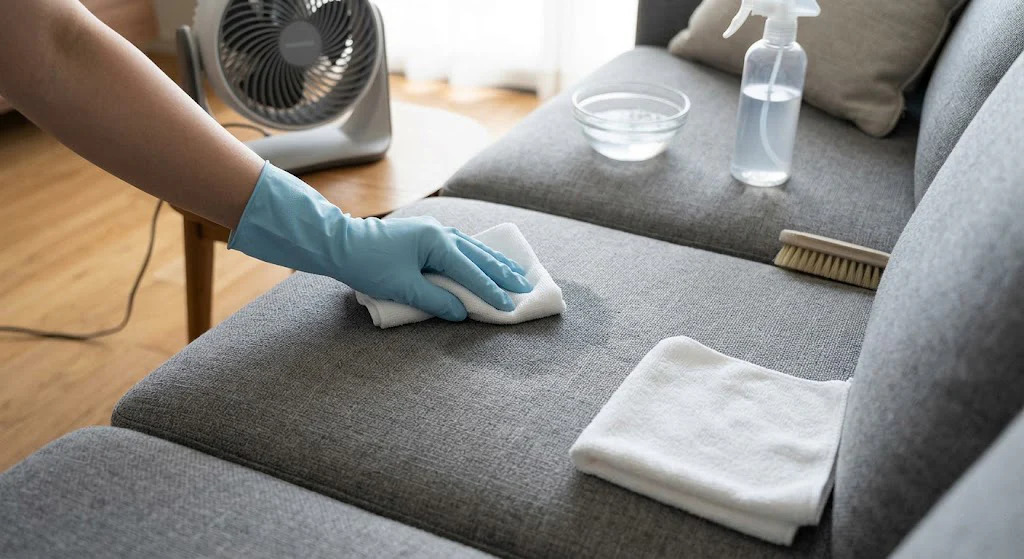
- Airflow: Aim a fan directly at the cleaned area for several hours.
- Dehumidifier: If you have one, run it in the room. It makes a shocking difference.
- Elevate the cushion: Stand cushions on edge so air can reach both sides.
- Sunlight, carefully: Indirect sun is helpful. Harsh direct sun can fade certain fabrics.
A good rule is: it should feel dry to the touch, then keep drying for a few more hours. Foam can feel dry on the surface while still holding moisture inside.
If it still smells after drying
This usually means one of three things: the urine traveled farther than you treated, it reached the couch base, or it dried before it was fully removed.
Track the true area
- Follow the seams: Liquid wicks along stitching and piping.
- Check the underside: If cushions are removable, inspect the platform beneath them.
- Sniff test in sections: Yes, it is not glamorous, but it is effective. Work in a grid.
When to use baking soda
Baking soda can help with surface odor after enzyme treatment and drying. Use it as a finishing step, not as the main solution.
- Lightly sprinkle on dry upholstery.
- Let sit 8 to 12 hours.
- Vacuum thoroughly with an upholstery attachment.
Do not apply baking soda onto damp cushions. It can clump, embed in fibers, and trap moisture.
Rental-friendly workflow
If you rent, you are often balancing speed, deposit anxiety, and not wanting to do anything that risks water damage. Here is the cleanest approach.
What changes in a rental
- Move fast: Treat the same day to avoid odor setting and possible frame involvement.
- Keep moisture controlled: Use extraction and fans so you are not soaking the couch structure.
- Document the process: If the couch is furnished by the landlord, take photos before and after, plus product labels used.
If cushions cannot be removed
When you cannot unzip or remove anything, focus on blotting and extraction. Apply enzyme cleaner in small amounts but enough to reach the likely depth, then extract again. More passes with less liquid is safer than one huge soak.
If odor persists and the couch is a landlord-provided item, it may be worth asking for professional upholstery cleaning. It is often cheaper than replacement and the pros have stronger extraction tools.
Special cases
Old or repeatedly hit spots
When a dog returns to the same area, odor has often penetrated foam and sometimes the wooden frame. Plan for multiple enzyme rounds and consider treating the platform beneath the cushion too.
Down blend and fiber-filled cushions
These can be trickier than solid foam because urine can spread through the fill. Extraction is your best friend here. Enzyme cleaner still helps, but drying time may be longer.
Foam that will not release odor
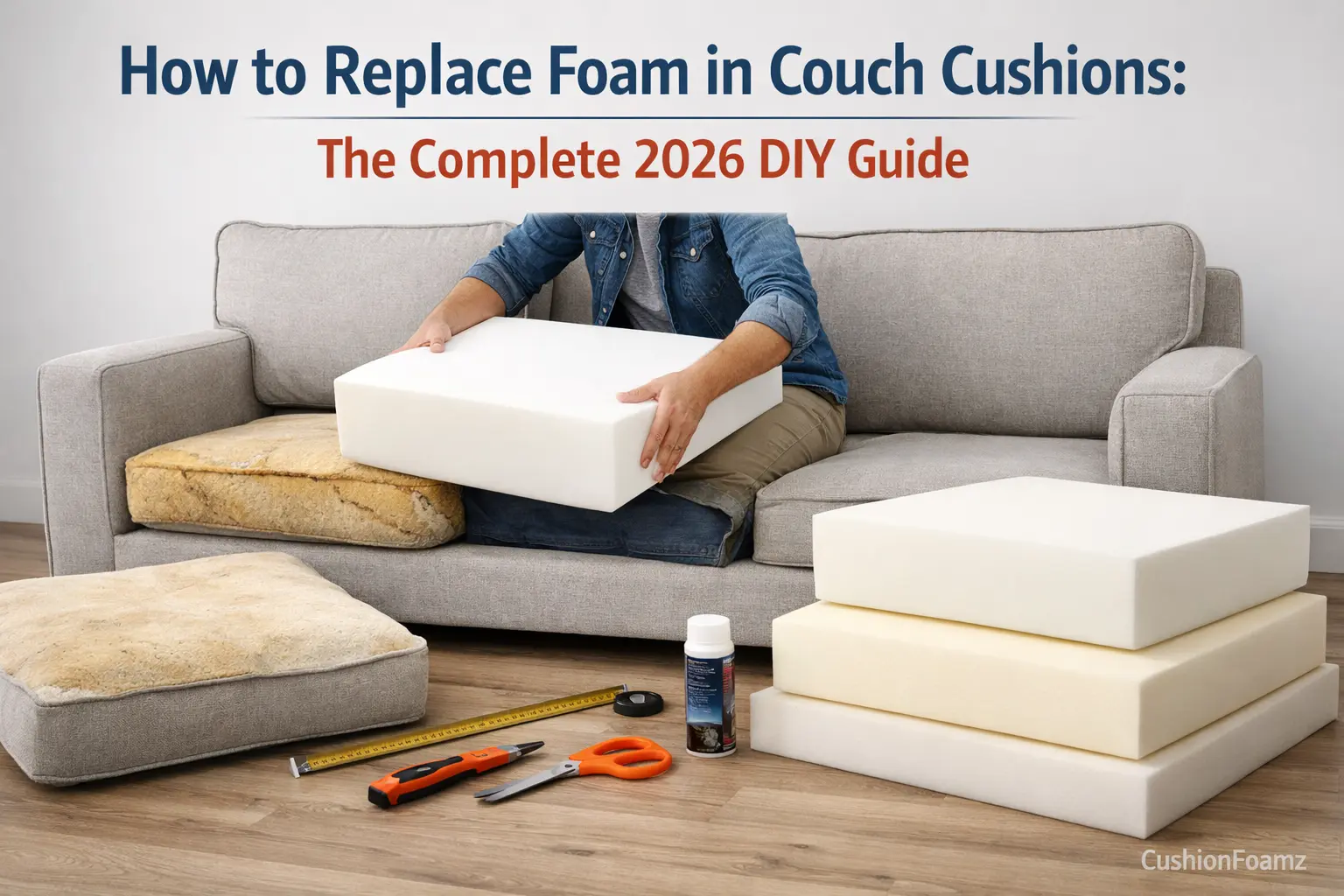
If the foam insert is deeply saturated and repeatedly re-odors after proper enzyme treatment and drying, replacement foam can be the most practical fix. It sounds drastic, but it is often less expensive than living with the smell or replacing the whole couch.
What not to do
- Do not ignore the care tag. If it says S or X, water-based cleaning can permanently damage upholstery.
- Do not steam clean fresh urine. Heat can set some stains and worsen odor issues.
- Do not flood the cushion “to rinse.” Over-wetting pushes urine deeper and increases drying time.
- Do not use bleach. It can damage fabric and can react with ammonia in urine to release toxic chloramine gases.
- Do not perfume the problem. Air fresheners can temporarily mask odor while bacteria and residues remain.
Quick checklist
- Check tag: W, WS, S, X
- Blot firmly, no rubbing
- Extract if the cushion feels damp or heavy
- Confirm depth with a saturation check
- Apply enzyme cleaner deep enough, allow full dwell time
- Blot and extract again
- Repeat 2 to 4 cycles if foam is involved
- Dry aggressively with fan and, ideally, a dehumidifier
- After fully dry, use baking soda only if needed
If you are unsure, note your care tag code, whether cushions unzip, and whether the smell is strongest on the cushion or the base. Those details decide the safest next step.