Dishwasher Door Won’t Latch or Pops Open Mid-Cycle

Clara Townsend
Clara Townsend is an interior stylist, vintage furniture enthusiast, and the creative voice behind Velvet Abode. With over a decade of experience transforming both cramped city apartments and sprawling fixer-uppers, she believes that a beautiful home is built on personal stories rather than massive budgets. When she isn't hunting for the perfect brass sconce at a local flea market, she can usually be found rearranging her living room for the third time this month.
There are few household sounds as stressful as a dishwasher clicking shut, starting to run, and then popping open like it changed its mind. The good news: “won’t latch” or “pops open mid-cycle” problems often come down to alignment, obstructions, or a tired seal, and you can check the easiest, cheapest culprits first with a flashlight and a little patience.
I am going to walk you through renter-safe checks (no drilling, no irreversible tweaks), starting with the simplest stuff that causes the most dramatic frustration.
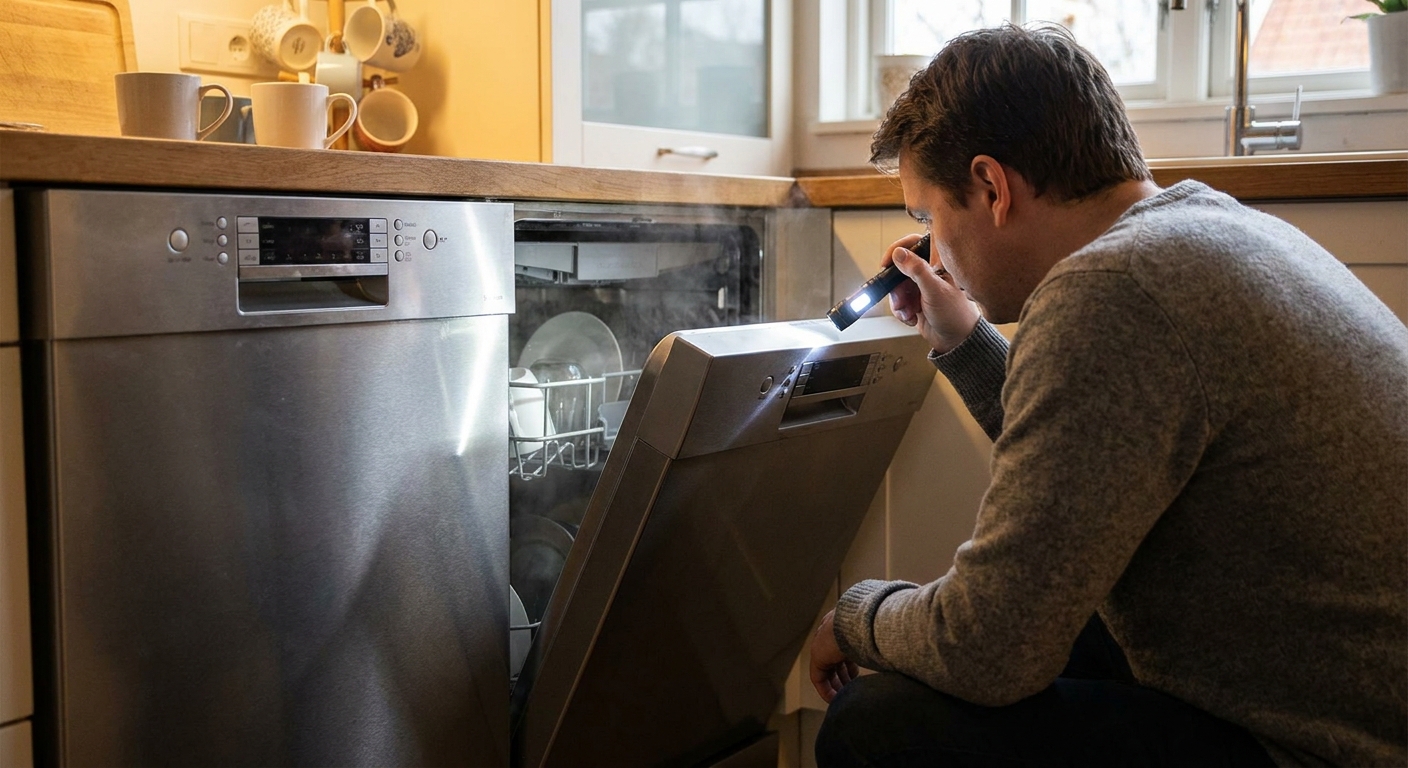
Before you start: a quick safety reset
- Pause the cycle and let any hot steam clear before you lean in close.
- If it popped open mid-cycle, press Cancel/Drain (or Start/Cancel) and wait until spraying stops before you try to re-latch. This helps prevent water on the floor.
- For quick visual checks (racks, gasket, obvious obstructions), you usually do not need to cut power.
- Turn off power at the dishwasher switch (if you have one) or the breaker if you will be touching the latch assembly repeatedly, removing panels, or you see damaged wiring or plastic.
- Remove heavy items from the door if you store detergent pods or a dish towel on the handle. Extra pull can make a borderline latch act up.
Cheapest checks first (in the order I would do them)
1) Make sure the racks are not blocking the door
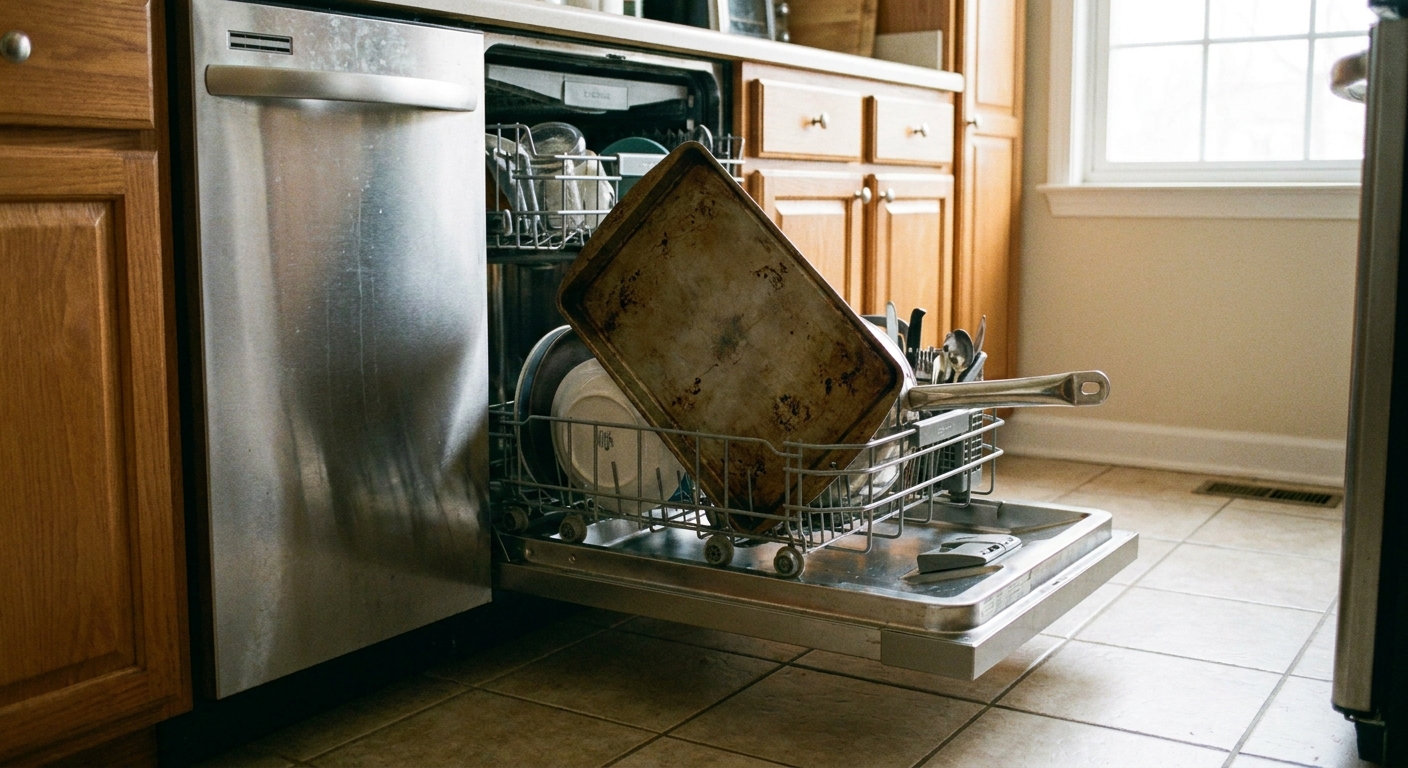
This is a very common “it was fine yesterday” reason a door will not close. One tall pan, a cutting board, or a long utensil can quietly push the rack forward or bump the door as it closes.
- Pull out the bottom rack and look for handles, sheet pans, or plates that stick out past the front edge.
- Check the upper rack for tall glasses or water bottles that can hit the top of the tub when the rack slides in, leaving it slightly unseated.
- Spin the spray arms by hand. If an arm catches on a dish, it can jostle the rack during the wash and gradually shift things out of place.
- Try closing the door with racks removed (if your model allows easy removal). If it latches perfectly with empty rails, you have a loading or rack alignment issue, not a latch failure.
Stylist tip, but practical: I like to think of the front couple of inches of the dishwasher as a “no fly zone.” Keep tall, chunky items a little farther back so the door can seal without pressure.
2) Check the soap dispenser door area
If the detergent dispenser door is not closing properly, or if a large item is blocking it from opening, it can cause all kinds of knock-on weirdness. The dispenser spring itself is usually not strong enough to force the main door open, but an oversized item positioned in that zone can press against the inner door panel, interfere with closing, or shift during the cycle.
- Open the dishwasher and close the dispenser door by hand. It should click shut, not hover half-closed.
- Look for sticky detergent buildup around the dispenser latch. Pods and gel can leave a tacky film that prevents a clean snap.
- Reload the area in front of the dispenser. Avoid placing a cutting board, tall plate, or large utensil basket directly in its swing path, or leaning anything that touches the inner door.
If you see residue, wipe the dispenser edges with a warm, damp cloth and a drop of dish soap, then dry it. That tiny clean-up can make the mechanism behave again.
3) Confirm you are getting a “full latch”
Some doors feel shut, but they are only resting against the gasket instead of clicking into the latch. During a wash, vibration and heat-related shifting can let it slip open.
- Close the door slowly until you feel resistance, then apply a gentle, even push until you hear or feel a distinct click.
- Try pressing on the center of the door near the latch, not one corner. Twisting pressure can keep the latch from seating.
- Once closed, lightly tug the handle. It should not open without using the latch release.
4) Control locks and panel quirks
This one is sneaky because it can look like a door problem. On many models, Control Lock changes how the buttons respond, and on many top-control dishwashers you have to start the cycle in a very specific sequence. That can make it seem like the dishwasher “started” when it actually never fully engaged the cycle.
- Look for a lock icon lit on the control panel.
- Hold the lock button (often 3 seconds) to toggle it off, then start a cycle again.
- If you have top-mounted controls, check your model’s start sequence. Many require you to press Start with the door open, then close the door firmly to begin. Others want the door fully closed before you press Start.
If you rent and do not have the manual, search your model number plus “control lock” and “how to start” on your phone. It is usually a quick fix.
5) Check the latch strike alignment (no tools first)
The latch strike is the little metal or plastic loop (usually at the top center of the tub) that the door latch grabs. If it is slightly off, the door may “almost” catch, then release later.
- Look straight on at the strike and the latch. They should meet cleanly in the center, not graze the side.
- Check for looseness. If you can wiggle the strike with your fingers, it may need tightening.
- Check for bent metal or cracks in plastic parts.
Renter-safe note: Tightening an obviously loose strike with a screwdriver is typically reversible and low-risk, but if the strike looks bent or you see cracked plastic, that is a good time to message your landlord or property manager. Replacement parts are usually inexpensive, but you should not have to buy them for an included appliance.
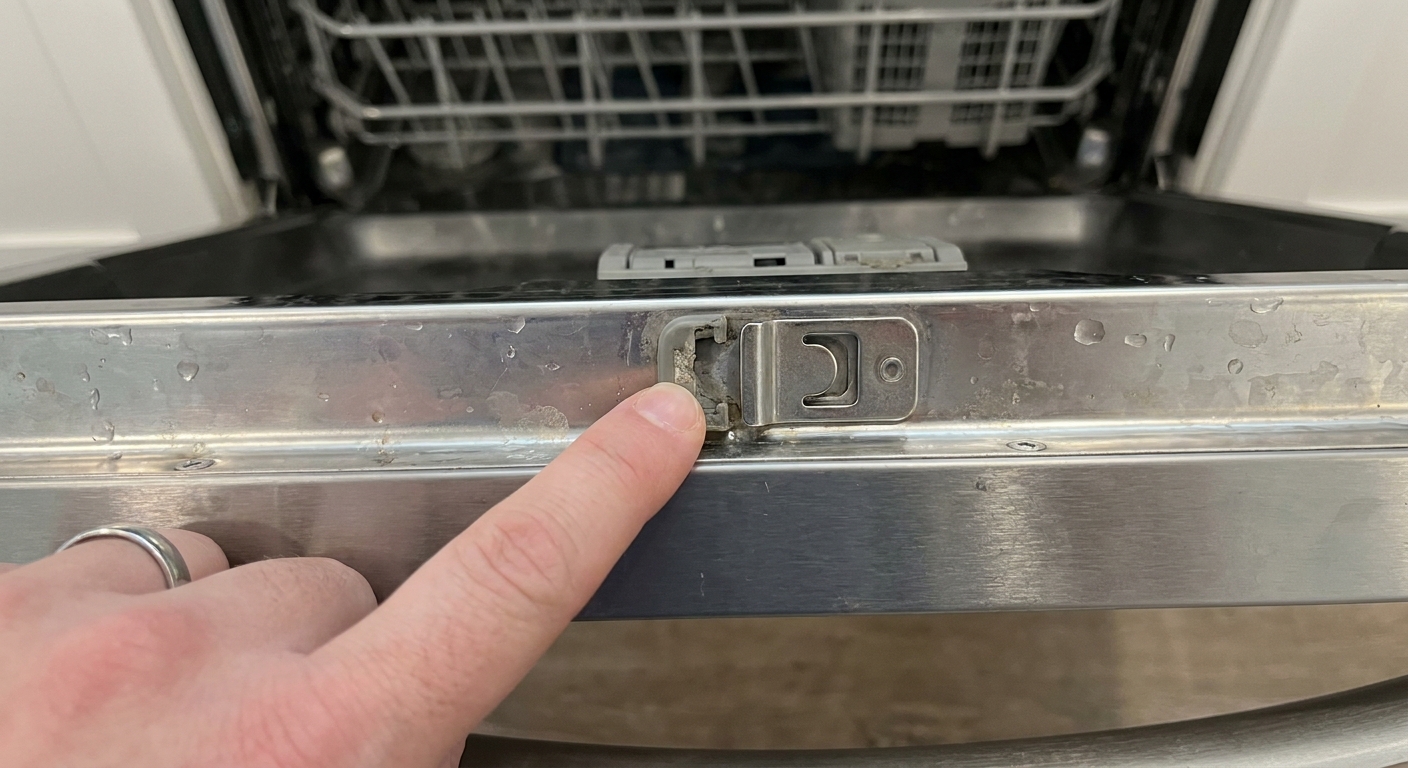
6) Clean the latch area and check the door switch zone
Some dishwashers use a small door-closed switch (or sensor) that sits right around the latch. If the latch assembly is gunky, or if something is loose, the door can “click” but not fully register as secure.
- Use a flashlight to look at the latch opening and the surrounding plastic for buildup, cracks, or wobble.
- Wipe gently with a damp cloth to remove grime, then dry. Keep it simple and renter-safe, no scraping with sharp tools.
- Listen for the click again after cleaning. A cleaner latch zone can make the engagement feel more confident.
7) Look for a worn, dirty, or displaced door gasket
The gasket (seal) is what gives you that soft, quiet “thunk” when the door closes. If it is torn, flattened, or coated in greasy film, the latch may not hold as confidently, and heat can make weak spots more obvious.
- Run your fingers along the gasket. It should feel springy, not brittle or flattened.
- Check for debris: a seed, a shard of glass, or dried detergent can keep the seal from sitting flush.
- Clean it gently with warm water and a little dish soap, then dry. Avoid harsh chemicals that can dry rubber out.
If the gasket is hanging out of its channel, you can often press it back in with your fingertips. If it is torn or visibly deformed, that is a replacement situation.
8) Door hinge balance (quick feel test)
If the door feels oddly springy, drops too fast, or will not hold itself at a partially open angle, worn hinge springs or links can affect how the door lines up with the latch when you close it.
- Open the door halfway and see if it holds steady.
- Close it slowly and notice if it pulls to one side or feels uneven.
Because hinge work can get non-renter-safe quickly, I would treat this as a “document and call maintenance” discovery rather than a DIY project.
9) Warped door or tub issues (rare, but real)
If you have tried everything above and the door still pops open, the problem can be structural. A slightly warped door, a shifting tub mount, or a dishwasher that is not level can change how the latch meets the strike.
- Check leveling: if the dishwasher tilts forward, gravity is not helping you. Look for gaps around the edges when the door is closed.
- Listen for rubbing: if the door scrapes on one side, alignment may be off.
- Note when it pops open: if it happens only during high-heat parts of the cycle, thermal expansion can exaggerate a fit issue.
For renters, this is the point where I would document it: take a quick video of the door popping open and a photo of any visible gaps, then send it to maintenance.
If it latches, but pops open mid-cycle
If the door closes fine but opens mid-wash, focus on what changes during the cycle.
- Vibration: Overloaded racks, unbalanced items, or spray arm contact can shake the latch loose. Try running a short cycle with a lighter load.
- Heat and expansion: A tired gasket or slightly misaligned strike can hold at room temp but fail when things warm up.
- Loading shifts: If something settles or slides forward, it can press on the inner door panel and gradually work against the latch.
- Latch mechanism wear: If you need to push unusually hard to get the click, the latch spring or catch may be worn.
When to stop DIY and call for service
A few signs mean it is smarter to bring in maintenance or an appliance tech, especially if you rent.
- The latch or strike is cracked, bent, or broken.
- You see water leaking from the top or sides of the door.
- The door pops open and the dishwasher keeps washing for more than a moment (most units stop washing quickly when opened, though some may drain briefly). Treat that as a service issue.
- You smell burning or see control panel glitches along with latch problems.
If you are contacting a landlord or technician, include: your dishwasher brand and model number (usually on the inner door edge), when it pops open, and whether it latches when empty.
A quick “try this now” checklist
- If it opened mid-cycle, hit Cancel/Drain and wait for spraying to stop.
- Remove one load and re-close the door until you feel a clear click.
- Check nothing is protruding past the front edge of either rack.
- Make sure the soap dispenser door can open freely and nothing is pressing on the inner door.
- Clean the door gasket and check it is seated all the way around.
- Inspect the latch strike for looseness and alignment.
- Wipe the latch area and look for obvious looseness or cracks.
When the door finally shuts with that calm, confident seal, it is such a small victory. But it makes the whole kitchen feel more peaceful, like the room can get back to doing what it does best: taking care of you.