Deep-Clean an Area Rug Without a Machine

Clara Townsend
Clara Townsend is an interior stylist, vintage furniture enthusiast, and the creative voice behind Velvet Abode. With over a decade of experience transforming both cramped city apartments and sprawling fixer-uppers, she believes that a beautiful home is built on personal stories rather than massive budgets. When she isn't hunting for the perfect brass sconce at a local flea market, she can usually be found rearranging her living room for the third time this month.
If your area rug is looking a little… lived-in (and not in the charming patina way), you do not need a rented machine to get it truly clean. You need a plan, a little rhythm, and a healthy respect for what your rug is made of. The goal here is to lift grit and oils out of the fibers, not drown the backing and hope for the best.
Below is my at-home deep-clean routine for when you have zero machines, minimal drama, and a strong desire to stop side-eyeing that one mystery spot near the coffee table.

Before you start: know your rug
Different fibers handle moisture and agitation very differently. The quickest way to regret your Saturday is to treat a wool or jute rug like a washable bath mat. When in doubt, follow the care label and take the most conservative route.
Check the tag and do a quick read
- Synthetic (polypropylene, nylon, polyester): Usually the most forgiving. Can handle gentle shampooing as long as you do not over-wet and you dry thoroughly.
- Cotton: Can be cleaned with mild soap and water, but it holds moisture. Drying well is non-negotiable to avoid mildew.
- Wool: Loves gentle handling, hates harsh chemistry and high alkalinity. Over-wetting can lead to lingering odor, texture change, dye movement, or discoloration in some rugs.
- Jute, sisal, seagrass: These are the “keep it dry” crew. Water can stain, warp, or cause browning. Generally stick to dry methods and very limited, careful damp blotting only if the care label allows.
- Viscose, bamboo silk: Beautiful, temperamental, and very water-mark-prone. I strongly recommend professional cleaning for anything large.
Know your backing
If the rug has a latex or rubbery backing, heavy soaking can break it down over time and trap moisture. If it is a tufted rug (common in many modern styles), too much water can loosen the adhesive that holds the fibers.
Supplies in five minutes
- Vacuum with a brush roll that can be turned off (or use upholstery tool)
- Soft-bristle brush or a clean white scrub sponge
- Two buckets (one for solution, one for rinse water)
- Clean white towels or cotton rags
- Mild soap: clear dish soap or a wool-safe detergent
- Optional: baking soda (for odor), dry carpet cleaning compound (for low-moisture refresh)
- Fan or dehumidifier (highly recommended)
- Optional for indoor cleaning: waterproof barrier (plastic sheet, tarp, or shower curtain liner) plus an old sheet or towels
Avoid: bleach, ammonia, high-pH all-purpose cleaners, and “extra strength” stain removers unless you know the fiber can take it. Also skip steam and very hot water on unknown rugs, and go easy on vinegar. It can affect dyes, and it is not ideal for wool or some backings.
Step 1: beat and vacuum
Most rugs look dingy because they are full of grit. That grit acts like sandpaper in the pile and keeps everything looking flat and gray. So before any spot-cleaning, you want to get as much dry soil out as possible.
If you can take it outside
- Shake the rug vigorously. If it is large, fold it in half lengthwise and shake in sections.
- Beat it gently. Use a rug beater if you have one. A broom handle works, but keep it light and skip this step for antiques, fragile bindings, or delicate hand-knotted rugs.
- Vacuum both sides slowly. Multiple passes, like you are mowing a lawn.
That order matters. If you vacuum first and then beat, you will just pull more dust up afterward.
If you cannot go outside
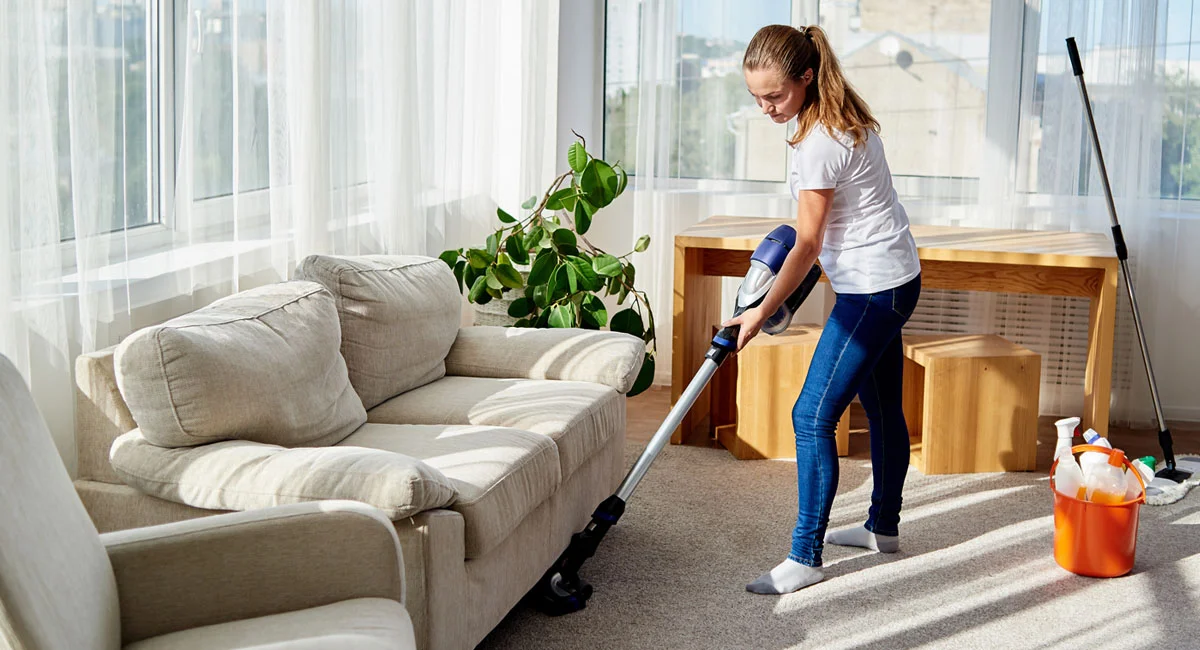
Vacuum slowly from multiple directions. Then flip the rug (if possible) and vacuum the back. If you have a balcony, even a quick shake over a sheet can help.
Quick vacuum note: Turn the brush roll off for fringe, high-pile, loops (Berber-style), and anything that looks like it could snag. Use the upholstery tool and patience instead.
Step 2: spot test dyes
Vintage-inspired rugs and richly colored patterns can release dye when wet. A two-minute spot test can save you from a blurry, bled-out border.
How to spot test
- Mix a small amount of your chosen cleaner with water.
- Dab a hidden corner with a white cloth dampened in the solution.
- Hold for 10 to 15 seconds, then lift.
- If color transfers to the cloth, stop. Switch to a dry method or call a pro.
If there is no dye transfer, you are generally safe to proceed with gentle, low-moisture shampooing.
Option A: gentle shampoo
This is the closest “deep clean” you can do without a machine. The trick is using minimal moisture and extracting as you go.
Protect your floor first (if indoors)
If you are cleaning inside, slide a waterproof barrier under the rug, then add an old sheet or towels on top of it. This helps protect hardwood and keeps moisture from getting trapped underneath.
Make a mild solution
In a bucket, mix:
- 1 teaspoon clear dish soap or wool-safe detergent
- 2 cups lukewarm water
You want light suds, not a bubble bath. Too much soap is harder to rinse and attracts dirt later.
Clean in small sections
- Pre-treat spots: Blot stains with a slightly damp cloth first. Do not scrub aggressively.
- Lightly scrub: Dip the brush, wring it out well, and gently work a 2x2 foot area. Follow the direction of the pile when possible.
- Blot and extract: Press clean towels into the area to pull up moisture and soil. Stand on the towels if needed.
- Rinse lightly: Use a second bucket with plain water. Dampen a cloth, wipe the section, then blot again with a dry towel.
Work your way across the rug like you are painting a wall. Slow and consistent wins.
Clara tip: If the rug starts to feel sticky as it dries, that is usually leftover soap. Do one more very light rinse pass and blot again.
Option B: dry compound
For natural fiber rugs like jute, sisal, or seagrass, keep moisture to a minimum. A dry carpet cleaning compound can be surprisingly effective for refreshing, but chunky natural fibers can hold onto residue. Test in a corner and plan to vacuum like you mean it.
Using a dry carpet cleaning compound
- Vacuum thoroughly.
- Sprinkle the compound evenly (follow the product directions).
- Gently work it into the fibers with a soft brush.
- Let it sit for the recommended time.
- Vacuum slowly and repeatedly to remove all residue. Two or three passes is not overkill here.
For odor only: baking soda refresh
- Vacuum.
- Lightly sprinkle baking soda.
- Let it sit 30 minutes (longer if the room is dry).
- Vacuum very thoroughly.
Do not leave powders in the rug for days. Any residue that remains can feel gritty and attract more soil over time.
Drying: do not rush this
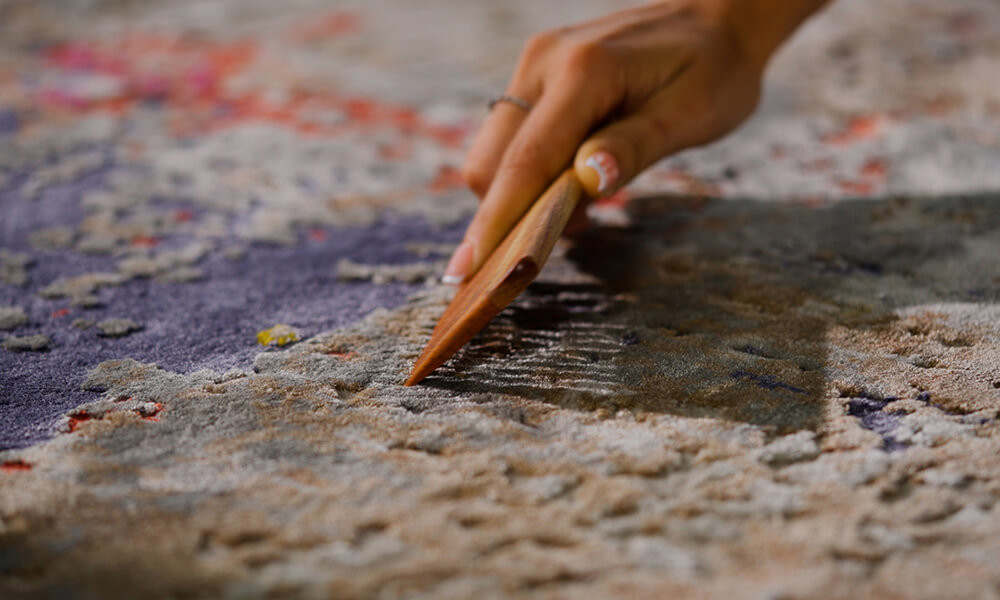
Deep cleaning is half cleaning, half drying. A rug that stays damp too long can smell musty, develop mildew, or show discoloration along edges and low spots.
Drying basics
- Blot first, then blot again: Press towels into damp areas until they come up mostly dry.
- Airflow is everything: Aim a fan across the surface, not straight down. Cross-breeze dries faster.
- Lift if you can: If the rug is small, drape it over a railing or sturdy table so air reaches both sides. For larger rugs, slide dry towels underneath in damp zones and replace as needed.
- Flip if appropriate: For thin, flexible rugs, flipping halfway through can help. For rugs with delicate backings, keep it flat and focus on airflow.
- No direct high heat: Avoid blasting with a heater close-up. Gentle warmth is fine, but high heat can shrink or warp certain fibers.
Dry time expectation: Plan on 6 to 24 hours depending on how much moisture you used, humidity, and airflow. Do not put furniture back until the rug is fully dry, including the backing. “Feels dry on top” is not the finish line.
Tough spots: calm fixes
Grease or oily marks
Blot first. Then use a small amount of dish soap diluted in water and gently dab. Avoid scrubbing hard, which can spread the oil.
Pet accidents
Blot immediately. Use cool water (not hot) and a small amount of mild detergent. If odor lingers, an enzyme cleaner can help on many synthetics, but spot test first for colorfastness. For wool, be extra cautious and consider a pro if it has soaked through.
Red wine or coffee
Blot, do not rub. Use diluted soap solution, then a light rinse. If the stain has set, you may need a professional cleaner rather than escalating to harsh chemicals.
The rug looks dull everywhere
That is usually soil load plus leftover soap. Repeat the beat-and-vacuum, then do a light rinse wipe and blot in sections to remove residue.
When to call a pro
I love an at-home win, but some rugs are simply too precious or too fussy to experiment on.
- Wool rugs with heavy staining, strong odors, or dye bleed risk
- Jute and sisal with water stains or widespread discoloration
- Viscose or bamboo silk (very prone to water marks and pile distortion)
- Antique, hand-knotted, or heirloom rugs
- Any rug with damage: fraying edges, loose binding, brittle backing
If the rug cost more than your sofa, or has sentimental value you cannot replace, it is worth calling a reputable rug cleaner who can clean and dry it properly.
Keep it clean longer
- Vacuum weekly in high-traffic areas, and vacuum slowly.
- Rotate every 2 to 3 months so one side does not get all the foot traffic and sun.
- Shoes-off if possible, or at least a good doormat at entry points.
- Blot spills immediately and rinse lightly, then blot dry.
- Use a rug pad to reduce wear and keep grit from grinding into the backing.
A rug that is cared for gently and consistently stays plush longer, looks richer, and feels like the soft landing your home deserves.