Curtains That Don’t Catch on Swinging French Doors

Clara Townsend
The quickest way to turn charming French doors into a daily annoyance is curtains that get grabbed every time the doors swing. I have watched gorgeous linen panels become accidental door stops, pulled askew in that slow-motion way that makes you sigh before you even touch the holdback.
The fix is not complicated, but it is specific: your curtain needs to live outside the door’s swing path, and it needs a home base to return to so the latch area stays clear. Below is exactly how I approach it, whether you are hanging side panels beside the doors or using a rod mounted to the door itself.
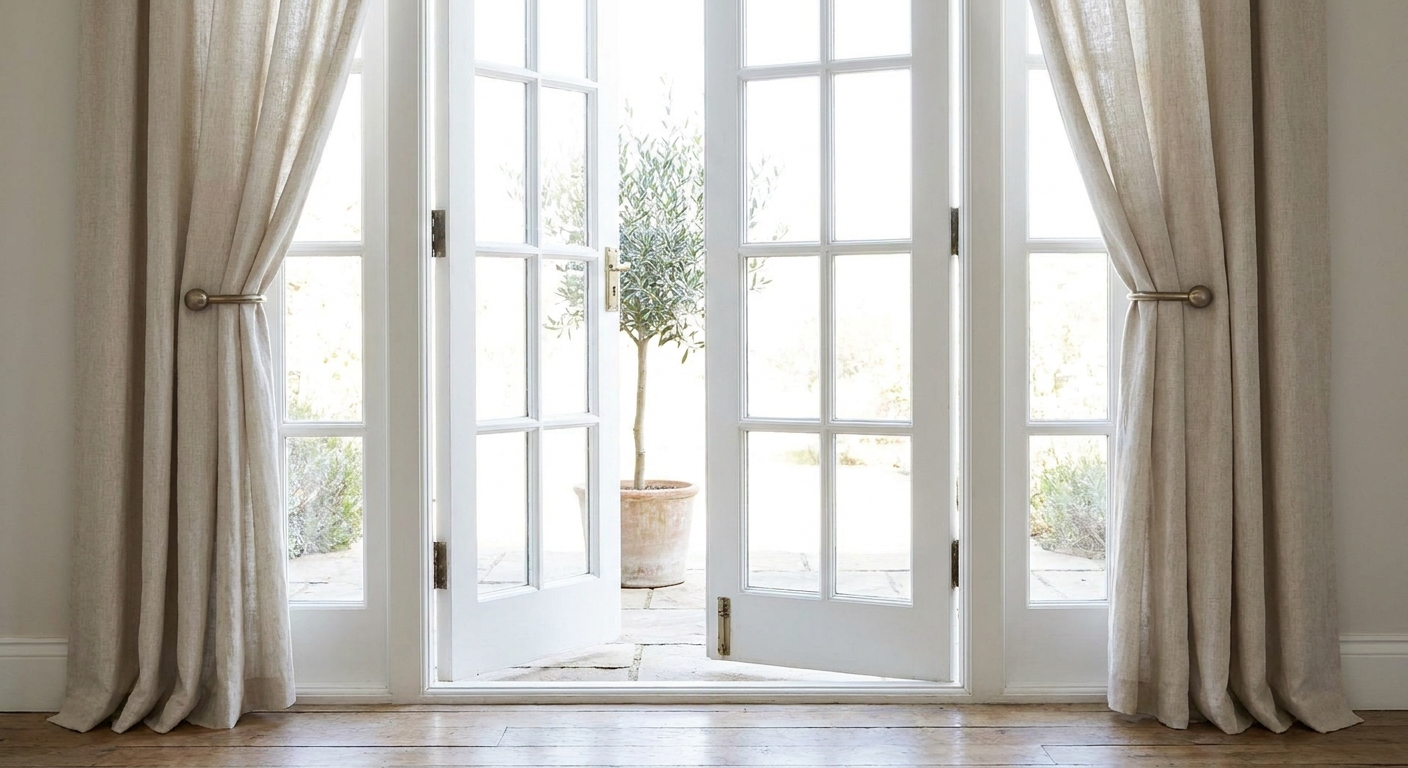
Why curtains catch
Hinged doors move in an arc. If fabric sits anywhere in that arc, the door will either:
- Drag the panel inward (wrinkling and shifting the rod over time).
- Catch the leading edge of the curtain (especially with textured linen and loose weaves).
- Block the latch so the doors do not close cleanly, or they close but do not fully latch.
So we solve for three things: clearance, rod placement, and a reliable way to keep panels parked (holdbacks, tiebacks, or returns that keep fabric hugged back).
Do this first: swing-path check
Before you move hardware, do a quick reality check with painter’s tape. It saves re-drilling.
- Open each door fully to the point you actually use it (90 degrees, 110 degrees, whatever your hinges allow).
- Mark the widest point the door edge reaches on the wall with painter’s tape.
- Mark the handle and latch area too, because that is where fabric loves to bunch.
Your curtain needs to sit outside those marks when it is at rest, and it should not billow into them when the door moves.
Option 1: Wall side panels
This is the classic look: a rod above the French doors with stationary side panels, sometimes with a shade on the glass for privacy. The secret is setting the rod so the panels hang wide and slightly forward enough that the doors can swing without grazing fabric.
Rod placement that works
- Go wider than the frame. Mount the rod so the panels can sit mostly on the wall, not over the glass. This keeps fabric out of the swing zone and makes the doors feel grander.
- Use brackets with projection. A rod that sits too close to the door plane is an invitation for snagging. Choose brackets that project the rod farther from the wall when you need extra clearance, especially with lever handles or multi-point locks that protrude.
- Mind the top corners. If your doors have prominent trim or bulky hinges, you may need the rod slightly higher so the fabric does not brush those corners when you pull it to the side.
Clearance guideline
Start by aiming for 1 to 2 inches of space between the moving door and the nearest hanging fabric, then test the door through its full swing and adjust as needed. Give yourself extra room if you have:
- Thick blackout lining
- Heavy pleats
- Textured linen that tends to grab
- Kids or pets who fling doors open with confidence
Use return rods to keep panels back
If your side panels creep toward the doors, a return rod can be a quiet miracle. Return rods have curved ends that wrap back to the wall, which helps the fabric stay hugged to the side and reduces the side gap where panels like to drift.
If you do not have a return rod, you can still create a simple return:
- Pin the last pleat toward the wall using a drapery pin or return hook.
- Anchor the last ring with a tiny screw-eye on the wall and a short piece of clear line so the panel naturally falls back away from the latch zone.
It is one of those invisible details that makes the whole setup feel calm instead of fussy.
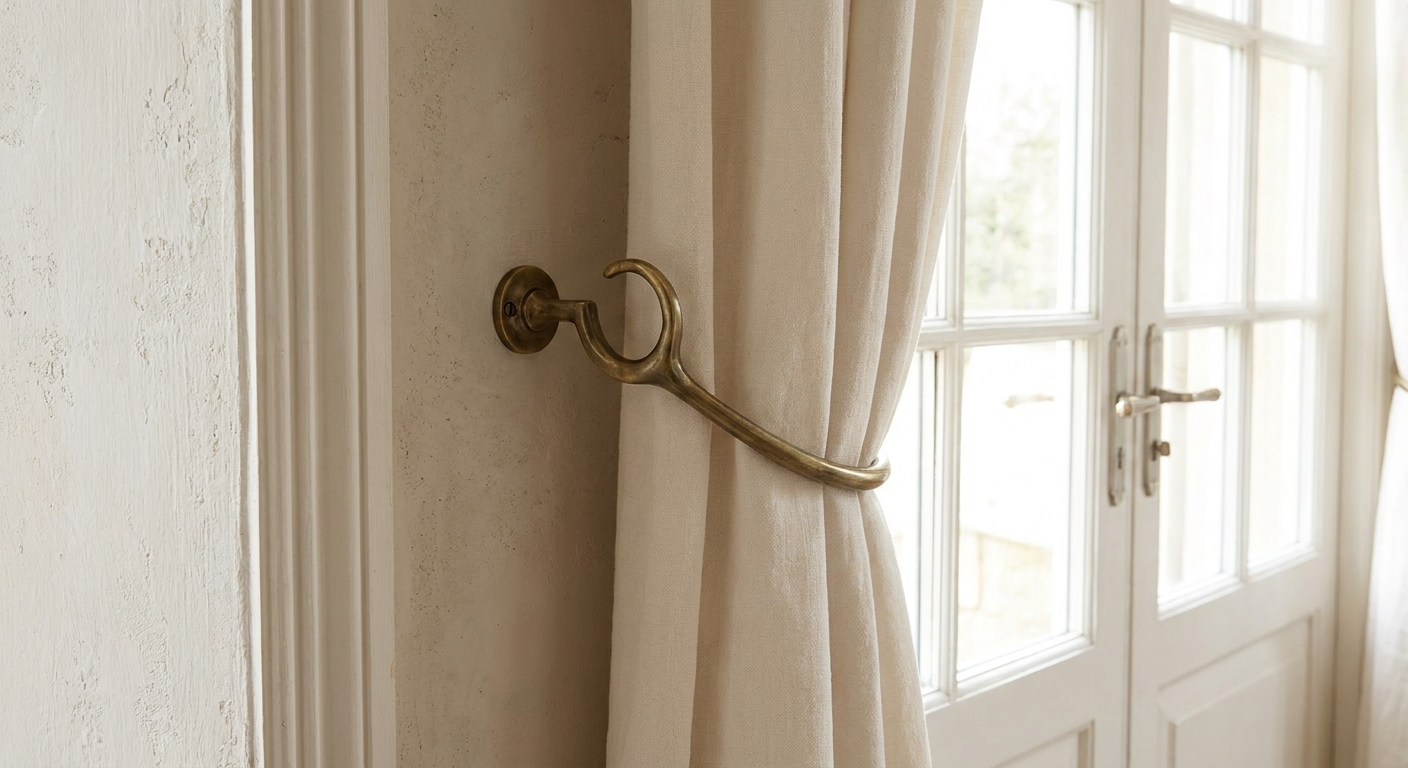
Holdbacks stop snagging
If your curtains catch when the doors open, the fastest fix is often not a new rod. It is giving the fabric a dedicated parking spot.
Holdback placement
Mount the holdback so the pulled-back curtain sits fully beyond the latch edge of the door. Practically, that means:
- Place the holdback far enough out that the fabric does not droop into the handle area.
- Start around mid-height (or slightly above) so the panel lifts up and away from handles and locks, then adjust based on your specific hardware and how full the curtain is.
- Test before drilling. Tape the holdback in place and physically swing the door through its full arc, including the way you actually enter and exit.
Holdbacks vs tiebacks
- Holdbacks (rigid hooks) are best when you need the fabric to stay put every day.
- Tiebacks (fabric ties or ropes) look softer but can loosen over time and let panels drift back into the swing path.
A stylist trick for stubborn panels
If a panel refuses to stay sleek in a holdback, lightly train it for a few days: pull it back the same way each morning and evening. Fabric often learns. Linen in particular tends to settle into a fold pattern once it has been parked consistently.
Option 2: Door-mounted rod
If your French doors are squeezed between walls, built-ins, or cabinets, a wall-mounted rod can feel impossible. In that case, a rod mounted directly to the door can work beautifully, as long as you plan for the latch and handle.
Keep the latch clear
- Keep the hardware shallow. A low-profile rod and brackets reduce bulk near the latch side.
- Keep the curtain inside the door edges. On-door curtains should be tailored to the glass area and sit within the stiles, not billowing past the latch stile.
- Stabilize the bottom if needed. Tie-downs or a second, lower rod can keep the curtain from swinging into the handle as the door moves.
Where to mount on the door
Mount the rod high enough that the curtain clears the lockset, and center it over the glass so the fabric does not creep toward the latch stile. Also, be deliberate about what you are screwing into. Door-mounted hardware should be fastened into solid wood rails or stiles, not just thin trim detail.
Best fabrics for door rods
- Lightweight linen or cotton for a relaxed look with less bulk near the latch
- Unlined or lightly lined panels so the curtain stacks flatter when pulled aside
- Simple headers (like a rod pocket or small rings) rather than deep pinch pleats that protrude
Hardware details that help
Even a great-looking installation can catch if the hardware is working against you. Here is what I check.
Projection matters
If the door rubs the curtain, you often need a rod that sits farther out from the wall. Look for brackets with more projection, or choose a rod system designed to stand off the wall more generously. This matters even more with lever handles, thumb turns, and tall lock trim that push into the curtain zone.
Center supports and stacking
For wide spans over double doors, a center bracket keeps the rod from bowing. Just make sure it does not land where curtains need to slide or stack. If your panels are mostly stationary, it is less of an issue. If you open and close them daily, it is worth planning.
Ring size and glide
Small rings that barely fit the rod create jerky movement, which makes panels drift into the door zone. Slightly larger rings or smooth grommets help the fabric move cleanly into its parked position.
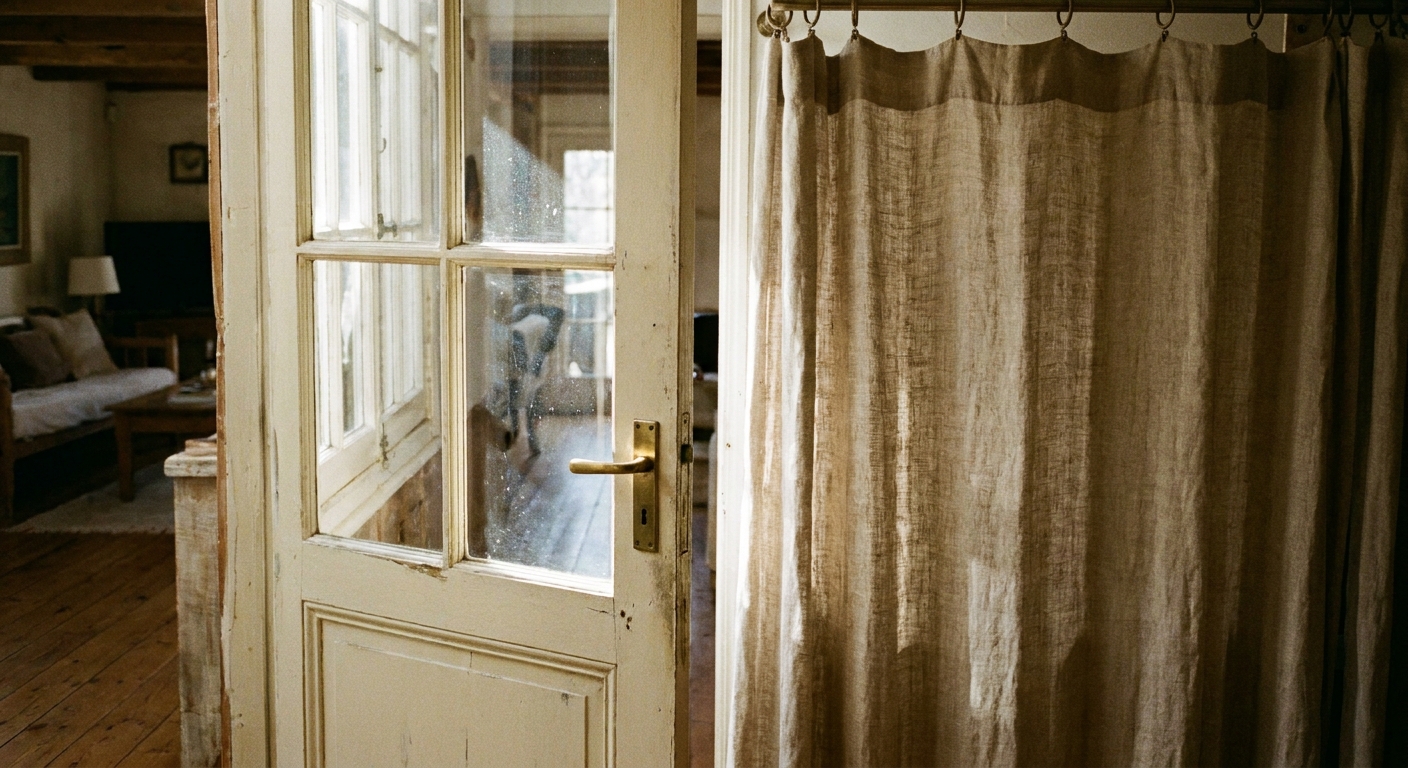
Make sure the doors latch
This is the part people skip, then wonder why the doors feel off. After installing curtains, do this:
- Close and latch both doors with the curtains hanging normally.
- Open each door slowly while watching the curtain edge and the handle area.
- Pull panels into their holdbacks and repeat the open-close-latch cycle.
If the latch catches only when the curtains are styled, your holdbacks are too close to the door or too low, letting fabric spill back into the hardware zone.
If you cannot move the rod
If you are renting, or you just do not want to patch and repaint right now, you still have options.
Use a firmer holdback
Swap a soft tie for a sturdier holdback, or mount the holdback farther out. This alone solves a surprising number of snagging situations.
Hem for a clean skim
If the curtain puddles and the door drags it, hemming to a true floor skim can reduce the tugging that pulls fabric into the door path.
Train with steam
A quick steam where the curtain folds into the holdback position helps it fall back into place instead of springing outward into the swing zone.
Other privacy options
If you want privacy without managing long fabric near an active door, there are a few solutions I reach for first:
- Inside-mount shades on the glass (roller, cellular, or Roman) for a clean look that never enters the swing path.
- Blinds on the door when you need easy light control and a tidy profile.
- Cafe curtains on a small rod for a softer look that stays well below the latch and handle area, best when full blackout is not the goal.
You can still use decorative side panels with any of these, which gives you softness without the daily snag factor.
Common mistakes
- Mistake: Hanging panels directly in front of the active door edge. Do instead: Widen the rod so most of the fabric lives on the wall.
- Mistake: Using bulky headers and thick lining that stick out near handles. Do instead: Choose lighter materials or simpler headers near doors, or increase rod projection.
- Mistake: Holdbacks placed too low so fabric pockets around the handle. Do instead: Start around mid-height or slightly higher and test with the door swing and latch.
- Mistake: Skipping secure mounting. Do instead: Hit studs when you can, or use anchors rated for the curtain weight. Holdbacks take a surprising amount of tugging.
FAQ
Should curtains go inside the door frame or outside it?
For swinging French doors, curtains typically behave best outside the frame on the wall, with panels that park to the sides. Inside the frame is where you are most likely to fight the swing path and the latch.
Can I still use full-length curtains on French doors?
Yes, but treat them like side panels, not something the doors will brush against. Pair them with a solid holdback plan so the panels stay out of the way when the doors are in use.
My curtains catch only when there is a breeze. What helps?
Use sturdier holdbacks, consider return rods so the fabric naturally hugs the wall, and avoid overly light, floaty fabric right next to active doors. Even a little extra rod projection can help keep fabric from drifting into the swing zone.
What if my doors open outward?
Out-swing doors are often easier because the door moves away from interior curtains. You still need to keep fabric clear of handles and locks, and drafts can still push panels into the hardware zone. Do a swing-path tape test anyway before you commit to rod placement.
A calm finish
When French door curtains are done well, you barely notice the logistics. The panels frame the light, the doors open cleanly, and nothing snags, scrapes, or steals your patience.
If you want the quickest win: tape the swing path, give yourself real clearance, and park the fabric fully past the latch edge. It is a small fix that makes the whole space feel instantly more livable.