Curtains Snagging on a Window AC

Clara Townsend
The first summer I lived in a tiny city apartment, my beautiful linen curtain panel developed a grimy little “kiss” mark right where it kept brushing the top corner of my window air conditioner. It snagged, it stained, and it also could make the unit work harder because the fabric kept drifting in front of the vents and restricting airflow. If you are dealing with the same thing, there is good news: you do not need to ditch your curtains or settle for bare windows.
Below are three styling fixes I use again and again: a shorter hem (the quickest long-term solution), a tieback (the easiest day-to-day fix), and a side panel that clears the chassis (the most polished looking option for many rooms). I am intentionally skipping deep cleaning and installation sealing steps here so we can stay focused on the fabric problem, but it is always worth checking your unit manual for clearance and sealing guidance because drafts and condensation can contribute to staining.
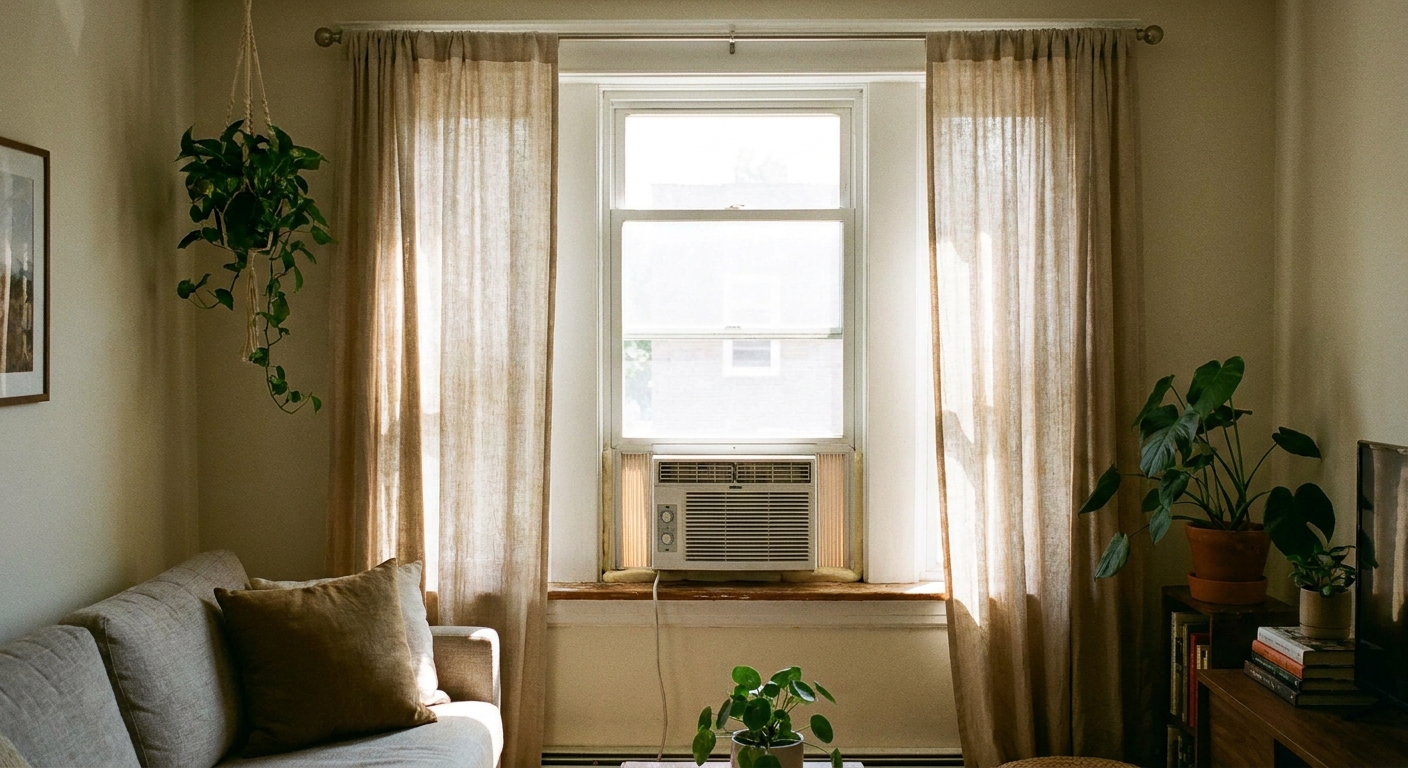
Why curtains catch and stain around window units
A window AC is basically a box that interrupts the clean drop of a curtain. Most of the snagging happens for three reasons:
- The chassis sticks into the room. Even a small unit creates a ledge that fabric wants to drape onto.
- Air movement pulls fabric in. When the fan kicks on, lightweight panels can flutter straight toward the intake or vents.
- Condensation and dust create marks. The top and sides of the unit can collect moisture, lint, and grime, which can transfer to fabric like a stamp.
What you want is a curtain setup that does two things at once: it looks intentional, and it maintains a clear zone around the unit so nothing blocks airflow or rubs against the casing. When in doubt, follow the clearance guidance in your AC manual, especially around the air intake and exhaust.
Before you change anything: do a 60 second fit check
Stand to the side and look at your window straight on. Answer these quickly:
- How far does the unit project into the room? A shallow unit can sometimes work with a tieback alone. A deep one usually needs a hem or side panel solution.
- Where are the vents? Many units pull air in from the sides and front. You want fabric kept away from those areas.
- Is the curtain rod wide enough? If the rod barely clears the window frame, panels have nowhere to “live” except in front of the AC. A wider rod lets you park fabric to the sides.
If your rod is narrow, consider swapping to a longer rod or extending it so each panel can sit mostly on the wall instead of the window. This single change often makes every option below work better. If you want extra help keeping panels parked, a rod with returns (or simple end caps) can discourage fabric from creeping forward.
Option 1: A shorter hem that stops above the AC
This is my go-to fix when you want curtains that still read as curtains, but you never want them touching the unit. The idea is simple: the curtain ends intentionally above the air conditioner, creating a clean horizontal line.
Where it works best
- Kitchens, bedrooms, and rentals where you want a no-fuss solution
- Windows where the AC fills the lower sash and fabric has no safe place to fall
- Homes with pets or kids where tiebacks get tugged
How to do it (no sewing required)
- Measure your “safe hem” point. Aim for the curtain to end 1 to 2 inches above the highest point of the unit so it never grazes it.
- Try a temporary hem first. Use iron-on hem tape, fabric tape, or drapery clips to test the height for a few days.
- Make it look intentional. A crisp fold reads tailored. A slightly puddled or uneven temporary hem reads like an accident, especially next to an AC.
Stylist tip: If you love the taller look of long curtains, hang the rod higher and wider, but choose a shorter finished length. Your eye will still read height from the rod placement, even if the hem stops above the unit.
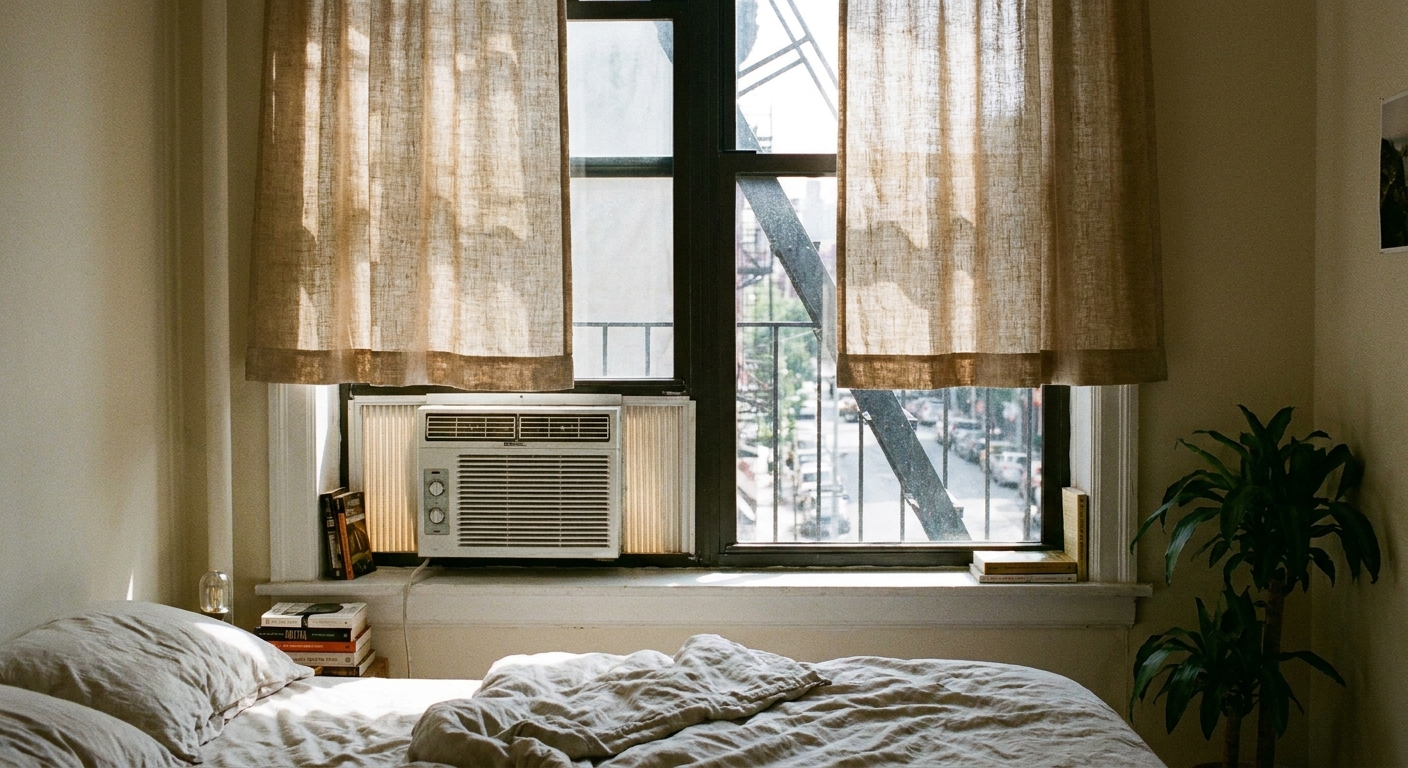
Option 2: Tiebacks that keep fabric out of the airflow
Tiebacks are the easiest fix because you can do them with what you already own. The goal is not just to “make it cute.” The goal is to pull fabric fully clear of the unit so it cannot flutter into the vents.
Two tieback placements that actually work
- High and wide. Tie the panel back higher than you think, around the middle of the window height or slightly above. This keeps the lower portion from swinging forward.
- Low and tight. If you want a softer, loungy drape, tie lower but pull the panel back far enough that the fabric line sits behind the front edge of the AC chassis.
Easy tieback options
- Magnetic tiebacks: great for renters, quick on and off
- Soft fabric ties: linen or velvet ribbon looks cozy and intentional
- A pretty belt: vintage scarf, leather belt, or braided cord for a collected look
Small safety note: Make sure the tied fabric cannot slip forward into the unit when the fan is running. If it does, this option needs either a tighter tie or one of the solutions below.
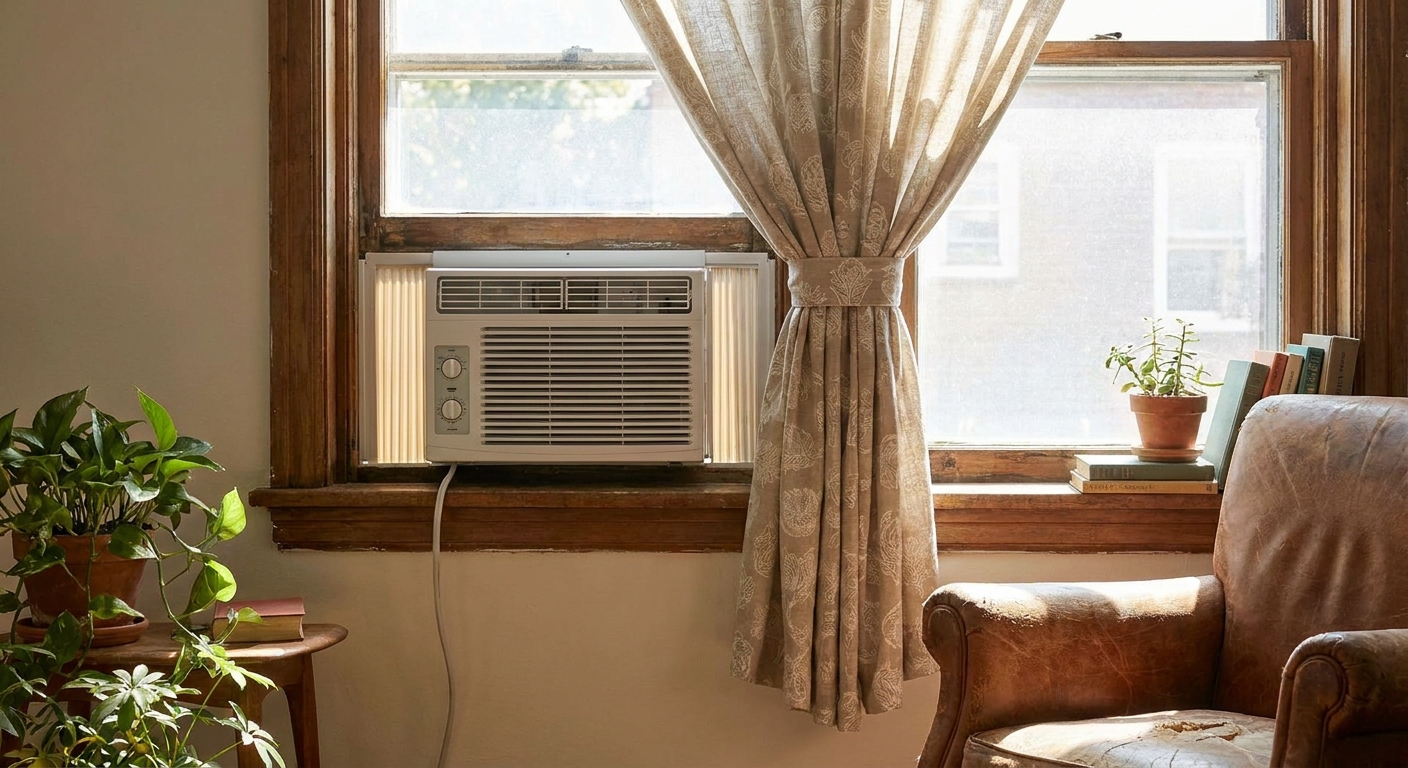
Option 3: A side panel that clears the chassis
If you want the window to look dressed without battling fabric and airflow all season, a side panel setup is often the cleanest. Think of it like this: instead of two full panels trying to meet in the middle, you create a deliberate curtain moment on one side that never crosses the AC.
What it looks like
You hang one functional panel on the side that has the most wall space and let it stack neatly there. On the AC side, you either use no panel or a very narrow stationary piece that stops well clear of the unit.
Why it works
- The fabric has a “home” on the wall, not on top of the AC
- You reduce flutter because there is less loose fabric near the airflow
- It looks intentional and a bit boutique hotel, especially with a thicker drape
How to set it up
- Use a wider rod than the window. You want room for the curtain to stack without creeping toward the unit.
- Choose the stacking side. Pick the side with more wall space, or the side where the curtain will not interfere with the AC controls.
- Keep the AC side minimal. If you need symmetry, consider a narrow stationary panel that stays pinned back with a discreet holdback.
Stylist tip: This is a great place to mix vintage and modern. A simple modern rod plus a vintage-inspired pinch pleat panel looks rich, even if the panel is just doing decorative duty on one side.
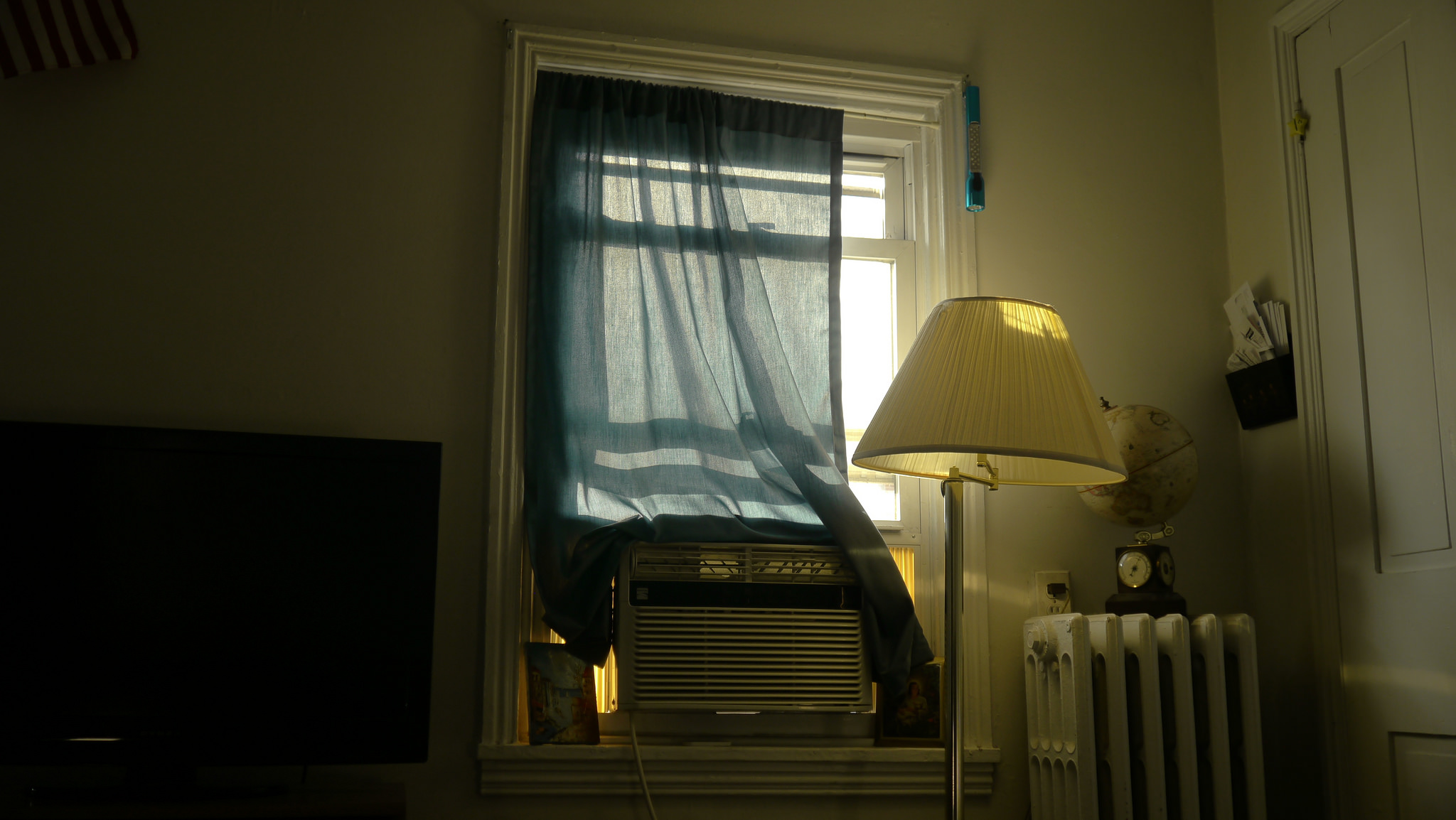
Fabric and finish choices that reduce snagging
Even the best setup can get annoying if the fabric itself is a magnet for lint or a snaggy weave. If you are shopping or swapping panels, here is what I reach for around window units:
- Tighter weaves: cotton twill, heavier linen blends, or lined panels snag less than loose slubby linen.
- Washable fabrics: if your panel is likely to brush the unit during adjustment, machine washable is a sanity saver.
- Lining helps: lining adds weight so panels hang straighter and flutter less when the AC turns on.
- Skip delicate trims near the unit: fringe and loose tassels love to get pulled toward airflow.
Quick fixes for right now
- Clamp and tuck: use a small binder clip or drapery clip behind the panel to shorten it temporarily so it clears the AC.
- Use an adhesive hook as a stealth holdback: place it on the wall beside the window and loop the panel back. Check the product weight rating, and avoid placing adhesive where condensation or heat buildup is common, since that can cause it to fail.
- Add weight to the hem: curtain weights help stop flutter. If you use safety pins in a pinch, know they can rust or leave marks if the fabric gets damp.
These are not forever solutions, but they can stop the daily snagging immediately.
Common questions
Is it bad if my curtain blocks part of the window AC?
Yes, it can be. Curtains that cover the intake or vents can reduce airflow, make the unit run longer, and sometimes lead to more condensation or dust buildup on the fabric. Design wise, it also tends to look messy because the panel never hangs cleanly.
Can I still make my window look bigger with a window unit installed?
You can, just adjust the “rules.” Go higher and wider with the rod, then choose a hem height or side panel layout that stays out of the unit’s way. The height comes from rod placement and visual continuity, not from forcing fabric to drop in front of a big metal box.
What if my AC sticks out so far that any curtain will touch it?
That is when the side panel option shines, or a shorter hem. Give the fabric a place to live on the wall, and treat the unit zone like a no-curtain zone. It will feel calmer immediately.
Are there alternatives to curtains near a window unit?
Yes. An inside-mount roller shade or cellular shade above the unit can be a clean solution when curtains feel fussy. You can also combine a shade for privacy with a single stationary side panel for softness.
My easiest recommendation
If you want one simple answer: extend the rod wider, then choose either a shorter hem that stops above the unit or a single side panel that stacks away from it. You will protect your curtains, help your AC breathe, and your window will still feel styled instead of improvised.