Corduroy Sofa Care

Clara Townsend
Clara Townsend is an interior stylist, vintage furniture enthusiast, and the creative voice behind Velvet Abode. With over a decade of experience transforming both cramped city apartments and sprawling fixer-uppers, she believes that a beautiful home is built on personal stories rather than massive budgets. When she isn't hunting for the perfect brass sconce at a local flea market, she can usually be found rearranging her living room for the third time this month.
Corduroy is one of those fabrics that looks instantly inviting, like a soft jacket you never want to take off. But it also has opinions. The wales (those raised ribs) can flatten, the grooves can hoard crumbs like it's their job, and one overzealous scrub can leave a shiny, crushed patch that never quite matches again.
The good news: corduroy is very cleanable when you treat it like a directional fabric. Your main goals are simple. Get grit out of the grooves, use as little moisture as possible, and dry in a way that keeps the pile standing evenly.
Know your corduroy
Corduroy upholstery is made with raised ribs (wales) separated by channels. Those channels are why corduroy hides wear well, and also why it traps dust, sand, and pet hair.
- Wales: the raised ribs. Crushing happens here.
- Grooves: the valleys between ribs. This is where grit lives, and grit is what abrades fibers over time.
- Nap: the direction the fibers naturally lie. On corduroy, the nap usually runs along the ribs, and it matters because scrubbing against it can leave the pile looking uneven or shiny.
Pinwale vs wide wale
Not all corduroy behaves the same. Pinwale (fine ribs) tends to look smoother but can crush more easily. Wide wale (thicker ribs) is sturdier, but those bigger channels can collect more crumbs and pet hair. Same care rules, just different trouble spots.
If your sofa has a care tag with a code, follow it: W means water-based cleaner is allowed, S means solvent only, WS means either, and X means vacuum only (no consumer cleaners). For stains on an X-coded piece, consult a pro.
If you can't find a tag, start with dry methods (vacuuming and brushing). If you must spot clean, use the least moisture possible and test thoroughly in a hidden spot. For large or mystery stains on unknown fabric, calling a pro is often the cheapest mistake-prevention.
Weekly routine
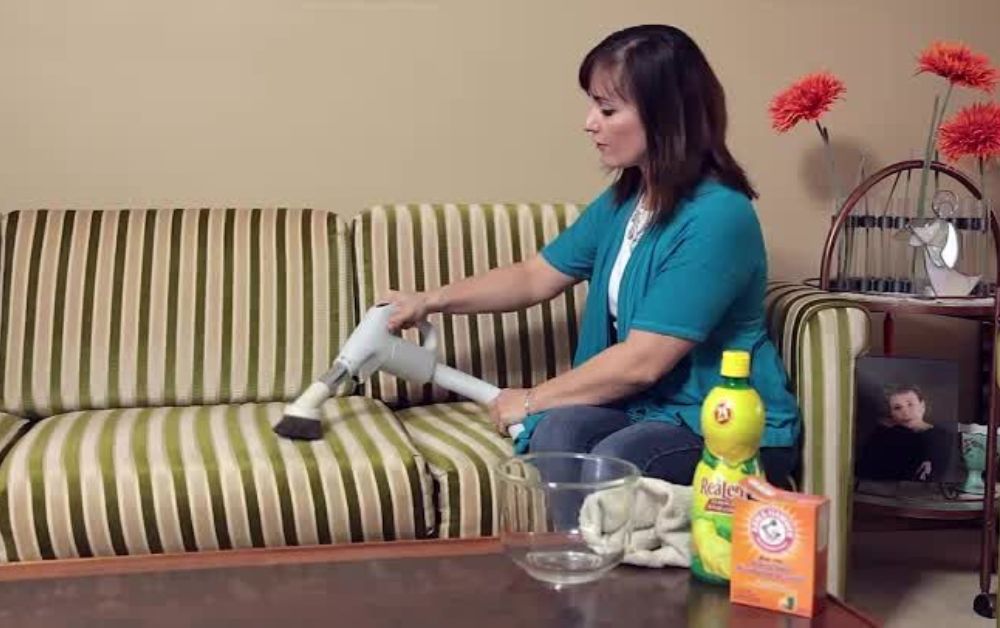
1) Vacuum along the ribs, then lightly across
This is the trick most people miss. If you vacuum randomly, you can push debris deeper into the channels or rough up the pile.
- Start with a soft upholstery brush attachment and vacuum with the nap, which is usually along the ribs (the direction that feels smoother when you run your hand over it).
- Then vacuum perpendicular to the ribs with very light pressure to pull dust out of the grooves. Think “skim the surface,” not “press and drag.”
- Finish with one last gentle pass along the ribs to lay everything neatly.
If your vacuum has strong suction, dial it down to the lowest effective setting. Corduroy likes a calmer approach.
2) Brush the grooves, not with fingernails
For crumbs that cling in the channels, a clean, dry soft-bristle upholstery brush works beautifully. Brush lightly across the ribs (so you're working over the grooves), then vacuum it up.
Spot cleaning
Corduroy’s biggest enemy during stain removal is too much liquid. Over-wetting can swell fibers, create water marks, and leave the ribs looking uneven once dry. Your guiding principle is: blot, don’t rub.
Before you touch the stain
- Blot immediately with a clean, white cloth or paper towel. Press, lift, rotate to a dry area, repeat.
- Vacuum first if the stain includes grit or dried debris. Otherwise you risk grinding it in.
- Test in a hidden spot (back hem, under a cushion) to check for color transfer and texture change.
- Avoid colored towels. Dye transfer is a very un-fun plot twist.
Low-moisture method (most everyday spots)
Mix a small bowl of lukewarm water with a couple drops of clear dish soap. You want barely-there suds, not a bubble bath.
- Dampen a white cloth so it is just barely wet, then wring it out well.
- Blot from the outside in to keep the spot from spreading.
- Switch to a second cloth dampened with plain water and blot to rinse.
- Press with a dry towel to pull out moisture.
Quick stain notes
- Mud: Let it dry, vacuum, then use the low-moisture method. Wet mud loves to spread.
- Coffee or tea: Blot fast, then minimal soap and water. Don’t use hot water, it can set tannins.
- Ink: Don’t start with water. This is a “test carefully or call a pro” stain, especially on light corduroy.
- Oil (butter, lotion, dressing): Sprinkle a small amount of cornstarch (or baking soda if that's what you have) for 20 to 30 minutes, then vacuum thoroughly. Test first, and don’t leave powder sitting for hours. Some dyes can be fussy, and residue can get stuck in grooves.
If your tag says “S” (solvent-only)
Skip water. Use a dry-cleaning solvent upholstery cleaner designed for “S” fabrics, and follow the label closely. Work in a well-ventilated room and use a light hand. The goal is to lift, not saturate.
Velvet Abode rule of thumb: if you can see the fabric getting visibly wet beyond the stain, you’re using too much moisture for corduroy.
Deep clean and refresh
If the whole sofa looks dingy (not stained in one spot, just generally tired), spot cleaning won’t blend well. Corduroy rewards evenness.
- Work seam-to-seam: Lightly clean an entire panel or cushion face at once, not a little island in the middle.
- Use the same low-moisture mix: Dampen, wring well, and blot and wipe very gently along the ribs.
- Rinse lightly: A second cloth with plain water, wrung very well, helps prevent soap residue that can attract dust.
- Groom last: When it’s just slightly damp, brush along the ribs to reset the nap so it dries even.
Removable cushion covers
Don’t assume removable means machine-washable. Many corduroy covers have backings, linings, or dyes that can shrink, pucker, or water-mark.
- If the label explicitly allows machine washing, use cold water, gentle cycle, mild detergent, and close zippers.
- Air-dry or tumble on no-heat, then reshape and brush along the ribs once dry.
- If there’s no washing guidance, don’t gamble. Clean on the cushion instead or go pro.
Flattened or shiny ribs
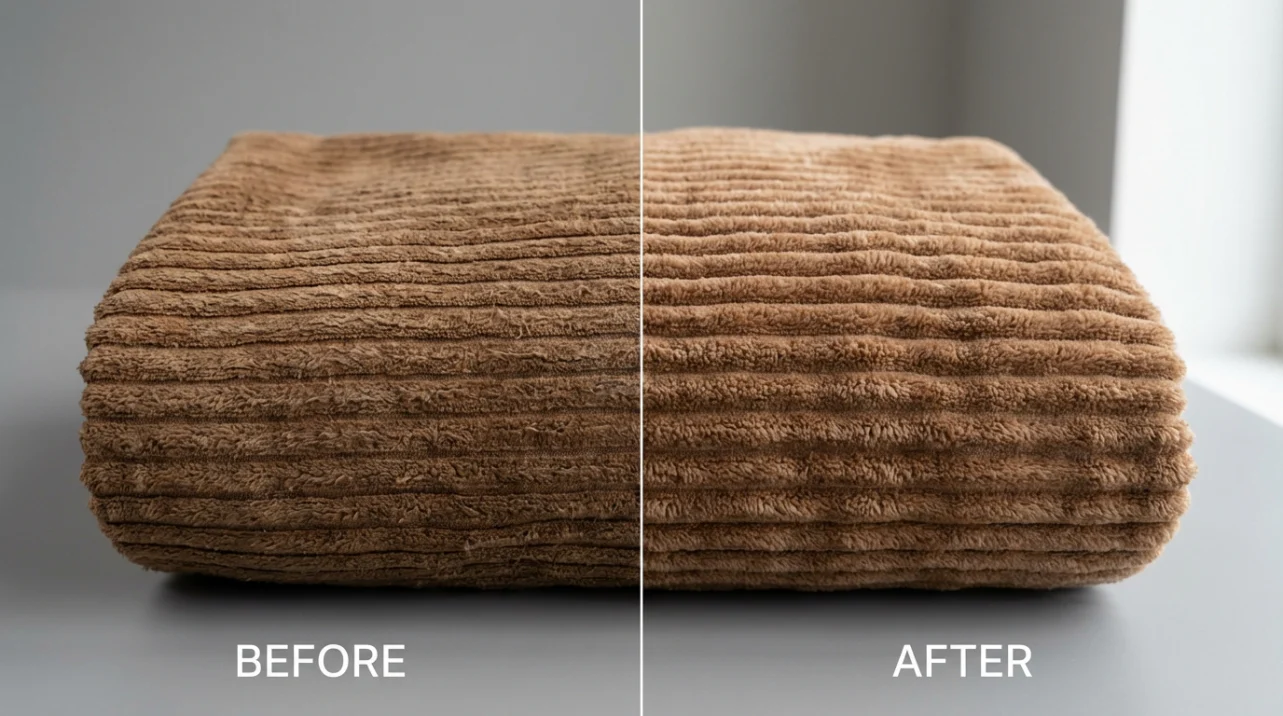
Flattening happens from pressure, body oils, or scrubbing against the nap direction. The fix is usually a combination of gentle lift plus correct drying.
Revive the pile
- Let it dry completely first if it is damp. Trying to “fix” corduroy while wet often locks in distortion.
- Use a soft clothing brush or upholstery brush and lightly brush along the ribs to raise fibers.
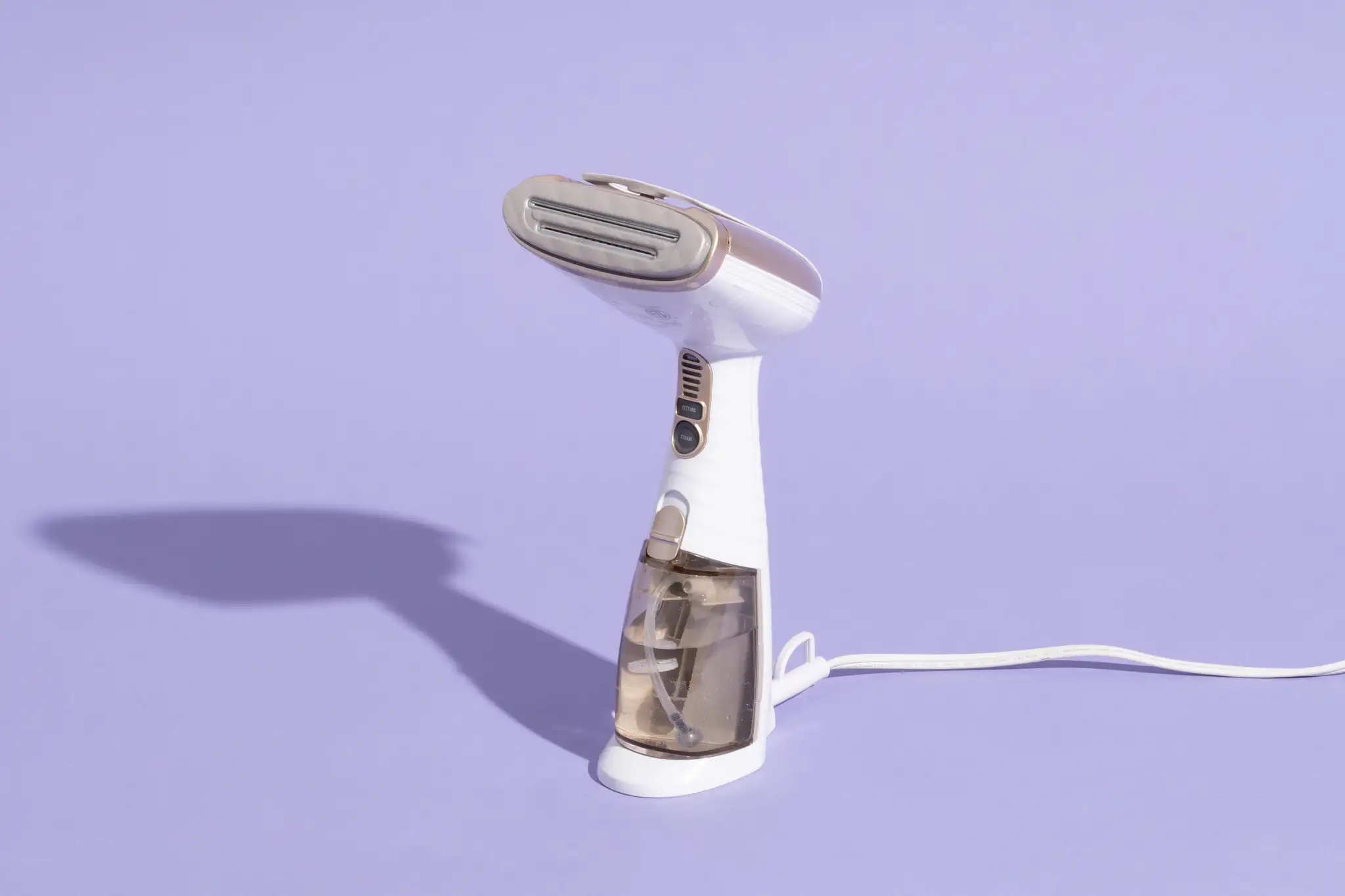
- If it’s still flattened, apply steam from a garment steamer held several inches away. Keep it moving. Don’t soak it.
- Test steam first in a hidden spot. Some upholstery backings and adhesives hate moisture, and steaming can cause darkening or water marks on certain fabrics.
- While the area is warm, brush gently along the ribs to coax the pile back up.
- Finish by blotting any moisture and let it air-dry with good airflow.
Avoid pressing corduroy with an iron. Heat plus pressure is basically a crush recipe.
Pet hair in the grooves
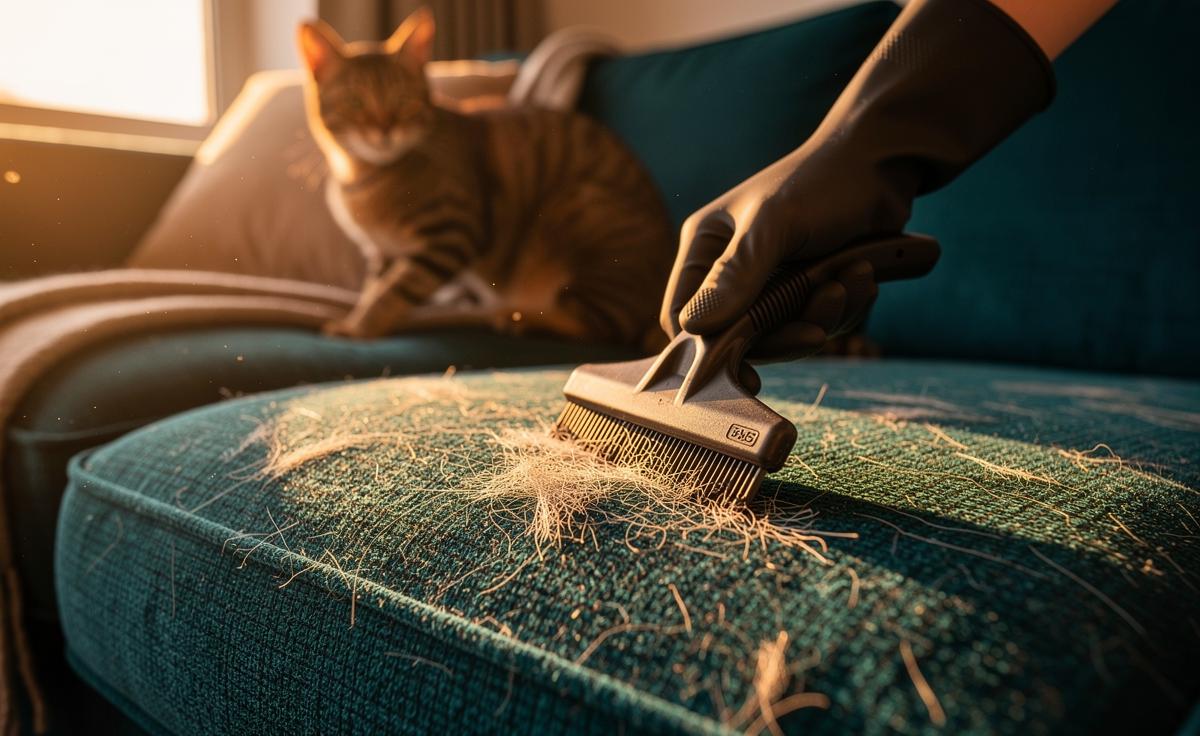
Corduroy’s channels grab pet hair like Velcro. Vacuuming alone often skims the top and leaves hair tucked down in the valleys.
Best tools
- Rubber pet hair brush (or a slightly damp rubber glove): Lightly drag across the ribs to gather hair into little tumbleweeds you can pick up.
- Lint roller: Great for a quick pass, but it can miss hair lodged deep in grooves.
- Vacuum + crevice tool: Use gently along seams and where cushions meet the frame.
My quick routine
- Rubber brush across the ribs to lift hair.
- Vacuum with upholstery brush along the ribs.
- Quick final pass with the lint roller on arm tops and head-rest zones where hair clings most.
Drying
Drying is where corduroy either looks fresh and plush or ends up with ripples and dark marks.
- Blot, blot, blot: Use clean towels to press out moisture before you walk away.
- Airflow matters: Open a window or use a fan aimed across the surface, not blasting straight down.
- Reset the nap while damp: When the area is only slightly damp, lightly brush along the ribs to keep the pile consistent.
- Skip heat: Avoid hot hair dryers or heaters. Heat can set stains and pressure-dry lines can crush the pile.
- Don’t sit until fully dry: Pressure on damp corduroy is a fast track to flattened ribs.
What to avoid
- Hard scrubbing across the ribs: This roughs up fibers and can leave shiny patches.
- Over-wetting: Leads to water marks and uneven pile.
- Bleach or harsh stain removers: They can strip dye and stiffen the pile.
- Too-stiff brushes: If it feels like it belongs in the garage, it does.
- Ironing: Heat plus pressure crushes ribs.
Spill kit
If you want corduroy to stay looking like that perfect thrifted jacket, have a tiny kit ready. It makes you calmer, which makes you gentler, which is half the battle.
- White cotton cloths or plain paper towels
- Soft upholstery brush
- Small bowl and clear dish soap
- Cornstarch (for oils)
- Lint roller or rubber pet hair brush
- A small fan for faster, even drying
When to call a pro
Professional upholstery cleaning is worth it if:
- The tag is S or X, and the stain is large, set, or unknown.
- The stain is from ink, dye transfer, or wine and it has already set.
- Your sofa is vintage and you suspect the dye is unstable.
- You see widespread darkening that suggests deep soil, not just surface dust.
If you hire someone, mention that it’s corduroy and ask how they plan to avoid crushing the ribs. A good pro will talk about controlled moisture, pile setting, and grooming during drying.
The Velvet Abode bottom line
Corduroy isn't delicate, but it's specific. Vacuum with intention, keep spot cleaning low-moisture, lift flattened ribs with gentle brushing and careful steam, and always finish by grooming the nap so the pile dries even.
Do that, and your corduroy sofa will keep its cozy, ribbed texture without the sad shiny patches that make it look tired before its time.