Coffee Table Styling Made Simple

Clara Townsend
Clara Townsend is an interior stylist, vintage furniture enthusiast, and the creative voice behind Velvet Abode. With over a decade of experience transforming both cramped city apartments and sprawling fixer-uppers, she believes that a beautiful home is built on personal stories rather than massive budgets. When she isn't hunting for the perfect brass sconce at a local flea market, she can usually be found rearranging her living room for the third time this month.
There’s a special kind of annoyance reserved for a coffee table that looks “almost” styled, but somehow still feels messy, flat, or like you just set things down mid-conversation. The good news: coffee table styling isn’t a talent you either have or you don’t. It’s a little formula. Once you learn it, you can repeat it in any room, on any budget, and swap it out seasonally without starting from scratch.
Today I’m sharing the exact “recipe” I use when I walk into a room and need the table to look intentional in ten minutes. We’ll anchor with a tray, build a few simple layers, and finish with the kind of small details that make the whole room feel like a comforting hug.
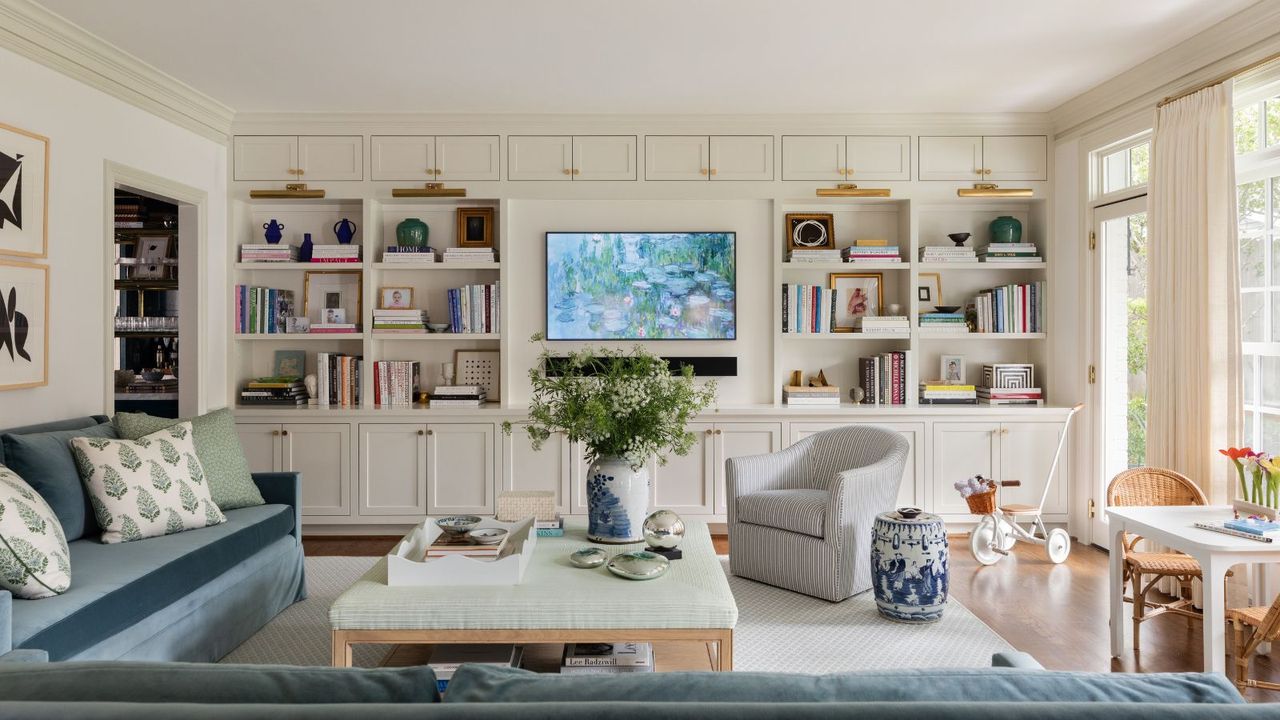
The repeatable formula
If you only remember one thing, make it this: anchor, layer, vary height, add something living, then edit. Styling should feel like a little still life, not a storage shelf.
Step 1: Start with an anchor tray
A tray is your best friend because it instantly turns “random objects” into a “collection.” It also gives you permission to leave your essentials out while still looking pulled together.
- Size starting point: aim for a tray that covers about one third to one half of the table surface (adjust up or down depending on how much you actually use the table).
- Shape idea: echo the table shape for calm (round tray on round table), or contrast it for energy (rectangular tray on round table).
- Material tip: choose something with presence: brass, wood, rattan, stone, lacquer, or even a thrifted serving platter.
Clara tip: This is what I call the little note I’d text a friend mid-styling. If you’re working with a family room, pick a tray with a small lip. It keeps items from migrating when someone inevitably slides the tray to make room for pizza night.
Step 2: Build a book stack base
Books create instant height and structure. They also tell a story, which is the entire point of a home that feels personal.
- Use 2 to 3 books per stack, depending on table height.
- Choose covers that work with your room, but don’t stress about perfection. Neutral spines calm things down; bold art books add personality fast.
- Place the stack partly on the tray or just beside it so the table feels layered, not boxed in.
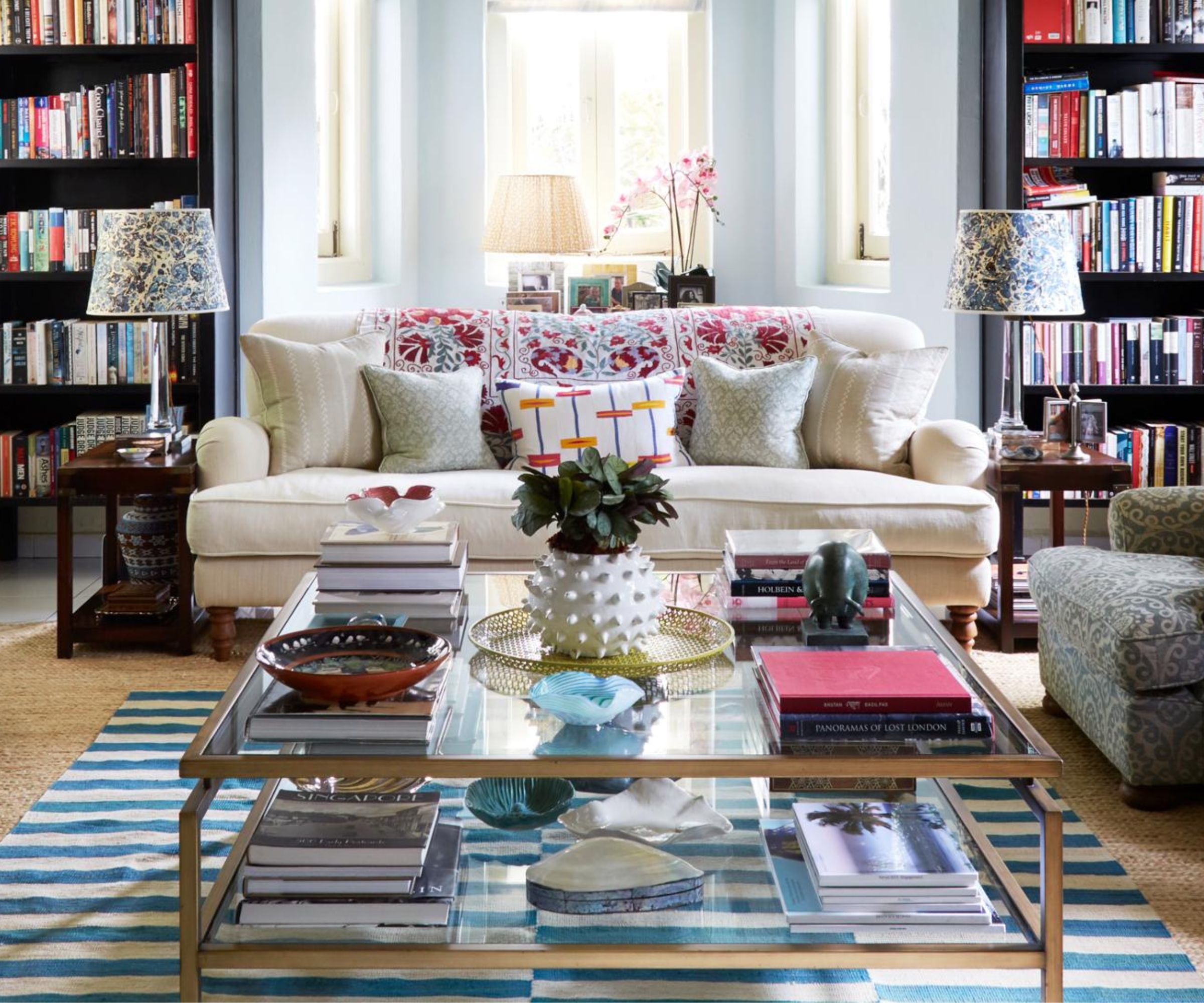
Step 3: Create three heights
This is the difference between “flat” and “styled.” Give your eye a tall element, a medium element, and a low element.
- Tall: a vase with branches, a slim table sculpture, or a candlestick.
- Medium: a candle, a small bowl, or a short vase.
- Low: matches in a pretty box, a coaster stack, or a small object with texture.
Keep the tallest piece practical. If it blocks the view to the TV, it’ll get moved and your styling will slowly unravel.
Step 4: Use odd numbers
Odd numbers often look relaxed and natural. Three is the easiest place to start.
- Group 3 small objects on the tray (for example: candle, matches, small dish).
- Or do 1 statement object plus 2 supporting pieces (for example: a vase, then a small bowl and a lighter).
Step 5: Add something alive
A room instantly softens when something natural shows up on the coffee table.
- Fresh: a clipped branch, grocery store flowers, a little bundle of herbs in a glass.
- Low maintenance: a pothos cutting in water (give it bright, indirect light and refresh the water now and then), dried stems, eucalyptus, or an artful bowl of citrus.
Step 6: Edit for breathing room
The final step isn’t adding, it’s subtracting. Your table needs negative space so it feels calm and usable.
- Leave at least one clear landing zone for a mug.
- Make sure nothing wobbles. If it rattles when you set down a drink, it’s not staying.
- Step back and check balance. If everything is on one side, shift the tray or book stack slightly.
Two easy layouts
The vibe of the room matters. A formal living room coffee table can be a little more sculptural. A family room table has to earn its keep.
Living room setup
- Anchor: vintage brass or marble tray
- Books: 2 oversized art or design books (one can be a thrifted coffee table book with a beautiful spine)
- Statement: a ceramic vase with a single branch
- Detail: a small bowl for jewelry or keys, plus a candle
This setup photographs like a dream because it has contrast: hard and soft, tall and low, glossy and matte.
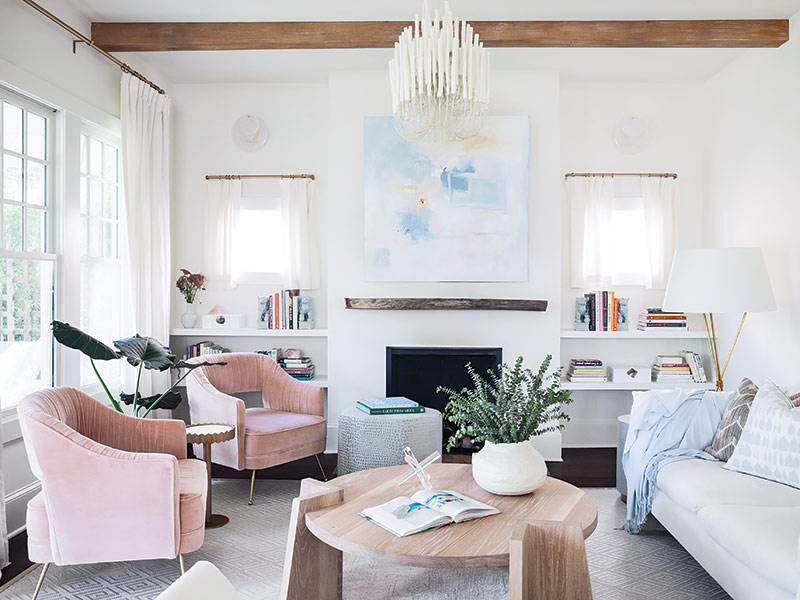
Family room setup
- Anchor: sturdy wood or rattan tray with handles
- Books: 1 to 2 books max, or swap books for a lidded box
- Function: coasters that you actually use, a candle or diffuser, and a small catchall
- Flexible: one “moveable” object, like a small vase you can pick up quickly
Family-room styling is about contained beauty. The tray keeps things tidy, and every item has a job.
Quick safety note: If you’ve got kids or pets, skip an open flame on the coffee table. Try an LED candle, a reed diffuser, or a lidded candle you only light when you’re in the room.
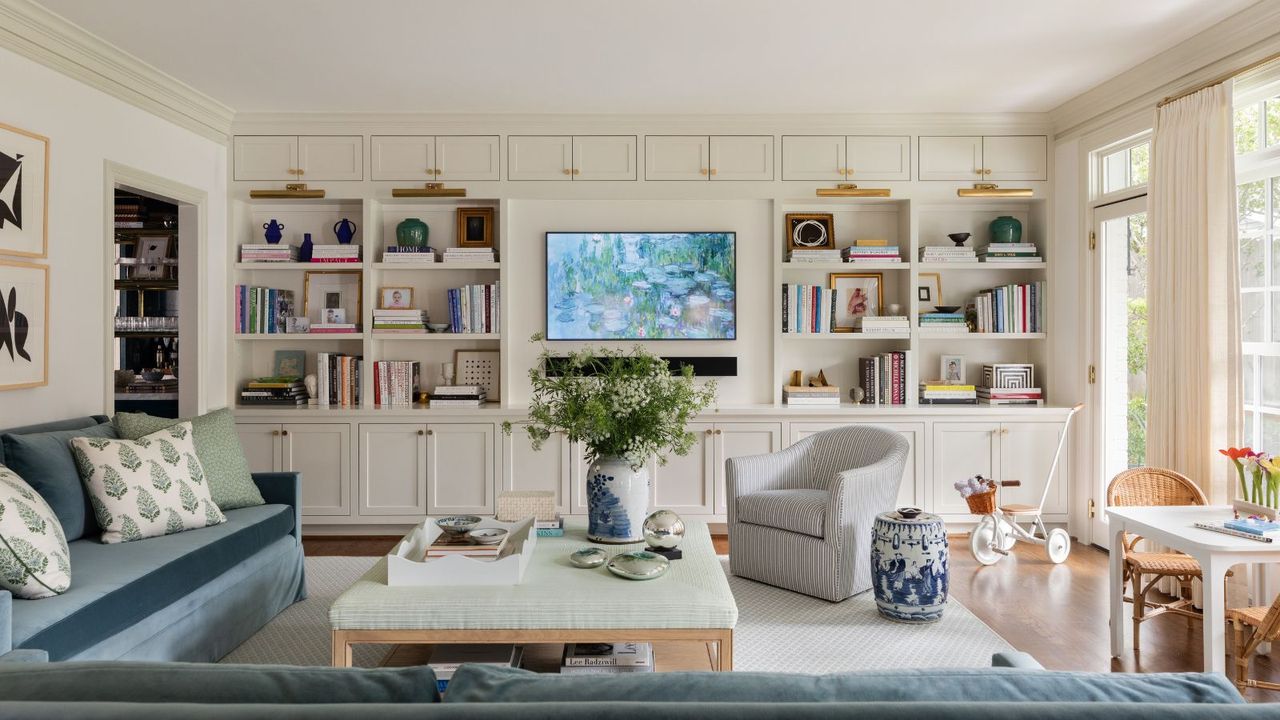
Easy seasonal swaps
The secret to seasonal styling is keeping your base the same. Tray stays. Books stay. You swap one or two small elements and suddenly the whole room feels refreshed.
Spring
- Trade heavy candles for a fresh, clean scent (linen, citrus, green tea).
- Add tulips, ranunculus, or a single flowering branch in a simple vase.
- Swap in a lighter catchall like clear glass or pale ceramic.
Summer
- Use a bowl of lemons or peaches as your organic element.
- Switch to woven texture: a seagrass coaster stack or rattan box.
- Add one glossy piece, like a small glass vase, to catch the light.
Fall
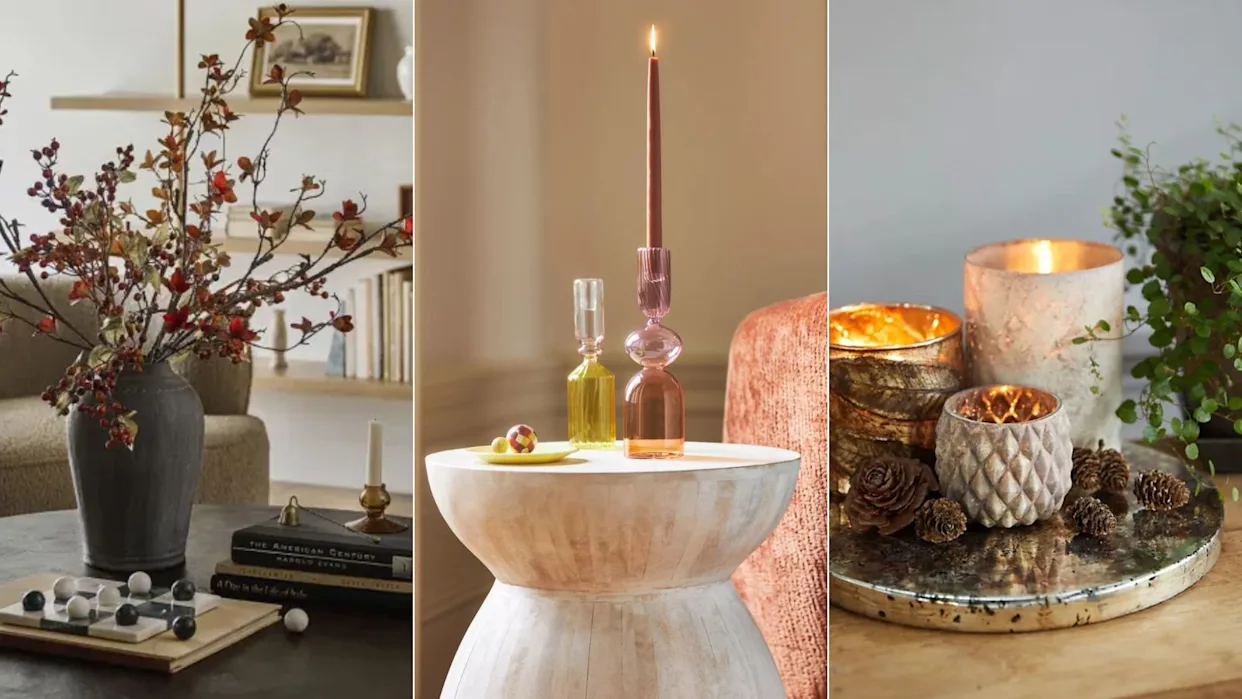
- Bring in amber glass, a favorite of mine for instant warmth.
- Swap flowers for dried stems or a branch with warm-toned leaves.
- Choose a deeper candle scent (smoke, fig, sandalwood).
Winter
- Layer in metallics: brass candlesticks or a small silver dish.
- Use evergreen clippings or dried oranges in a bowl.
- Add a cozy touch like a small knitted coaster stack or a velvet-wrapped box.
Budget-friendly sourcing: grocery store flowers, thrifted trays, secondhand books, and small vintage bowls are usually far cheaper than “decor” from big-box stores and they look more personal, too.
Tiny table fixes
If your coffee table is small
- Go mini: use a small tray or a single beautiful bowl as the anchor.
- Limit the cast: pick 3 items total plus coasters.
- Choose low pieces: keep the tallest element under eye level when seated so it doesn’t feel like a centerpiece at a restaurant.
If your coffee table is always cluttered
- Give clutter a container: add a lidded box or deep bowl on the tray for remotes, lip balm, and the little stuff.
- Create zones: one zone for “pretty,” one zone for “life.” The tray is the pretty zone.
- Try a nightly reset: 60 seconds, no more. Put cups away, toss receipts, return remotes to the tray.
If everything looks flat
- Increase height with a taller vase or candlestick.
- Add texture: something woven, something glossy, something matte.
- Turn one book stack slightly so it’s not perfectly parallel with the table edge.
If it looks too fussy
- Remove one small item.
- Swap in one personal object: a matchbox from a trip, a tiny framed photo, a found stone from a beach day.
- Let one piece be imperfect: a slightly wrinkled linen napkin under a candle, or stems that lean naturally.
What to avoid
- Too many tiny objects that read like clutter from across the room.
- Anything fragile you’re nervous to use or constantly move.
- Overly tall arrangements that block sightlines (or the TV).
- A tray that’s so big you’ve got nowhere to set down a drink.
The five-minute reset
If company’s on the way and you need the table to behave, do this:
- Put all loose items into a basket off to the side for now.
- Center your tray (or nudge it slightly off-center for a relaxed look).
- Place your book stack.
- Add one tall element and one low element.
- Wipe the surface, light the candle, and stop touching it.
That last step matters. Coffee tables are like hair. The more you fuss, the less natural it looks.
If you want your coffee table to feel intentional, let it tell the truth about your home. A candle you actually light, coasters you actually use, and a bowl that catches the daily bits and bobs will always feel more beautiful than a table you’re scared to touch.