Clothes Dryer Smells Musty? Apartment Lint Trap, Drum, and Vent Checks

Clara Townsend
Clara Townsend is an interior stylist, vintage furniture enthusiast, and the creative voice behind Velvet Abode. With over a decade of experience transforming both cramped city apartments and sprawling fixer-uppers, she believes that a beautiful home is built on personal stories rather than massive budgets. When she isn't hunting for the perfect brass sconce at a local flea market, she can usually be found rearranging her living room for the third time this month.
A musty dryer smell is one of those tiny household insults that somehow clings to your whole day. You pull out a warm towel expecting “fresh” and instead get a whiff of basement cardigan. The good news is that in apartments, the culprit is usually simple: damp lint hiding where you wouldn’t think to look, a slightly mildewy drum, or a vent path that is not exhausting well.
This guide walks you through the renter-safe checks that make the biggest difference: the lint trap (and its sneaky secondary lint spots), the drum, and the vent hose. I will also tell you plainly what is safe to open yourself and what should be handed to maintenance.
Quick reality check: sometimes the dryer is innocent. Odor can transfer from clothes that sat too long in the washer, or from already-mildewed towels and gym gear. Still, a dryer that is not venting well can make every load worse.
Quick sniff test
Musty usually means moisture plus buildup. Translation: damp lint, lingering wet-laundry smells, or humid air getting trapped in the machine or vent line.
- Smells musty even when empty: drum residue, damp lint in the lint trap housing, or a vent issue.
- Smells worst right after a cycle: moisture not exhausting well, or laundry sat wet too long before drying.
- Comes and goes: seasonal humidity, a vent flap that sticks sometimes, or intermittent airflow restriction.
Before you start
- Unplug the dryer (or switch off the breaker if the plug is inaccessible). If it is a gas dryer, do not touch gas lines or fittings.
- Work with a dry machine. If you just ran a load, let the drum cool.
- Skip flammable shortcuts. No gasoline, no lighter fluid, and avoid spraying strong solvents inside the dryer.
- Have basics ready: microfiber cloths, dish soap, white vinegar, baking soda, a vacuum with a hose, and a flashlight.
If your lease mentions appliance servicing rules, follow them. When in doubt, take a quick photo of the model label and email maintenance first. It saves everyone time.
Stop and call maintenance
Do not “push through” these. Stop using the dryer and put in a ticket (or call) if you notice:
- Burning smell or scorching odors
- Dryer or closet area gets extremely hot, or the unit keeps shutting off
- Breaker trips repeatedly
- Lint blowing into the closet or a clear vent disconnection
- Any gas smell near a gas dryer
Step 1: Lint trap and housing
I am going to use one term throughout: the lint trap housing is the slot and cavity where the lint screen slides in. This is where damp lint loves to hide.
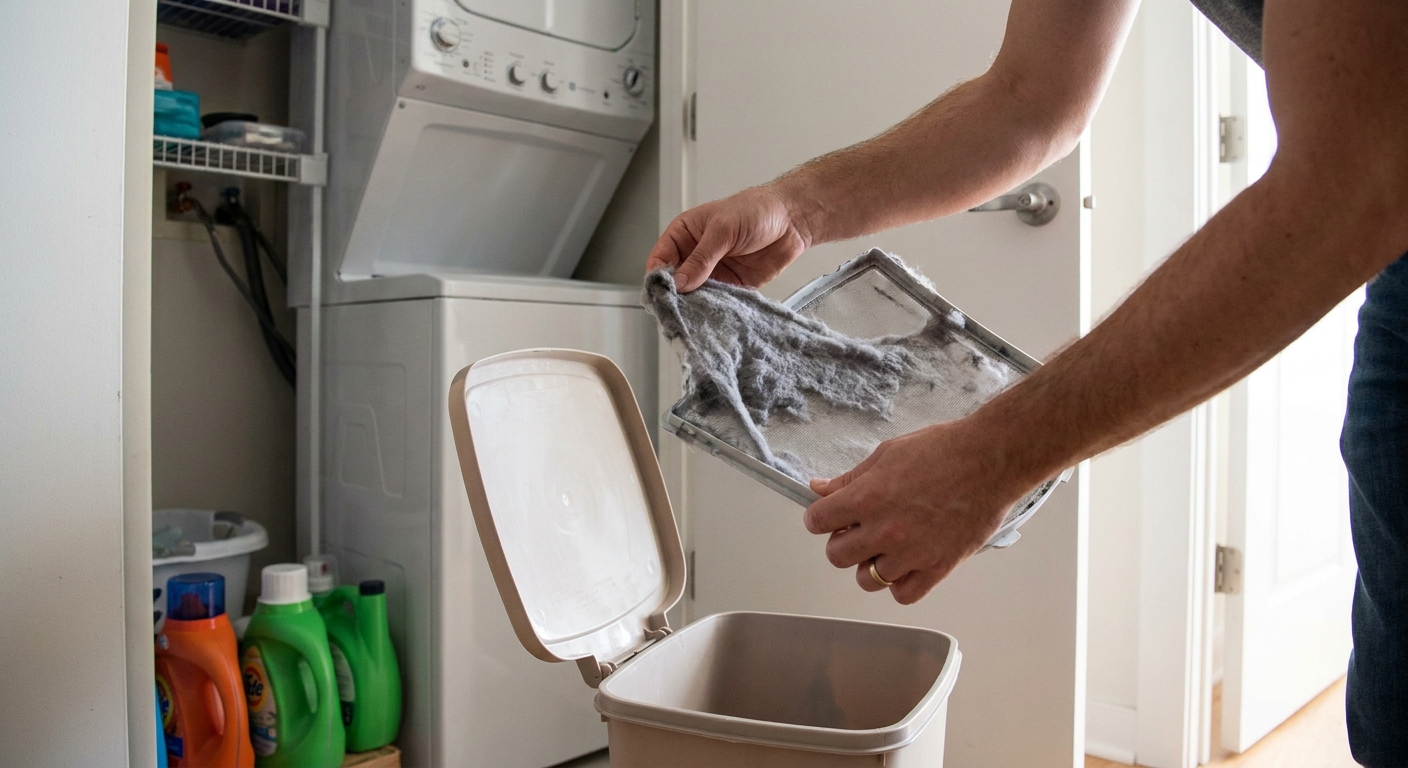
Clean the screen
Most of us pull off the fuzz and call it a day. But dryer sheets and softener residue can coat the screen and mess with airflow, moisture, and odor.
- Wash the lint screen with warm water and a drop of dish soap.
- Rinse well and let it dry completely.
- If you want to check for residue: run water over the screen. If it beads up, it needs a wash.
Vacuum the housing
This is the “secondary lint spot” that gets missed. Lint falls past the screen and sits in the housing where it can stay slightly damp, especially in humid apartments or closet laundry setups.
- Remove the lint screen.
- Use a flashlight to look down into the housing.
- Vacuum gently with a hose attachment. Do not force rigid tools deep into the cavity.
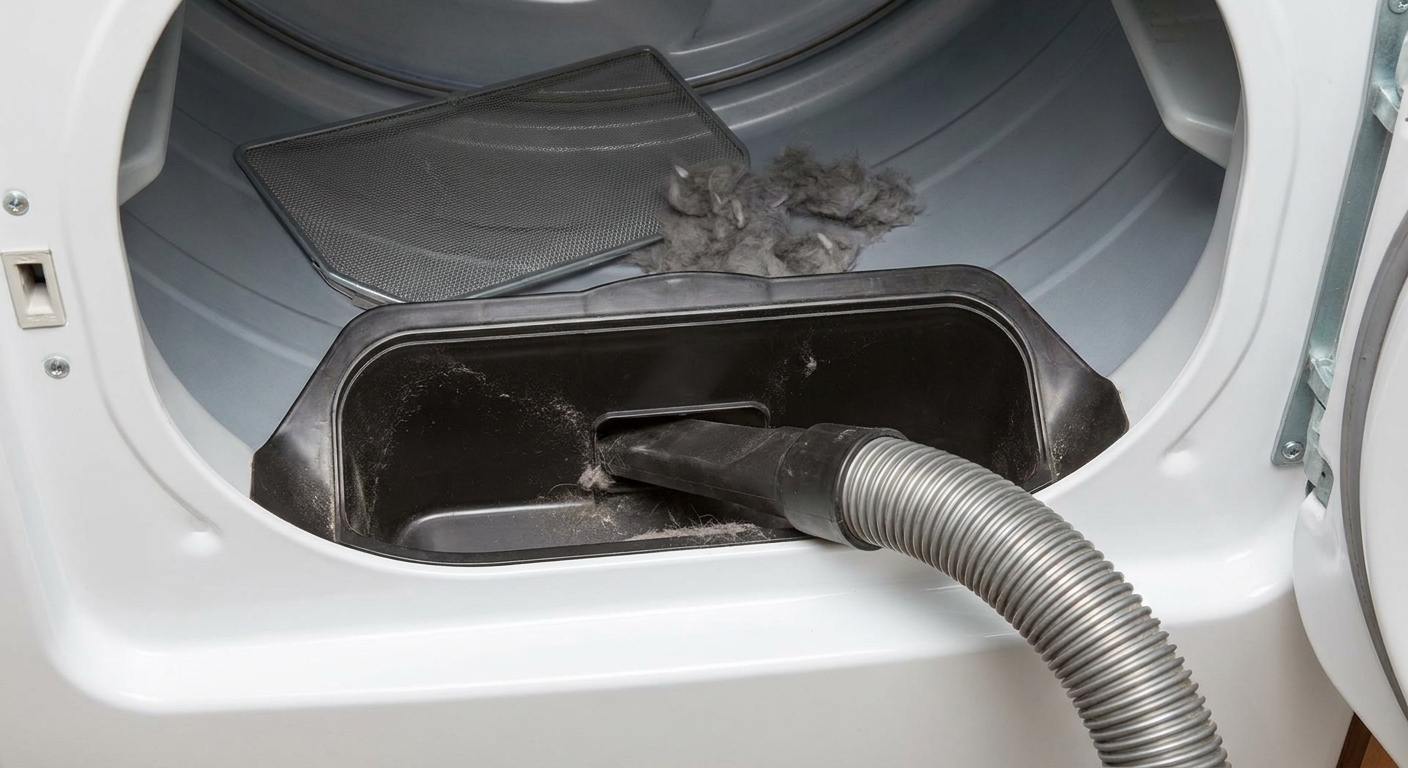
Renter-safe note: avoid removing large panels to access the internal blower area unless your lease explicitly allows it. If you can see heavy lint caked below the housing and cannot reach it safely, that is a maintenance ticket.
Step 2: Clean the drum
Dryers feel like they should be self-cleaning because of the heat, but residue happens. A forgotten damp load, a humid vent path, or too much softener can leave a faint film that holds odor.
Simple drum refresh
- Wipe the drum with a cloth dampened in warm water + a little dish soap.
- Optional: follow with a wipe of equal parts water and white vinegar to cut lingering odors. Spot-test first and check your manual if your drum has a special coating or finish.
- Dry thoroughly with a clean towel.
- Run the dryer on high heat for 10 to 15 minutes with nothing inside to fully dry it out. Do not leave it unattended.
For stubborn odor
You listed baking soda on the counter, so let it earn its keep. If the drum still smells a bit swampy:
- Make a thin paste of baking soda + water.
- Wipe a light layer on the drum with a soft cloth, focusing on any hazy film.
- Wipe again with clean water until residue is gone, then dry thoroughly.
- Run an empty high-heat cycle for 10 minutes. Do not leave it unattended.
If you see black spots
In a dryer, visible “mildew” is often a mix of lint, detergent residue, and moisture. If it wipes away easily, the steps above usually solve it. If it does not wipe away, or you see staining around seams and vent areas, stop and call maintenance. Moisture where it should not be can signal a venting problem, not just a dirty drum.
Step 3: Check airflow
Musty smell loves poor airflow. In apartments, dryers often live in tight closets where warm, damp air lingers if the vent path is partially blocked.
The door test
- Run a timed dry cycle for 5 minutes with a small damp load (a couple of towels works). An empty dryer will make heat, but it will not create the moisture needed to test venting.
- Open the closet door (if you have one) and take a sniff.
- If the closet smells steamy or stale fast, airflow may be restricted or the closet needs more ventilation.
Look for vent hose problems
If your dryer is accessible, pull it out carefully just enough to see behind it. You are looking for:
- Kinks or crushing in the flexible vent hose.
- Loose connections where moist air could leak into the closet.
- Excess length of hose looping on itself and catching lint.
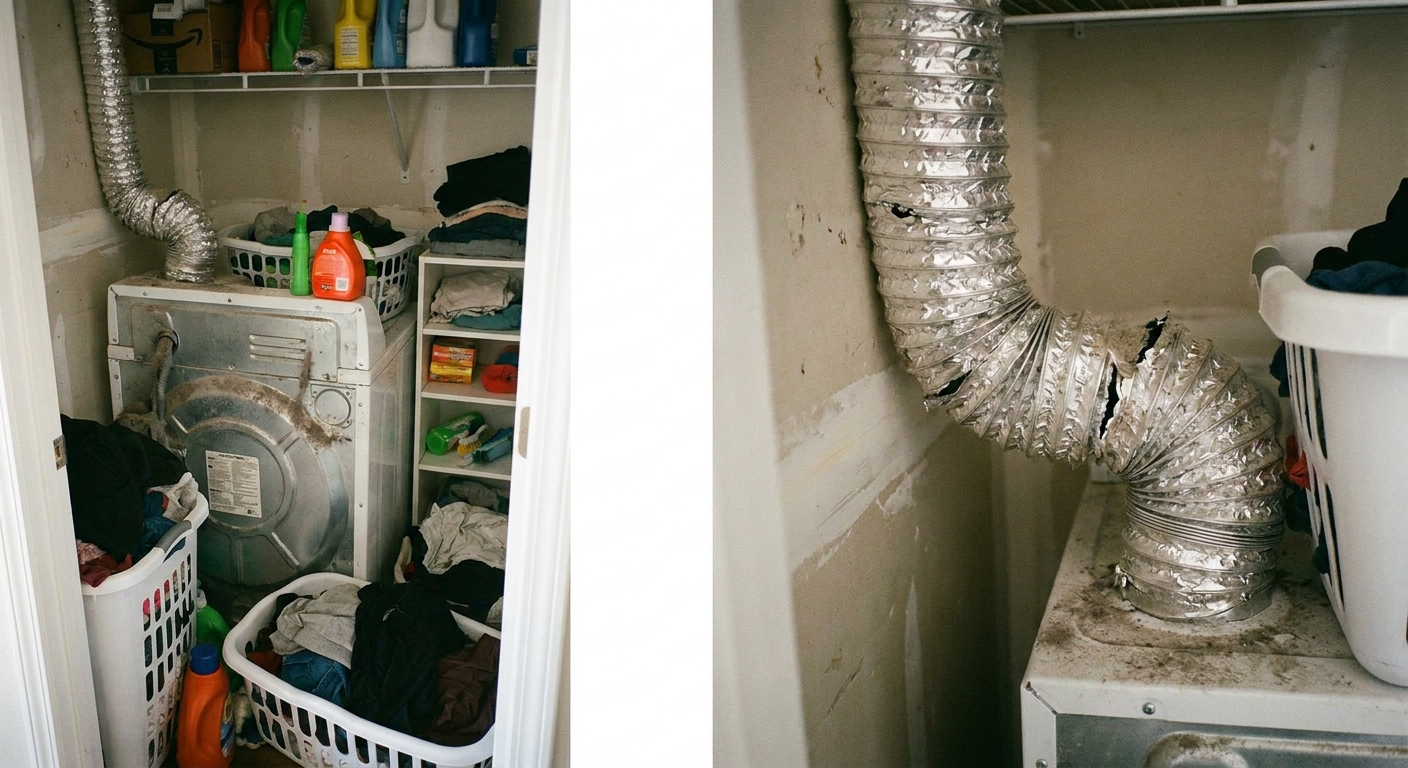
What you can do: if it is simply kinked, straighten the hose gently so it has a smooth curve. If it is torn, disconnected, or looks packed with lint, that is usually a maintenance call in rentals.
Vented vs ventless dryers
Not every apartment dryer uses a wall vent. If you have a ventless (condenser or heat pump) dryer, you may not have a vent hose at all. Musty smells in ventless units often come from a dirty condenser area, clogged filters, or a water reservoir that needs emptying. Follow your manual and lean on maintenance if access requires panel removal.
Other lint spots
Lint does not only live on the screen. Here are bonus spots that can hold damp fuzz and odors, with renter-friendly boundaries.
- Dryer door gasket and rim: wipe the rubber or inner lip with warm soapy water, then dry.
- Moisture sensor bars (inside the drum): if your dryer has two small metal strips, wipe them with a damp cloth. Residue can confuse dryness sensing and leave loads slightly damp.
- Lint under the machine: vacuum around the base and the floor behind the dryer if you can safely reach it.
- Wall connection area: if you can see lint accumulation around the wall vent connection, vacuum gently without removing fixed ductwork.
Avoid: opening the dryer cabinet, removing the back panel, or disconnecting hard ducting without approval. Those steps can create fire risk if reassembled poorly and can violate a lease.
When the building owns the ductwork
In many apartment buildings, you can access the flexible vent hose behind your dryer, but the ductwork inside the wall and the exterior vent termination are building-owned and building-maintained. If the musty smell persists after cleaning the lint screen, housing, and drum, the issue is often deeper in that system. A blocked vent can also cause condensation and lingering damp smells.
Signs the wall duct needs service
- Clothes take much longer to dry than they used to.
- The dryer or closet area feels unusually hot and humid.
- You smell mustiness or stale air even when the dryer is off.
- You see lint blowing into the closet (possible disconnection or leak).
What to say in your request
Copy and paste friendly, specific language like:
Hi, my dryer has a persistent musty odor and drying times have increased. I cleaned the lint screen and vacuumed the lint trap housing, and I wiped the drum. Could someone check the dryer vent connection, the wall duct, and the exterior vent for airflow and lint buildup? Thank you.
What renters can disassemble
Usually safe
- Remove and wash the lint screen.
- Vacuum the lint trap housing with a hose attachment.
- Wipe the drum, door rim, and gasket.
- Straighten a visible kink in the flexible vent hose without disconnecting anything.
Usually not renter-safe
- Removing the front, top, or back panels of the dryer cabinet.
- Disconnecting the dryer from wall ducting or messing with clamps if you are not confident re-seating everything tightly.
- Cleaning inside wall ducts with long brushes that can dislodge joints.
- Any work involving gas connections or venting shared with other units.
If your building supplies the appliances, err on the side of calling maintenance. You deserve a safe, properly vented dryer. Your laundry should smell like clean cotton, not like a forgotten gym bag.
Habits that prevent mustiness
- Do not let wet laundry sit. Even 30 to 60 minutes can create that sour-start smell, especially in humid conditions.
- Leave the dryer door cracked open between loads so the drum can air out.
- Go easy on dryer sheets. Too many can create residue on screens and sensors.
- Do not overload the dryer. Crowded loads dry slowly and can stay slightly damp, which keeps odors alive.
- Wash the lint screen every load and wash it with soap monthly.
- Monthly reset: wipe the drum, then run one hot, empty cycle, especially in humid climates.
FAQ
Why does my dryer smell musty but my clothes do not?
Often the drum or lint trap housing has an odor, but heat and detergent mask it on fabrics. It is still worth addressing because it can worsen and start transferring to clothes over time.
Could the smell be coming from the washer?
Yes. If clothes sat wet in the washer, or your washer has mildew buildup, the dryer can “inherit” that odor and warm it up. If you keep chasing dryer smells that return instantly, check the washer gasket, dispenser drawer, and run a washer-clean cycle.
Can I use bleach inside the dryer?
I do not recommend it in most cases. Bleach fumes are irritating, and liquids can damage finishes if not rinsed thoroughly. Stick with dish soap, cautious spot-tested vinegar (or skip it), and thorough drying. If you suspect true mold inside inaccessible parts, call maintenance.
My dryer is in a closet and always feels damp. Is that normal?
It is common, but it is not ideal. Closet setups need good venting and some breathing room. If you have a louvered door, keep it open during drying when possible, and ask maintenance to confirm the vent path is clear.