Close the Gap Between Your Mattress and a Fabric Headboard

Clara Townsend
There are a few tiny household annoyances that feel weirdly personal. One of mine is the little slot between a mattress and a fabric headboard, the one that seems to exist purely to swallow pillows, pacifiers, phones, and the occasional TV remote at 1 a.m.
I have styled beds in everything from shoebox apartments to drafty old farmhouses, and I can tell you: that gap is usually not about “messy bedding.” It is more often a simple fit problem between your mattress height, your frame position, and how the headboard is mounted.
Below is exactly how I troubleshoot it in a client’s home, step by step, without turning it into a whole weekend project.
Measure the gap first
Before you buy anything, measure. The fix for a 1 inch gap is totally different from the fix for a 4 inch gap.
What you need
- Tape measure
- A book or cutting board (something flat)
- Your phone camera (optional but helpful)
How to measure accurately
- Depth of the gap: Push pillows forward. Measure from the top edge of the mattress (head end) straight back to the headboard upholstery. Use the flat book as a straight edge if your bedding is in the way.
- Height difference: Measure from the top of the mattress to the point where the headboard starts to angle or curve (common on cushioned or wingback styles). Sometimes the mattress is technically “touching,” but the upholstered face sits back, creating a catch zone.
- Side-to-side consistency: Measure the gap on the left and right. If one side is bigger, your frame or headboard is likely slightly off-center or out of square (meaning the frame is skewed, so the corners are not evenly aligned).
Quick interpretation: If the gap is under 1.5 inches, you can often solve it with positioning or a slim filler. If it is 2 to 4 inches, you usually need to adjust the headboard mount or the frame-to-headboard relationship.
Find the real cause
That gap usually comes from one of these scenarios. Once you identify yours, the fix becomes almost boringly straightforward.
Your mattress is sitting too far forward
This is common with platform beds that have a little lip, or with adjustable bases and metal frames where the mattress can creep forward over time.
- Check whether the mattress is flush to the head of the frame.
- Look for a stop bar or small brackets that are supposed to keep the mattress from sliding.
- If you can push the mattress back and it stays, congratulations, you just solved it in 10 seconds.
The headboard is mounted too far back
Fabric headboards are often thicker than wood ones, and the brackets sometimes push the upholstered panel away from the frame, especially when the hardware is universal.
- Stand at the side of the bed and look at the profile. Is the headboard leaning away from the mattress?
- Look at the brackets. Are they set on a rear hole position when they could be moved forward?
Your headboard shape creates a catch zone
Even when the mattress touches the lower panel, a wingback, curved, or deeply cushioned headboard can sit back higher up. That creates a sneaky “shelf” where pillows and small items slide down and disappear.
The mattress is thinner than the bed was designed for
Many upholstered bed designs are commonly proportioned around a roughly 10 to 14 inch mattress, but it varies a lot by brand and whether a foundation is expected. If you have an 8 inch mattress, the headboard can end up feeling tall and far away, which visually and physically exaggerates the gap.
This does not mean your mattress is “wrong.” It just means you may need to adjust the mount or add height with a foundation solution. If you can, check the manufacturer’s recommended mattress height for your specific bed.
Fix 1: Reposition the frame and mattress
I always start here because it costs nothing and often works.
Step-by-step
- Strip the bed back to the fitted sheet so you can actually see what is happening.
- Push the mattress firmly toward the headboard.
- Check whether the bed frame has a head rail or a mattress stop. If it does, make sure the mattress is fully seated against it.
- If the mattress slides forward again, add a grippy layer between mattress and base: a thin rug pad or non-slip shelf liner can help on smooth platforms.
Stylist note: Keep it thin, non-staining, and as flat as possible so you do not change the support feel. Avoid anything thick or squishy that could create uneven support, trap moisture, or interfere with airflow, especially on slatted frames and adjustable bases. And if your headboard is fabric, keep grippy materials under the mattress, not between mattress and headboard.
One more tiny save: If you are pushing the whole bed back toward a wall or wall-mounted headboard, felt pads or a slim bumper on contact points can help prevent scuffs.
Fix 2: Bring the headboard closer
If your headboard attaches to a bed frame, a metal frame, or a universal bracket set, you often have a little wiggle room.
What to look for
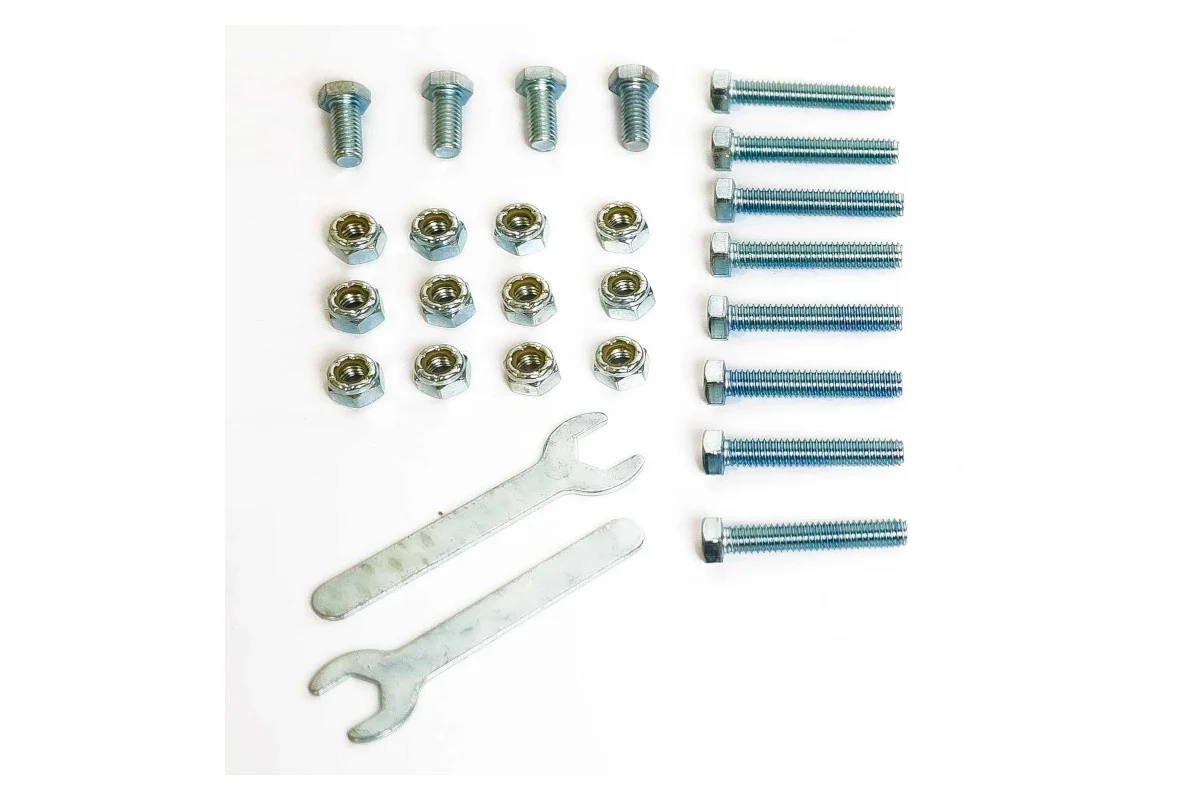
- Slotted brackets: These let you shift the headboard forward and back by choosing different holes.
- Offset plates: Some setups include a plate that can be flipped to change how far the headboard sits from the frame.
- Wall-mounted headboards: These can be mounted a touch too high or too far back, creating a shelf-like void.
A safe adjustment process
- Have a second person hold the headboard steady. Upholstered panels are heavier than they look.
- Loosen bolts slightly and test whether the headboard can shift forward.
- Re-tighten firmly and recheck the gap on both sides.
- Once aligned, give the headboard a gentle shake. If it moves, tighten again and recheck both sides.
Important: If you see cracked wood, stripped holes, or bent metal, stop and repair or replace the hardware. A wobbly upholstered headboard can damage fabric at stress points over time.
Fix 3: Add a soft filler
If your gap is small to medium and you want a solution that does not involve tools, a soft filler is genuinely underrated. The goal is to create a gentle barrier that stops items from dropping, without putting pressure on the upholstery.
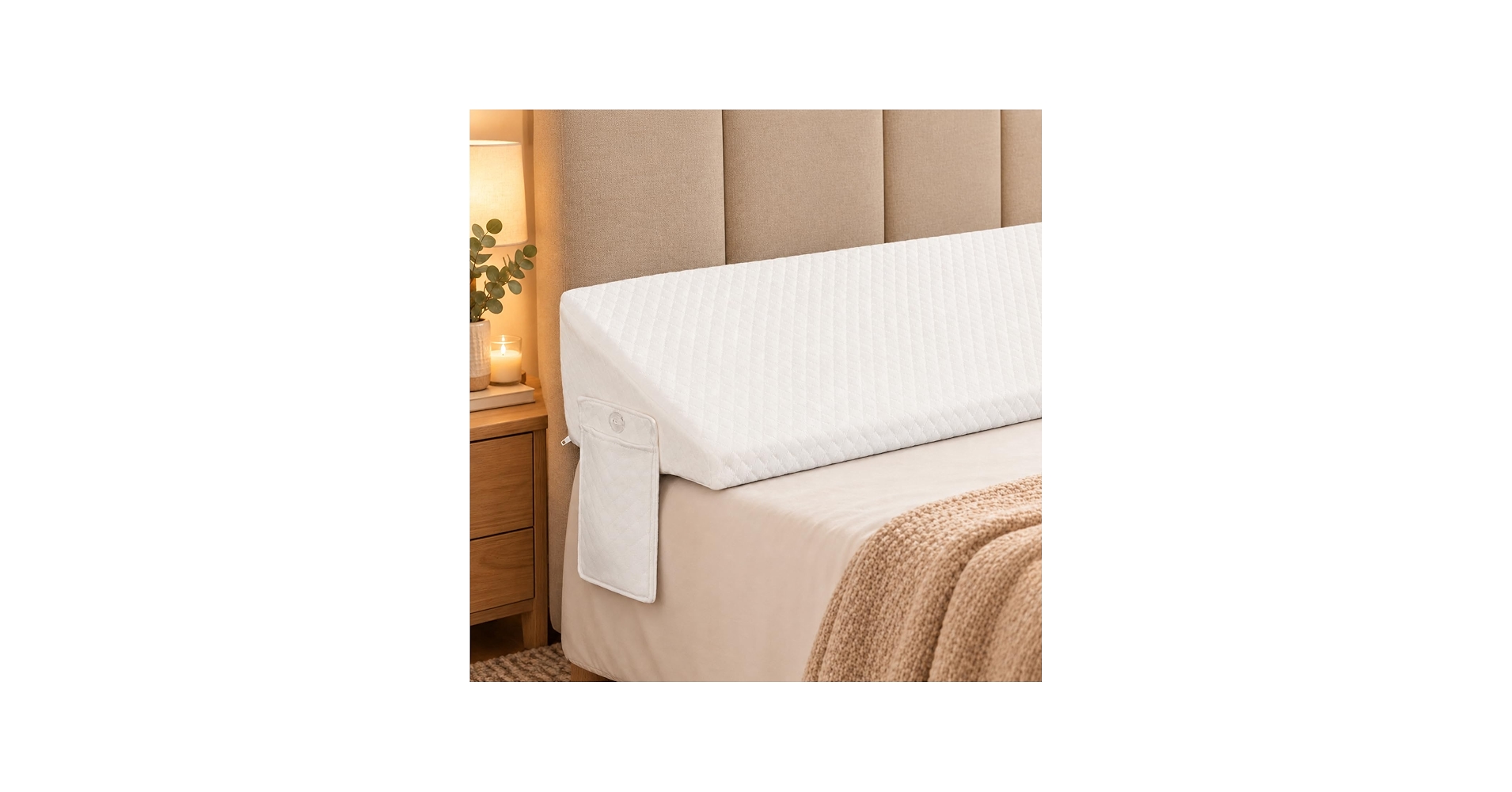
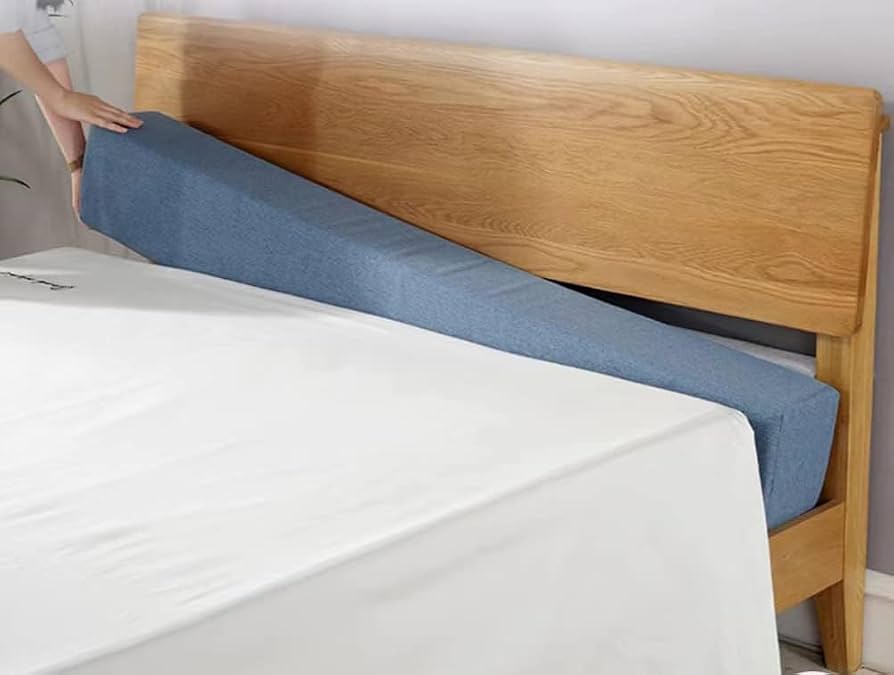
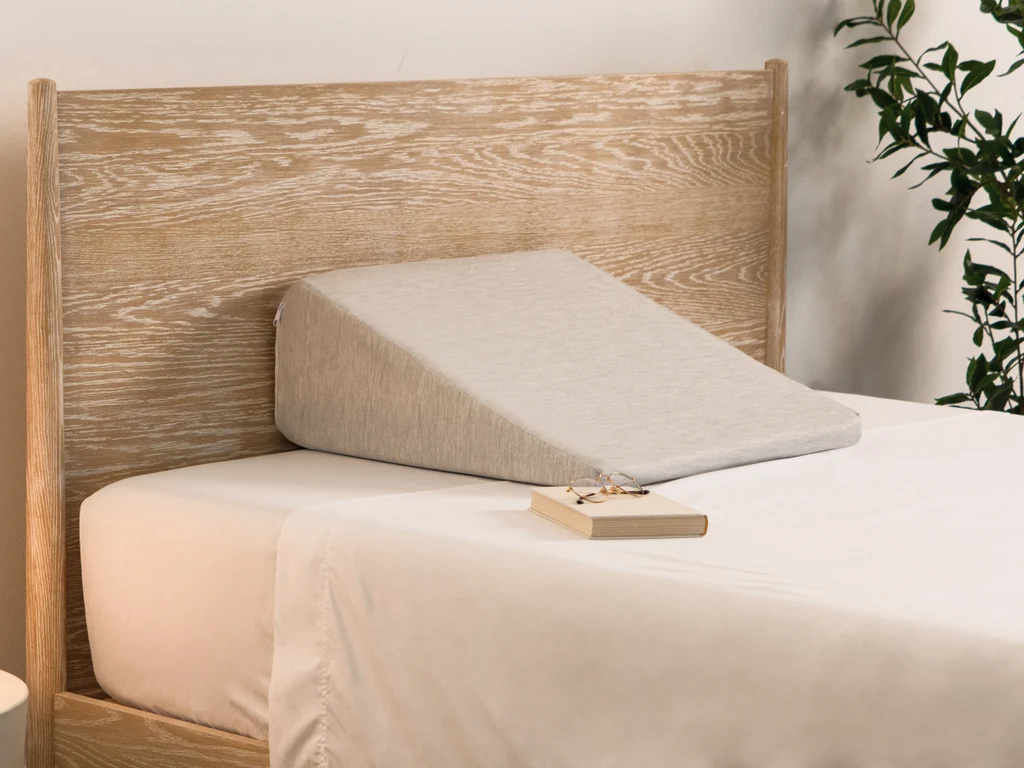
Option A: A foam wedge or bolster
Look for upholstery foam, a bed gap wedge, or a long cylindrical bolster pillow that spans most of the bed width.
- Choose a filler that is slightly wider than your measured gap so it stays in place.
- If it is visible, wrap it in fabric that matches your headboard or your sheets for a cleaner look.
Option B: A rolled towel or draft-stopper cushion
This is my quick fix when styling a guest room the night before someone arrives. Roll a bath towel tightly and tuck it into the gap. If you want it to look intentional, slide it into a spare pillowcase.
Option C: A hidden lumbar
If you already use sleeping pillows plus decorative pillows, hide a long lumbar pillow behind your sleepers. It fills the void and gives your pillows a soft backstop, which can make the whole bed feel more plush and tailored.
Avoid: Anything sticky or adhesive against upholstery, anything sharp-edged, or anything that compresses the fabric hard enough to leave dents.
When a bigger change is the real fix
Sometimes the gap is a symptom of a bigger mismatch in proportions. If you keep “fixing” it and it returns, it is worth considering the underlying geometry.
A thicker mattress can help if
- Your mattress is notably thin and your headboard face sits far back.
- Your pillows look like they are constantly sliding into a trench.
- The bed feels visually unbalanced, like the headboard is towering above a low mattress.
You do not necessarily need a new mattress, either. In some setups, adding height underneath with a bunkie board or low-profile foundation brings the sleeping surface up and reduces the apparent gap.
Compatibility check: Some upholstered platform beds are designed for mattress-only. Adding a foundation can make the bed too tall, reduce how much headboard shows, or affect how securely the mattress sits. Use what your bed’s manufacturer recommends when you can.
A different mount can help if
- Your headboard is wall-mounted and the gap is large even when the bed is pushed fully back.
- The headboard was installed a bit too high, so the upholstered panel starts above the mattress line.
- Your frame and headboard are from different brands and the bracket set forces an awkward stand-off distance.
If you are renting or you cannot remount, the soft filler route is the most practical. But if you own the place and plan to keep the headboard, correcting the mount is the most satisfying long-term fix.
Quick checklist
- Gap is small and even: Try a foam wedge or a hidden lumbar.
- Gap is small but keeps coming back: Mattress is sliding forward. Add a thin grippy layer under the mattress and check for stops.
- Gap is medium and the headboard looks far away: Adjust bracket position to bring the headboard closer.
- Gap is large and nothing lines up: Consider a mount change or reassess mattress height for the bed design.
- Gap is bigger on one side: Re-square the frame, re-tighten hardware, then remeasure.
FAQs
Is it bad for my fabric headboard to press tightly against the mattress?
A light, gentle contact is fine in most cases. What you want to avoid is constant hard pressure that rubs the fabric every time you move the mattress, or pressure that bends the headboard structure. If you see puckering, stress lines, or the headboard starts to bow, back off and use a soft filler instead.
My pillows still fall through even with a wedge. What am I missing?
Usually it is width. If the wedge is narrower than the gap, it migrates. Measure again and size up slightly. Also check whether the mattress is drifting forward overnight, which re-opens the slot.
Can I just shove pool noodles in there?
You can, but they tend to pop up and look a little messy unless they are hidden well. If you do use them, put them inside a pillowcase or wrap them in fabric so they do not squeak against sheets and so they look more intentional.
Will a mattress topper solve it?
Sometimes. A topper can add height, which may reduce the effective drop if your headboard curves back above the mattress line. But it generally will not change the depth between the mattress and headboard. If the issue is depth, focus on brackets, frame position, or a filler.
A final styling tip
Once the gap is handled, do one small thing that makes the bed feel finished: pull your pillows slightly forward, then add a long lumbar or a soft throw at the foot in a texture that plays nicely with your headboard. Linen against velvet, boucle against smooth cotton, or a nubby wool against crisp percale makes the whole setup feel like it was meant to be that way, not “fixed.”
Your bed should feel like a comforting hug, not a place where your phone disappears into the upholstery void.