Clean a Fabric Couch at Home

Clara Townsend
Clara Townsend is an interior stylist, vintage furniture enthusiast, and the creative voice behind Velvet Abode. With over a decade of experience transforming both cramped city apartments and sprawling fixer-uppers, she believes that a beautiful home is built on personal stories rather than massive budgets. When she isn't hunting for the perfect brass sconce at a local flea market, she can usually be found rearranging her living room for the third time this month.
There is something deeply comforting about a fabric sofa that looks lived-in in the good way: a little rumpled, a little softened, and still fresh enough that you would happily sprawl out on it with a cup of tea. The trick is cleaning it like a textile, not like a countertop. Fabric hates rushing, harsh chemicals, and over-wetting.
This is my at-home method for cleaning upholstered couches without shrinking, fading, watermarking, or turning a small spot into a big sad halo.
Before You Start: Know Your Couch
Find the care tag
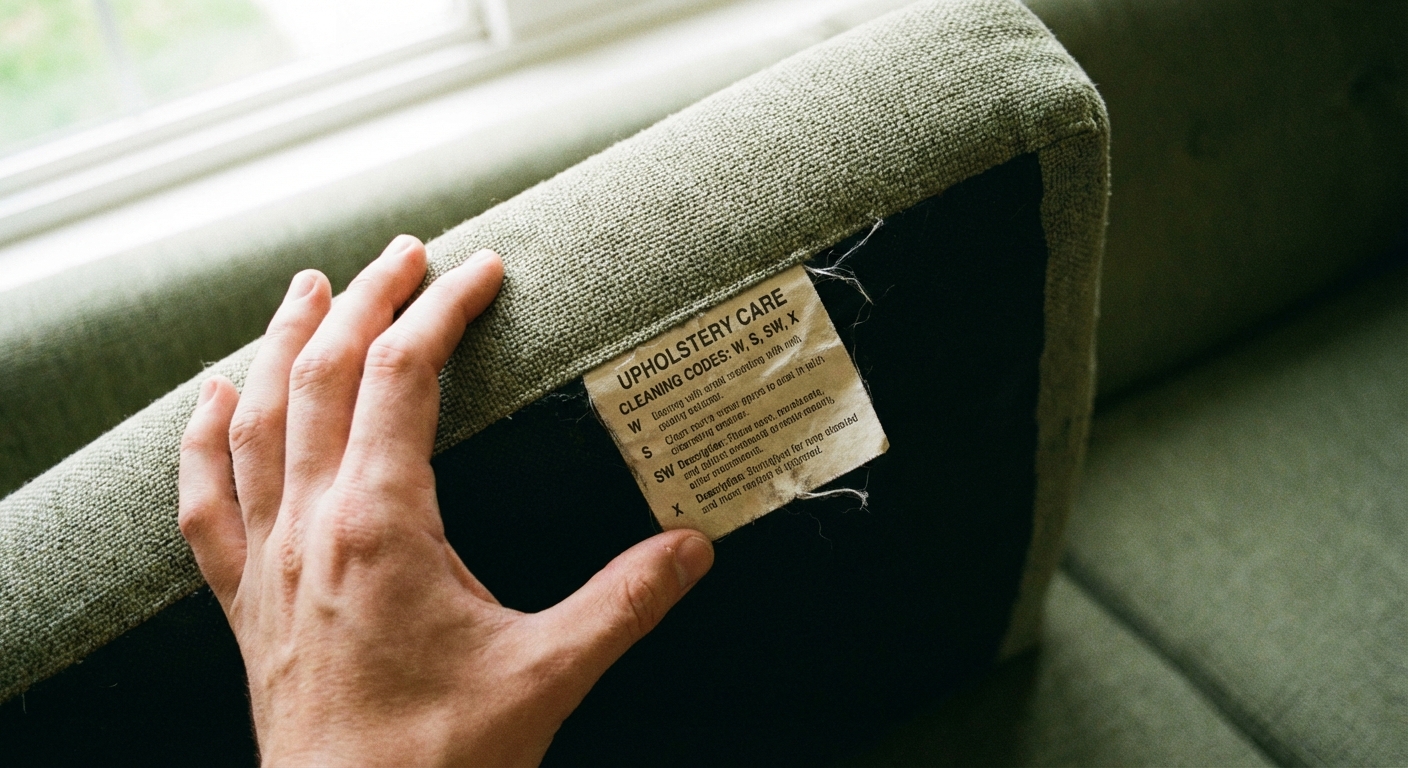
Most sofas have a care tag either on a removable cushion seam, under the seat cushions, or tucked underneath the sofa frame. You are looking for a cleaning code. One quick caveat: codes are not perfectly universal, so if your tag gives specific instructions (or extra letters), follow that first.
- W: Water-based cleaners are safe.
- S: Solvent-based cleaners only (no water).
- WS or SW: Water-based or solvent-based, with care.
- X: Vacuum only. No liquids. Call a pro for stains.
You might also see manufacturer wording like dry-clean style guidance. When in doubt, go slow, keep moisture minimal, and spot-test.
Do a real spot-test
Pick a hidden area like the back lower hem or the inside edge under a cushion.
- Test your cleaner on a white cloth, then dab the fabric.
- Wait 15 minutes to check for immediate dye transfer, darkening, stiffness, or weird texture changes.
- Then let it fully dry before committing. Full dry-down can take a few hours, and rings love to appear late.
Set yourself up
- Ventilation: Open windows, turn on a fan.
- Tools: Upholstery vacuum attachment, soft brush, white microfiber cloths, spray bottle, small bowl, and a clean towel.
- Golden rule: Work from the outside of a stain toward the center, and use the least moisture that gets the job done.
The Safe Weekly Reset
Step 1: Vacuum like you mean it
Dry soil is what grinds into fibers and makes upholstery look dull, so vacuuming is half the battle.
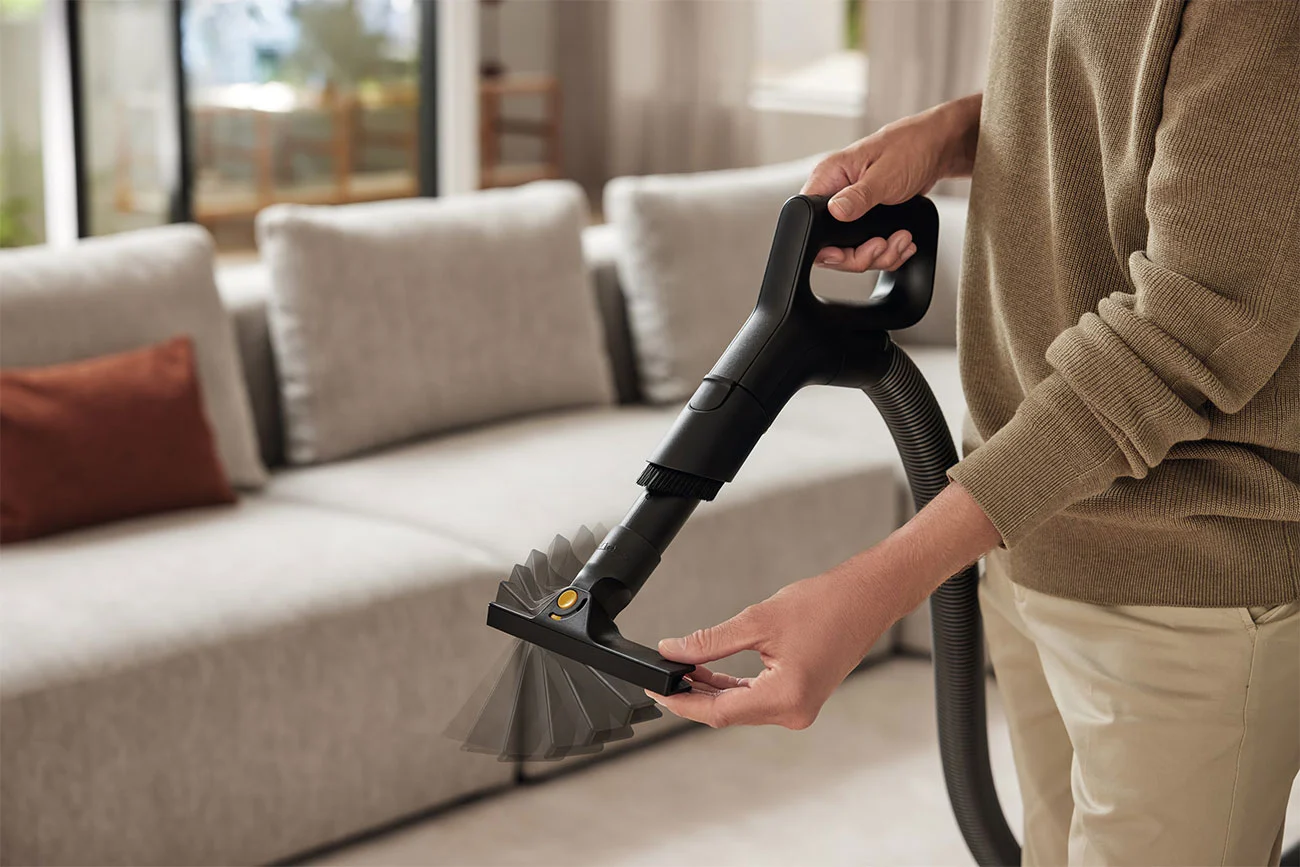
- Remove cushions and vacuum all sides.
- Use the crevice tool along seams, piping, and where arms meet the seat.
- Lightly brush the fabric with a soft brush to lift pet hair, then vacuum again.
Step 2: Deodorize lightly (optional)
If the couch smells a little “life happened,” a light sprinkle of baking soda can help on many W and some WS fabrics.
- Sprinkle a thin layer.
- Let sit 20 to 60 minutes.
- Vacuum thoroughly and slowly.
Often best to skip baking soda on S or X codes, or on very nubby, velvet, or heavily textured fabrics where powder can cling and dull the surface. When in doubt, follow the tag and test first.
How to Clean by Fabric
Quick vocab so I do not repeat myself: “Rinse-dab” means dabbing with a clean cloth lightly dampened with plain water to lift out soap, then blotting dry. It matters because leftover soap can attract dirt later.
Cotton
Cotton is breathable and cozy, but it can absorb water fast and show rings if you spot-clean too aggressively.
- Best approach: Light, even cleaning over a wider area, not just the dot of the stain.
- Go-to cleaner (W fabrics): 2 cups cool water + 1/2 teaspoon clear dish soap.
- Technique: Mist the cloth, not the couch. Dab, do not scrub. Then rinse-dab.
- Drying: Blot with a towel, then aim a fan across the surface.
Linen
Linen is the romantic one: gorgeous texture, relaxed wrinkles, and a little sensitive about over-wetting.
- Best approach: Minimal moisture and quick drying.
- Avoid: Hot water, heavy rubbing, and soaking through the cushion.
- Technique: Use barely-damp cloths and feather-light pressure. If you see a tide line forming, widen your dabbing area to blend it out.
- Extra tip: Keep a second dry cloth in your other hand and blot as you go. Linen rewards speed.
Polyester and blends
These are often the easiest at-home. They tend to be more stain-resistant and less prone to shrinking than natural fibers, but oils can cling.
- Best approach: Dish soap solution for general grime, and targeted degreasing for oily stains.
- Technique: Dab with sudsy cloth, then rinse-dab.
- Watch for: Texture changes if you scrub hard. Let the cleaner do the work.
Performance fabrics
Performance fabrics are made for real life. Still, they do not love mystery cleaners or defaulting to bleach.
- Best approach: Start with mild soap and water, then step up only if needed.
- Technique: Work in small sections, blot thoroughly, and rinse-dab so soap does not attract future dirt.
- Always: Check the manufacturer guidance for your exact fabric if you know the brand. Some performance fabrics do allow diluted bleach for specific issues like mildew, but only when the manufacturer says so.
S code (solvent only)
If your tag says S, it means no water. Your safest move is professional cleaning, especially for large stains.
- Small spot option: Use an upholstery dry-cleaning solvent product that is clearly labeled for S fabrics. Ventilate well, spot-test, and use minimal product.
- Important: Dab only. Stop immediately if you see dye transfer or a texture change.
Stain First Aid
If you take one thing from this guide, let it be this: blot, do not rub. Rubbing pushes the stain deeper and roughs up the fibers.
Liquid spills
- Blot with a clean, dry cloth until no more liquid transfers.
- If your code allows water (W or many WS), dab with a cloth lightly dampened with cool water.
- If needed, dab with a tiny amount of dish soap solution, then rinse-dab.
- Press with a dry towel and run a fan until fully dry.
Grease and oily marks
- Blot gently. Do not add water first.
- Sprinkle a small amount of cornstarch (or baking soda only if appropriate for your fabric) and let sit 15 to 30 minutes.
- Vacuum.
- If a shadow remains on W or WS fabrics, dab with a tiny amount of dish soap solution, then rinse-dab.
Mud and tracked-in dirt
- Let it fully dry.
- Vacuum thoroughly.
- Then treat any remaining discoloration with a mild soap solution and gentle dabbing, followed by a rinse-dab.
Pet accidents
Urine is a two-part problem: the visible stain and the uric acid residue that keeps smelling like “hello, remember me?”
- Blot as much as possible immediately.
- If your couch is W or WS, use an enzyme cleaner made for upholstery. Follow the label, and do not over-saturate.
- Rinse-dab to remove residue if your fabric allows water, then blot and dry quickly with towels and a fan.
If the cushion insert is soaked or the smell persists after drying, it is often a professional job because the padding and frame can hold odor.
Common Stains
Red wine
- Blot immediately.
- Dab with cool water on a cloth.
- Use mild dish soap solution, dabbing from the outside inward.
- Rinse-dab and dry fast.
Coffee and tea
- Blot.
- Dab with mild soap solution.
- Rinse-dab.
- If a tan shadow remains on W fabrics, a tiny amount of white vinegar diluted 1:3 with water can help, but only after spot-testing.
Chocolate
- Lift solids with a spoon or dull knife.
- Dab with mild soap solution.
- Rinse-dab and dry.
Ink (ballpoint)
This is where people panic and start scrubbing. Please do not.
- Spot-test first.
- For S or many WS fabrics, dab carefully with isopropyl alcohol on a cloth, working from the outside in.
- Use minimal alcohol, blot only, and switch to clean cloth sections frequently so you do not redeposit ink.
- Stop if you see dye transfer or the ink starts spreading.
- If your fabric allows water, finish with a light rinse-dab, then dry.
Makeup
- Lift excess with a spoon edge.
- Dab with mild soap solution for most W fabrics.
- For oil-heavy makeup, a little dish soap is your friend, but rinse-dab well so it does not attract dirt later.
Drying Without Watermarks
Drying is where “clean” turns into “why is there a watermark.” Your goal is even moisture and fast airflow. Rings happen when the edge dries differently than the center and leaves a little boundary line behind.
- Blot first: Press a dry towel into the area to pull out moisture.
- Airflow: Aim a fan across the cushion, not straight down like a wind tunnel.
- Avoid high heat: Skip space heaters and hot hair dryer blasts. If you must use a hair dryer, keep it on cool or low and keep it moving.
- Fluff and rotate: If cushions are removable, stand them on edge while they dry so both sides breathe.
If you accidentally created a ring, lightly dampen a larger area around it with a water-misted cloth (for W fabrics), then blot and fan dry to blend.
Once everything is fully dry, a gentle brush can help “reset” the nap on microfiber and velvet so the texture looks even again.
Portable Extractors
If you have a small upholstery extractor (the popular little green machines), it can be helpful for W and some WS couches, especially for kid messes and pet moments. The rules are the same: use minimal solution, do extra extraction passes, and do not soak the cushion. Your best friend is still airflow and patience.
What Not to Use
- Chlorine bleach unless your manufacturer specifically allows it (some performance fabrics do, many do not).
- Hydrogen peroxide on colored fabrics unless you have spot-tested and are sure it will not lighten dye.
- Strong vinegar mixes or DIY cocktails with multiple acids and cleaners.
- Abrasive brushes that can fuzz fibers and change texture.
- Colored towels that can transfer dye when damp.
- Too much water, even if your code is W. Over-wetting is how you get rings, ripples, and mystery smells.
Renter-Friendly Cautions
- Avoid over-wetting: Water can seep into foam, plywood, and adhesives. That is where smells live.
- Skip dyed towels: Use white cloths so color does not transfer.
- Do not use a rented carpet cleaner by default: Upholstery tools can still over-saturate cushions. If you do rent one, use the lowest moisture setting and do extra dry passes.
- Patch test everything: Especially if you are trying a new stain remover the night before move-out photos.
- Protect the floor: Put a towel under drip zones so you do not leave marks on hardwood or stain a rental rug.
When to Call a Pro
Sometimes the most budget-friendly move is not experimenting on a $2,000 sofa with a $6 cleaner.
- Your tag says X, or the fabric is delicate (viscose, silk blends, antique upholstery).
- The stain is large, old, or unknown (especially if it could be oil-based).
- There is pet urine that soaked into the cushion or frame.
- You see color transfer during spot-testing.
- The couch has down or feather channels that you do not want to saturate.
- There is mildew smell, water damage, or smoke odor.
Ask specifically for an upholstery cleaning method that matches your code (low-moisture for sensitive textiles) and confirm they will do a spot-test first.
Maintenance Routine
- Weekly: Quick vacuum of seats, arms, and under cushions.
- Monthly: Rotate cushions and give seams a deeper crevice vacuum.
- Seasonally: Spot-clean small marks, then do a light overall refresh so no single area gets “too clean” compared to the rest.
Your couch is allowed to look like a home happens there. The goal is not perfection. It is that lovely, settled feeling when you sit down and everything feels fresh, soft, and yours.