Choosing the Right Lampshade Size

Clara Townsend
Clara Townsend is an interior stylist, vintage furniture enthusiast, and the creative voice behind Velvet Abode. With over a decade of experience transforming both cramped city apartments and sprawling fixer-uppers, she believes that a beautiful home is built on personal stories rather than massive budgets. When she isn't hunting for the perfect brass sconce at a local flea market, she can usually be found rearranging her living room for the third time this month.
Picking a lampshade feels like it should be the easy part. And then suddenly you are standing in a store aisle (or scrolling at midnight) wondering why every shade looks either doll-sized or like it belongs in a hotel lobby.
Good news: lampshade sizing is not magic. It is mostly proportion, a little hardware know-how, and one very important safety check so your bulb is not roasting the fabric. Let’s make your lamp look intentional, cozy, and quietly expensive, even if the base came home with you from a thrift shop.
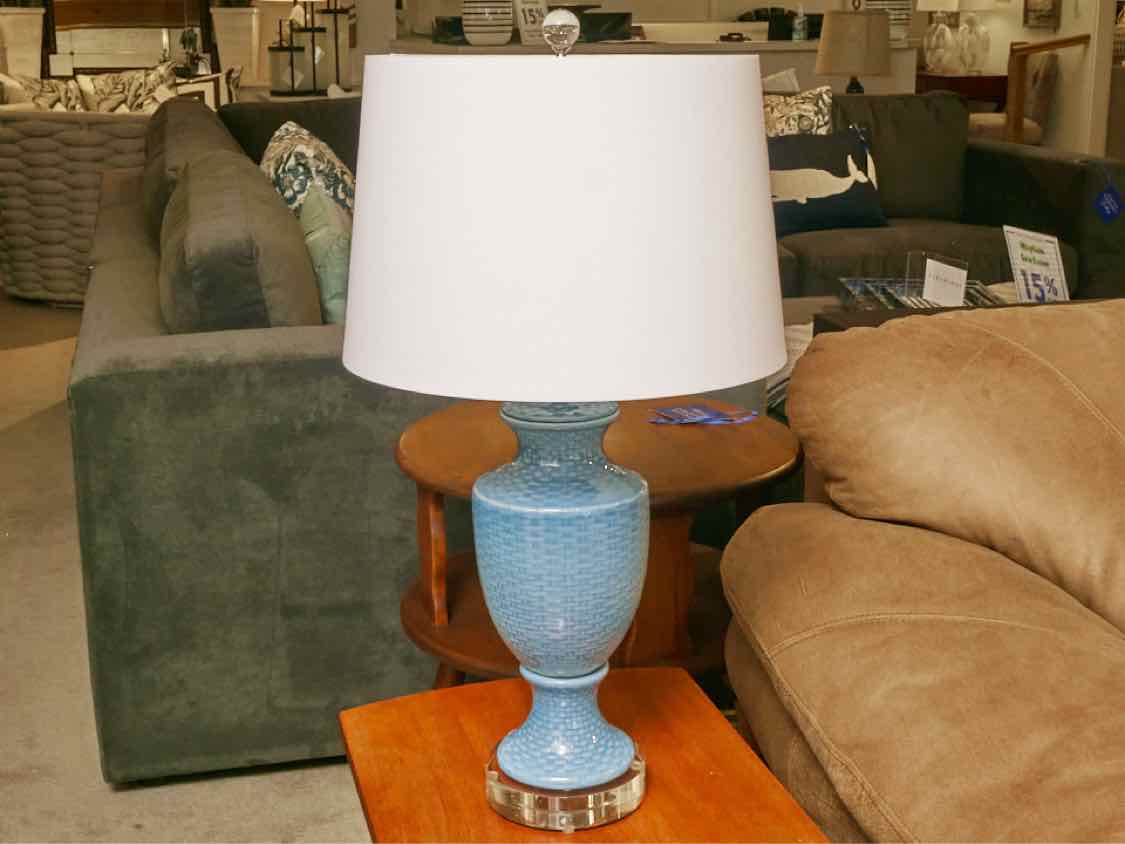
The three measurements that matter
When you shop for shades, you will see three dimensions. If you know what they mean, you can buy confidently without guessing.
- Top diameter: the width of the shade at the top opening.
- Bottom diameter: the width of the shade at the bottom opening. This is often the number used in shade names and listings.
- Height: how tall the shade is from top rim to bottom rim.
Vertical height vs slant height
Here is the sneaky detail that trips people up: tapered shades are sometimes sold by slant height (measured along the angled side), not vertical height (straight up and down). Slant height is always longer, so a shade can look “taller” online than it will in real life.
Quick sanity check: if a tapered shade listing mentions “slope,” “slant,” or “slope height,” treat that number as the angled measurement and look for a separate vertical height in the specs.
Quick translation for online listings: A “14 x 14 x 10” shade often means 14 inches top diameter, 14 inches bottom diameter, 10 inches tall (a drum). A tapered shade might read “12 x 16 x 11”. Retailers are not perfectly consistent, so always confirm what order they use and whether “height” means vertical or slant.
Proportion rules that work in real homes
These are not laws of physics. They are reliable starting points that make most lamps look right quickly.
Rule 1: Shade height is about two-thirds of the base
First, measure the lamp base height from the bottom of the base to the bottom of the socket (not the finial). I will call that base height (BH).
Your shade height usually looks best at about two-thirds (roughly 65%) of BH.
- If BH is 18 inches, a shade around 11 to 12 inches tall is a great starting point.
- If your base is short and stout, go slightly taller to avoid a “mushroom cap” look.
- If your base is tall and skinny, a slightly shorter shade can keep it from feeling top-heavy.
Rule 2: Bottom diameter is close to BH
For most table lamps, the shade’s bottom diameter looks right when it is roughly equal to BH (or within a few inches). Think of it as a pleasing near-square silhouette.
- BH of 18 inches often pairs nicely with a 16 to 18-inch bottom diameter.
- Short bases often need a wider diameter to feel grounded.
Rule 3: The shade covers the hardware
When the lamp is on, you generally do not want to see the socket and bulb glaring at you like a tiny spotlight. A well-sized shade covers the socket and keeps the bulb’s brightest point out of direct view from normal seating height.
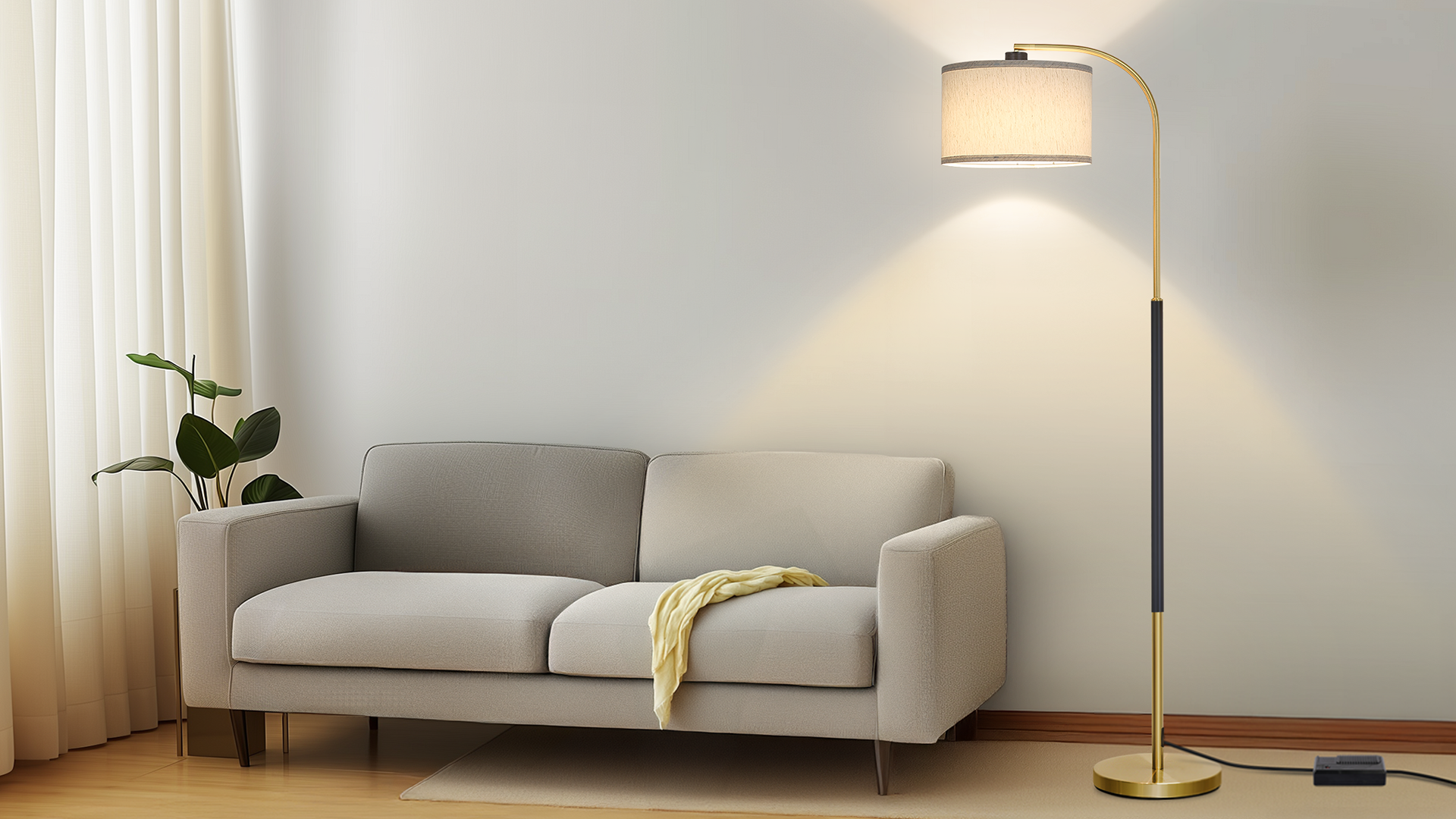
Table lamp sizing
If you only remember one approach, make it this: measure the base, then choose shade height and width from those numbers.
Step-by-step
- Step 1: Measure BH (bottom of base to bottom of socket).
- Step 2: Choose shade height at about two-thirds of BH.
- Step 3: Choose bottom diameter around BH (or slightly larger if the lamp sits on a wide nightstand or chunky side table).
- Step 4: Confirm the shade will be wider than the widest part of the base by about 1 to 2 inches on each side.
Nightstand note: In bedrooms, I like a shade that is wide enough to give that soft, wrapping glow, but not so wide that you bonk it when reaching for your water glass. If your nightstand is narrow, prioritize a slightly slimmer diameter and a taller shade for balance.
Floor lamp sizing
Floor lamps tend to look “off” when the shade is undersized. A too-small shade makes the lamp read like an afterthought, especially next to a sofa or reading chair.
Two quick checks
- Shade width should feel substantial next to furniture. If your floor lamp is beside a sofa, a bottom diameter in the 16 to 20 inch range is often the sweet spot for a standard-height lamp, depending on the base.
- Overall height should suit the moment. A reading corner usually wants the bottom of the shade around eye level when seated, so the bulb is not in your line of sight and the light lands where you need it.
Quick visual cue: If the base is tall and slim (like a pole lamp), a drum shade that is too small can look like a lollipop. Bump the diameter up before you change anything else.
Harp and fitter basics
This is the part that makes beginners feel like they are “not a lamp person.” You are. You just need two definitions, plus one tiny bonus word.
What is a harp?
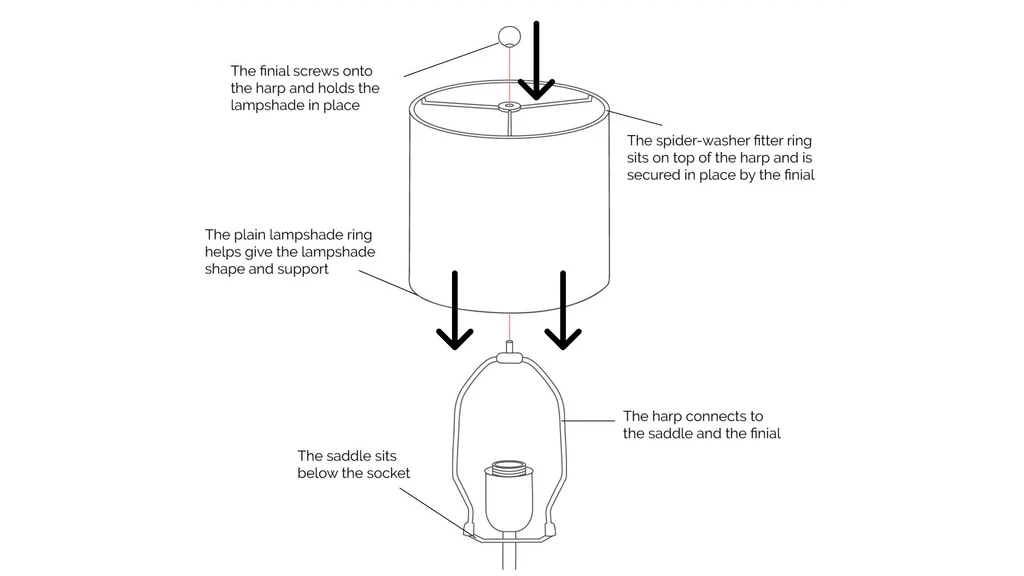
The harp is the U-shaped metal piece that straddles the bulb and gives the shade its structure. The shade’s wire frame rests on the harp’s little ledge (often called the saddle), and a finial holds it in place.
- If your shade sits on a harp, you are usually shopping for a spider fitter shade (most common).
- Harp height affects where the shade sits. If your shade looks too high or too low, you may need a different harp size, not a different shade.
What is a finial?
The finial is the little knob that screws onto the top of the harp to lock the shade in place. Functional, and also a chance to be a little fancy if you want.
What is a fitter?
The fitter is simply how the shade attaches to the lamp.
- Spider fitter: The shade has a wire “spider” that rests on the harp. Common for table and floor lamps with finials.
- UNO fitter: The shade attaches directly to the socket. Common on pharmacy lamps and some swing-arm lamps.
- Slip-UNO: the ring slips over the socket and sits under the bulb. The bulb helps hold it down.
- Threaded-UNO: the ring screws onto the socket’s threaded collar. This is a firmer, more “locked in” fit.
- Clip-on fitter: Clips directly onto the bulb. Best for smaller lamps and chandelier bulbs. Use low-heat LED bulbs here, since incandescent or halogen can run too hot in a tight clip-on setup.
Online shopping note: Some listings also mention a spider “drop” (how far the spider sits down from the top of the shade). That drop affects how high or low the shade rides on the harp. If your proportions look right but the shade sits weirdly high, the drop (or harp) is often the culprit.
Bulb clearance and heat safety
A beautiful shade is not worth a scorched lining. Clearance matters for both safety and longevity, especially if you are using anything other than LED.
Clearance rules
- Keep the bulb centered. The bulb should not touch the shade or lean close to one side.
- Leave breathing room above the bulb. You want space so heat can rise and escape. If the bulb top is nearly kissing the shade, the shade is too short or the harp is too low.
- Follow the socket label. Many lamps have a max wattage printed on the socket. Treat that as the rule, even if the shade “seems fine.”
- Choose LEDs when possible. LEDs run much cooler and are kinder to vintage shades, silk, and lined fabric.
If you are unsure: turn the lamp on for 20 to 30 minutes, then carefully check for excessive heat near the top of the shade without touching the bulb or metal parts. The shade should feel warm at most, not hot. If it feels hot, switch to a lower wattage bulb or an LED, and reassess your shade fit.
Common mistakes
This is the “why does my lamp look like it came from a dorm room starter kit?” section. Usually, it is one of these.
- Shade too small. Undersized shades make even a gorgeous vintage base look skimpy. When in doubt, size up the diameter.
- Shade too short. A short shade exposes the socket and creates harsh glare.
- Wrong shape for the base. A very angular base with a sharply tapered shade can feel fussy. A curvy base with a tiny drum can feel cramped. Aim for either gentle echoing shapes or calm contrast.
- Fabric that fights the vibe. Shiny polyester, plasticky “silk,” or stiff paper can look inexpensive fast. Linen, cotton, and softly textured weaves read more elevated, even in budget shades.
- Wrong color temperature bulb. A too-cool bulb (blue-white) makes most shades look sad and gray. Warm white generally flatters homes best.
My favorite easy upgrade: a warm LED bulb plus a slightly larger, lightly textured shade. It is the lighting equivalent of putting on a good sweater.
Quick checklist
If you are standing in your apartment with a tape measure and a lamp you did not choose (hello, hand-me-downs), this is your quick, no-drama list.
Before you shop
- Measure BH (bottom of base to bottom of socket): ____ inches
- Measure widest part of base: ____ inches
- Check your attachment type: harp and finial, UNO, or clip-on
- Note bulb type and size (A19, candelabra, globe), and ideally plan for LED
- Check the max wattage printed on the socket (if listed)
Choose a starting shade size
- Shade height: about two-thirds of BH (starting point)
- Bottom diameter: about equal to BH (or slightly larger for visual weight)
- Shade should be at least 2 inches wider than the base at its widest point
Final reality check
- The shade hides the socket and softens glare from where you sit.
- The bulb does not touch the shade and has room above it.
- The shade does not overhang your nightstand edge so much that it feels precarious.
Shade shape cheat sheet
Size is half the story. Shape does a lot of the mood-setting.
- Drum: clean and modern, great with sculptural vintage bases for a fresh mix.
- Tapered empire: classic and cozy, especially lovely with traditional bases and warm bulbs.
- Coolie: playful and retro, throws light downward and creates a pool of glow.
If you are mixing eras, a simple drum in linen is the most forgiving choice. It lets the base be the main character.
When to break the rules
Sometimes you want a slightly oversized shade for drama, or a petite shade to highlight an ornate base. The rules are your starting point, not your prison.
Break them on purpose, not by accident. If you are going smaller, do it because you love the silhouette, and make sure the socket is still hidden and the bulb stays cool.
If you change only one thing, change the shade size. If you change two things, change the shade size and the bulb warmth. Those two fixes solve most “my lamp looks wrong” problems.