Chocolate Stain on a Washable Throw Blanket
Gust
A little flutter. A cozier corner.
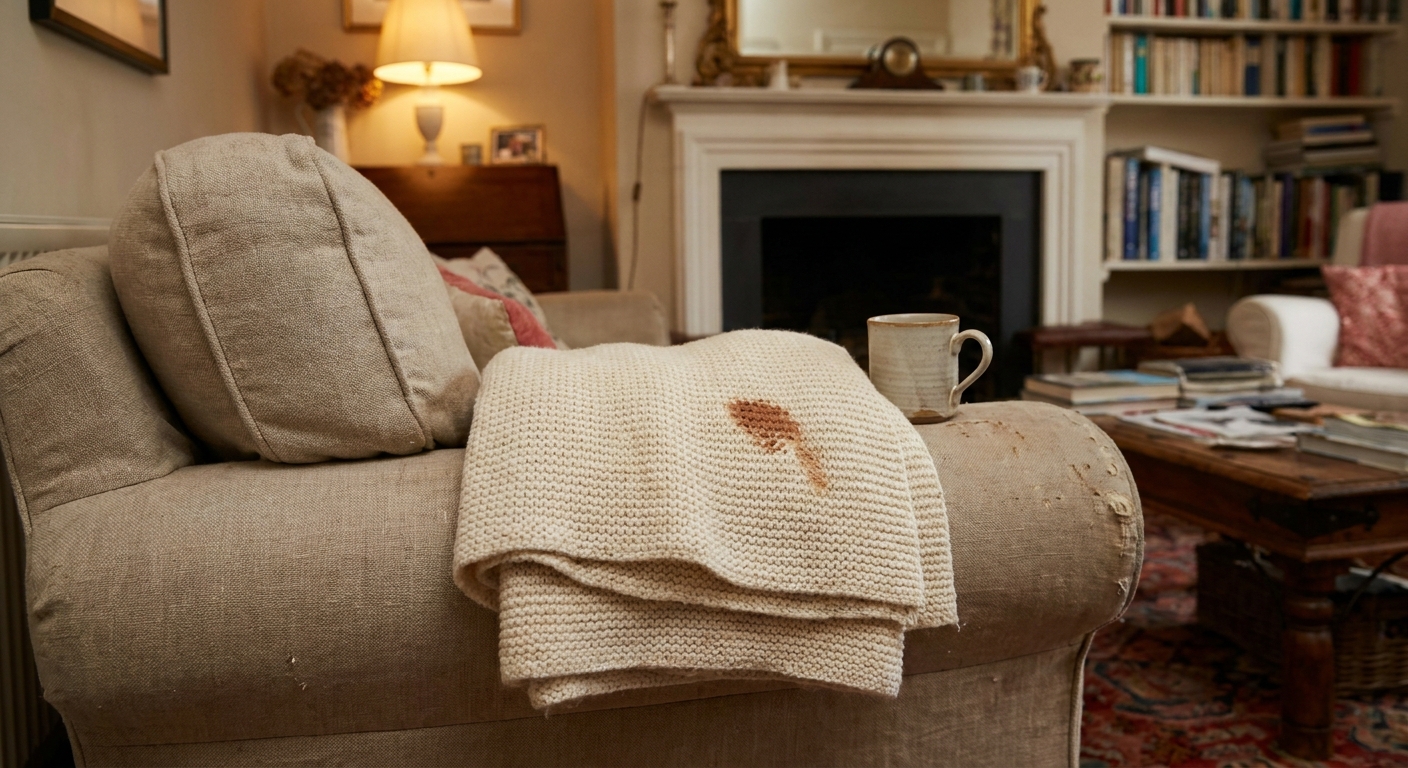
Chocolate shows up like an uninvited guest at movie night. One second your throw blanket is doing its job, the next it is wearing a brown badge of honor. The good news: if the throw is truly machine washable, chocolate is a very beatable stain, as long as you treat it like what it is: a mix of solids, dye, and oil.
Before you do anything: check the label
I know, I know. Tags are the least cozy part of any blanket. But this one matters.
- Machine washable (cotton, many poly blends): Proceed with the steps below.
- Wool, cashmere, mohair, alpaca, angora: Do not assume you can machine wash, even if it feels sturdy. Many wool throws felt, shrink, or distort.
- “Dry clean only”: Keep it out of the washer. Water and agitation can warp the fabric, disturb finishes, and make stain removal harder.
If the care tag says “dry clean only” or the throw is a special wooly treasure, jump down to What to do for wool or dry-clean-only throws.
Before you start: quick color check
If your throw is dyed, printed, or richly colored, do a tiny colorfastness test before you go all-in.
- Dab a drop of diluted dish soap or detergent on an inside seam or hem.
- Wait 5 minutes, then blot with a white cloth.
- If color transfers, go gentler and stick with minimal water, or consider professional cleaning.
Step 1: Scrape off the chocolate
Chocolate has fat. Heat and rubbing push that fat deeper into the fibers. Your first job is to remove as much physical chocolate as possible without smearing it.
If the chocolate is still soft or melted
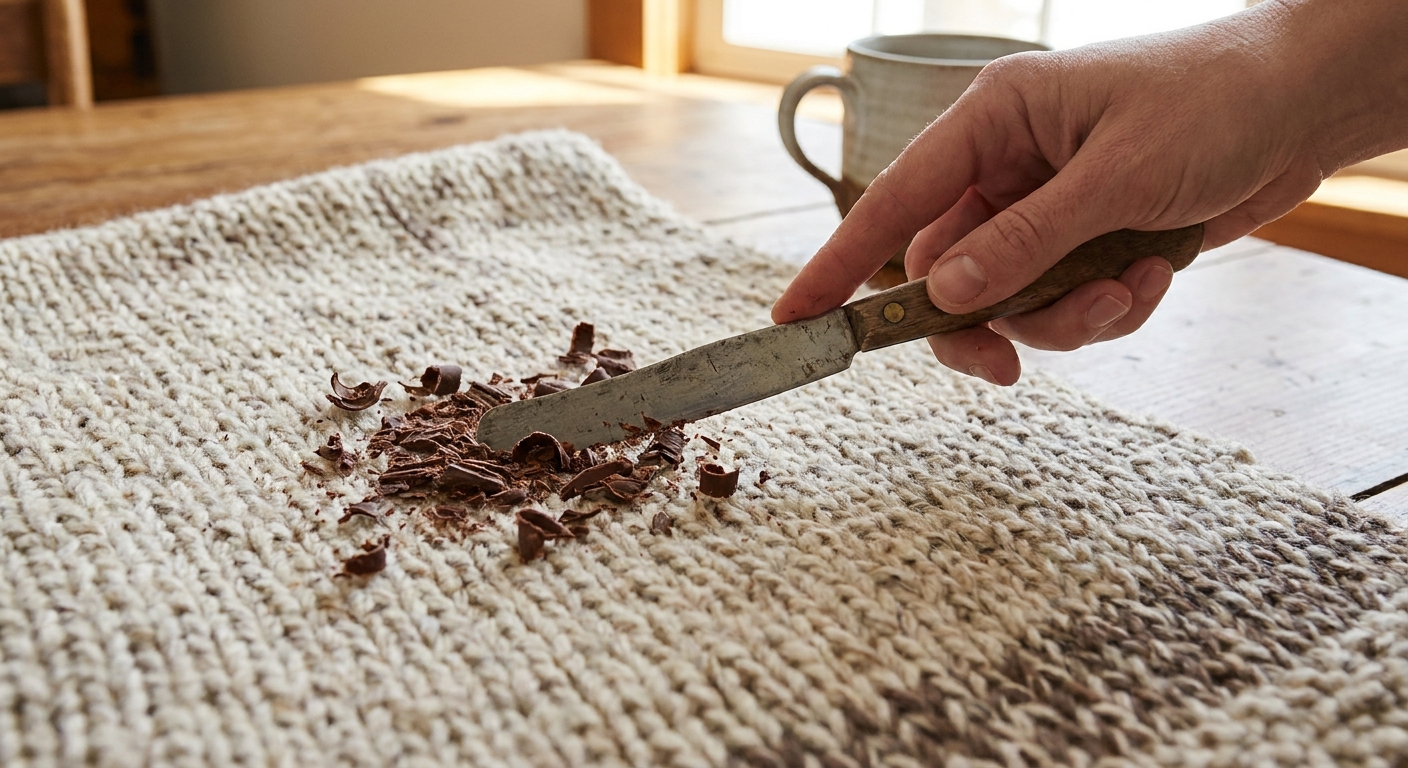
- Gently lift excess with the edge of a spoon or a dull butter knife.
- If it is very melty, slide the throw into the freezer for 10 to 20 minutes (or press an ice pack on the back side through a thin towel). Once it firms up, scrape again.
If the chocolate is already dried
- Scrape from the outside of the stain toward the center to avoid widening the spot.
- Shake or vacuum up crumbs so you do not grind them in later.
Step 2: Blot with cold water
Hot water can melt the fats and make the mess travel. Cold water helps you control it.
- Place a clean white towel under the stained area to prevent transfer to other layers.
- Dab the stain with cold water using another clean cloth.
- Blot, do not rub. Rubbing frays fibers and can make the stain look bigger.
Step 3: Pre-treat the oily part
Even after scraping, chocolate leaves an oily shadow. Pre-treating is what saves you from the “it looked fine until it dried” surprise.
Option A: Liquid dish soap
- Add a small drop of clear liquid dish soap to the stain.
- Work it in gently with your fingertips or a soft toothbrush.
- Let it sit for 5 to 10 minutes.
- Rinse with cold water until no suds remain.
Option B: Enzyme laundry detergent
- Rub a small amount of liquid laundry detergent into the stain.
- Let it sit for 10 to 15 minutes.
- Rinse with cold water.
If the blanket is white or colorfast and the stain is stubborn, an oxygen bleach soak can help. Use it only if the label allows, and follow the package directions.
A quick safety note from the laundry basket: skip chlorine bleach for this. It can damage many fibers and dyes, and it is not the best match for oily, mixed stains like chocolate anyway.
Step 4: Wash gently, with breathing room
This is the part where a throw blanket gets treated like laundry, because it is laundry.
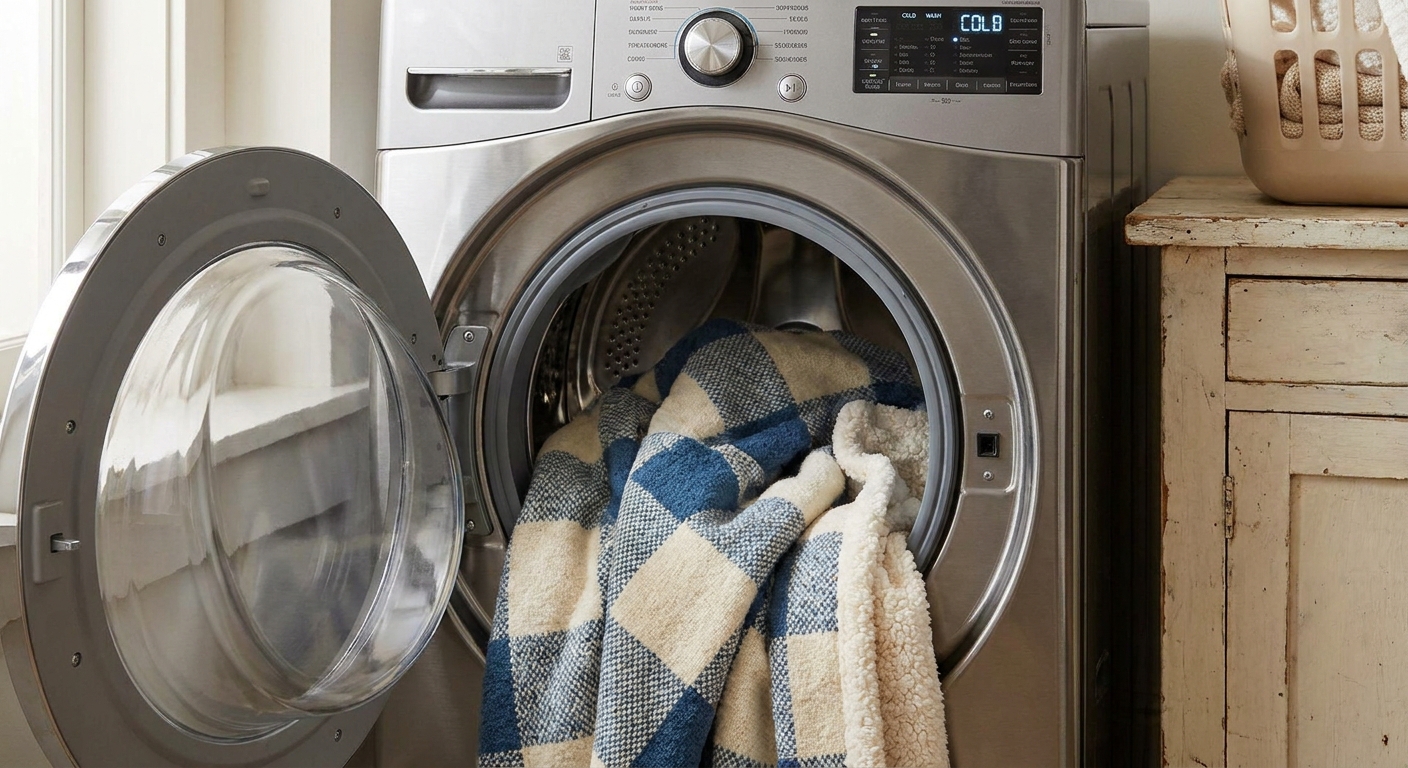
- Water temp: Cold to start.
- Cycle: Gentle or normal (use gentle if the throw is plush or loosely woven).
- Detergent: Use the recommended amount for the load size. More is not better, and extra detergent can leave residue.
- Load size: Give it room. Overcrowding keeps detergent from circulating and can grind stain residue back in.
Once the oily part is lifted, a warm wash can help on some fabrics, but only if the care label allows it and the throw is colorfast. When in doubt, stay cold and repeat the pre-treat instead.
Skip fabric softener if you can. It can leave a coating that makes future stains clingier, especially on fleece and microfiber throws.
Step 5: Air dry first
Heat is a stain’s best friend. Before you tumble dry, do this quick check:
- When the wash finishes, inspect the stained area in good light.
- If you see any shadow, do not dry it yet. Re-treat and wash again.
If it looks clean:
- Best: Air dry flat or draped over a rack.
- If you must tumble dry: Use low heat, and still double-check before the blanket gets fully warm.
Quick spot-clean option
If you caught it fast and the stain is small, you may not need a full wash right away.
- Scrape.
- Blot cold water.
- Dish soap dab, then rinse cold.
- Press with a towel to remove moisture, then air dry.
Still, if it was a big blob or a milk-chocolate smear with a buttery sheen, a full wash is usually worth it.
Wool and dry-clean-only throws
Some throws are born to be pampered. If the tag says dry clean only, or if the throw is wool and not explicitly machine washable, keep the washer door politely closed.
For wool (when you cannot machine wash)
- Freeze to harden any remaining chocolate, then scrape gently.
- Blot with cold water sparingly. Do not soak.
- Use a tiny amount of wool-safe detergent diluted in cold water, dab lightly, then blot with plain cold water to remove residue.
- Press with towels and dry flat, reshaping as it dries.
For dry-clean-only
- Scrape or freeze and scrape first.
- Blot gently with a dry cloth to lift oils.
- Take it to a professional cleaner and point out the stain.
If you are tempted to “just wash it once,” remember: shrinking, felting, and texture changes are often permanent. A throw can forgive chocolate more easily than it can forgive a hot, agitated wash.
Troubleshooting
The stain lightened but left a shadow
- That is usually leftover oil. Repeat the dish soap pre-treat and rewash.
The stain is old or has been dried already
- Rehydrate the area with cold water, then pre-treat with dish soap or detergent and let it sit a little longer, up to 20 minutes.
- Wash again. You might need two rounds.
The throw is light and now looks slightly dull
- Rinse thoroughly after pre-treating. Residual soap can attract dirt and make the area look different when dry.
Little don’ts that save cozy
- Do not use hot water first. It melts fats and helps the stain travel.
- Do not rub aggressively. Blotting is slower but kinder to the fabric.
- Do not dry with heat until the stain is gone. Dryers set stains like a finishing spell.
- Do not mix multiple strong stain products at once. Pick one approach, rinse, then reassess.
Quick checklist
- Check the label. Only machine wash if it is truly washable.
- Patch test on an inconspicuous spot if the throw is dyed or printed.
- Scrape, freeze if needed, scrape again.
- Blot with cold water.
- Pre-treat the oil with dish soap or detergent.
- Wash, starting cold.
- Air dry or inspect before any heat.
Chocolate happens. Cozy can stay. I will be over here, fluttering near the laundry basket, rooting for your throw to come out looking like nothing ever occurred.