Childproofing Sharp Sofa Corners and Glass Coffee Tables

Clara Townsend
Clara Townsend is an interior stylist, vintage furniture enthusiast, and the creative voice behind Velvet Abode. With over a decade of experience transforming both cramped city apartments and sprawling fixer-uppers, she believes that a beautiful home is built on personal stories rather than massive budgets. When she isn't hunting for the perfect brass sconce at a local flea market, she can usually be found rearranging her living room for the third time this month.
Small apartments make every inch count, which is exactly why the sharp corner of a sofa suddenly feels like it’s in the middle of the room once a toddler starts cruising. Add a glass coffee table to the mix and you’ve got a high style, high stress situation.
The good news: you don’t need to wrap your home in bulky foam or sacrifice everything you love. With a few low-profile guards, smarter placement, and a couple of renter-friendly stability tricks, you can keep your space looking like you while making it far safer for wobbly heads and busy hands.

Start with the real risk points
I like to do a two-minute “toddler eye-level” scan. Kneel down, look at your living room the way a newly mobile little person does, and you’ll instantly spot the problems.
- Sharp sofa arms and corners: Especially square track arms, wood-framed arms, and low-profile modular sofas.
- Glass coffee table edges: Even tempered glass is still a hard surface that can bruise on impact. The edge and corner are the issue, not the top. (And if glass ever breaks, that’s a whole separate hazard.)
- Wobble and slide: A table that skates on wood floors, or a sofa that shifts when pulled up on, turns a bump into a fall.
- Traffic lanes: In a small space, the route from hallway to kitchen often cuts right past the coffee table corner.
If your child is pulling up, climbing, or starting to run, you’re not overreacting. Many home bumps and injuries come from everyday falls into hard edges. Your goal is to reduce the “hard edge meets face” scenario and reduce furniture movement.
Don’t forget nearby hazards: As you scan, look for blind cords, long lamp cords, and anything climbable nearby (like a TV console or bookshelf). Those are common living room trouble spots too, especially in tight layouts.
Low-profile corner guards
There’s a whole world between “nothing” and “chunky baby foam.” These are the options that tend to blend into adult spaces.
Search terms to use: “matte clear silicone corner protector,” “wraparound fabric corner guard,” and “clear edge bumper strip for glass.”
For sofa corners
- Clear silicone corner protectors: Best for sharp 90-degree corners on track arms. Look for flexible, slightly matte silicone if you hate the shiny plastic look. Clean the surface with rubbing alcohol before applying so it actually sticks.
- Fabric corner wraps: These are padded textile guards that tie or Velcro on. They’re great if you hate adhesives, and they can look like an intentional detail in linen or bouclé.
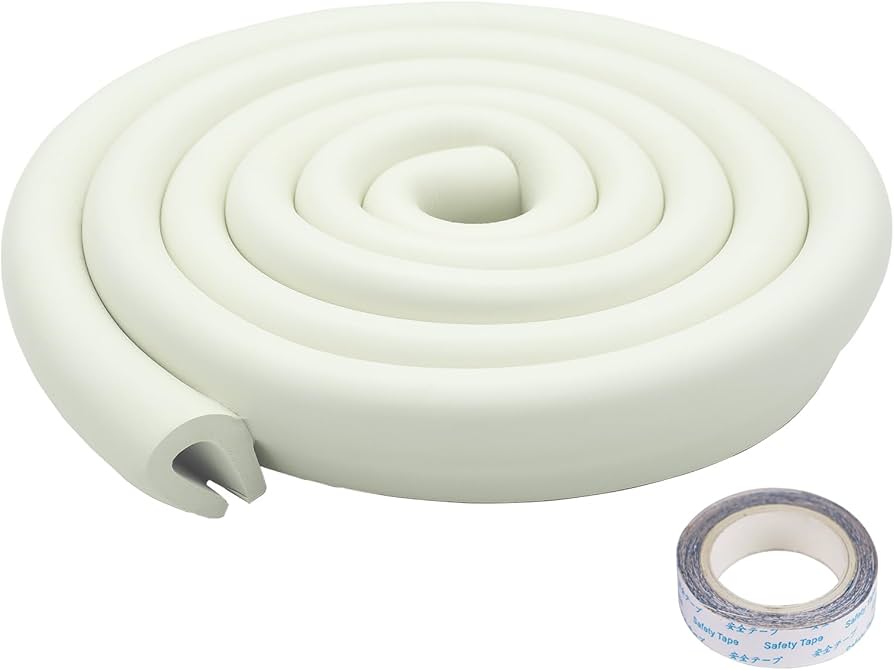
- Furniture edge padding strips: If your sofa arm is more of a long rectangle than a point, use a thin strip along the edge instead of a corner blob.
For glass coffee tables
- Low-profile edge bumpers: A continuous silicone strip around the perimeter can be less visually obvious than four corner guards. It also helps with “forehead meets edge” anywhere along the side.
- Corner caps plus edge strip: For very sharp glass corners, use both. Corners take the biggest hit.
- Felted edge guards: Some brands make slim felt or fabric-covered bumpers. These can read more grown-up, especially with warm wood tones nearby.
Quick safety nuance: If you’ve got a teether, keep an eye on any peel-and-stick guard. Some toddlers will bite, pick, or pry silicone off, and a loose piece can become a choking hazard. If it starts lifting, replace it, upgrade the tape, or switch to a wrap style that can’t be popped off easily.
My styling rule: If you can match the guard to either the material (clear on glass) or the palette (oatmeal fabric on an oatmeal sofa), it stops looking like a “product” and starts reading like a subtle finish.
Adhesives that stay put
The secret is less about the guard and more about the prep.
How to get guards to stick
- Degrease first: Use rubbing alcohol on a lint-free cloth. Oils from hands, furniture polish, and cooking residue can sabotage adhesion.
- Warm the room: Many adhesives bond better at normal room temperature. Cold, drafty apartments make peel-ups more likely.
- Press and hold: Firm pressure for 30 to 60 seconds, then avoid bumping for a few hours.
- Choose the right tape: If the included tape is weak, upgrade to a quality double-sided mounting tape labeled removable.
Tape reality check: “Removes cleanly” depends on your finish. Veneers, lacquer, paint, and oil-finished wood can lift, discolor, or show “ghosting.” Avoid ultra-strong VHB-style tapes on delicate finishes, and always test in a hidden spot first.
Removal without damage
- Use gentle heat: A hair dryer on low can soften adhesive.
- Peel slowly: Pull parallel to the surface, not straight out.
- Clean residue safely: A citrus-based adhesive remover is often effective, but spot test first, especially on wood finishes.
If you’re renting and nervous, do a small test before you commit to guarding every corner.
Renter-friendly stability strategies
Traditional anchoring often means drilling, which can be a lease issue. In a small apartment, though, stability is half the battle.
Keep the coffee table from sliding
- Rug as an anchor: A rug with a proper rug pad stops the table from skating. More on rug sizing in the next section.
- Clear rubber furniture grippers: These go under table legs and are nearly invisible. Choose a grippy style made for hard floors.
- Museum putty for decor: Not for the table itself, but for items on top so a toddler can’t easily sweep a heavy tray or candle off. Spot test first. It can leave residue and may damage some finishes, especially porous or unsealed wood.
Keep the sofa from shifting
- Non-slip pads under sofa legs: Especially helpful on hardwood or laminate. They also protect floors.
- Wall-friendly bump stops: If the sofa backs up to a wall and shifts when pulled, a discreet bumper can reduce movement and wall scuffs.
Note on true anchoring: Coffee tables usually aren’t designed to be wall-tethered like tall furniture. Even a stable table can tip if climbed on or pulled hard, so think of these as risk reducers, not a guarantee.
Lease note: If you’re considering any strap-style anti-tip anchor for nearby tall pieces (bookcases, dressers, TV stands), check your lease and ask your landlord. Many are fine with small holes if patched at move-out, but you’ll want that in writing.
Layout tweaks that help
In tight spaces, “just keep them away from the table” isn’t realistic. But you can move the danger out of the main traffic lane and create a softer landing zone.
Reposition for the walking path
- Shift the coffee table off-center: Centered is pretty, but centered also means it’s in the path. Slide it closer to the sofa so there’s one main walkway instead of two narrow ones.
- Create a clear line to the kitchen: If your child is following you, remove the obstacle course. Fewer tight turns means fewer collisions.
- Float a pouf at the corner: A soft ottoman or knitted pouf near the sharpest point can act like a friendly bumper that looks intentional.
Use a soft perimeter
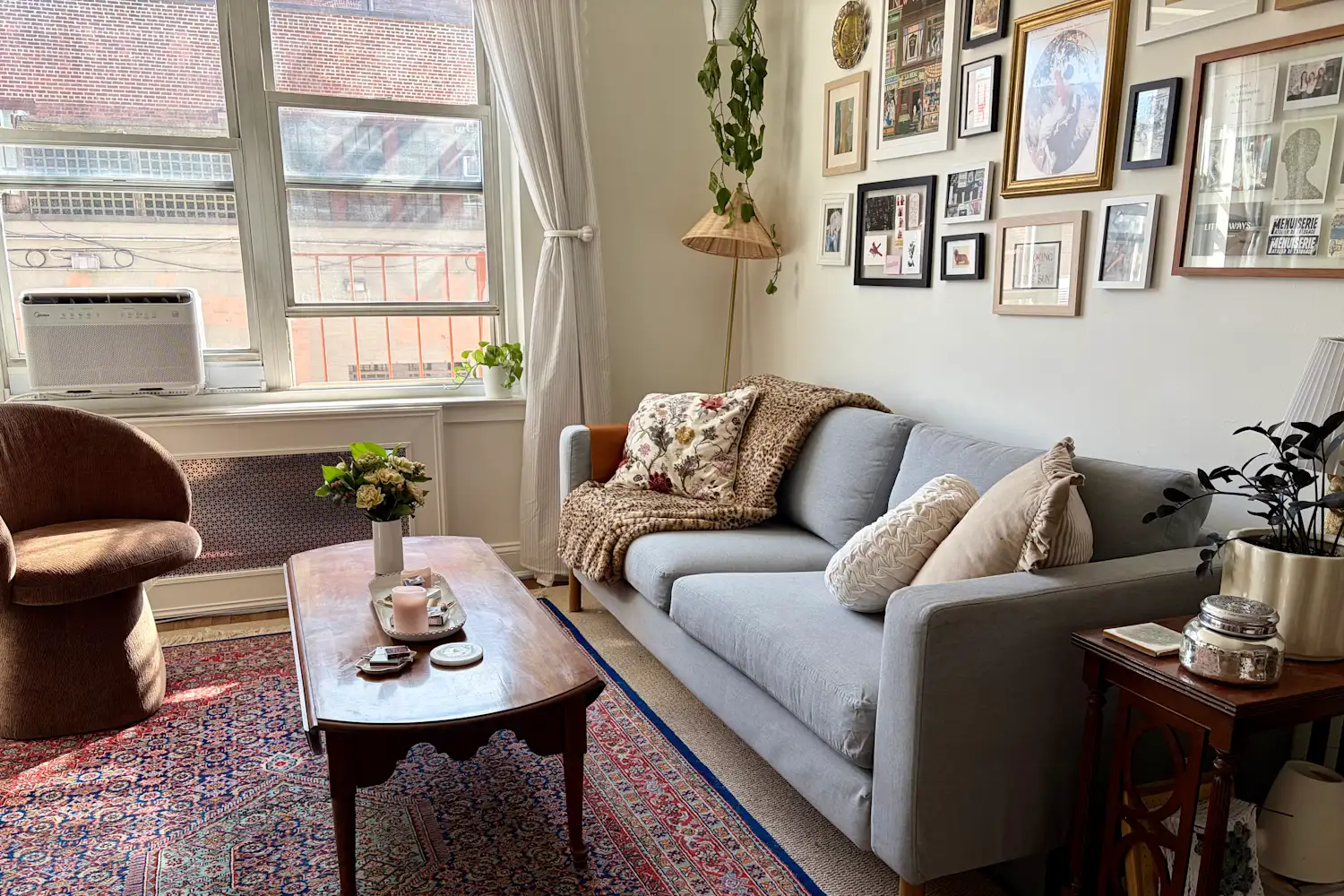
- Rug size matters: Aim for a rug large enough that the front legs of the sofa and the coffee table sit on it. This reduces sliding and adds cushioning.
- Rug pad matters more: Choose a thicker, cushy pad if your building has hard floors. It makes falls less dramatic and it makes the room feel warmer.
- Consider a slightly higher pile: Not full-on shag, just enough texture to soften. Flatweave is gorgeous, but it’s not forgiving.
Make glass safer for now
I love a glass table for the way it visually disappears in a small room. But toddlers don’t care about visual lightness. If you’re trying to keep it for now, focus on three layers: soften, stabilize, and style strategically.
Soften the edge
Add a low-profile bumper or corner caps, and don’t apologize for it. Clear silicone is often the least visually disruptive on glass. Just check it regularly, especially if your child likes to pick at things.
Stabilize the base
If the table wobbles, fix that first. Tighten hardware, add levelers, or use thin furniture shims. It helps, but keep in mind that glass-topped tables can still tip if climbed or pulled hard.
Style the top as a deterrent
- Skip heavy decor with sharp edges: A marble object is gorgeous, but it’s also a toe breaker.
- Use a soft tray: A woven tray can corral items and feels gentler.
- Keep it boring at toddler height: No remote-control pile, no shiny coasters that look like toys.
When to swap furniture
Sometimes the kindest thing you can do for your nervous system is to admit the piece is wrong for this season of life. Swapping doesn’t have to mean downgrading your style.
Consider replacing the coffee table if:
- Your child repeatedly falls into it despite guards and layout changes.
- The table has very sharp corners and you can’t apply guards securely.
- It’s top-heavy or wobbly, especially pedestal bases with glass tops.
- Your space forces constant tight walking paths around it.
What to swap in without losing the open feel
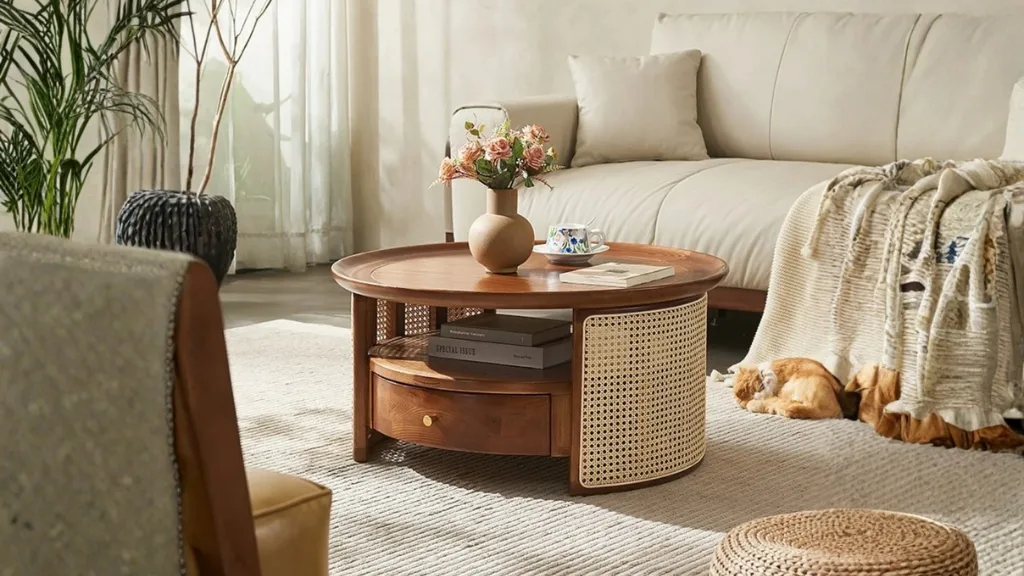
- Round or oval tables: No sharp corners. A vintage round wood pedestal can be stunning and still compact.
- Upholstered ottoman with a tray: Soft by default. Add a tray when you need a stable surface for coffee.
- Nesting tables: Pull them apart when you need surface area, tuck them away when you want floor space.
- Acrylic with rounded edges: Still visually light, but choose pieces with thick, rounded edges and stable bases.
For sharp sofa corners, the swap decision usually comes down to how hard the edge is and how much the sofa dominates the room. A slipcovered sofa with softer arms can be a dream in small apartments, but I’d try low-profile guards first.
A simple weekend checklist
If you want a clear plan, here’s the order I’d do it in, coffee in hand.
- Day 1: Toddler eye-level scan, then mark the sharp points with painter’s tape so you don’t forget them.
- Day 1: Clean surfaces with rubbing alcohol where guards will go.
- Day 1: Add corner guards and edge bumpers, then let the adhesive set.
- Day 2: Add a rug pad, then reposition the rug so sofa front legs and table are on it.
- Day 2: Add clear grippers under the coffee table and non-slip pads under sofa legs.
- Day 2: Rework the layout so the main walkway avoids the table’s sharpest corner.
- Ongoing: Do a quick weekly check that guards and bumpers are still firmly attached, especially during teething phases.
And then, breathe. Your home can be both beautiful and lived in, even in a small apartment, even with a tiny tornado learning to walk. Childproofing isn’t a design failure. It’s just design that loves your real life.
Quick safety note: This article is for general home styling and childproofing ideas. For specific safety concerns, especially with furniture stability, tip-over risks, choking hazards, or glass breakage, consider consulting a qualified child safety professional and follow manufacturer guidance.