Chemical Smell From New Foam Floor Tiles

Clara Townsend
The first time I bought interlocking foam tiles for a play corner, I expected something like “new yoga mat,” a little rubbery, gone in a day. What I got was more like opening a plastic pool float in a tiny apartment. If you are staring at your brand-new foam floor and thinking, This cannot be what my living room is supposed to smell like, you are not being dramatic.
Foam tiles and foldable play mats can release a noticeable odor at first. The good news is that many do calm down with time and airflow. The not so comforting news is that not all mats mellow, and because kids and pets spend a lot of time face-down on the floor, it is worth being extra picky.
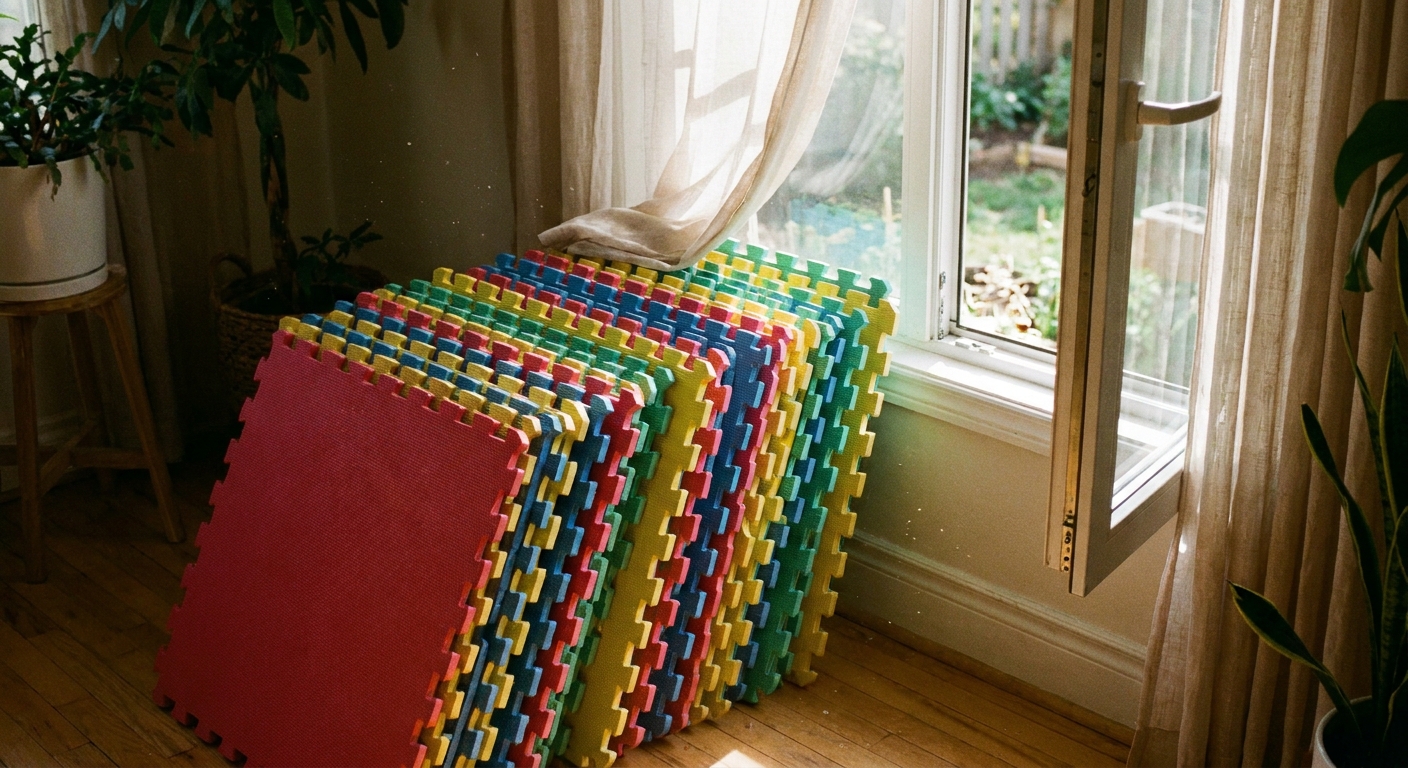
Why new foam tiles smell “chemical”
That sharp, plasticky odor is usually from volatile organic compounds (VOCs) and other residual manufacturing byproducts slowly releasing into the air. This is commonly called off-gassing.
Foam floor tiles are often made from materials like:
- EVA foam (ethylene-vinyl acetate), a common “puzzle tile” material
- PE foam (polyethylene), often used in thicker mats
- PVC or vinyl foams, still sold in some markets and product lines, though many kid-focused brands now emphasize EVA/PE
Many of these products are closed-cell foams, meaning the structure is made of tiny sealed bubbles. That helps them resist water and cushion impact. It can also make odors feel more persistent because there is less airflow through the material, and the compounds causing the smell have to slowly diffuse out of the foam over time.
Before kids or pets use it: a simple safety-first plan
If the smell is strong, treat the mat like a “not yet” item. I know that is annoying when you bought it for immediate chaos-control, but a short delay is often all it takes.
Step 1: Unpack it away from your main living space
If you can, open the box in a garage, laundry room, covered balcony, or near an open window in a room you can close off. The strongest odor often hits in the first few hours after unboxing.
Step 2: Air it out with real airflow, not just “sitting there”
For closed-cell foam, still air is not your friend. You want exchange: fresh air in, stinky air out.
- Open windows on opposite sides of the space if possible.
- Set up a fan pointing out one window to exhaust air, and another pulling fresh air in if you have it.
- If you have an air purifier with activated carbon, run it nearby. Carbon is the helpful part for odors. A plain HEPA-only unit is great for dust, less impressive for smells.
Step 3: Let it “breathe” on both sides
Odors can linger on the underside too, especially when tiles are stacked or tightly packed.
- Separate tiles into smaller piles or lay them out.
- After a few hours, flip them and continue airing.
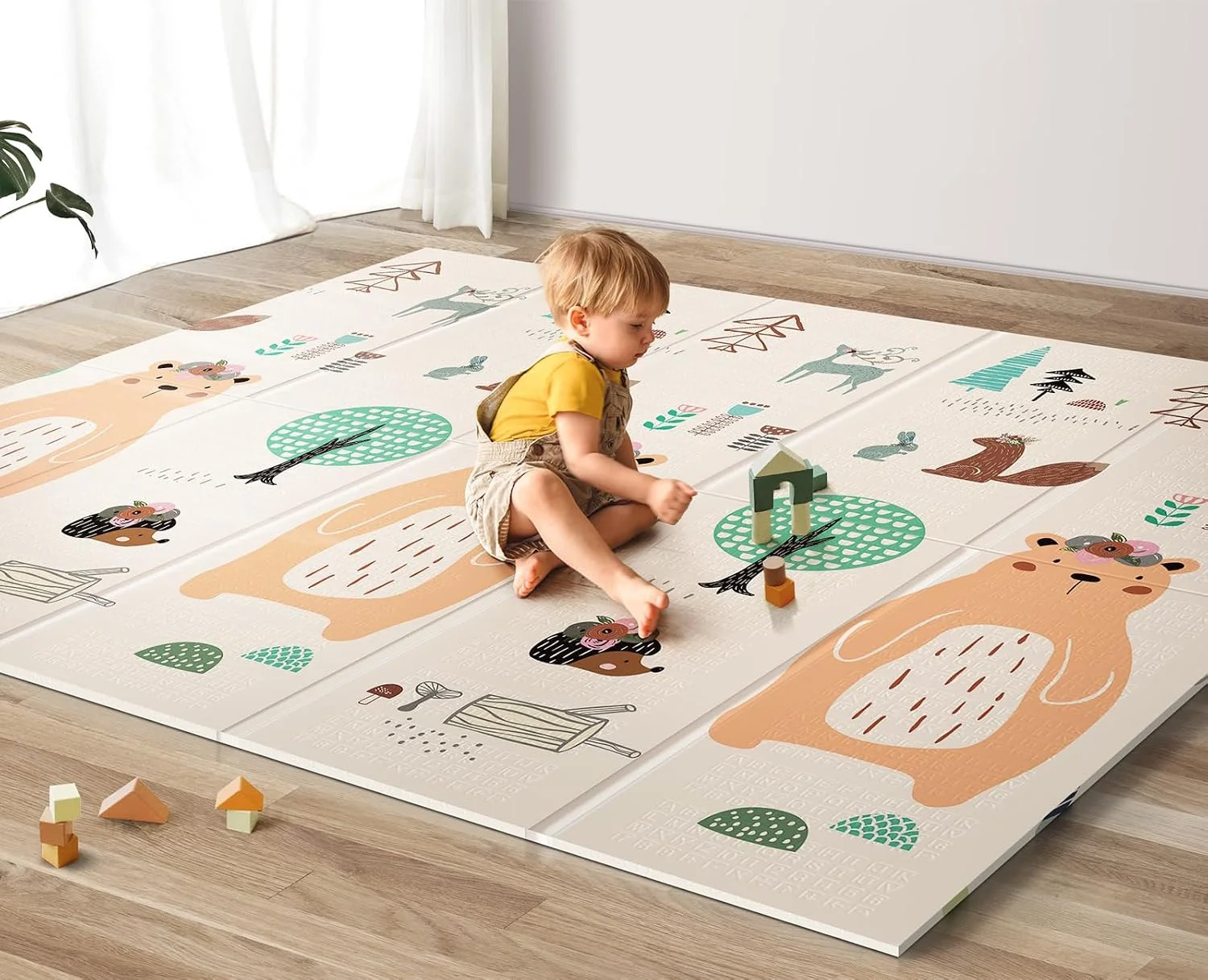
- If it is a foldable mat, open it fully and, if possible, prop it so air reaches the underside.
Step 4: Wipe gently if the surface feels oily or tacky
Sometimes a new mat has a thin residue from manufacturing or packaging. A quick wipe can help remove that “factory” layer.
- Use warm water with a small amount of mild dish soap.
- Wipe with a soft cloth, then wipe again with clean water.
- Dry completely before bringing indoors.
Skip harsh cleaners or solvents. They can damage foam, dull printing, weaken seams, or create a whole new smell problem. When in doubt, follow the brand’s care instructions.
Step 5: Do a quick visual check
Before anyone rolls around on it, take ten seconds to look for issues you should not ignore: crumbling edges, cracking, a stubborn greasy film, or dye that rubs off onto a damp cloth. If you see those, stop using it and contact the seller or manufacturer.
Step 6: Do the sniff test the right way
Do not press your nose into the foam and take a deep breath. Instead, step into the room, pause, and see if the odor is still obvious at normal distance. If you can smell it across the room, it is not ready for tummy time.
How long does off-gassing last?
This varies by product, thickness, and how it was packaged. In real-home terms, with good ventilation, many mats follow a pattern like this:
- Mild smell: often improves over a couple of days.
- Moderate smell: can take several days, sometimes a week or more, especially for thicker mats.
- Strong, eye-watering smell: often eases noticeably within the first few days with aggressive airing out. If it is not trending down, I start thinking “return,” not “wait it out.”
Heat can increase the rate of off-gassing, but it can also intensify the smell short-term. Only add warmth if you can also ventilate. A sunny room with open windows is fine. Do not bake tiles in an enclosed car or put them near a heater.
Why foam tiles are different from a rug
A new area rug smell is often from latex backing, dyes, or packaging. Rugs are largely textiles. You can hang them, beat them, and let a breeze pass through the fibers.
Closed-cell foam is different:
- Less airflow through the material: air does not pass through it like it does with a woven rug.
- More material-driven odor: the smell tends to come from compounds diffusing out of the foam itself.
- Closer contact: kids roll on it, pets nap on it, and little hands spend a lot of time on the surface before touching faces.
That is why “just unroll it outside for an hour” often falls flat for foam. You usually need longer time, stronger airflow, and sometimes a wipe-down.
What not to do
- Do not soak foam tiles in a bathtub. Water can get into seams and edges and encourage warping or mildew smells later.
- Do not jump to vinegar, bleach, or strong disinfectants unless the manufacturer recommends it. These can discolor finishes, dull printing, weaken adhesives, and leave their own lingering odor.
- Do not cover it immediately with rugs, vinyl covers, or big furniture if the smell is strong. Give it time to off-gas before you trap odors underneath.
- Do not mask it with fragrance sprays. It mixes into a headache cocktail and does not fix the source.
When the smell is a red flag
I am all for patience with new-home smells, but there is a line where you should trust your nose and your common sense.
Consider returning the mat or tiles if:
- The smell is still strong after 7 to 10 days of consistent airing out and flipping.
- You notice irritation symptoms like headaches, throat scratchiness, watery eyes, or nausea when you are near it.
- The odor spikes with normal room warmth and never really drops back down.
- The surface feels greasy, sticky, or leaves residue even after gentle washing and drying.
- It smells like harsh solvent rather than a mild “new product” scent.
If your household includes babies, pregnant people, or anyone with asthma or chemical sensitivities, I would be even quicker to return a mat that does not settle down.
If the odor seems extreme right out of the box, it is also reasonable to contact the manufacturer. Ask whether they have emissions testing info for that model and confirm you are following the intended cleaning and airing instructions. If you bought from a marketplace listing with multiple sellers, double-check that it shipped from the brand or an authorized seller, since storage conditions and authenticity can vary.
Choosing lower-odor foam tiles
You should not have to play odor roulette, but here we are. When you are shopping, these clues can help:
- Look for third-party testing claims from recognizable programs. Examples you may actually see: GREENGUARD Gold (chemical emissions) and, for fabric covers (not bare foam tiles), OEKO-TEX Standard 100. Be wary of vague “non-toxic” claims with no testing name attached.
- Check material transparency. A listing that clearly states EVA or PE and includes care instructions tends to feel more reputable than vague wording.
- Read reviews for smell notes, especially recent ones. Multiple people describing “overwhelming odor” is a pattern.
- Prefer mats that ship less compressed when possible. Very tight packaging can trap odor and make the first unboxing intense.
And a design note from me: darker colors and heavy prints can hide scuffs, but they also sometimes involve more inks or surface coatings. That does not automatically mean more smell, but if you are smell-sensitive, a simpler, less heavily printed mat can be worth trying.
FAQ
Is it safe to sleep in a room with off-gassing foam tiles?
If the smell is noticeable, I would avoid sleeping in that room until you have aired the tiles out and the odor has dropped to “only if I put my nose right on it.” Ventilation helps, but your comfort matters too. If you feel irritation, remove the tiles from that space and keep airing them elsewhere.
Can I put foam tiles outside to air out?
Yes, with a few guardrails: keep them out of direct harsh sun for long stretches (UV can fade and dry out foam), avoid damp ground, and do not leave them out overnight where dew can settle. A covered patio with a breeze is ideal.
Will baking soda help?
Baking soda can help with some odors, but foam is not absorbent the way fabric is. If you try it, sprinkle lightly, let it sit briefly, then vacuum thoroughly. Do not let powder get into seams where it will grit up the connections. If you have babies crawling, be extra meticulous about cleanup.
Why do some mats barely smell and others are awful?
Manufacturing processes, the type of foam, additives, how long it sat in packaging, and storage conditions all make a difference. Two mats that look similar online can behave very differently in your home.
My mat smells like fish. What does that mean?
Sometimes plastics and additives can produce an amine-like, fishy odor. It is not something I would ignore. Air it out for 24 to 48 hours with strong ventilation, and check the brand website for guidance or recalls. If it persists, I would return it rather than trying to “clean it away.”
A realistic bottom line
A little “new foam” smell is common. A smell that takes over the room, lingers, or makes anyone feel unwell is not something you have to tolerate.
If you want the simplest approach: air it out hard, flip it, wipe it, and give it a few days. If it is still loud and sharp, meaning you smell it across the room and it makes you want to open every window you own, return it and try a better-tested option. Your home is allowed to smell like dinner, laundry, and maybe a candle you actually love. Not a chemistry set.