Ceramic and Porcelain Tile Cleaning Without Grout Damage

Clara Townsend
Clara Townsend is an interior stylist, vintage furniture enthusiast, and the creative voice behind Velvet Abode. With over a decade of experience transforming both cramped city apartments and sprawling fixer-uppers, she believes that a beautiful home is built on personal stories rather than massive budgets. When she isn't hunting for the perfect brass sconce at a local flea market, she can usually be found rearranging her living room for the third time this month.
Tile is one of my favorite “forgiving” surfaces. Ceramic and porcelain can take real life: spilled coffee, muddy shoes, a dog who thinks bath time is optional. Grout, on the other hand, is the sensitive friend in the group. Clean it too harshly and it starts to look rough, porous, and permanently dingy.
This is the Velvet Abode approach: choose pH-aware products, mop like you mean it (but not like you are sanding the floor), and dry strategically so you are not ice skating through a studio apartment. If you already follow our streak-free routine for LVP and laminate, think of this as the complementary sibling guide for tile: same calm cadence, different rules.
Quick note before we start: This guide is for ceramic and porcelain tile. If you have natural stone (marble, travertine, limestone, slate), stop here and use stone-safe cleaners. Stone and acid are not friends.
Know your surfaces
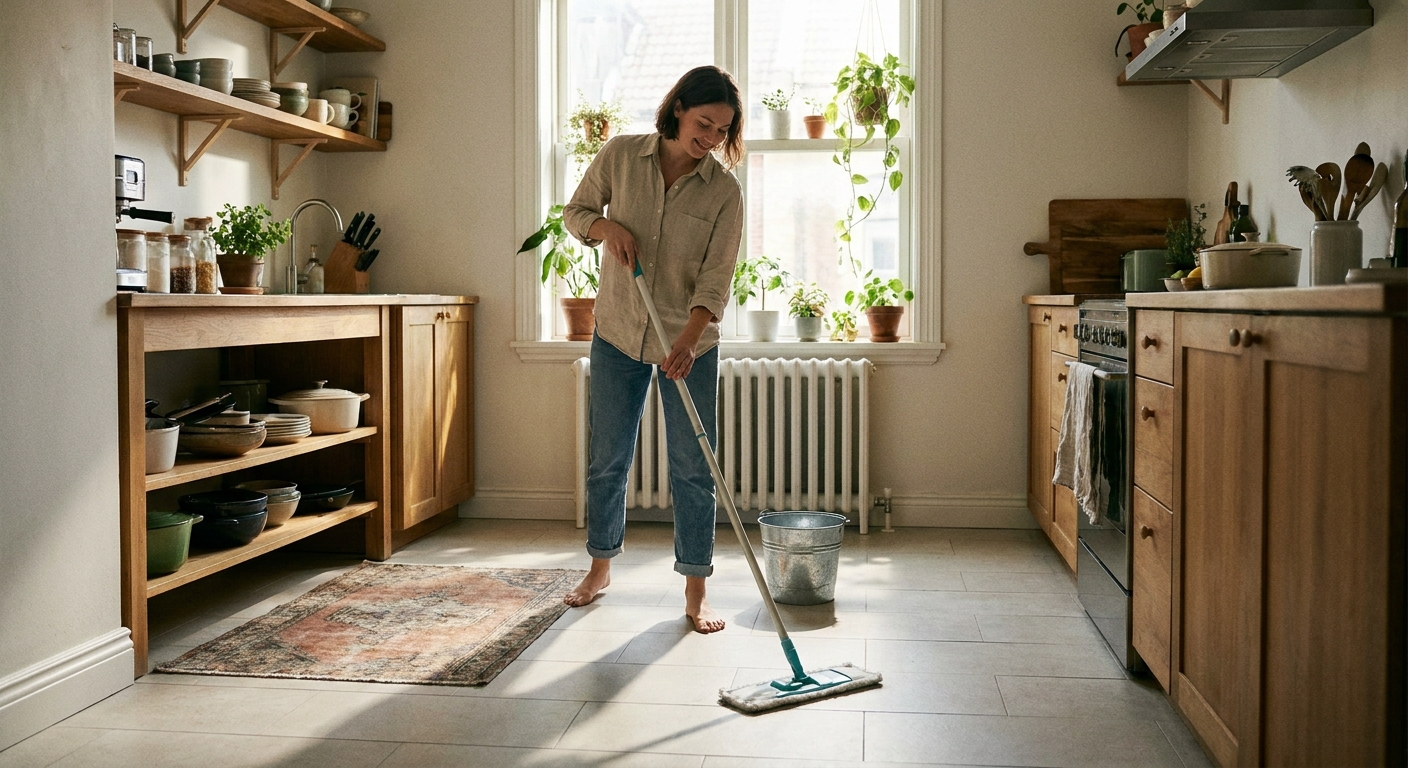
Ceramic and porcelain are fired hard and generally low-porosity (porcelain especially). If the surface is glazed, that glaze is effectively “sealed” and resists stains well. Unglazed porcelain and some ceramics can still absorb and stain, so when in doubt, treat your floor like it deserves a gentle routine and a good rinse.
Grout is usually cement-based, which means it is porous. It can absorb oils, dyes, and cleaner residue, then hold onto them like a grudge.
Why grout gets damaged during normal cleaning
- Too acidic (hello, straight vinegar) can etch cementitious grout and weaken sealer over time.
- Too alkaline (heavy degreasers used too often) can leave residue, dull some finishes, and degrade certain sealers if overused.
- Abrasive tools (rough scrub pads, stiff wire brushes) physically rough up grout so it stains faster.
- Dirty water mopping redistributes grime, then dries as haze on tile and gray film in grout lines.
A note on grout type
Most homes have cement grout, but epoxy grout exists too. Epoxy grout is less porous and more stain-resistant, and it generally tolerates cleaning better than cement grout. If you are not sure what you have, assume it is cement grout and stay in the gentle zone.
pH-aware cleaners
If you remember one thing: grout likes cleaners that are pH neutral to mildly alkaline for routine cleaning. Acid is a “rare guest,” not a daily roommate.
Best options for weekly cleaning
- pH-neutral tile cleaner: Look for labels that explicitly say “pH-neutral” and “safe for grout.” These are designed to clean without stripping sealers or leaving cloudy residue.
- A few drops of mild dish soap in warm water: This is my tiny-apartment staple for quick resets. Keep it truly minimal. Too much soap equals sticky film and faster resoiling.
When you can go mildly alkaline
If your kitchen tile has a greasy cast near the stove, a mild alkaline cleaner can help. Use it occasionally, rinse well, and do not let it dry on the floor.
What to avoid on cement grout most of the time
- Vinegar or lemon water as a general mop solution.
- Acidic bathroom descalers used broadly on tile floors.
- Bleach as routine maintenance. It can discolor grout, break down some sealers, and it does not remove oily soil well, which is why “it looks clean for two days then worse.”
If your tile is ceramic or porcelain but you are not sure about the grout type, treat it like standard cement grout and stay in the neutral zone. Your future self will thank you.
Mop habits that prevent haze
That sad cloudy look after mopping is not always leftover installation grout. In real-life homes, it is often soil plus detergent residue that dries into grout lines and the tiny texture of tile.
The no-haze mop routine
- Dry prep first: Vacuum or sweep thoroughly. Hair and grit turn into muddy paste the moment water hits.
- Two-bucket method (even in a small apartment): One bucket for cleaner, one for rinse. If you do not have space, use a small second container like a mixing bowl or a squat bucket that tucks under the sink.
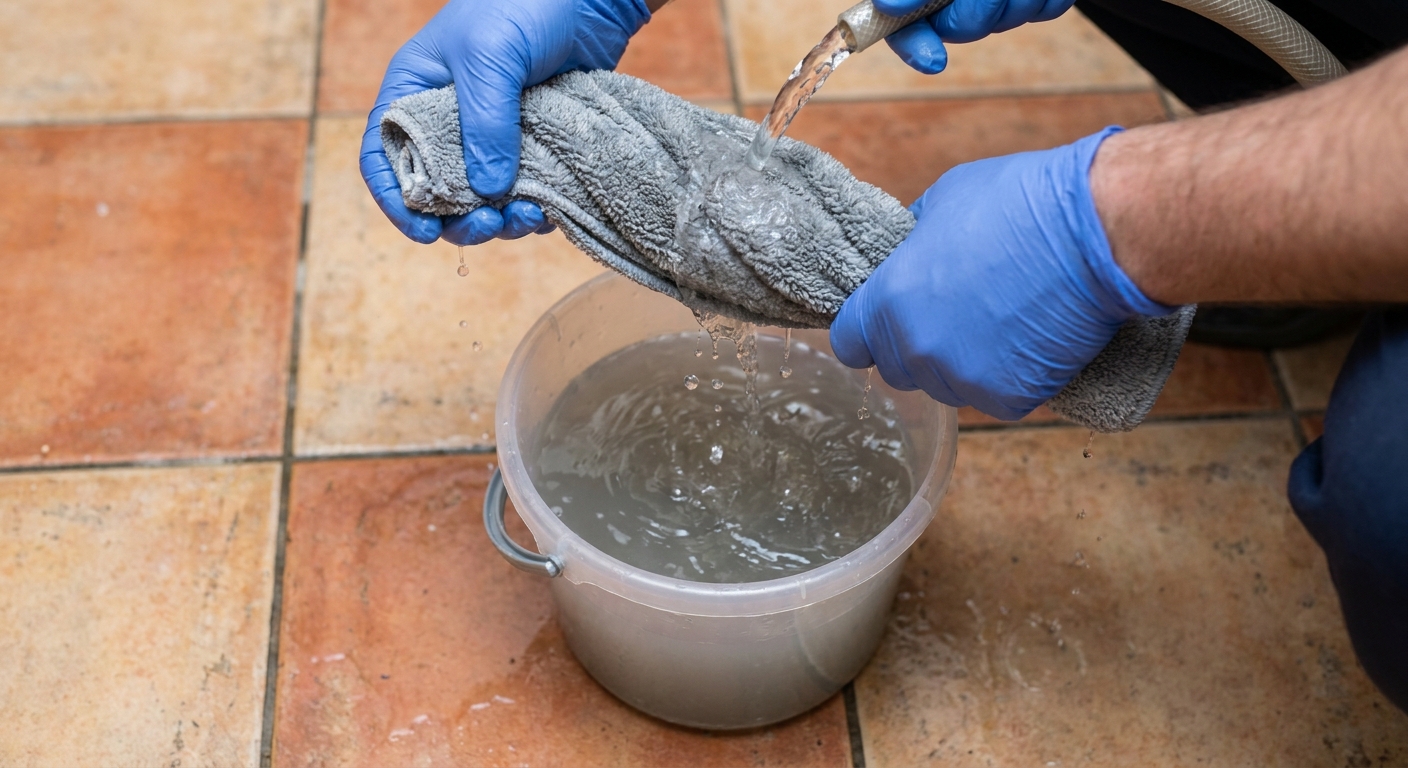
- Wring like you are mad at the mop: Damp, not dripping. A practical check: lift the mop and make sure no water drips. Standing water seeps into grout and pulls dirt into the lines.
- Work in sections: Think 10 to 15 square feet at a time, especially in kitchens and entryways.
- Rinse pass: Do a quick second pass with clean water (or a fresh damp microfiber pad). This is the step that keeps tile from looking mysteriously dull.
- Swap pads often: Microfiber pads are your secret weapon, but only when they are not saturated with gray water.
Textured tile
Textured porcelain is gorgeous and practical for slip resistance, but it loves to hold onto dust, cooking residue, and that fine gritty stuff that seems to appear out of nowhere.
What works best
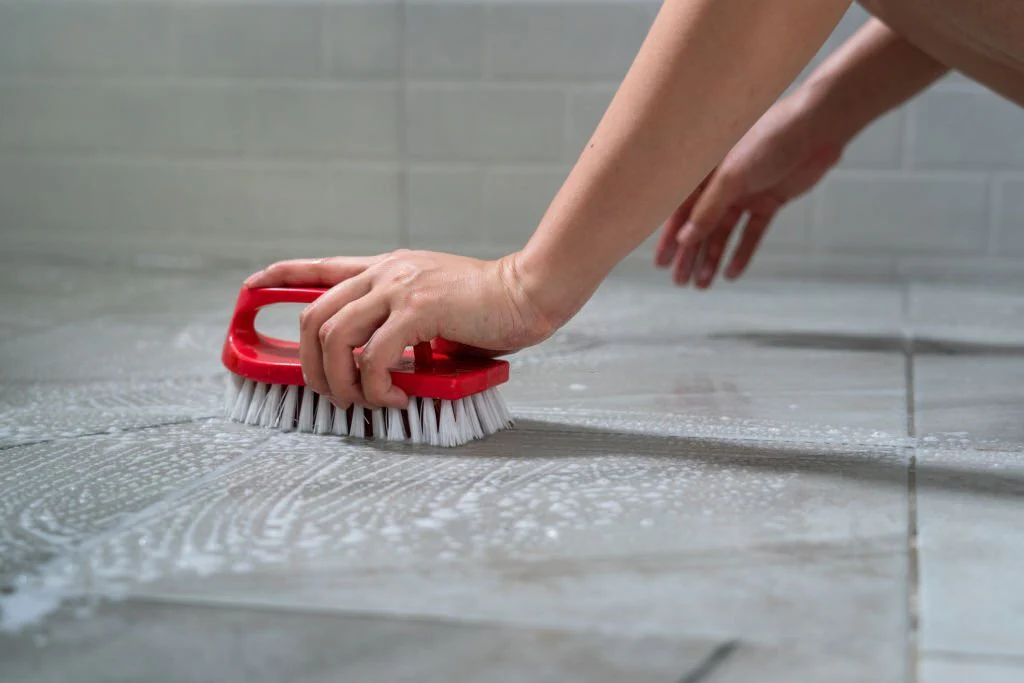
- Soft-bristle brush: Choose nylon, not wire. Use gentle circles over the texture and light strokes along grout lines.
- Microfiber plus patience: On textured surfaces, a flat mop glides over the high points. Follow with a microfiber cloth wrapped around your hand to press into the texture in high-traffic zones.
- Targeted spot cleaning: Instead of flooding the whole floor, pre-treat sticky spots with a pH-neutral cleaner, let it sit for 3 to 5 minutes, then agitate gently.
A simple scrub paste for stubborn spots
For a small area (like around the trash can or under the pet bowl), mix baking soda with a little water into a loose paste. Apply to the spot, lightly scrub with a soft brush, then rinse thoroughly.
Baking soda is mildly abrasive, so keep this occasional and targeted, not an all-floor habit. If you have polished or high-gloss tile, or colored grout, test in an inconspicuous spot first to be safe.
Grout care
Grout looks best when you treat it like fabric upholstery: clean it gently, do not over-wet it, and protect it so stains do not become permanent roommates.
Spot-cleaning grout lines
- Use a pH-neutral cleaner or a grout-safe cleaner.
- Apply to the grout line, not the whole floor.
- Agitate with a soft toothbrush or grout brush.
- Rinse with clean water, then wipe dry.
Sealing
If your grout is cement-based and in a wet or high-traffic area, a quality grout sealer helps enormously. You will know it is time to reseal when water stops beading and starts soaking in. In many homes, that is every 1 to 3 years depending on traffic and cleaning habits.
Seal on a calm day when you can keep pets and shoes off the floor, and always follow the product’s cure time. Rushing is how you end up with sticky footprints immortalized in your entryway.
Drying for small apartments
In a roomy house you can mop and wander off. In a small apartment, mopping often blocks the only path from the couch to the kitchen, which means drying is not optional. It is safety.
My slip-safe drying routine
- Keep one dry lane: Mop from the far corner toward the door so you always have a dry exit.
- Towel-dry high-traffic strips: Run a clean towel under your foot and “skate” it across the main walkway. It is oddly satisfying.
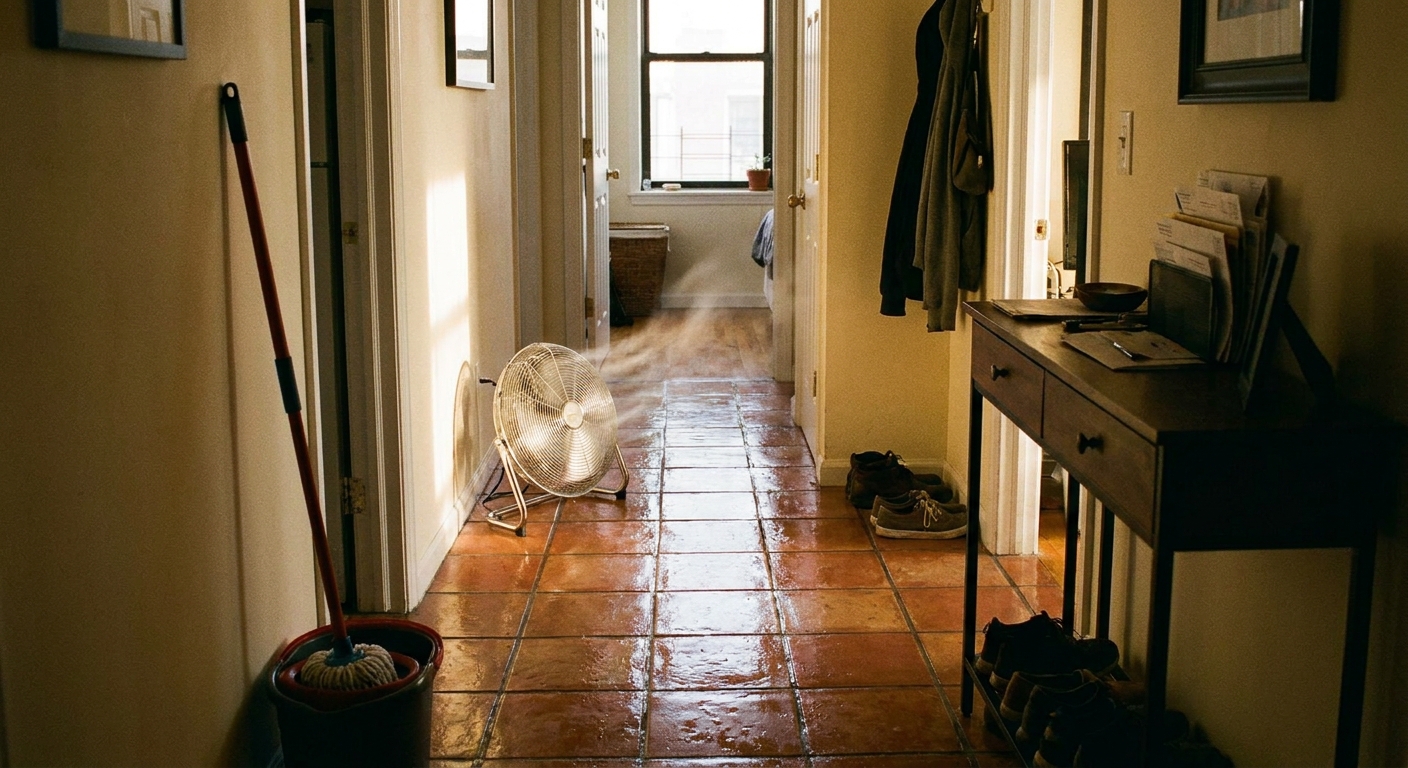
- Use airflow: A box fan pointed across the floor dries tile fast without heat. Open a window if weather allows.
- Do not overuse rinse water: The more water you put down, the longer it takes to evaporate and the more it migrates into grout lines.
A gentle schedule
If you are already on a rhythm for LVP or laminate, keep that same “little and often” mindset. Tile rewards consistency, and grout hates extremes.
Quick daily or every other day
- Dry sweep or vacuum crumbs and grit, especially in the kitchen and entry.
- Spot clean spills promptly, especially coffee, wine, tomato sauce, and anything oily.
Weekly
- Vacuum thoroughly.
- Damp mop with a pH-neutral cleaner.
- Do a quick rinse pass if your cleaner calls for it or if you notice any film.
- Towel-dry the main walkway.
Monthly
- Detail the textured zones and corners with a soft brush.
- Spot-clean grout lines that are starting to darken.
Seasonal
- Check grout sealer performance with a few drops of water. If it absorbs quickly, plan to reseal.
- Deep clean before resealing, not after.
Troubleshooting
My tile looks cloudy after mopping
- Use less cleaner next time.
- Add a rinse pass with clean water.
- Switch to clean microfiber pads more frequently.
Grout is darker in the kitchen paths
- That is usually oil and tracked-in soil, not a stain that lives forever.
- Use a grout-safe cleaner and a soft brush, then rinse and wipe dry.
- Consider resealing if water absorbs fast.
Textured tile still feels grimy
- Vacuum first with a brush attachment to lift grit from texture.
- Use a soft brush with a pH-neutral cleaner and give it dwell time.
- Rinse and dry. Residue is what makes texture feel dirty again quickly.
My floor is clean but feels slippery
- That is often leftover detergent film.
- Do a warm-water rinse mop, then towel-dry.
- Avoid “shine” products unless they are specifically made for your tile. Many leave a coating that attracts soil and increases slipperiness.
What about steam mops
- Check your tile and grout manufacturer guidance first.
- Steam can stress grout and some sealers over time, especially if you linger in one spot or use it frequently.
- If you use steam, keep it moving and follow with a dry microfiber pass.
The small kit I keep
You do not need a cleaning closet that looks like a chemistry lab. A small, calm kit beats an overflowing basket of half-used bottles.
- pH-neutral tile cleaner
- Microfiber flat mop with 2 to 4 washable pads
- Small nylon scrub brush or old toothbrush for grout
- Two small buckets or one bucket plus a rinse bowl
- Two absorbent towels dedicated to floors
When your tools are gentle, your grout stays intact. When your routine is steady, your tile stays luminous. And when you dry the walkway first, your small apartment stays safe and livable, even mid-mop.