Care for Velvet Throw Pillows and Cushion Covers

Clara Townsend
Clara Townsend is an interior stylist, vintage furniture enthusiast, and the creative voice behind Velvet Abode. With over a decade of experience transforming both cramped city apartments and sprawling fixer-uppers, she believes that a beautiful home is built on personal stories rather than massive budgets. When she isn't hunting for the perfect brass sconce at a local flea market, she can usually be found rearranging her living room for the third time this month.
Velvet throw pillows are the jewelry of a room. They catch lamplight, make a sofa look instantly more intentional, and bring that soft, swipeable texture we all can’t stop petting. The catch is the nap: those tiny fibers that create velvet’s glow can get crushed, streaky, or dull if you clean it like a regular cotton cover.
Below is my Velvet Abode approach: gentle, realistic, and aimed at keeping that plush sheen intact. Think of this as the accessory companion to our velvet furniture care page , because pillows live a slightly different life. They get hugged, flipped, sat on, and occasionally hit with a coffee spill at the worst possible moment.
First, identify your velvet
Before you reach for water, check the care tag and do a quick reality check on the fabric. Velvet is a pile fabric construction (the weave and the raised nap), not a single fiber. Cleaning depends on what the pile is made of, plus any backing, finish, or dye.
Common velvet types
- Cotton velvet: Gorgeous depth and softness, but more likely to watermark and show pressure marks. Often needs the most careful handling.
- Silk or silk-blend velvet: Luxurious and delicate. When in doubt, treat as dry-clean only.
- Polyester velvet: Often the most forgiving and sometimes washable on gentle settings. Still, dyes and finishes vary, so follow the specific label and test first.
- Viscose/rayon velvet: Can be tricky with water. Many rayon velvets are best professionally cleaned.
If the tag says dry clean only: Believe it. Any at-home spot-cleaning can still cause watermarking or color loss, so test first and keep moisture minimal. For anything serious or wide-spread, take it in.
If there is no tag: Test first in an inconspicuous area, like the seam allowance inside the cover or the underside of a pillow.
Removable cover or sewn shut? If the cover zips off, you have more options. If the pillow is sewn shut, avoid soaking the insert. Work in small sections and focus on careful blotting, fast drying, and nap revival.
Your velvet care kit
You do not need a cabinet full of specialty products. You need soft tools and patience.
- White microfiber cloths or clean white cotton cloths
- A small bowl of lukewarm water
- Mild detergent or a few drops of gentle dish soap
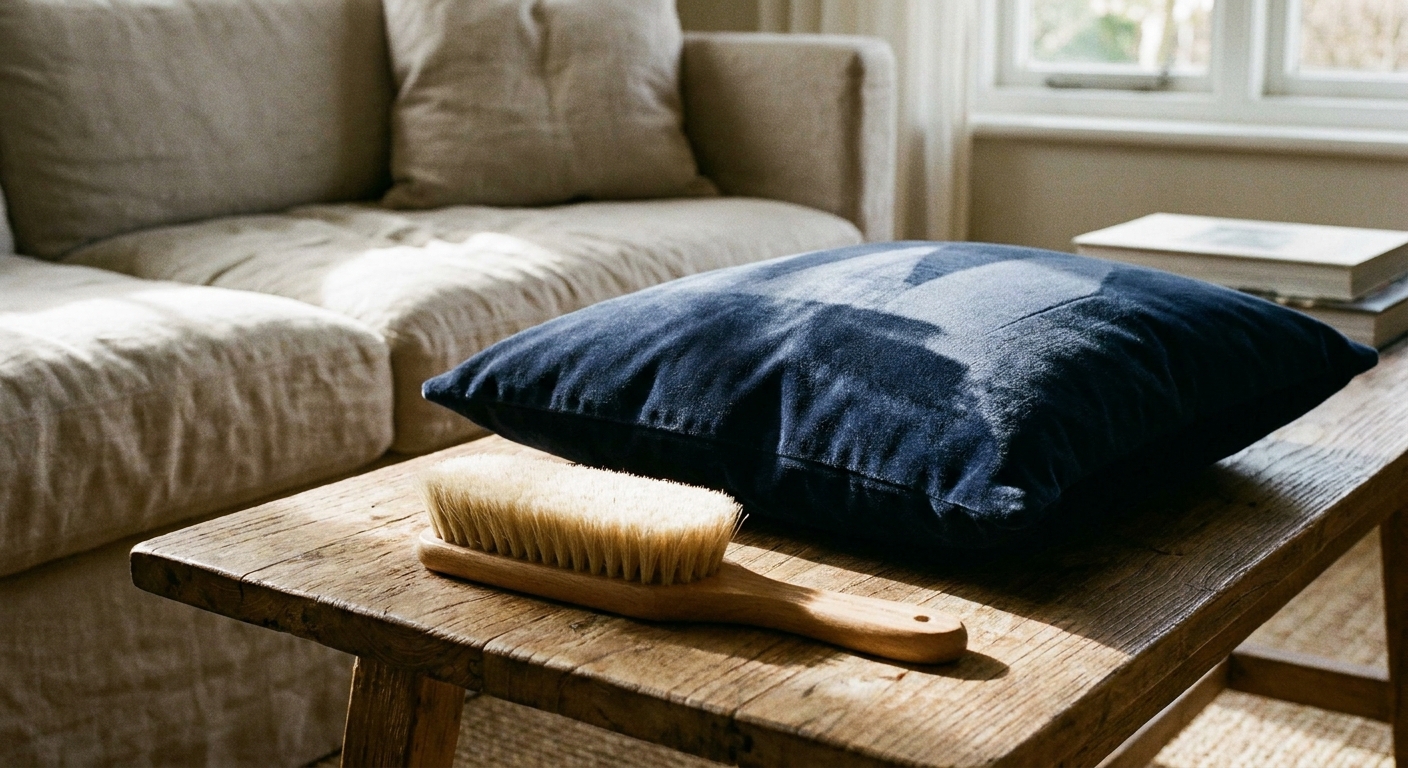
- A soft brush (natural bristle clothing brush or baby hairbrush) for nap revival
- A handheld steamer, if you have one
- Vacuum with an upholstery brush attachment
- Lint roller for quick refreshes
Weekly upkeep
Most velvet “damage” on pillows is really just compressed pile and dust. A small routine keeps them looking rich without constant washing.
1) Vacuum gently
Use the upholstery brush attachment and the lightest pressure. Move in the direction of the nap, not against it. If you are not sure which way the nap runs, swipe your hand across the fabric. One direction will feel smoother, and it will look slightly darker or lighter depending on the angle of light.
2) Fluff the insert, not the cover
Instead of aggressively kneading the velvet itself, unzip the cover and shake or “karate chop” the insert. Your goal is to bring back shape without grinding the pile.
3) Rotate placement
If one pillow is the unofficial seat of your household, rotate it to spread out pressure. Velvet hates repetitive compression in the exact same spot.
Spot-cleaning
If you do one thing right with velvet, let it be this: blot, don’t rub. Rubbing pushes stains deeper and scrambles the nap, which creates shiny streaks that are harder to fix than the original spill.
Always do a colorfastness test first: Dampen a white cloth with plain water and dab an inside seam or hidden edge. If dye transfers to the cloth or the area darkens and stays dark, stop and consider professional cleaning.
Step-by-step spot-clean
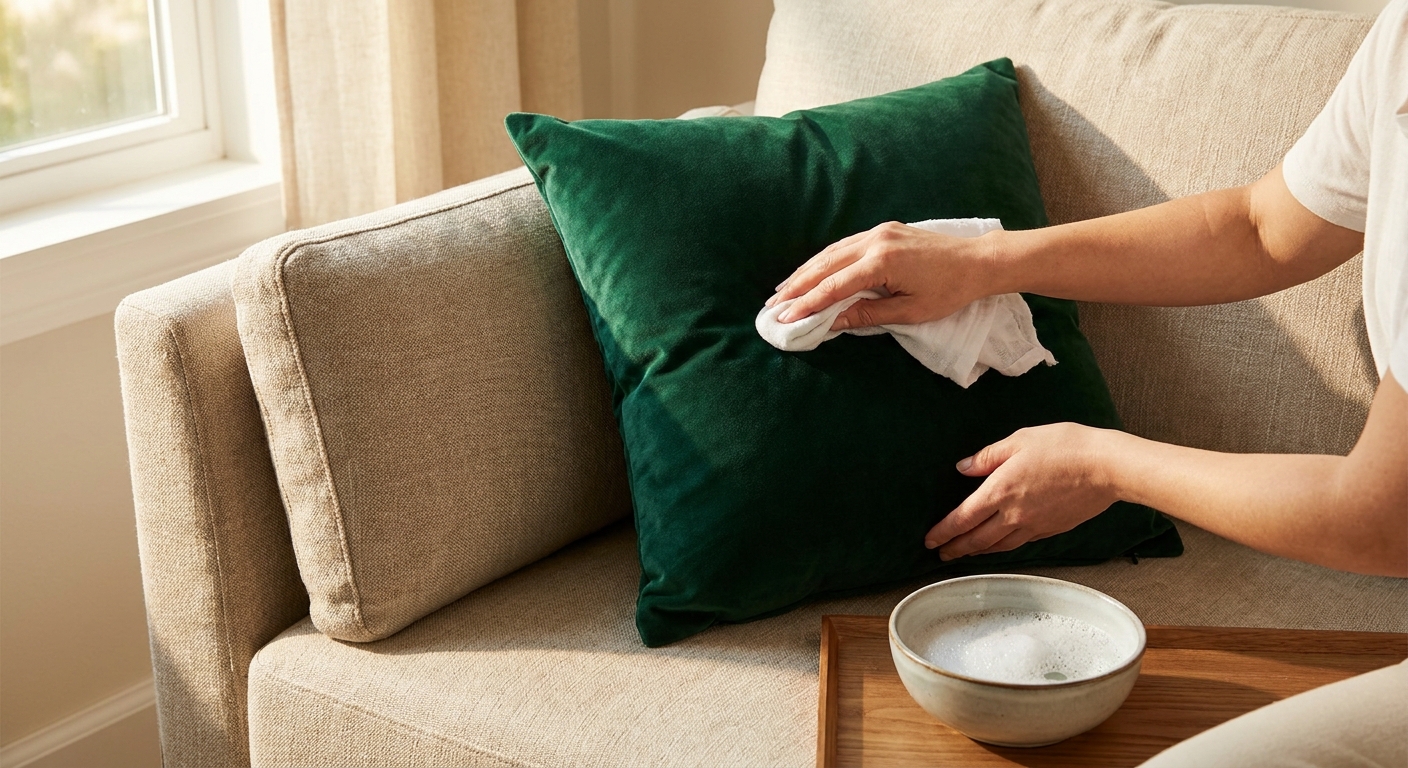
- Act fast. Blot with a dry white cloth to lift as much as you can.
- Mix a gentle solution. Lukewarm water plus a tiny drop of mild detergent. You want barely-there suds.
- Dampen, don’t soak. Dip the cloth, wring it out very well, then blot the stain from the outside in.
- Rinse by blotting. Use a second cloth dampened with plain water to remove soap residue.
- Blot as dry as possible. Press with a dry cloth until you stop picking up moisture.
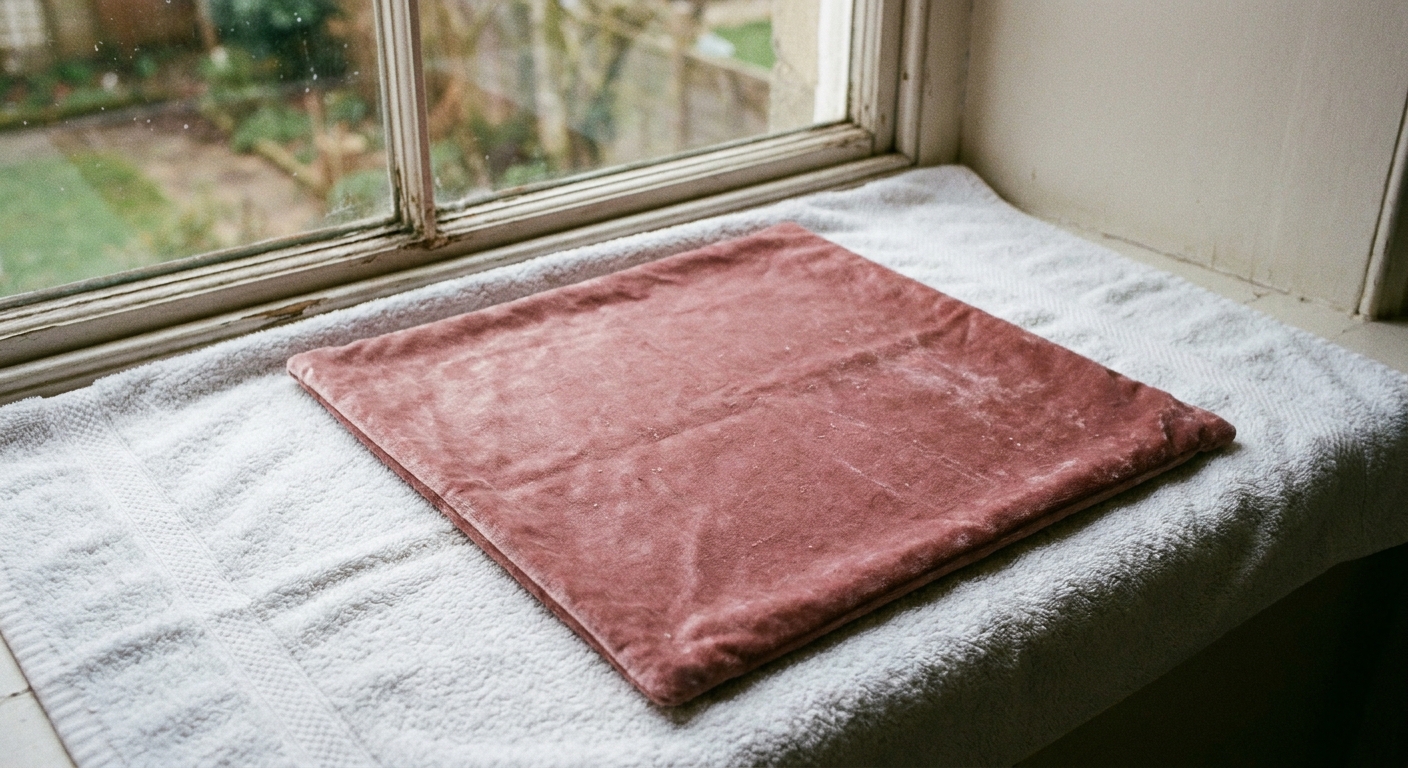
- Air-dry flat. Reshape the cover and let it dry flat with good airflow.
- Revive the nap. Once fully dry, brush lightly with the nap, then finish with one final pass so the pile lies in a uniform direction.
Important: Avoid saturating velvet. Water can travel through the pile and leave a ring, especially on cotton or rayon velvet.
What stain is it?
- Coffee, tea, red wine: Blot immediately. Avoid hot water (it can set tannins). Use the mild solution above, then rinse-blot and dry flat.
- Oil, makeup, greasy fingerprints: Blot first. Then use an absorbent powder like cornstarch (or baking soda) to pull oil. Sprinkle lightly, wait 30 to 60 minutes, then vacuum gently with the brush attachment. Spot-clean afterward only if needed.
- Pet accidents: Blot, then use a very mild soap solution and a careful rinse-blot. Dry thoroughly with airflow. If odor persists, consider a pro cleaner rather than soaking with odor removers.
- Ink, dye transfer, unknown stains: Stop early. Ink and dyes can spread with water. This is a good “call a pro” moment.
If you can see the nap changing direction while you clean, slow down. Velvet rewards a light touch.
Skip harsh DIY chemicals
Many readers reach for vinegar, hydrogen peroxide, or oxygen stain removers. On velvet, these can shift color, strip finishes, or create watermarks. If you choose to try anything beyond mild soap and water, test first and use the gentlest possible method.
If the tag allows washing
Some velvet cushion covers are washable, especially polyester velvet. Still, “washable” does not mean “toss it in with towels and hope for the best.” Finishes, backings, and dyes vary widely, so the care label is the boss.
Before you wash
- Do a color test. Dampen a white cloth and blot a hidden area. If you see dye transfer, do not wash.
- Zip the cover closed to protect edges and prevent distortion.
- Turn it inside out to reduce abrasion on the velvet face.
- Wash alone or with like-soft items, never with anything rough.
- Use cold water and a gentle detergent.
Machine-wash settings
- Delicate or hand-wash cycle
- Cold water
- Low spin or extra-low spin if available
Avoid: bleach, fabric softener, heavy-duty cycles, and overloading the machine.
Hand-washing (even safer)
Fill a basin with cool water and a small amount of gentle detergent. Submerge the cover, swish lightly, and do not wring. Drain, then refill with clean water to rinse. Press water out with a towel like you are blotting, not twisting.
Drying velvet
This is where velvet usually goes wrong. Heat and pressure are nap crushers.
Do this
- Dry flat on a clean, smooth towel, reshaping the cover to its original dimensions.
- Air dry away from direct sun to prevent fading and harsh, uneven drying.
- Flip onto a dry towel if needed so both sides dry evenly.
Skip this
- Do not tumble dry unless the tag explicitly says it is safe, and even then use no heat or air-fluff only.
- Do not hang wet velvet by the corners. It can stretch and dry with odd ripples.
- Do not place anything on top “to speed it up.” That is an instant nap flattening situation.
Revive crushed nap
If your pillow looks a little streaky after sitting on it, don’t panic. Most crushed areas are just the pile laying in a different direction.
Method 1: Brush
When the cover is fully dry, use a soft brush and sweep in the direction of the nap with light, consistent strokes. Finish with a final uniform pass so the sheen looks even.
Method 2: Steam, then brush
Steam relaxes the fibers so they can stand up again.
- Hold a handheld steamer a few inches away. Do not press it into the fabric.
- Steam lightly in small sections. Do not saturate.
- Let the area cool and dry for a minute.
- Brush gently with the nap.
Steaming notes: Use the lowest effective output, especially on synthetics. Avoid prolonged steaming on heat-sensitive fabrics or glued backings.
No steamer? You can use the steam from a hot shower in a small bathroom. Keep the cover out of the direct spray, do not over-humidify the room, and make sure everything dries completely afterward to avoid musty odors or mildew.
Method 3: Stubborn pressure marks
Some velvets, especially cotton, can hold a “shadow” from pressure. Try a second gentle pass of steam and brushing. If it still looks off, it may be a true change in the pile from long-term compression. That’s your cue to rotate pillow placement more often.
Water rings and shading
Velvet can show shading that looks like a stain but is really nap direction or a watermark from uneven moisture.
If you suspect a watermark
- Lightly dampen a larger area around the mark (not just the ring) with a well-wrung cloth, then blot dry. The goal is to even out moisture so it dries uniformly.
- Dry flat with airflow and brush once fully dry.
When to stop: If the fabric looks worse as it gets wetter, pause and let it dry. Overworking velvet tends to create more visible texture changes.
Storage
If you swap pillow covers seasonally, store velvet like you would store a favorite sweater: supported, clean, and uncrushed.
- Clean first. Invisible oils attract dust and can set over time.
- Store flat if possible. A shallow cotton storage bag or a breathable bin is ideal.
- Avoid tight vacuum bags for velvet covers. Compression can set the nap in a way that is hard to revive.
- Use acid-free tissue to pad folds if you must fold the covers.
- Keep away from damp spaces to prevent musty odors and mildew risk.
Quick FAQs
Can I use a lint roller?
Yes, gently. It’s great for pet hair. Use light pressure and roll with the nap when you can.
Can I iron velvet?
Try not to. Direct heat and pressure can permanently crush the pile. If you must, use steam and keep the iron from touching the velvet face. A steamer is the safer option.
Do I need dry cleaning?
Only if the tag says so, or if you have silk velvet, rayon velvet, strong dyes that bleed in a color test, or a stain that will not lift with gentle spot-cleaning.
Why does it look lighter in spots?
Usually it is nap direction reflecting light differently, not fading. Brush it, steam lightly, and rotate the pillow to prevent repeated compression in the same place.
A simple routine
If you want a low-effort plan you can actually stick to, here it is:
- Weekly: quick vacuum with the upholstery brush, light fluffing of the insert
- As needed: color-test, then spot-clean by blotting, air-dry flat
- After cleaning: steam lightly (from a distance) and brush with the nap
- Seasonally: rotate covers and store loosely so the pile can breathe
Velvet is not high maintenance, it’s just honest. It shows every heavy hand and rewards every gentle one. Treat your pillows like little heirlooms-in-training, and they will keep giving your room that soft, candlelit glow for years.