Candle Wax Stuck in an Area Rug

Clara Townsend
I have a special talent for lighting a candle to set a mood and then immediately doing something that threatens the mood, like knocking that candle over. If you are staring at a waxy patch in your area rug right now, take a breath. The goal is simple: get the wax out of the pile without melting it deeper into the rug backing.
The safest approach for most rugs is a patient freeze and chip, followed by a very controlled bit of blotting only if you still feel residue. Heat can work, but it is also the fastest way to drive wax down into the foundation of the rug, where it loves to hide.
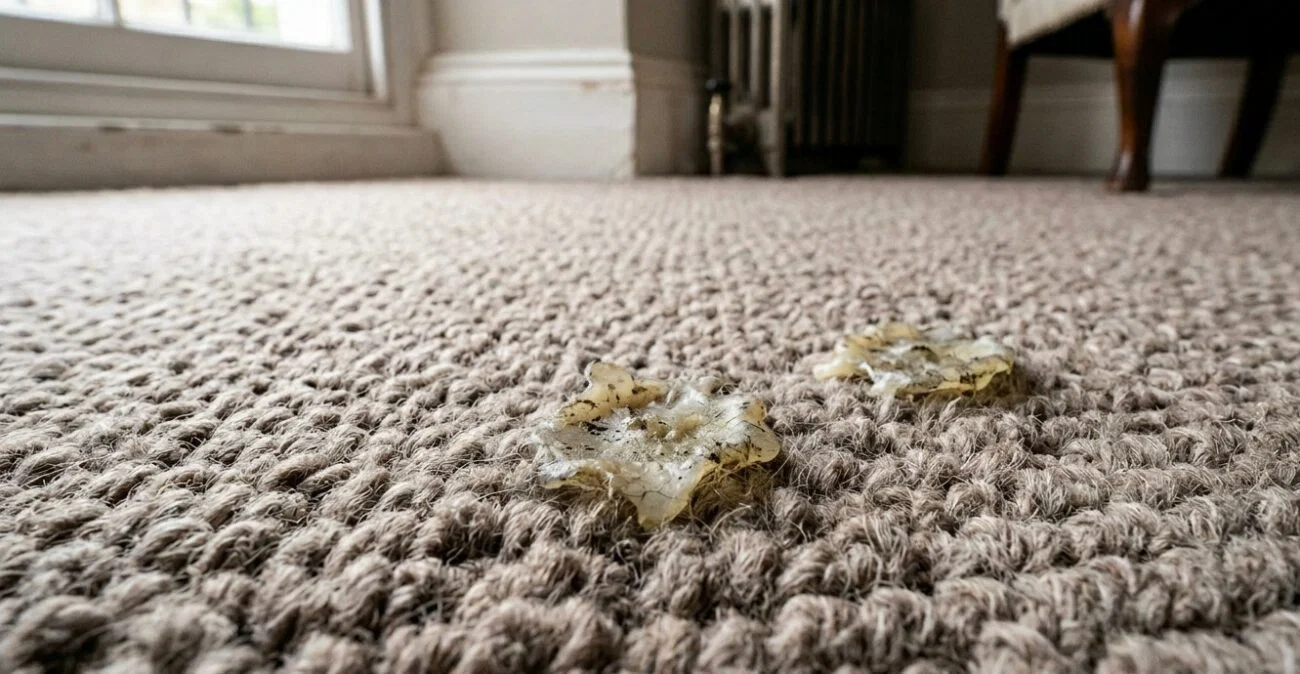
Before you start: three rules
- Do not rub. Rubbing can fuzz fibers, distort loops, and push wax lower.
- Do not start with heat. Warm wax moves like a stain and can seep into the backing and rug pad.
- Support the rug. If your rug is on a squishy pad, slide a thin cutting board, baking sheet, or piece of cardboard under the wax spot if you can. It keeps pressure from forcing wax downward while you work.
If the wax is still soft, let it fully harden first. You can speed that up with an ice pack, but do not smear it around trying to scoop it while it is gummy.
If the spill includes soot (a gray or black smudge), treat that separately first: let it dry, then vacuum gently. Keep soot dry as long as possible since moisture can make it smear.
What you need
- Ice cubes in a zip-top bag, or an ice pack wrapped in a thin towel
- A dull butter knife, old credit card, or plastic scraper
- A vacuum (with suction control if possible)
- White paper towels or plain white cloth
- Optional for leftover residue: a small amount of isopropyl alcohol (70% or 91%)
Skip dyed towels and anything fuzzy that could shed into the rug pile.
If your rug sits on a finished floor, slide a barrier under the area if you can. Cardboard or a thin baking sheet works. It helps protect the floor finish from any drips or brief heat transfer.
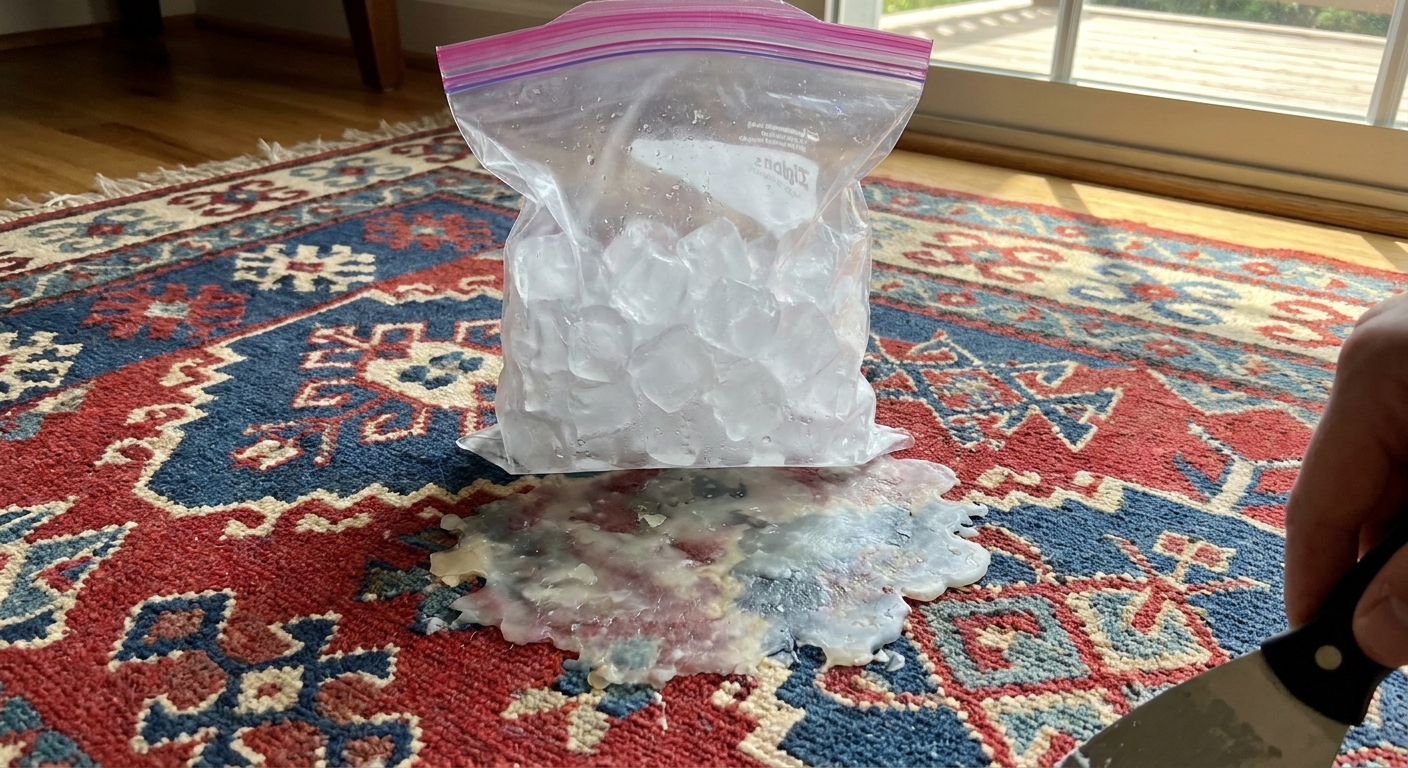
Freeze and chip
Step 1: Freeze until brittle
Set your bag of ice directly on the wax for 10 to 20 minutes. You want it cold enough that it cracks cleanly instead of bending. If the wax is thick, you may need a second round.
Step 2: Chip from the outside in
Use a dull edge and work from the outer rim toward the center. Think tiny shavings, not big heroic pries. If you yank, you risk pulling fibers or cutting loops.
Pause and refreeze any time the wax starts to feel tacky.
Step 3: Vacuum between passes
Vacuuming after each round keeps chips from warming under your hands and prevents you from grinding crumbs into the pile.
Tip: If your vacuum has strong suction, hover slightly above delicate fibers, like wool loops, shag, or viscose, and let it lift the crumbs rather than dragging the nozzle hard across the spot.
By pile height
Low pile
Low pile rugs are the easiest because wax sits closer to the surface.
- Freeze thoroughly.
- Use a credit card edge at a low angle to skim wax off.
- Vacuum, then inspect by brushing your fingers lightly across the grain.
Medium pile
Wax can wrap around the base of the fibers.
- Freeze, chip gently.
- Use your fingers to separate clumped fibers as you go, like you are teasing apart a tiny knot.
- Refreeze often rather than pushing harder.
High pile or shag
Shag is where people panic and reach for a hair dryer. Resist.
- Freeze longer so the wax fractures.
- Chip in very small pieces, lifting wax away from the strands.
- If wax is tangled around fibers, pinch the wax and crack it off rather than scraping the rug.
If you are dealing with a very fluffy shag, it can help to put a small piece of mesh (like a clean produce bag) over the area while you vacuum, so you do not accidentally swallow long fibers. Hold the mesh taut and vacuum through it.
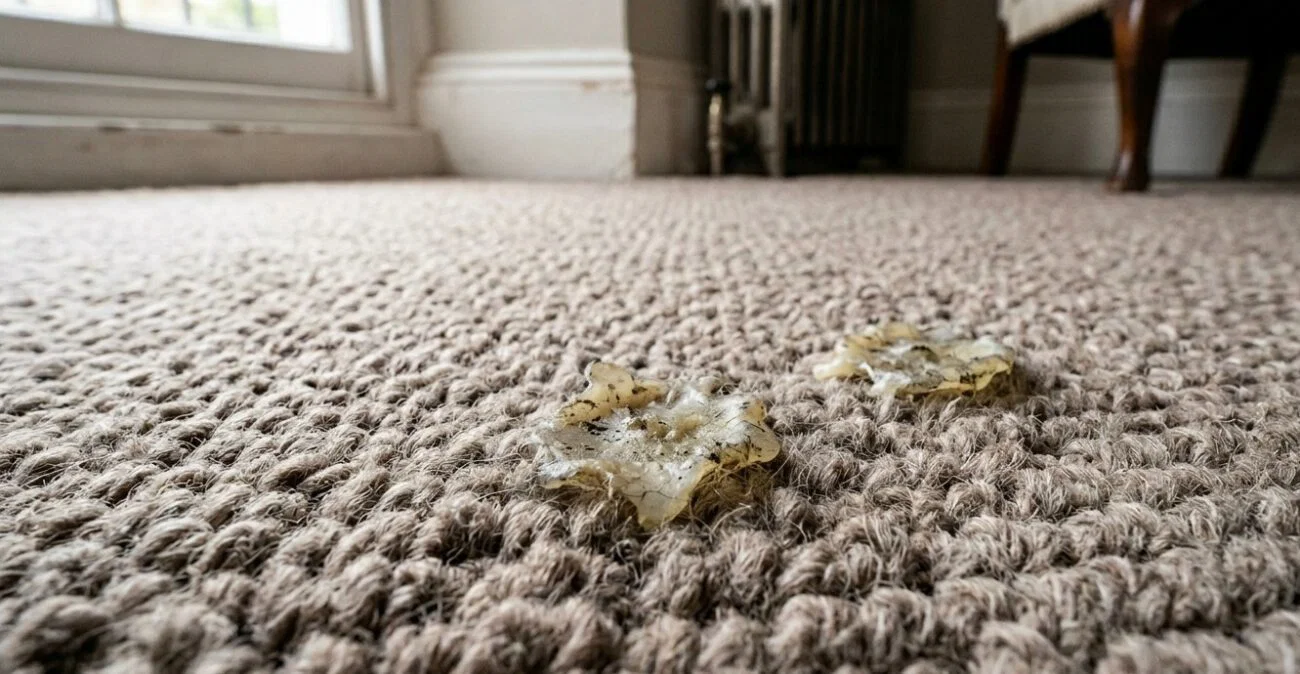
If residue remains: blotting, limited
After chipping, you might still feel a slightly stiff or greasy residue. This is where careful blotting can help, but you want to avoid the classic mistake: heating so much that the wax turns liquid and migrates downward.
Paper towel and iron (optional)
If you choose to use the paper towel and warm iron method, keep it brief and controlled:
- Place 2 to 3 layers of plain white paper towel over the spot.
- Set an iron to low with no steam.
- Touch the iron to the paper in quick taps, then lift and check the towel every time.
- Move to a clean section of towel as soon as you see wax transfer.
Stop if you are not seeing transfer after several quick taps. At that point, continuing usually means you are warming the backing more than the wax you are trying to remove.
Let the area cool fully, then reassess. You can do another short round later, but do not hover heat over the rug.
If the rug sits on a thick pad, be extra conservative with any heat. That pad acts like insulation and encourages wax to soak down.
Wool and viscose cautions
I love a wool rug. I also respect how quickly a well-meaning cleaning attempt can rough it up.
Wool
- Freeze-and-chip is usually safe.
- Avoid aggressive solvents and heavy rubbing, which can fuzz the fibers and distort the pile.
- If you still feel residue, try another freeze-and-chip round first. If you must spot clean, use the tiniest amount of mild soap and cool water on a cloth, blotting only, then blot with plain water. Keep moisture minimal.
Viscose, bamboo silk, or art silk
Viscose rugs are gorgeous, drapey, and famously temperamental. They can watermark, lose sheen, or go stiff with moisture and many cleaners.
- Stick to freeze-and-chip and gentle vacuuming.
- Do not use alcohol, acetone, or strong stain removers.
- If wax is significant or deep, this is a smart moment to call a professional rug cleaner who works with viscose.
Optional: tiny alcohol step
If your rug is synthetic and colorfast, and you still feel a greasy halo after chipping, you can try a very small amount of isopropyl alcohol. This is most useful when the candle had fragrance oils and you are dealing with that slightly slick residue.
- Test first in an inconspicuous spot for color transfer.
- Dampen a white cloth lightly. Do not pour alcohol on the rug and do not saturate the backing.
- Blot from the outside toward the center.
- Follow with a cloth dampened with plain water to remove any residue, then blot dry.
Avoid this step on viscose and use caution on rugs with unknown dyes or a latex-backed construction, since excess liquid can soften adhesives.
Reset the pile
Once the wax is gone, the fibers sometimes look flattened or confused about which direction they want to lie.
- Let the area dry completely if you used any moisture.
- Use your fingers or a clean spoon to gently lift and fluff the pile back up.
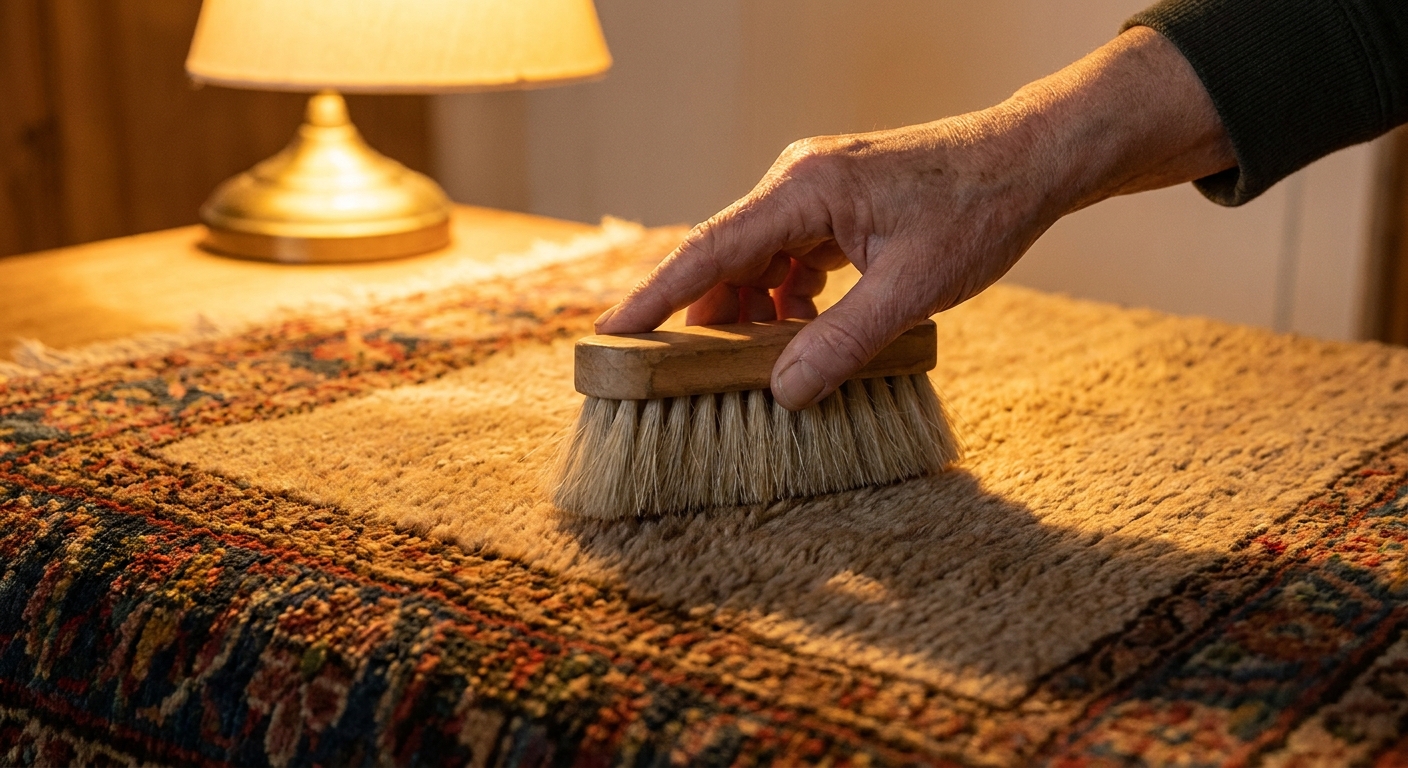
- Brush lightly in the direction of the surrounding pile using a soft brush.
If you are not sure which way the pile runs, look at the rug from two directions under the same light. One direction looks darker and richer, the other looks lighter. Match what you see around the spot.
Troubleshooting
Dyed wax left color behind
Color in wax can behave like dye. Do not keep heating it. After you have removed as much wax as possible via freezing, treat remaining color as a stain and consider a professional cleaner, especially for wool or viscose.
Heat made it worse
It happens. Cool the area completely, then go back to freeze-and-chip. Often you can still lift wax that re-set deeper, but you will need more patience and smaller passes.
It feels crunchy but looks clean
That usually means there is still a thin layer at the base of the fibers. Freeze again, flex the fibers gently with your fingers, and vacuum. If the rug is synthetic and colorfast, a tiny alcohol blot can help.
There is a big wax puddle
Freeze longer, chip in layers, and do not try to pry up one giant piece. The backing is the prize you are protecting.
When to call a pro
Get help if any of the following are true:
- The rug is viscose, bamboo silk, or labeled silk-like and you have more than a tiny spot.
- The wax is colored and you see dye transfer.
- The wax reached the backing and the rug feels stiff across a larger area.
- The rug is an heirloom, antique, or you would cry if it changed texture.
A good rug cleaner can often remove wax mechanically and with controlled techniques that are much safer than experimenting at home.
Quick recap
- Freeze, chip, vacuum is the safest sequence for most rugs.
- Work slowly, refreezing often, especially on shag.
- Use heat only as a last resort, and only in brief taps with constant checking.
- Viscose is a no-solvent zone. Stop early and consider professional cleaning.