Cafe Curtains for a Kitchen Sink Window

Clara Townsend
There is a very particular kind of vulnerability that comes with a kitchen sink window. You are just trying to rinse a mug and suddenly you are aware of your neighbors, your posture, and the fact that dish soap has a way of finding your sleeves. Cafe curtains are my favorite fix because they give you privacy right where you need it, but they leave the top of the glass open so the room still feels bright and breathing.
The trick is measuring them like a short tier, not like full-length drapery . Below is exactly how I size and hang cafe curtains on the lower half of a sink window so the basin stays private and the light stays generous.
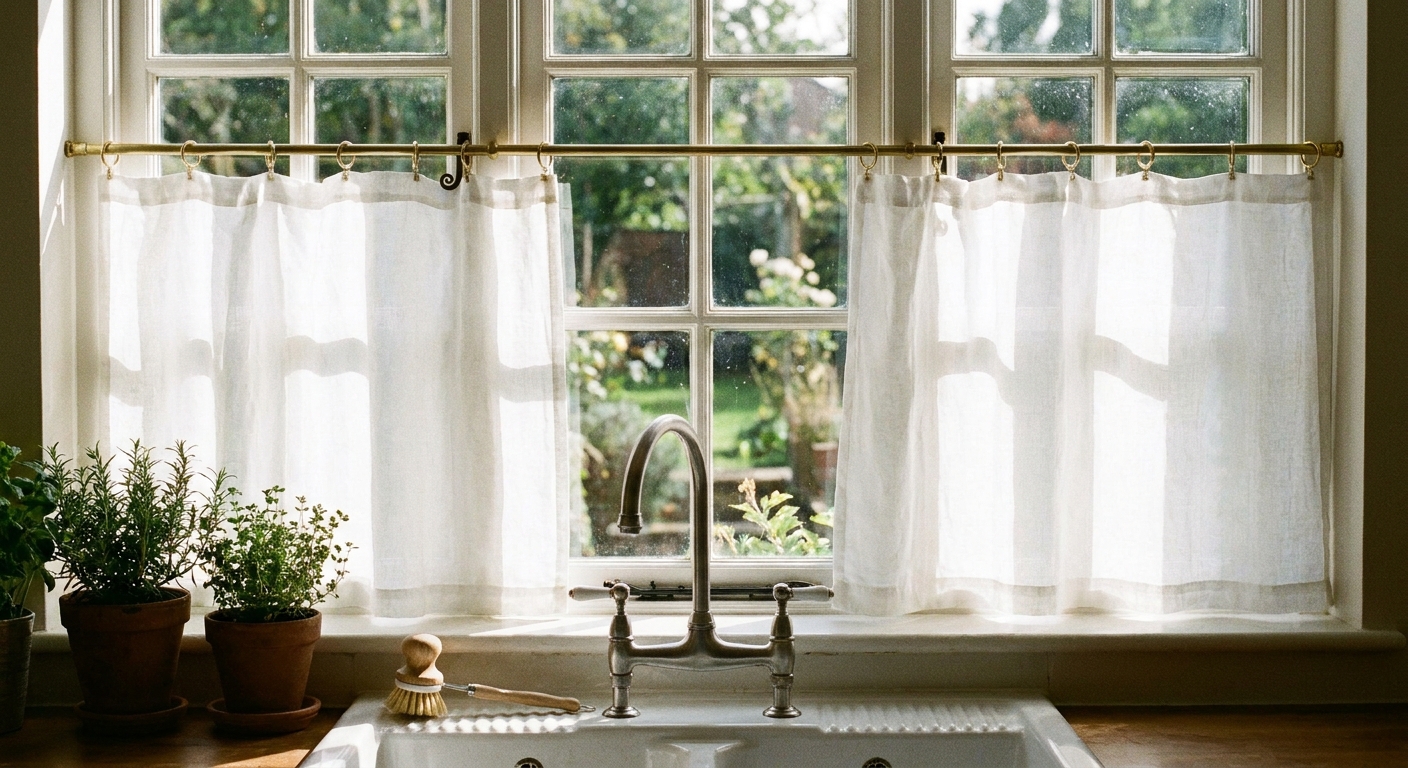
What counts as a cafe curtain?
Cafe curtains are short panels (often in two pieces) hung across the lower portion of a window. They are meant to sit at eye level or below, blocking views in while still letting daylight pour in from the top half.
For a kitchen sink window, that usually means the curtain covers the faucet zone and your upper body while you work, but it stops well before the top of the window so the whole space still feels open.
Decide your coverage first (the privacy line)
Before you touch a tape measure, stand at the sink and decide what you actually want to hide. I like to choose a “privacy line” that blocks:
- The sink basin and counter zone (so dishes are not on display).
- Your torso at the sink (so you do not feel like you are washing lettuce in a shop window).
A reliable starting point is to cover the lower 1/2 to 2/3 of the glass. If your window starts low behind the faucet, you can go a bit higher. If your window is tall and already feels private, you can keep it closer to half.
Rod height: where to place it on the window
The biggest cafe-curtain mistake I see is hanging the rod too low, which makes the curtain feel like an afterthought and does not actually improve privacy.
My go-to placement
- Set the rod at the midpoint of the window for classic cafe-curtain proportions.
- If you want more privacy, place it slightly above the midpoint, around 55 to 65 percent up from the bottom of the glass.
Simple measuring method:
- Measure the glass height (not the whole trim) from the bottom of the glass to the top of the glass.
- Divide by 2 to find the midpoint.
- Mark that height on both sides of the window frame, then adjust up a few inches if you want more coverage.
Practical sink note: If your faucet or gooseneck sprayer visually crowds the curtain, nudge the rod up a couple inches. Cafe curtains look best when the hardware and the fabric do not feel like they are competing for the same little strip of air.
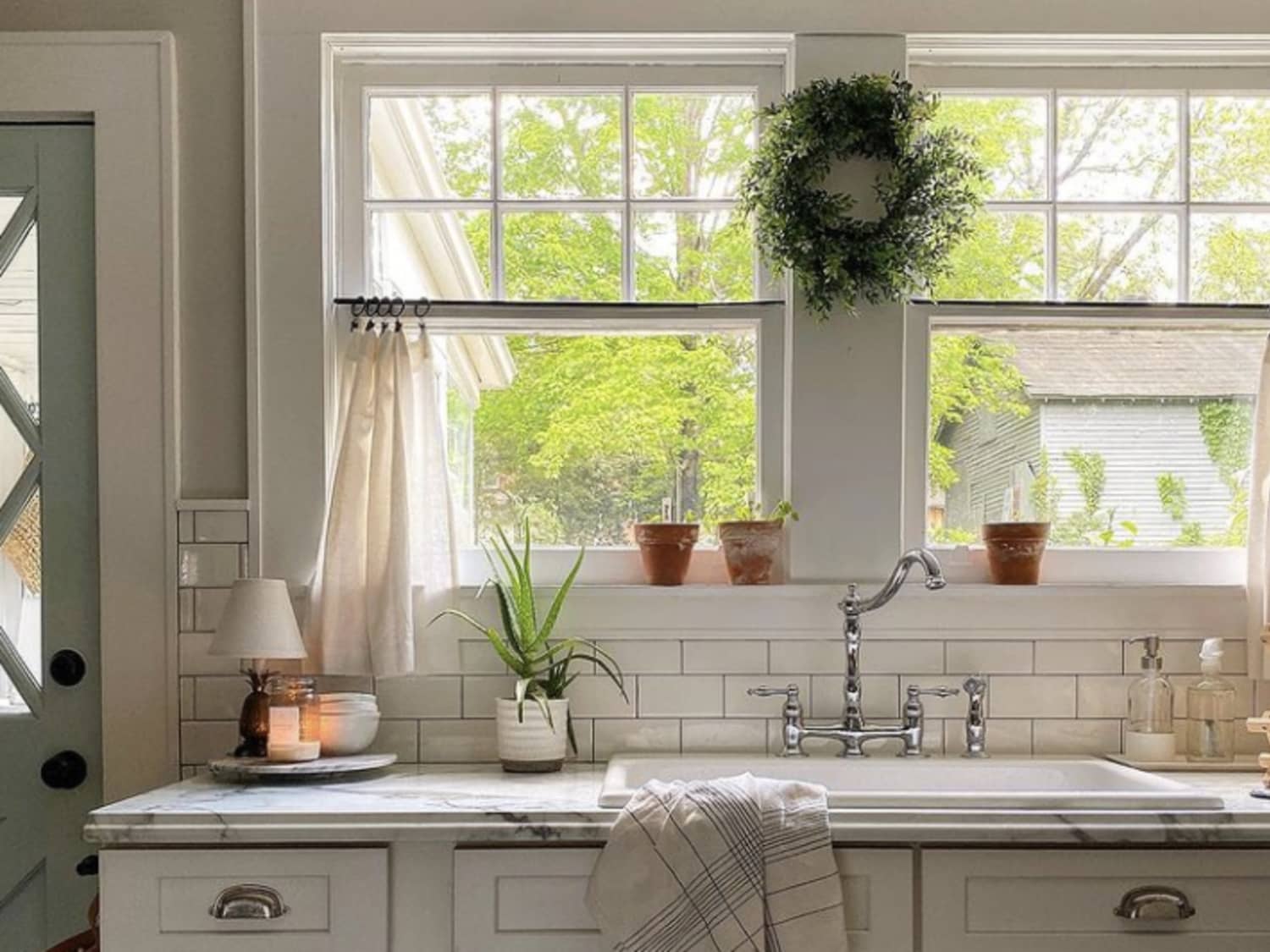
Panel length: how long your tier should be
Cafe curtains look polished when they land with intention. Not too short, not grazing your countertop like a damp sleeve.
The easiest way to measure length
Measure from the top of the rod (or from the rod pocket, if that is how the curtain hangs) down to where you want the hem to end.
Best hem placements for a sink window
- Just below the window’s lower rail or muntin line if you want a crisp, tailored look.
- 2 to 4 inches below the rod’s bottom edge if your window is short and you only need a small privacy band.
- End 1 to 2 inches above the countertop if your window sits close to the counter. This keeps fabric out of splashes and makes cleaning less annoying.
Rule of thumb: For most kitchen sink windows, cafe curtain tiers land somewhere in the 12 to 20 inch range, but the real answer is whatever clears your countertop and covers your chosen privacy line.
If you are between lengths: Go slightly shorter. In kitchens, a hem that hovers is charming. A hem that drags looks accidental and gets grubby fast.
Width and fullness: how much fabric to buy
Fullness is what keeps cafe curtains from looking like a flat sheet taped to a window. Even if you love minimal style, you still want a little ripple so it reads “soft” rather than “temporary.”
Use this fullness range
- 1.5x fullness for a clean, slightly gathered look.
- 2x fullness for a classic cafe feel with pretty folds.
- 2.5x fullness if the fabric is very thin (like voile) or you need extra privacy without going opaque.
How to calculate it:
- Measure the rod width (or the width of the glass area you want covered).
- Multiply by your chosen fullness (1.5, 2, or 2.5).
- That number is your total curtain width across all panels combined.
Example: If your rod spans 36 inches and you want 2x fullness, aim for about 72 inches of total fabric width. That could be two 36-inch panels or one wide tier, depending on the look you like.
Two panels or one? For a sink window, I love two panels that meet in the middle. You can part them for more light and it looks sweetly traditional. One continuous tier looks cleaner and is a little easier if you want a perfectly even gather.
Choosing the right rod (and how to hang it)
Because cafe curtains sit mid-window, you have more rod options than you do with full-length drapery.
Rod options that work well over a sink
- Tension rod: Great for rentals or if you do not want holes. Best for lightweight fabrics.
- Slim sash rod (mounted to the frame): My favorite for a tidy, built-in look.
- Standard curtain rod with brackets: Useful if you want a thicker rod or heavier fabric.
Hanging steps that keep it straight
- Mark your rod height on both sides based on the midpoint method above.
- Check level before you drill or press in a tension rod. Even a slight tilt is weirdly noticeable at eye level.
- Mount into solid material when possible. Window casings can be thin, so pilot holes help prevent splitting.
- Test the operation. Open and close the panels and make sure the rod does not wobble when you tug.
Stylist tip: If you are using a tension rod and it keeps slipping, clean the inside window frame with rubbing alcohol first. Kitchen grease is real, and it is surprisingly sabotaging.
Fabric and lining: privacy without losing glow
In kitchens, I almost always choose washable fabrics with a bit of body. You want the curtain to fall nicely, not cling to the window like a damp napkin.
Fabric picks I reach for
- Cotton voile or batiste: Airy and bright, best with a bit more fullness for privacy.
- Linen or linen blend: Soft, matte, and elevated. Hides a surprising amount even unlined.
- Lightweight canvas or cotton duck: Great if you want more coverage and a crisp shape.
Do you need lining? Usually, no. If privacy is a major issue (street-facing sink), choose a slightly denser fabric or go up to 2.5x fullness. Lining can make a short tier feel stiff and heavy, and kitchens already have plenty going on visually.
Quick measurement checklist
- Rod height: midpoint of the glass, or 55 to 65 percent up from the bottom for more privacy.
- Panel length: rod to hem, usually 12 to 20 inches, ending 1 to 2 inches above the countertop if the window sits close.
- Total width: rod width × 1.5 to 2.5 (2x is the sweet spot for most kitchens).
Common cafe curtain mistakes (and simple fixes)
1) The curtain looks skimpy
Fix: Increase fullness. If your panels just barely meet, you will always feel like you are on display. Aim for 2x total width if you can.
2) The hem keeps getting splashed
Fix: Raise the hem so it ends above the countertop, or choose a fabric that can handle frequent washing.
3) The rod placement feels awkward
Fix: Move the rod up a few inches. That tiny change often makes the whole window feel intentional and balanced.
4) The fabric feels too busy for the kitchen
Fix: Keep pattern subtle and let texture do the work. A slubby linen or a simple stripe can add charm without visually cluttering a hardworking space.
FAQ
Should cafe curtains cover the whole sink window?
Not usually. The magic is that they cover the lower portion for privacy while leaving the top open for light. If you need full coverage at night, consider pairing cafe curtains with a simple shade above .
Do I hang cafe curtains inside the frame or above the trim?
Most sink windows look best with the rod mounted inside the window frame or directly on the casing, especially if you are aiming for a charming, tailored look. If you need a sturdier mount or the frame is shallow, you can mount slightly outside the trim, but keep the rod visually light.
Can I use cafe curtains on a window with a deep sill?
Yes, and it can look wonderful. Just make sure the hem does not land right on the sill where it will bunch. Either end the curtain above the sill line or several inches below it.