Bonded Leather Peeling on a Sofa

Clara Townsend
Clara Townsend is an interior stylist, vintage furniture enthusiast, and the creative voice behind Velvet Abode. With over a decade of experience transforming both cramped city apartments and sprawling fixer-uppers, she believes that a beautiful home is built on personal stories rather than massive budgets. When she isn't hunting for the perfect brass sconce at a local flea market, she can usually be found rearranging her living room for the third time this month.
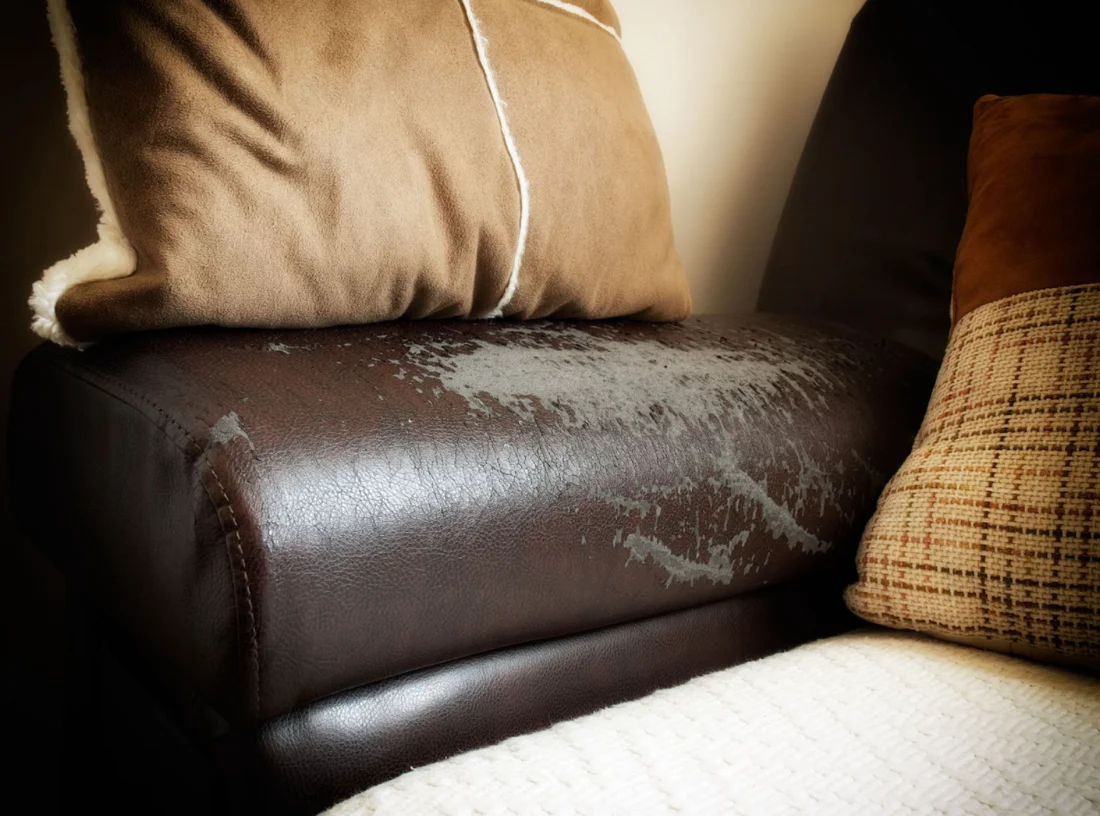
There is a particular heartbreak to it: your sofa still looks like it should be fine from across the room, but up close the seat cushions are snowing little black flakes onto your jeans. If you are dealing with bonded leather peeling, you are not alone. In my experience, this is one of the most common, most frustrating upholstery issues in rentals and first apartments.
Let’s talk about what bonded leather actually is, why it peels, what you can do to make it presentable for a while, and the honest signals that say, “Stop throwing time and money at this. Cover it or replace it.”
What bonded leather is (and is not)
Bonded leather is not the same thing as full-grain or top-grain leather. It is more like a hybrid material designed to look leather-like at a budget price.
How it is made
Manufacturers take leftover leather scraps and fibers, grind them down, and bond them together with adhesives. That bonded layer is then coated with a polyurethane (PU) finish and embossed with a leather-like grain pattern. The top coating is what you see and touch daily.
Why that matters
Real leather develops patina. Bonded leather relies on a surface coating. Once that coating starts to fail, it usually fails in sheets, flakes, or brittle chips rather than softening with age.
Common label clues: “bonded leather,” “faux leather,” “PU leather,” or “leather match” often point to a coated material (not a full hide) that can peel instead of aging gracefully.
Why bonded leather peels
Peeling is usually the top polyurethane layer separating from the backing underneath. Once the bond breaks in one spot, friction keeps lifting the edges, and it spreads.
- Friction and body oils: Seat cushions, arm tops, and headrest areas get constant rubbing plus skin oils and hair products. That combination breaks down the coating faster.
- Dry indoor air and heat: Radiators, heat vents, and sunny windows can make the coating brittle, especially in winter.
- UV exposure: Direct sun bakes the finish, making it crack and lift.
- Harsh cleaners: Alcohol, ammonia, bleach, and many multi-surface sprays can strip or weaken the topcoat.
- Age and manufacturing quality: Some bonded leather lasts a few years. In some cases, it can start peeling within 12 to 18 months, depending on use and the thickness of that PU layer.
Set expectations first
Temporary fixes can do two helpful things:
- Stop the visual mess so the sofa looks cleaner in photos or when guests come over.
- Reduce snagging and shedding so you are not constantly brushing flakes off your clothes.
What they generally cannot do is restore the original factory finish across a large area. If your sofa is peeling in multiple high-use zones, think of repairs as cosmetic patching, not a permanent reset.
Quick decision guide
- Small spot (coin to palm sized): Clean, level it with filler, then use a vinyl or faux leather repair kit.
- Widespread peeling: Skip the whack-a-mole repairs and go straight to a cover.
- Frame or cushions failing too: Covering can buy time, but replacement is usually the real fix.
- Not sure: Start with cleanup and a seat-only cover. It is the fastest way to stop flakes.
Renter-friendly touch-ups (temporary)
If you are renting or planning to replace the sofa later, aim for low-commitment improvements that tidy up the surface without requiring professional tools.
1) Clean gently and remove loose flakes
This step alone makes a difference, and it helps any product you apply later stick a little better.
- Vacuum with a soft brush attachment to pick up flakes.
- Wipe with a microfiber cloth dampened with water and a tiny drop of mild dish soap.
- Dry thoroughly. Do not soak seams or let water pool.
Extra note if you have pets or toddlers: vacuum flakes promptly so they do not end up in mouths or paws. If you are trimming or scraping, put down a drop cloth first so cleanup is fast.
Also: if your sofa has a care tag or the manufacturer has cleaning guidance, follow that first.
Avoid: magic erasers, rubbing alcohol, citrus cleaners, and strong degreasers. They can speed up peeling.
2) Smooth the edges so they snag less
If you have curling edges of coating, you can carefully trim only what is already fully detached.
- Use small sharp scissors or cuticle scissors.
- Trim conservatively. Do not pull, because it can lift more coating.
3) Use a vinyl or faux leather repair kit for small spots
Look for kits labeled for vinyl or faux leather. Bonded leather behaves like a coated surface once it starts flaking, so these kits are usually the best match.
Best for: dime-to-palm sized bald spots on arms or a cushion corner.
What most kits include: a filler or repair compound, optional backing fabric, and colorants (sometimes called repair paint).
How to get a cleaner result:
- Level the divot first: peeled areas often leave a noticeable dip. Use a leather/vinyl filler (usually included) in thin layers to build the surface back up before you focus on color.
- Color match as closely as you can, and test in a hidden area first.
- Apply thin layers. Thick patches tend to look lumpy and crack sooner.
- Let each layer dry fully before adding the next.
Reality check: in angled light, patches are usually visible. From standing distance, they can be a big improvement.
Cover-first fixes that look better
If peeling covers a wide area, a patch kit can turn into a game of whack-a-mole. At that point, covering is usually more attractive, more comfortable, and less time-consuming.
Slipcovers
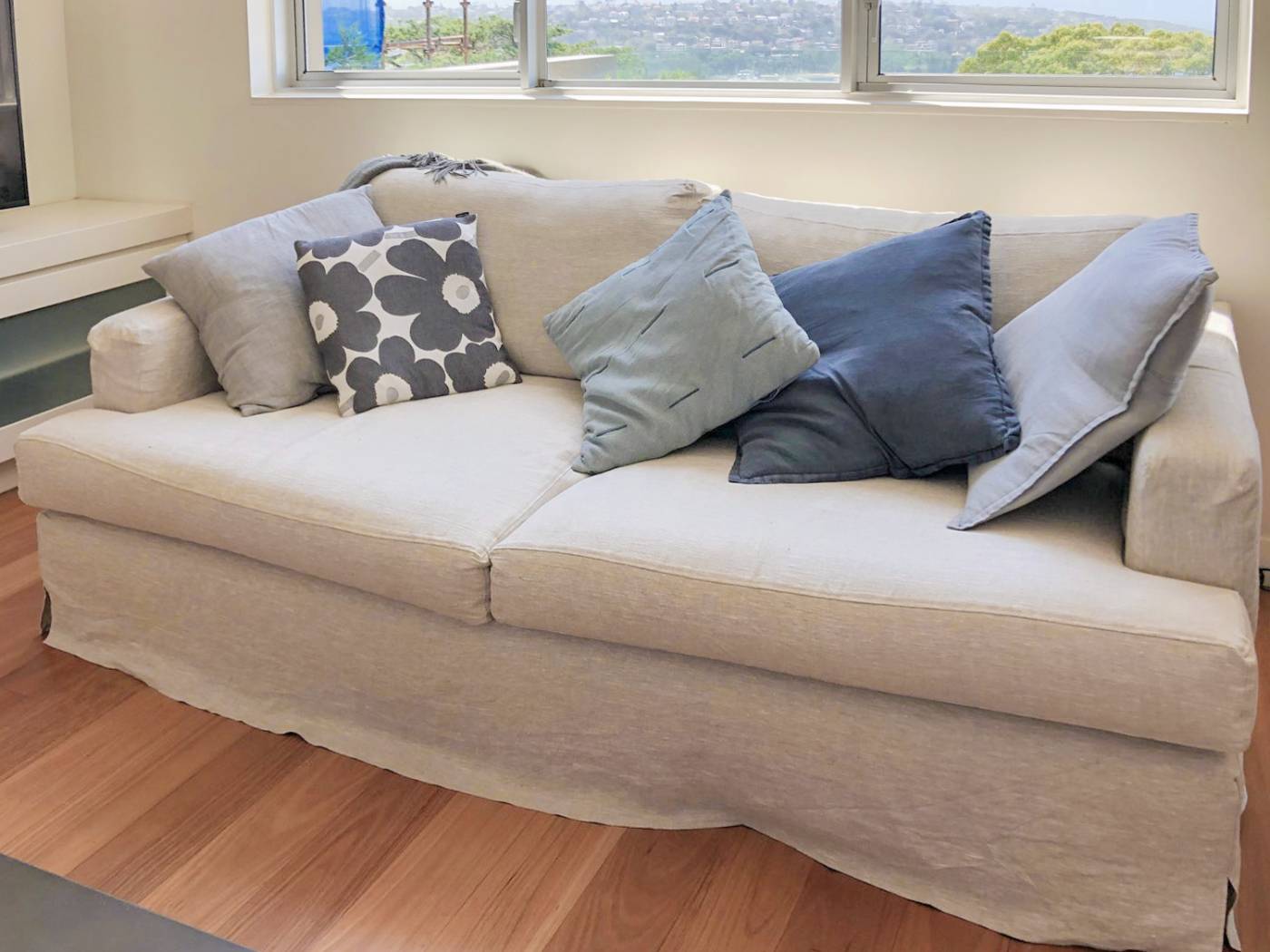
A good slipcover turns a flaky sofa into a calm, cohesive piece. It also stops the shedding issue immediately.
- Fit matters: If you can, choose a style made for your sofa type (T-cushion, box cushion, sectional). Universal covers can work, but they need a bit of tucking and adjusting.
- Heads up on sliding: slipcovers can shift on slick faux leather. Use foam tuckers, rolled washcloths, pool noodles cut to size, or even tightly rolled magazines in the seat and back crevices to hold fabric in place.
- Fabric choice: Washed cotton, canvas, and performance fabrics hide wear well. Textured weaves are forgiving and cozy.
- Color trick: If the sofa is dark and shedding, mid-tone oatmeal, warm gray, or camel hides lint better than bright white.
Throw blanket strategy for renters
If a full slipcover feels like too much, you can layer strategically:
- One large throw blanket tucked tightly into seat/back crevices.
- A second smaller throw for the most-peeling arm.
- Non-slip rug pad cut into strips under the throws to reduce sliding.
Seat-only covers for the worst zone
Sometimes only the seat cushions are failing. Stretch seat cushion covers can buy you time and keep flakes contained, even if the rest of the sofa is still presentable.
When it is time to replace
Here is my rule of thumb: if the peeling is spreading faster than you can tidy it, it is no longer a repair project. It is a materials problem.
Clear signals
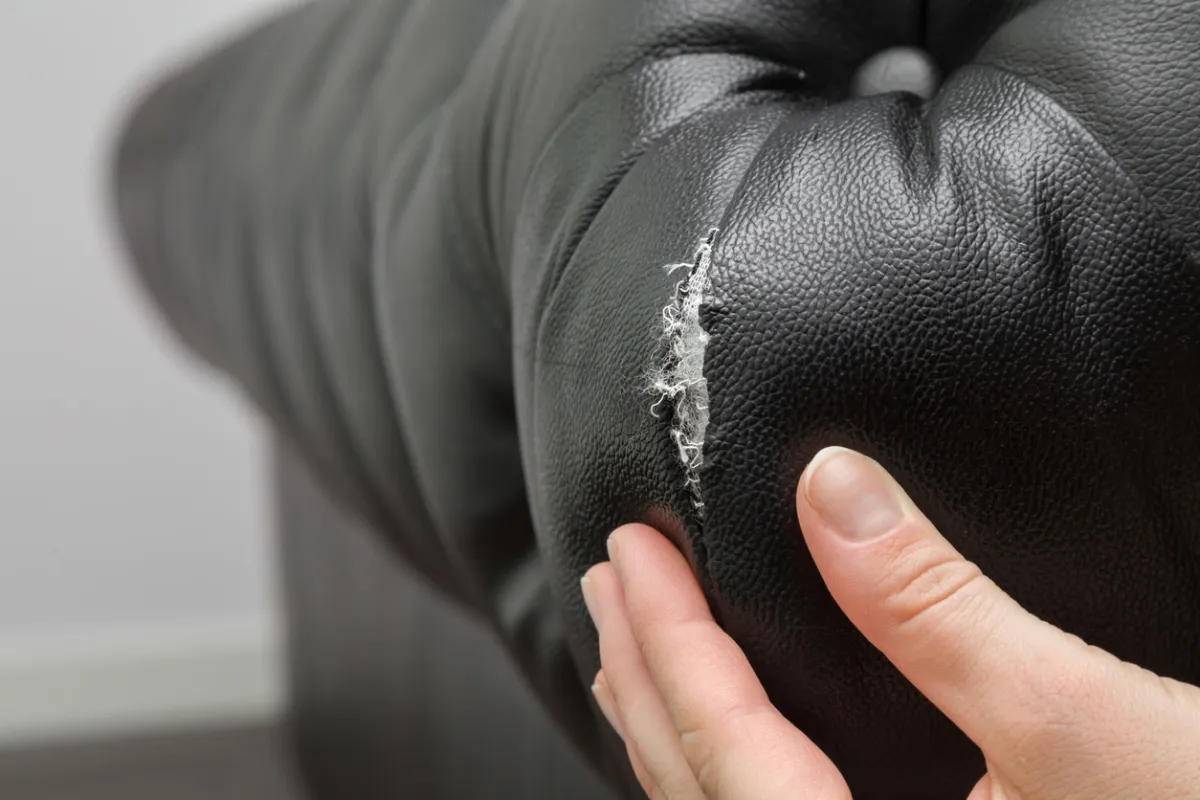
- Large sections are bald and the fabric-like backing is exposed across multiple cushions or arms.
- Cracking is everywhere in high-contact areas, even if it has not fully flaked yet.
- Patches keep failing within weeks because the surrounding coating continues to lift.
- Comfort is compromised because the surface feels rough, sticky, or snaggy.
- Frames or cushions are also failing (sagging seat, broken support, flattened foam). At that point, covering only hides the bigger issue.
When a slipcover is the smarter “replacement”
If the frame is solid and the cushions are still comfortable, a slipcover can be the most budget-friendly way to get a few more good years. This is especially true if:
- You are in a short-term rental.
- You have kids or pets and do not want to invest in a new sofa yet.
- You plan to move soon and do not want to haul a heavy new piece.
When to stop spending on fixes
If you have already bought cleaners, conditioners, paint-style touch-ups, and repair compounds and the sofa still flakes daily, consider that your sign. Put that money toward a cover now, or toward a replacement fund.
What not to do
- Do not soak it in oils or leather conditioner hoping it will “drink it up.” Conditioners help real leather, but they cannot re-bond a failing PU topcoat. Some can make peeling look worse by darkening exposed backing unevenly.
- Do not blast peeling areas with heat (hair dryer, heat gun). Heat can make the coating more brittle and accelerate cracking.
- Do not sand aggressively unless a specific kit instructs it. Over-sanding can widen the damaged area and create more lifting edges.
Care tips to slow peeling
You cannot reverse peeling, but you can slow down the spread.
- Move it out of direct sun or add curtains to filter light during peak hours.
- Keep it away from heat vents and radiators when possible.
- Clean gently with mild soap and water, then dry thoroughly.
- Use throws on high-contact zones like the seat and arms, even if you do not cover the whole sofa.
Next sofa: avoid the same problem
If this experience has made you swear off anything leather-adjacent, I get it. But you have options.
- If you want real leather: look for full-grain or top-grain leather. Ask what parts are leather, since some sofas use leather only on the front and vinyl on the sides.
- If you want low maintenance: consider performance fabric, microfiber, or tightly woven poly blends that clean easily and do not peel.
- If you love the look of vintage leather: buying secondhand real leather can be a better value than new bonded leather. Patina is a feature, not a failure.
Bottom line
Bonded leather peels because its surface coating breaks down. Once that starts, your best bet is to choose the kindest, most realistic path: a small cosmetic patch if the damage is limited, or a slipcover strategy if it is widespread. If the frame and cushions are also on their last legs, replacement is not “giving up.” It is choosing comfort and sanity.
If you want, tell me where the peeling is worst (seat, arms, back cushions) and whether you are renting. I can suggest the most discreet cover approach for your exact setup.