Biophilic Design for Small Apartments

Clara Townsend
Clara Townsend is an interior stylist, vintage furniture enthusiast, and the creative voice behind Velvet Abode. With over a decade of experience transforming both cramped city apartments and sprawling fixer-uppers, she believes that a beautiful home is built on personal stories rather than massive budgets. When she isn't hunting for the perfect brass sconce at a local flea market, she can usually be found rearranging her living room for the third time this month.
Biophilic design sounds fancy, but the heart of it is simple: make your home feel more like the natural world. More daylight. More greenery. More honest materials you actually want to touch. And in a small apartment, that can be the difference between “I guess this works” and “I can finally breathe in here.”
I love biophilic styling because it rewards you for paying attention, not for having a huge budget. A single trailing pothos over a bookshelf, a linen curtain that softens harsh afternoon sun, a little wooden stool that looks better the more you live with it. Those tiny shifts add up fast.
What it looks like in a tiny space
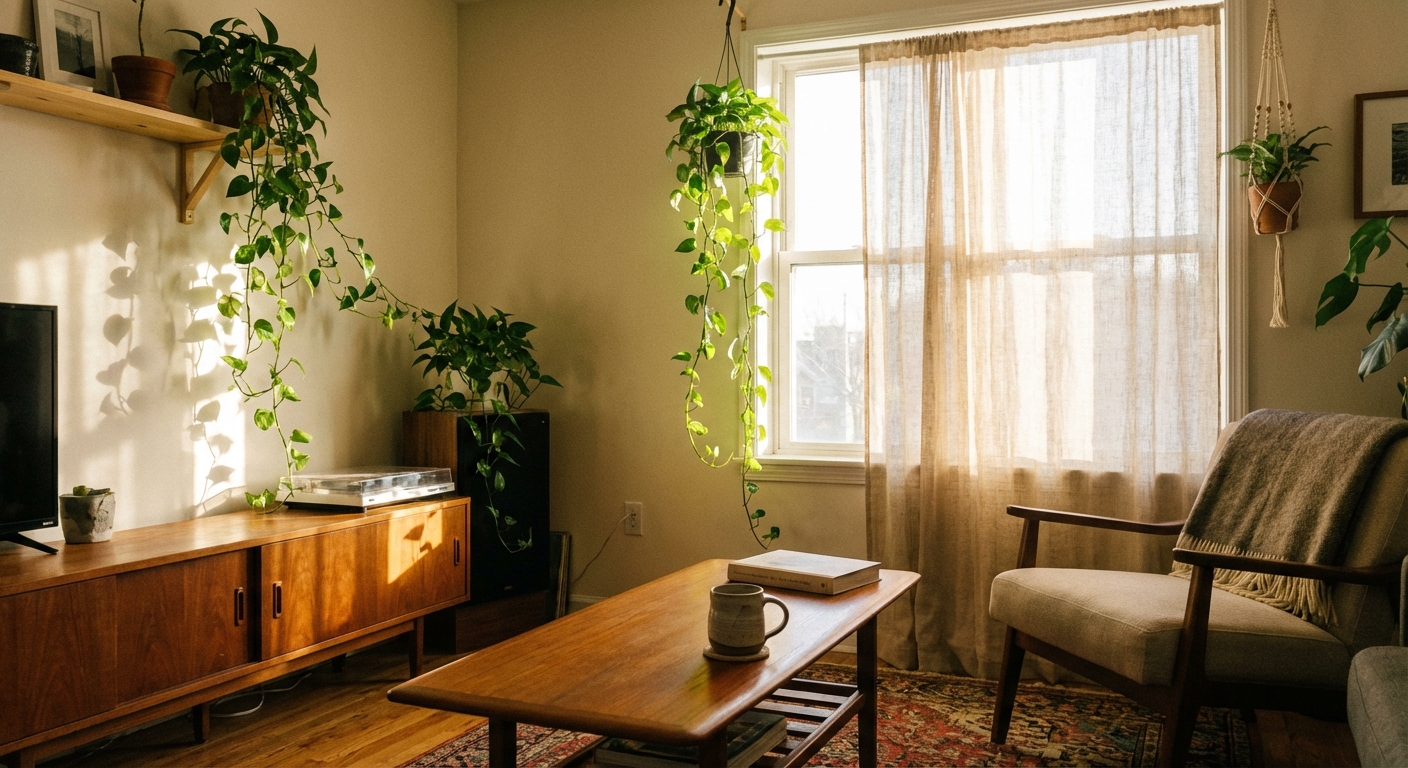
In big homes, biophilic design can mean living walls and indoor trees. In small apartments, it’s more like creating micro moments of nature that you can see, touch, and enjoy every day.
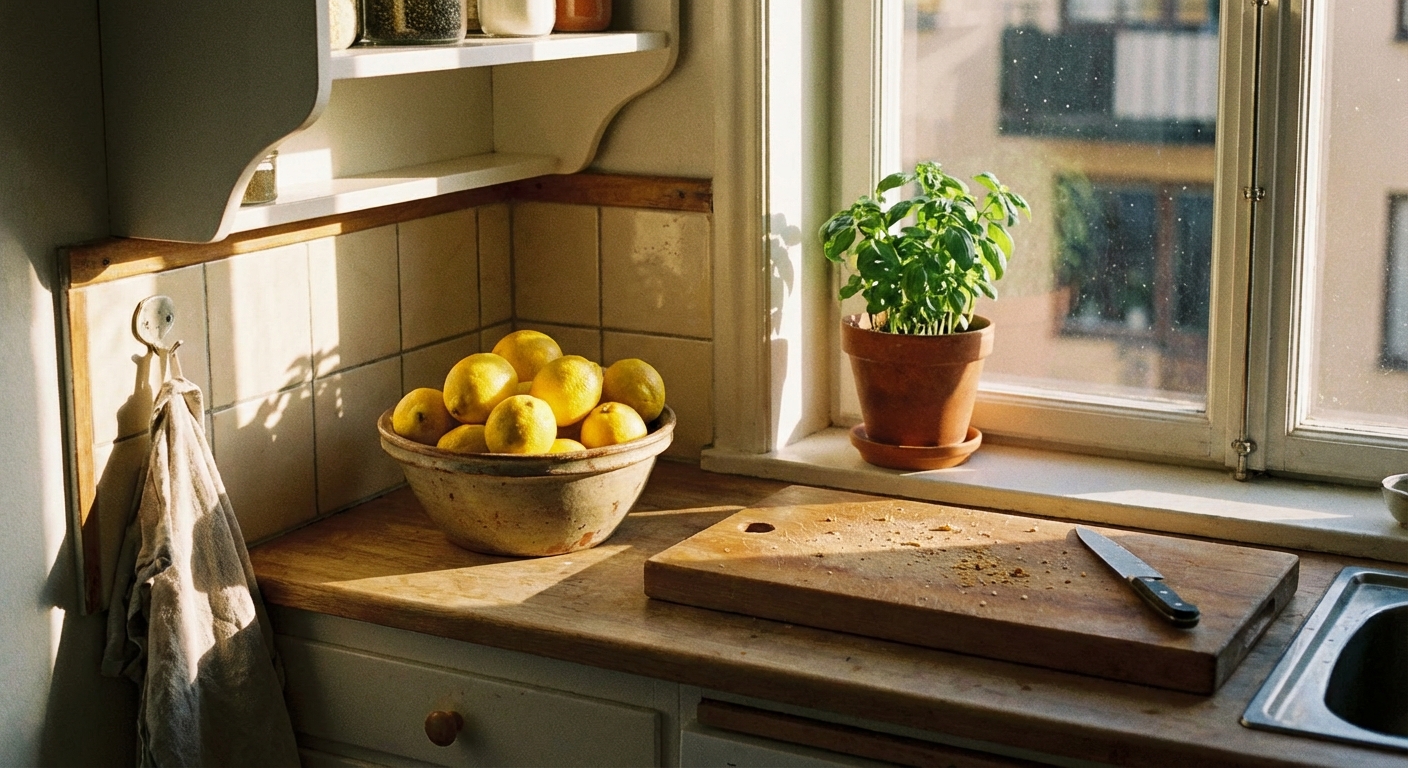
- Visual nature: plants, botanical prints, a view of the sky, even a bowl of lemons on the counter.
- Natural light: brighter mornings, calmer evenings, fewer harsh shadows.
- Natural materials: wood, rattan, linen, wool, stone, clay, cork.
- Nature-inspired shapes: rounded edges, organic curves, imperfect textures.
- Healthy flow: clearer walking paths, less visual clutter, more “ahh.” (A good target is keeping your main walkway about 30–36 inches clear.)
The best part is you don’t have to do all of it. Pick two or three elements and repeat them consistently.
Start with light
Every small apartment has at least one tricky corner that feels like a cave. Before you add more stuff, try to move light around. Biophilic design loves a bright, breathable baseline.
Easy natural light upgrades
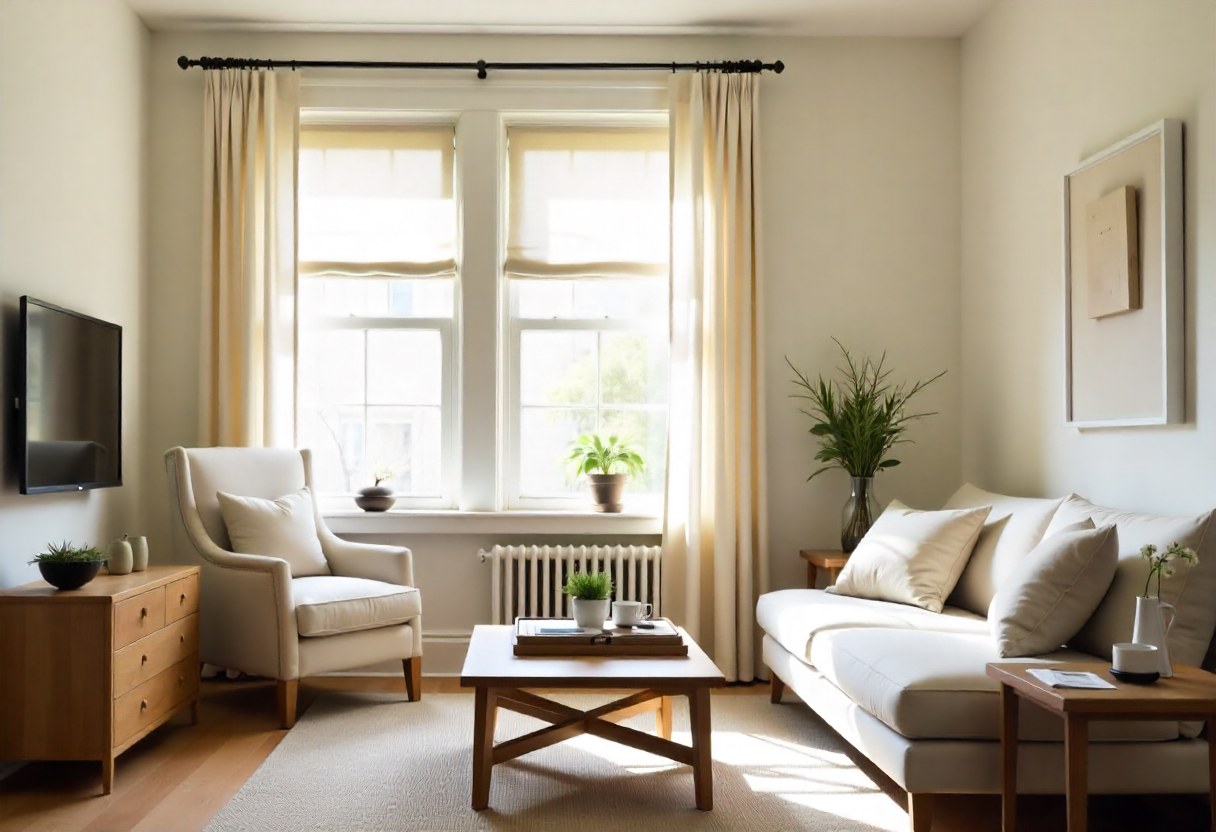
- Swap heavy curtains for linen or cotton sheers. You still get privacy, but the room keeps its glow.
- Hang curtains high and wide. Mount the rod close to the ceiling and extend it past the window frame so you’re not blocking glass.
- Use a mirror like a “window extender.” Place it perpendicular to the window to bounce light deeper into the room.
- Choose warm bulbs at night. Look for 2700K for that cozy, after-sunset vibe. If you love it extra warm, try 2200K to 2400K.
If you rent and can’t drill, a tension rod with light-filtering panels and a leaning mirror will still make a noticeable difference.
Houseplants that really do well
My most practical plant advice: pick plants that match your light and your attention span. Biophilic design should make life calmer, not give you a new weekly guilt ritual.
Plant success basics (save this): plants need consistent light (not occasional “catch-up” days), pots with drainage holes, and less water in low light. When in doubt, wait. Overwatering is the fastest way to lose a plant in an apartment.
Low light, low fuss
- ZZ plant: glossy leaves, tolerates low light, water every couple of weeks.
- Snake plant: upright and architectural, great for tight corners.
- Pothos: fast-growing and forgiving, lovely draped from a shelf.
- Cast iron plant: slow and steady, handles neglect like a champ.
Bright indirect light (the sweet spot)
- Monstera deliciosa: one plant can anchor a room near a bright window. Just avoid harsh direct sun on the leaves, which can scorch.
- Rubber plant: rich, moody leaves, looks incredible in a simple pot. Bright light is great, but ease it into any direct sun.
- Peace lily: tolerates lower light, but it’s happiest in medium to bright indirect light. In dim corners, it may live, just with fewer blooms.
Sunny window ledge (direct light)
- Herbs: basil, mint, thyme. Most herbs want a bright south or west window and often 6+ hours of strong sun. In winter, a small grow light can be the difference between thriving and sulking.
- Succulents: best in strong light, happiest when you leave them alone.
- Aloe: sculptural and useful.
Quick reality check: if your window faces north or is blocked by another building, you can still do plants, but they’ll need help. Pick true low-light varieties and consider a simple LED grow bulb (even in a floor lamp or clip light) for consistent support. You can also rotate plants weekly for even growth, but rotation isn’t a substitute for enough light.
If you have pets or kids: check plant toxicity before you buy. Pothos and peace lily are common offenders. A quick search can save you a stressful call later.
Plant styling without losing floor space
In a studio or one-bedroom, floor space is sacred. The trick is to think in layers: up, down, and tucked in.
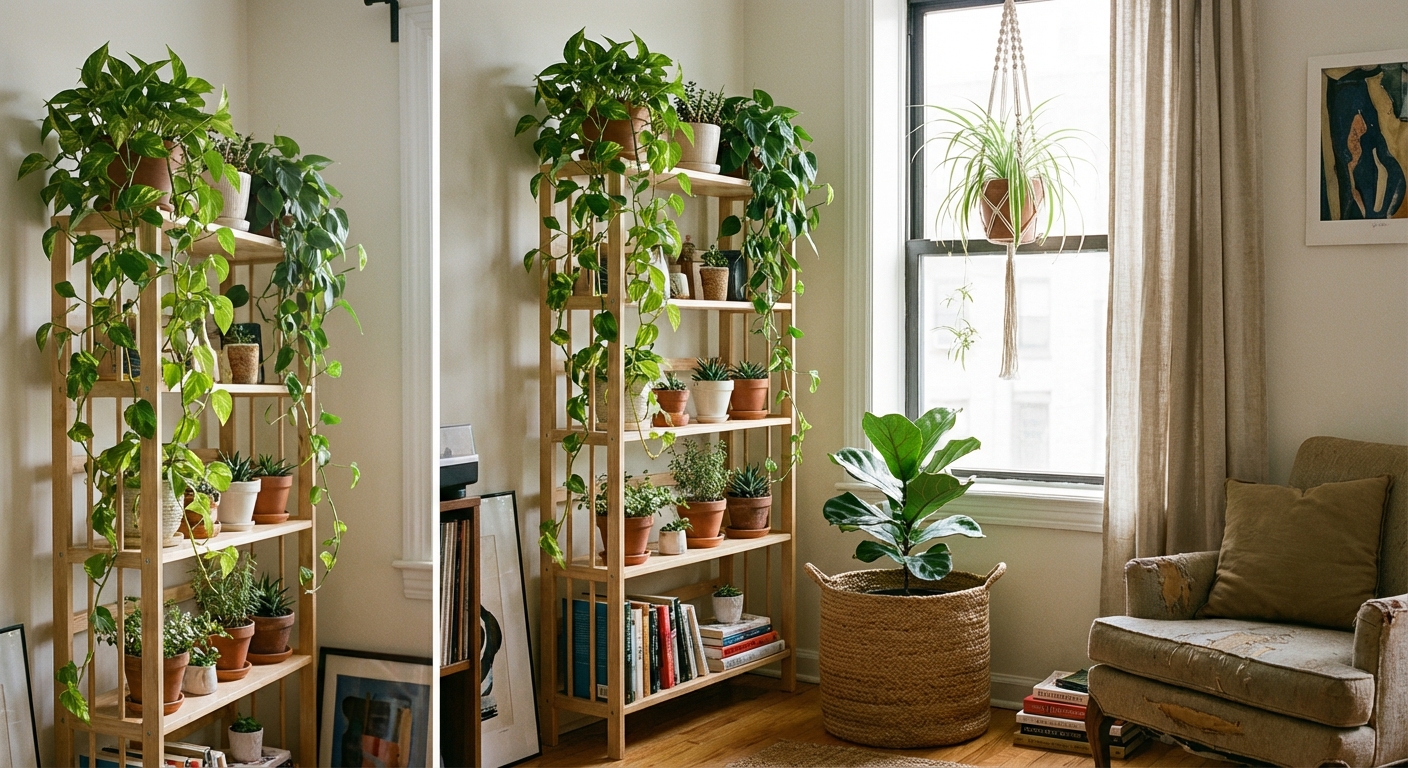
Go vertical
- Wall planters: use a few, not a whole grid, so the wall still feels calm.
- Hanging planters: one statement hanger in a corner reads intentional, not cluttered.
- High shelves: trailing plants soften hard lines and make ceilings feel taller.
Use plant perches
- A vintage stool: perfect plant stand and easy to move.
- A stack of two coffee-table books: instant height for a small pot.
- The top of a dresser or fridge: ideal for pothos, philodendron, or a basketed fern if light allows.
Create one green focal point
If you only do one thing, do this: place one larger plant (or a cluster of three) where your eye naturally lands when you walk in. Next to the sofa. By the balcony door. Beside the bed. A focal point makes the rest of the room feel curated, even if you still have mail on the counter.
Natural materials that ground a space
Plants are wonderful, but they’re not the only way to bring the outdoors in. Texture does a lot of emotional heavy lifting, especially in small spaces where you see everything at once.
High impact, small swaps
- Linen or cotton bedding: breathable, slightly rumpled, instantly relaxed.
- Wool or jute rug: adds warmth underfoot and helps rooms feel less echo-y.
- Wood accents: a cutting board left out, a wood tray, a small stool, picture frames.
- Stone and clay: a marble catchall, a ceramic lamp, terracotta planters.
- Rattan or cane: a hamper, a chair, a pendant shade, or a storage basket.
If you’re mixing vintage and modern, here’s my favorite formula: one warm wood tone + one tactile fabric + one earthy ceramic. Repeat those three and your apartment starts to feel quietly cohesive.
Color and pattern
Biophilic doesn’t mean turning your apartment into a rainforest-themed restaurant. You can keep it clean and contemporary while borrowing nature’s palette.
Easy color directions
- Soft greens: sage, olive, eucalyptus. Great on pillows, throws, or one painted wall.
- Earth neutrals: warm whites, sand, camel, clay, mushroom.
- Watery tones: smoky blue, deep teal in small doses, especially in bathrooms.
Patterns that whisper nature
- Botanical sketches: framed prints in simple black or oak frames.
- Stone-like marbling: subtle, works well in trays and textiles.
- Organic stripes: like the irregular lines you see in wood grain or grasses.
My personal rule: in a small apartment, keep large surfaces calm and let texture do the talking. Then add one or two winks of botanical pattern.
Air, scent, and sound
This is where small apartments can really shine. A tiny space changes quickly when you tweak the sensory details.
- Fresh air: crack windows for 10 minutes a day. Even in winter, it clears out that stale, “lived-in” air.
- Natural scent: cedar hangers, a beeswax candle, or an essential oil diffuser used lightly. If you have pets, asthma, or migraines, go extra gentle or skip fragrance entirely.
- Nature sound: a small tabletop fountain isn’t for everyone, but a soft playlist of rain or ocean can make city noise feel less sharp.
- Clear your main path: declutter the “airline aisle” so your body can move through the room without weaving. Calm is physical.
Bathrooms and humidity (a quick note)
If you’re adding plants to a bathroom, make sure the fan works and you’re not trapping moisture. Mold is not the vibe. Terracotta dries faster, a pebble tray can help with humidity for some plants, and good airflow matters more than fancy plant misting routines.
A tiny-apartment checklist (pick five)
If you want a quick plan, choose any five of these and try them this week.
- Replace one heavy curtain with a light-filtering linen panel.
- Add a mirror near the window to bounce daylight.
- Bring home one easy plant (pothos, snake plant, or ZZ).
- Put the plant in a terracotta or ceramic pot you love (with a saucer, and ideally a drainage hole).
- Add a small wooden tray to corral everyday clutter.
- Switch one bulb to 2700K warm light in your evening lamp.
- Lay down a natural-fiber rug or bath mat.
- Hang one botanical print or photograph of a landscape you miss.
- Style a bowl of citrus or a vase of grocery-store eucalyptus on the counter.
- Open the window for 10 minutes and let the space feel fresh again.
Biophilic design isn’t about perfection. It’s about creating a home that feels alive, even if it’s 450 square feet and your “dining room” is a fold-down table. Start small, repeat what works, and let your space get calmer and more breathable over time.