Arrange Living Room Furniture for Any Floor Plan

Clara Townsend
Clara Townsend is an interior stylist, vintage furniture enthusiast, and the creative voice behind Velvet Abode. With over a decade of experience transforming both cramped city apartments and sprawling fixer-uppers, she believes that a beautiful home is built on personal stories rather than massive budgets. When she isn't hunting for the perfect brass sconce at a local flea market, she can usually be found rearranging her living room for the third time this month.
If your living room feels a little… off, it’s often not your taste. It’s the layout. The good news is that arranging furniture is less about perfect symmetry and more about a few reliable rules: where people walk, where people look, and where people linger. Once you nail those, even the quirkiest floor plan can feel calm and intentional.
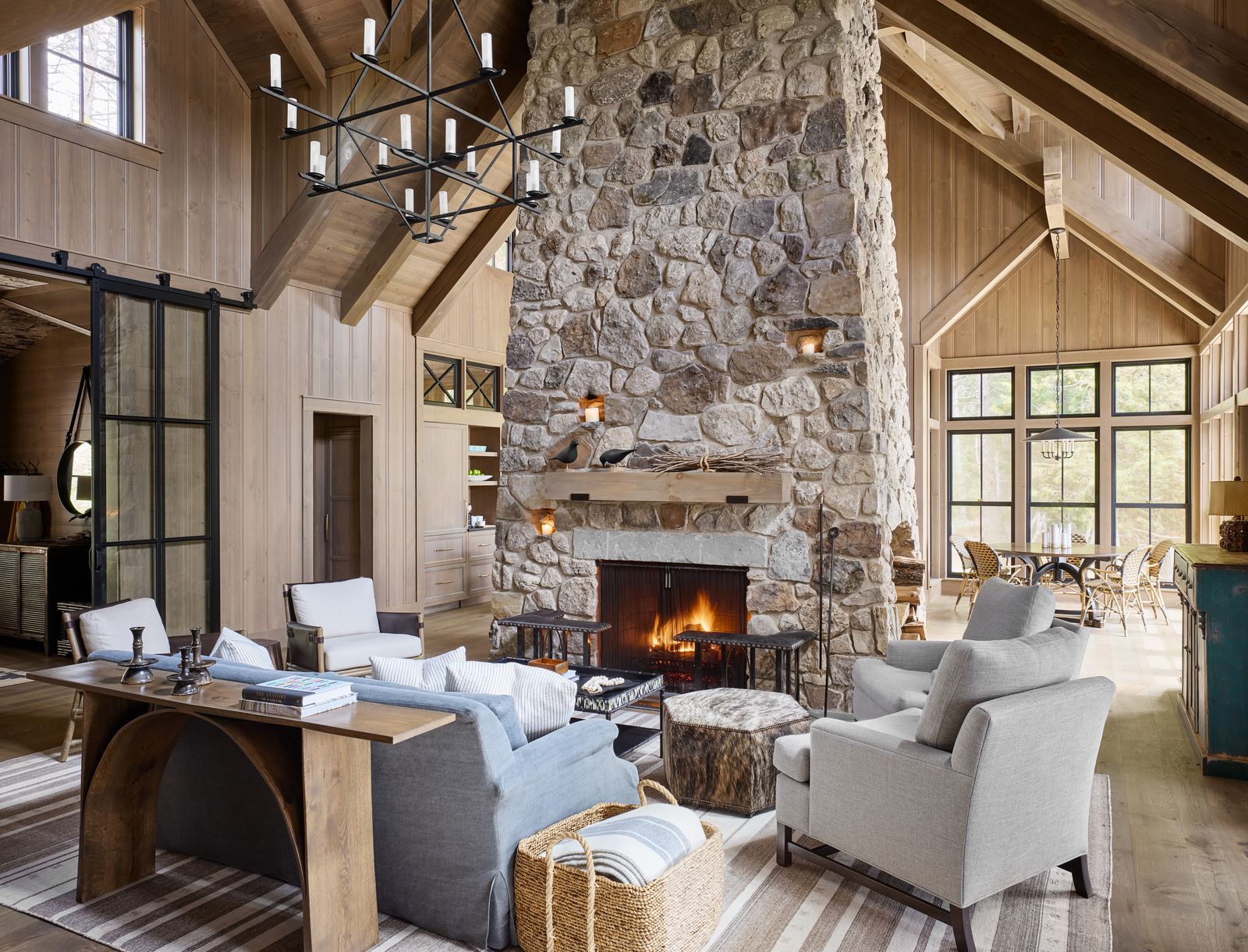
Below is the exact approach I use when I walk into a client’s space, whether it’s a narrow city rental or a wide-open great room that echoes.
The three anchors
Before you push a single sofa, choose your anchors. Every great living room layout supports these three things:
- Traffic flow: clear paths so nobody has to shuffle sideways past a coffee table.
- Conversation: seating close enough to talk without yelling across a canyon of hardwood.
- Focal point: one “north star” that tells the furniture where to face.
When a room feels cluttered or awkward, it’s usually because one of these anchors is missing or competing with another.
Step-by-step method
0) Do a quick measure
Two minutes that saves two hours: sketch the room, note door swings, vents and radiators, outlets, and where curtains need space to hang and move. Those little realities will quietly decide your best layout.
1) Find your focal point
Your focal point can be a fireplace, a TV, a big window, a built-in bookshelf, or even a vintage credenza with art above it. If you’ve got two strong focal points (hello, fireplace and TV), choose the primary one and let the other be secondary.
- If the room is used for watching TV daily, make the TV the primary focal point and style the fireplace as a beautiful supporting character.
- If you rarely watch, let the fireplace or window win and place the TV off to the side on a low console.
2) Map the walkways first
Think of traffic flow like invisible hallways. You want a clear path from entry to seating, seating to kitchen, and seating to any doors.
- Aim for 30 to 36 inches for many main walkways. If you’ve got a busy household, strollers, or accessibility needs, 36 to 42 inches is even better.
- 18 to 24 inches between coffee table and sofa is a reliable sweet spot for legroom and reach.
- Between furniture and walls: instead of an awkward “almost” gap, either go flush or float it on purpose. If you need curtain clearance or outlet access, a small gap of a few inches can help. If you’re floating furniture, 6 to 12 inches (or more) can look intentional.
Quick trick: outline your furniture with painter’s tape on the floor before you lift anything heavy. It saves backs and bad moods.
3) Place the rug, then build on it
A rug isn’t just a soft rectangle. It’s the boundary line that says, “this is the conversation zone.” In most layouts, at least the front legs of your sofa and chairs should sit on the rug.
- Small room: front legs on is great.
- Medium to large room: try to fit all major seating legs on the rug for a more grounded look.
4) Place the largest piece first
Usually the sofa. Put it where it best serves the focal point and the walkways. Once the sofa is right, everything else becomes easier.
5) Create a conversation circle
Your goal is a shape that encourages people to look at each other: a U-shape, L-shape, or two sofas facing. Keep chairs within easy talking distance and add a surface within reach of every seat, even if it’s just a small drink table.
6) Finish with the comfort layer
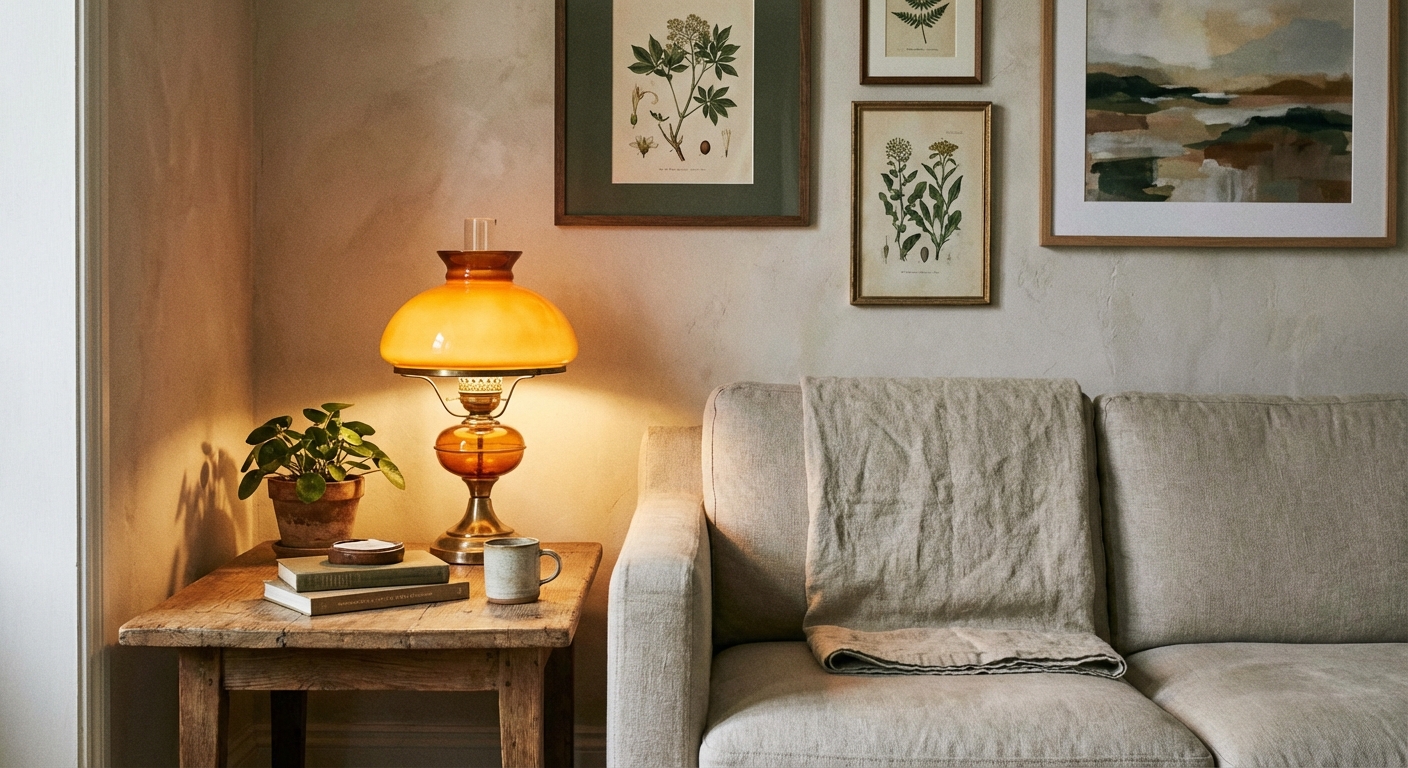
This is the part that makes the room feel like a comforting hug: a lamp where the shade sits around eye or shoulder level when you’re seated, a throw that begs to be stolen, a little patina somewhere. Layout first, coziness second.
Rules that help
Every seat needs a landing spot
Somewhere to set a mug, a book, or a phone. If your coffee table is far, add a small side table, a C-table, or a vintage stool.
Don’t shove everything against the wall
I know it feels like you’re “making space,” but it often makes the middle feel empty and the perimeter feel crowded. Even pulling the sofa 6 inches off the wall can make the room feel more designed.
Layer your lighting
Rule of thumb: think in 3 layers (ambient, task, accent). A ceiling fixture plus a couple of lamps makes a living room feel intentional. For bulbs, 2700 to 3000K is the cozy zone in most living rooms. If you like a crisp, modern look, you can go a touch more neutral.
TV height matters
If your neck hurts, the layout will never feel right. As a general guideline, aim for the center of the screen to land around seated eye level (often roughly 40 to 45 inches from the floor, depending on your seating). Slightly below eye level is usually comfortable, too. A lower media console helps almost every room look calmer.
TV distance, simplified
If the TV feels overwhelming or weirdly tiny, it’s often distance, not the TV. A solid rule of thumb for 4K TVs is sitting about 1 to 1.5 times the screen’s diagonal away (so a 65-inch TV often feels best around 5.5 to 8 feet away).
Spacing cheatsheet
- Sofa to coffee table: 18 to 24 inches
- Chair to coffee table: about 14 to 18 inches (adjust for chunky chairs or ottomans)
- Main walkway: 30 to 36 inches (36 to 42 inches for busy or accessibility-friendly routes)
- Behind dining chairs in open plans: about 36 inches if it’s a primary route
- Between sofa and side table: 2 to 4 inches (close enough to be useful)
- Art above sofa: hang so the bottom of the frame is about 6 to 10 inches above the back
Layouts by floor plan
Small living room
Small rooms love clarity. Pick one star piece (usually a sofa) and keep the rest light on their feet.
- Choose a sofa with raised legs so the floor shows under it.
- Swap chunky recliners for two slim chairs if possible.
- Use a round coffee table or an ottoman with a tray to soften tight pathways.
Long, narrow living room
The trick is to stop treating it like a bowling alley. Break it into zones.
- Create a main seating zone in the widest area.
- Add a second zone: a reading chair and lamp, a slim desk, or a console with art.
- Float furniture slightly inward to keep a clean side walkway.
Open concept living room
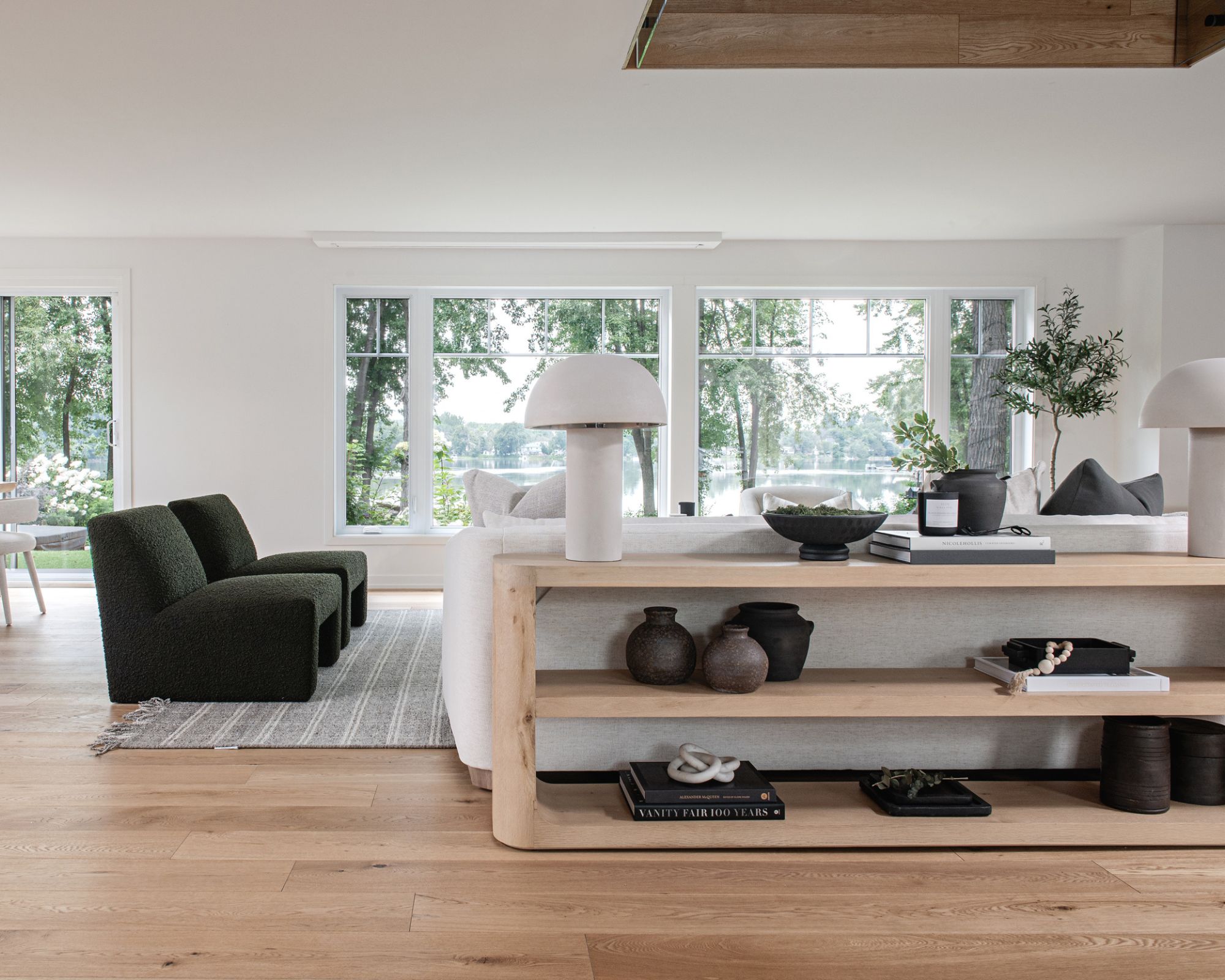
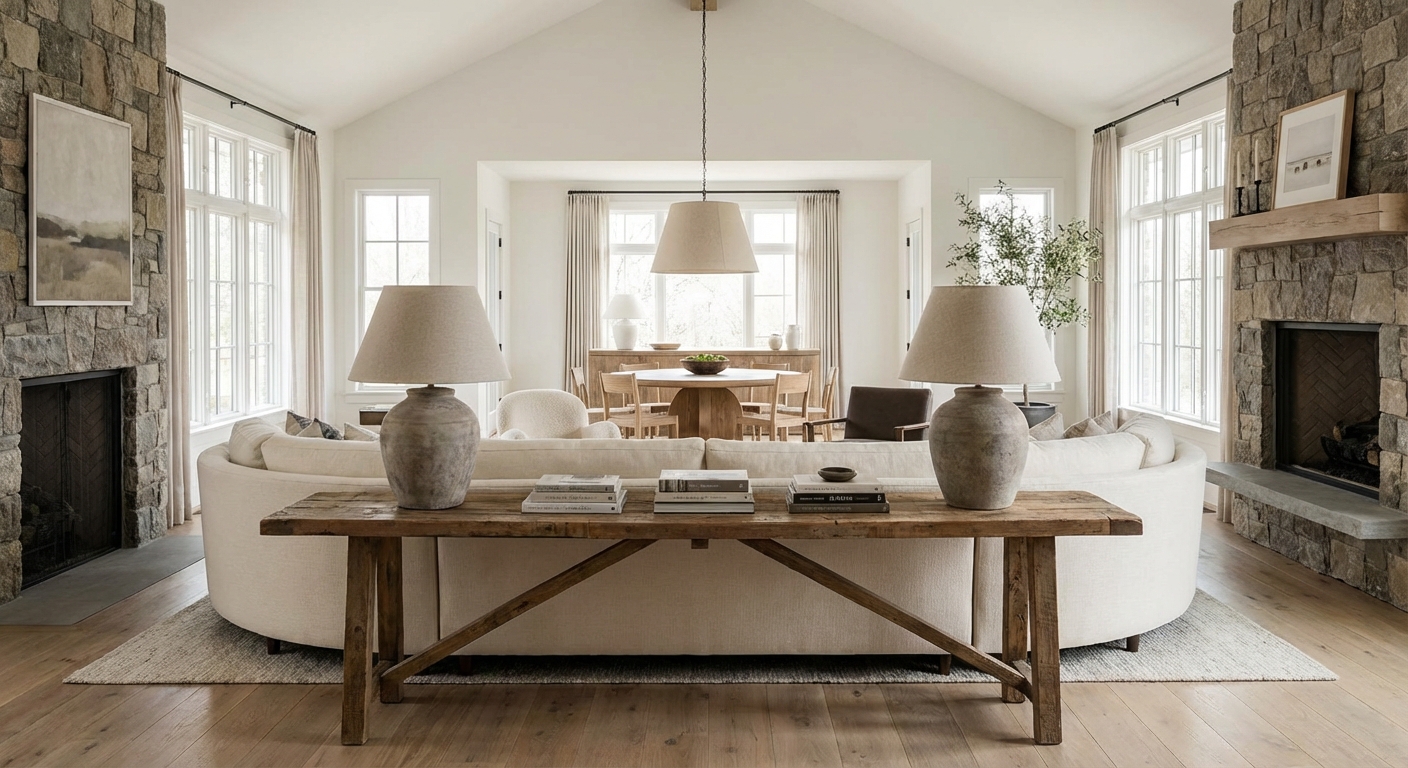
Open plans need boundaries that feel soft, not boxy. Your rug, sofa back, and console table are your best friends here.
- Float the sofa with its back to the dining or kitchen area to “draw the line.”
- Add a console behind the sofa for lamps and storage.
- Repeat one material across zones (wood tone, brass, or black) so it feels cohesive.
Square living room
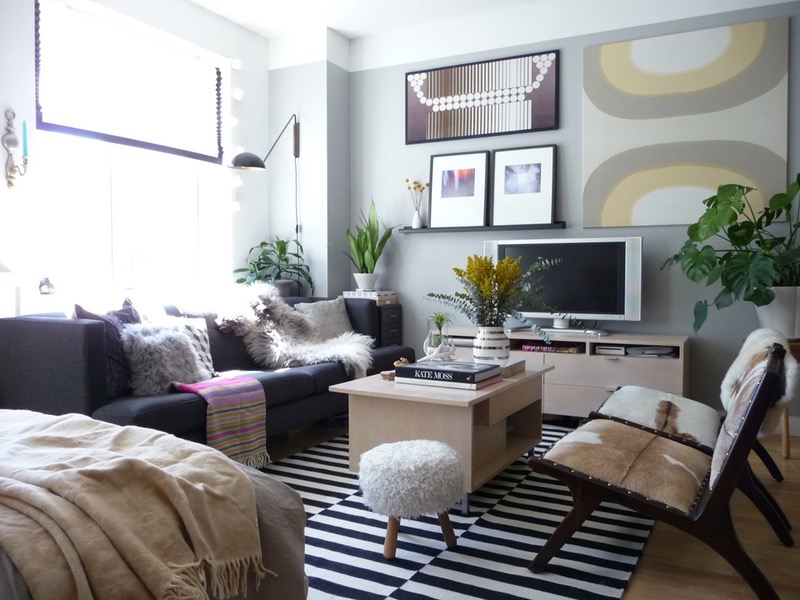
Square rooms can feel like furniture is orbiting the edges. Pull seating toward the center and commit to a strong shape.
- Try a U-shape: sofa plus two chairs.
- Or two sofas facing each other if you entertain often.
- Use a generous rug to anchor the middle.
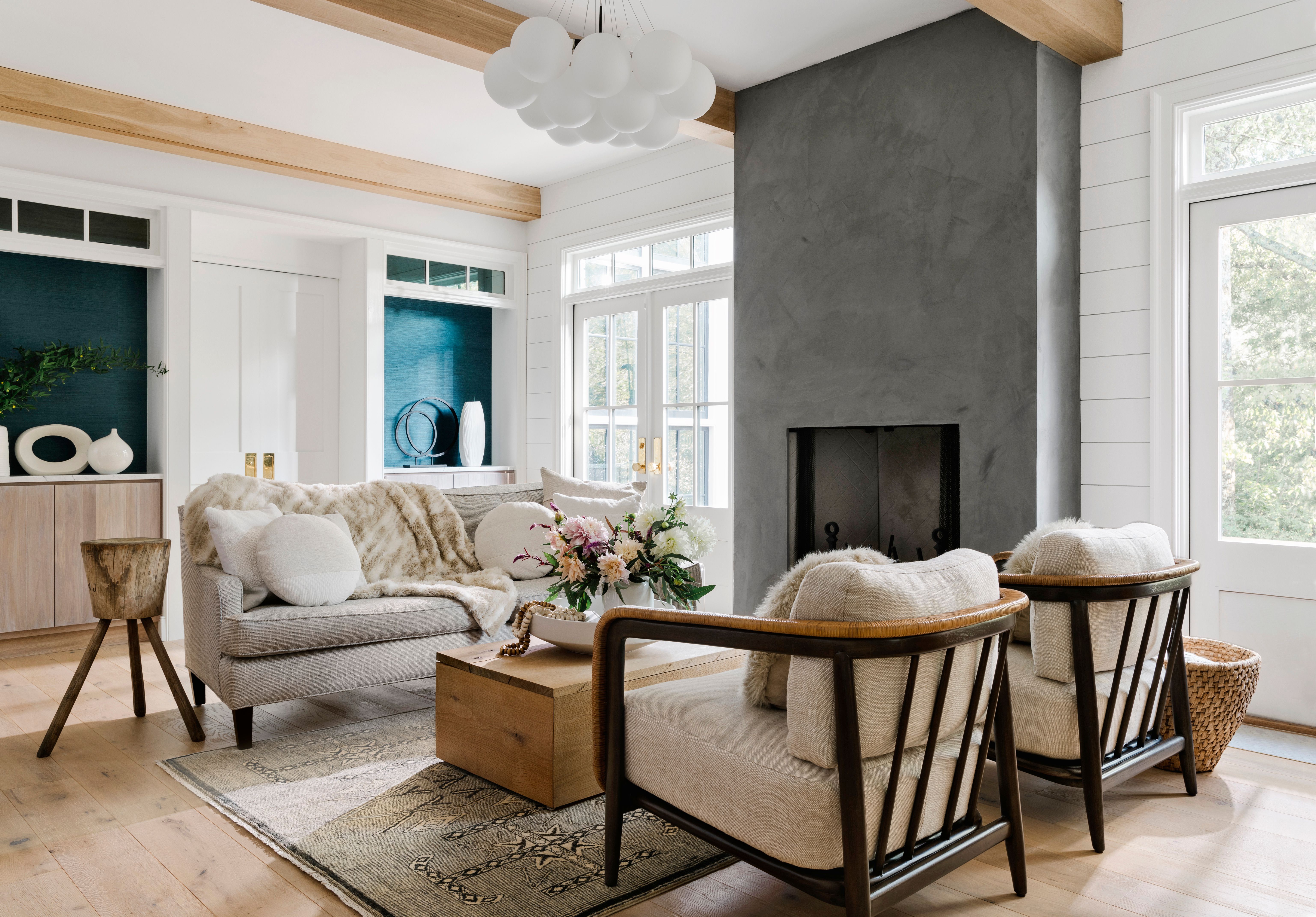
Living room with a fireplace
Fireplaces are natural focal points, but they can make TV placement tricky.
- If the TV must live here, consider placing it on a low console next to the fireplace rather than above it.
- Angle chairs slightly toward the fire for that easy, gathered feeling.
- Respect hearth clearance and safety, then avoid crowding the fireplace so it can breathe.
Awkward corners and bay windows
Don’t fight them. Use them.
- Bay window: make it a reading nook with one chair, a small table, and a lamp.
- Deep corner: tuck a tall plant or a slim bookcase and let it add height.
- Odd nook: use a petite desk or a vintage cabinet for hidden storage.
Pieces that make it easier
When to go sectional
A sectional is great when it replaces multiple bulky pieces and clearly defines the conversation zone. It’s less great when it blocks walkways or traps you into one layout forever.
- Choose a sectional if you have a big household and a clear wall or corner to anchor it.
- Skip it if you have lots of doors, odd angles, or you like rearranging often (hi, it’s me).
When to use two sofas
Two sofas facing each other is my favorite “grown-up cozy” layout. It’s excellent for conversation and makes even a simple room feel designed.
Small tables are layout superheroes
Drink tables, nesting tables, and vintage stools let you fine-tune function without crowding the room. They’re the accessories that quietly fix everything.
Common mistakes
- Mistake: The rug is too small. Fix: Size up so at least the front legs of seating are on it.
- Mistake: The coffee table is too far. Fix: Pull it in to about 18 to 24 inches from the sofa.
- Mistake: All furniture hugs the walls. Fix: Float the sofa or chairs a few inches forward and add a console if needed.
- Mistake: No clear focal point. Fix: Decide what you want to face, then align the main seating to it.
- Mistake: Lighting only from the ceiling. Fix: Add at least two warm-leaning light sources at different heights.
20-minute reset
If you’ve got 20 minutes and a little stubborn hope, do this:
- Clear the coffee table and remove one item that feels like it’s blocking movement.
- Pull the sofa forward 3 to 6 inches.
- Center the rug under the seating area, not the room.
- Move one chair closer so conversation distance feels easy.
- Turn on a lamp and swap to a warmer bulb if the light feels icy.
It’s amazing how quickly a room starts cooperating when you prioritize how it feels to live in, not just how it looks in a photo.
Final styling touches
Once your big pieces are placed, add the details that make it yours:
- A tray on the coffee table for corralling the daily mess.
- A throw with texture (linen, chunky knit, or worn-in cotton).
- A mix of old and new, like a modern sofa paired with a vintage side table that has a little patina.
- Art that sits at a human height, not floating near the ceiling like it’s afraid of commitment.
If you’re arranging right now, start with the focal point, protect the walkways, then pull the seating onto the rug. That trio fixes more rooms than any new purchase ever will.