Area Rug Sizing for Living Rooms

Clara Townsend
Clara Townsend is an interior stylist, vintage furniture enthusiast, and the creative voice behind Velvet Abode. With over a decade of experience transforming both cramped city apartments and sprawling fixer-uppers, she believes that a beautiful home is built on personal stories rather than massive budgets. When she isn't hunting for the perfect brass sconce at a local flea market, she can usually be found rearranging her living room for the third time this month.
There is a specific kind of “something feels off” that happens when a living room rug is too small. The sofa looks like it’s floating. The chairs feel stranded. The whole room feels a bit like a group photo where everyone accidentally stood six inches apart.
The good news is that rug sizing isn’t a mysterious designer secret. It’s mostly math, a little visual balance, and one golden rule: your rug should connect your seating pieces, not just sit under the coffee table like a lonely island.
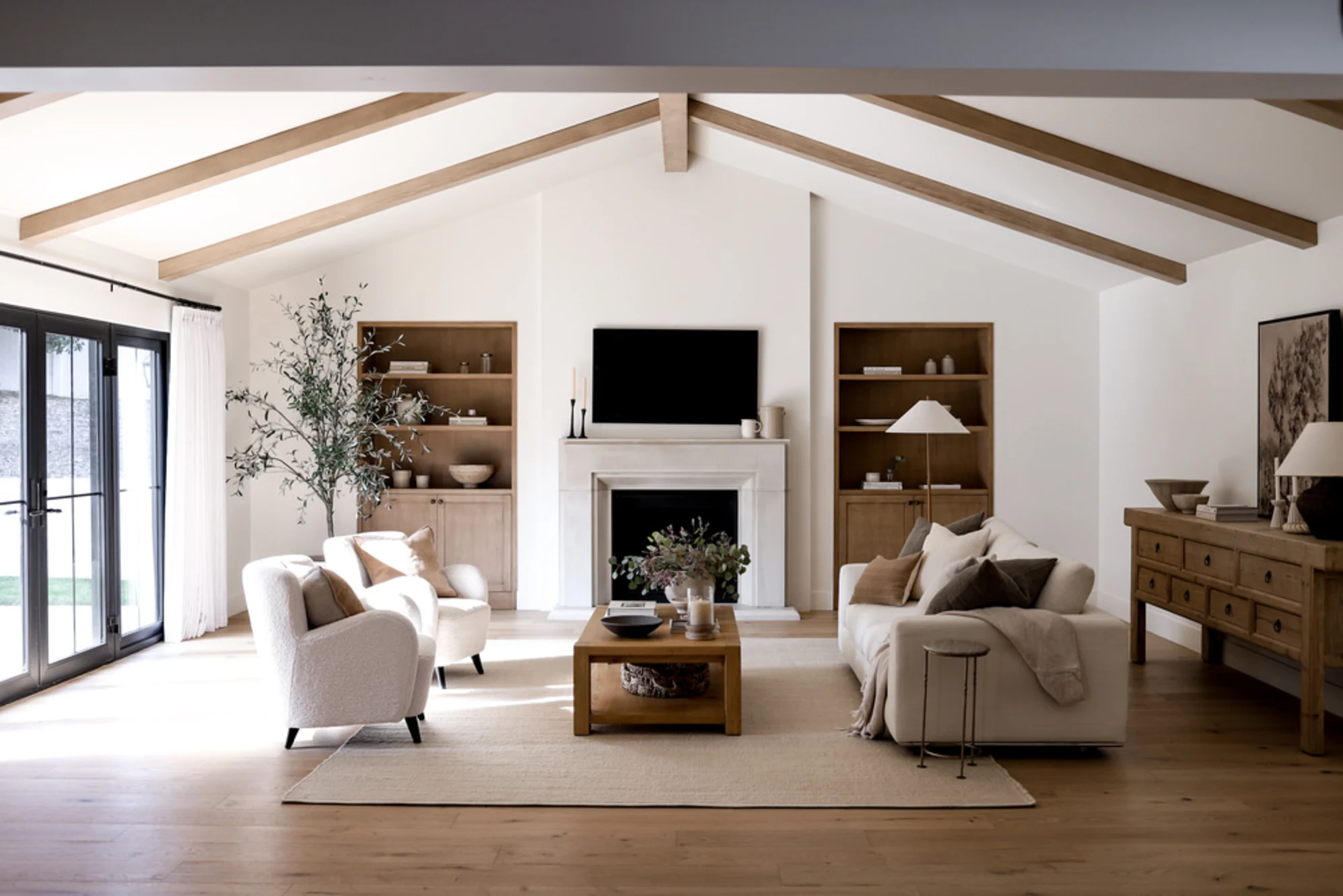
The rug’s job
Before we talk inches, let’s talk purpose. A living room rug should do at least two of these things:
- Anchor the seating area so the sofa, chairs, and table feel like one conversation zone.
- Soften sound and footsteps, especially in apartments with wood or tile floors.
- Define a “room within a room” in open layouts where living and dining overlap.
- Add warmth and personality through color, pattern, and that cozy underfoot texture.
If your rug isn’t doing those jobs, it’s probably the wrong size or in the wrong spot. Or both. No shame. We’ve all been there, usually right after falling in love with a rug online and ignoring the dimensions like a romantic comedy lead.
Placement rules
Best default: front legs on
In most living rooms, the cleanest, most flexible placement is this: the front legs of the sofa and any chairs sit on the rug. It visually ties everything together while keeping the rug from swallowing the room.
More luxe: all legs on
If your room is large enough, placing all furniture legs on the rug feels tailored and expansive. It’s my favorite in big, airy spaces because it creates a true “zone” and makes the room feel intentionally planned.
Smallest option: coffee table only (use carefully)
A small rug that sits under only the coffee table is the most common mistake. It can work if your seating is very tight and the rug still reaches close to the front legs. If there’s a big strip of bare floor between rug and sofa, your eye reads it as disconnected.
Quick check (not a law): If there’s a big, obvious gap between the sofa and the rug edge, the rug will usually read too small for an anchored look. If that gap is an intentional walkway, you’re fine, just make sure the seating still feels connected.
Rug sizes that work
These are the most common rug sizes and what they tend to suit. Every home is different, but these are reliable starting points.
- 5' x 8': Best for small seating setups, like a loveseat with two compact chairs, or a very small apartment living area. Often too small for a standard sofa arrangement.
- 6' x 9': A helpful in-between when 5' x 8' feels skimpy but 8' x 10' is impossible. Great for narrower rooms.
- 8' x 10': The most versatile “correct” size for many living rooms with a standard sofa and chairs. Usually allows front legs on, sometimes all legs on if furniture is compact.
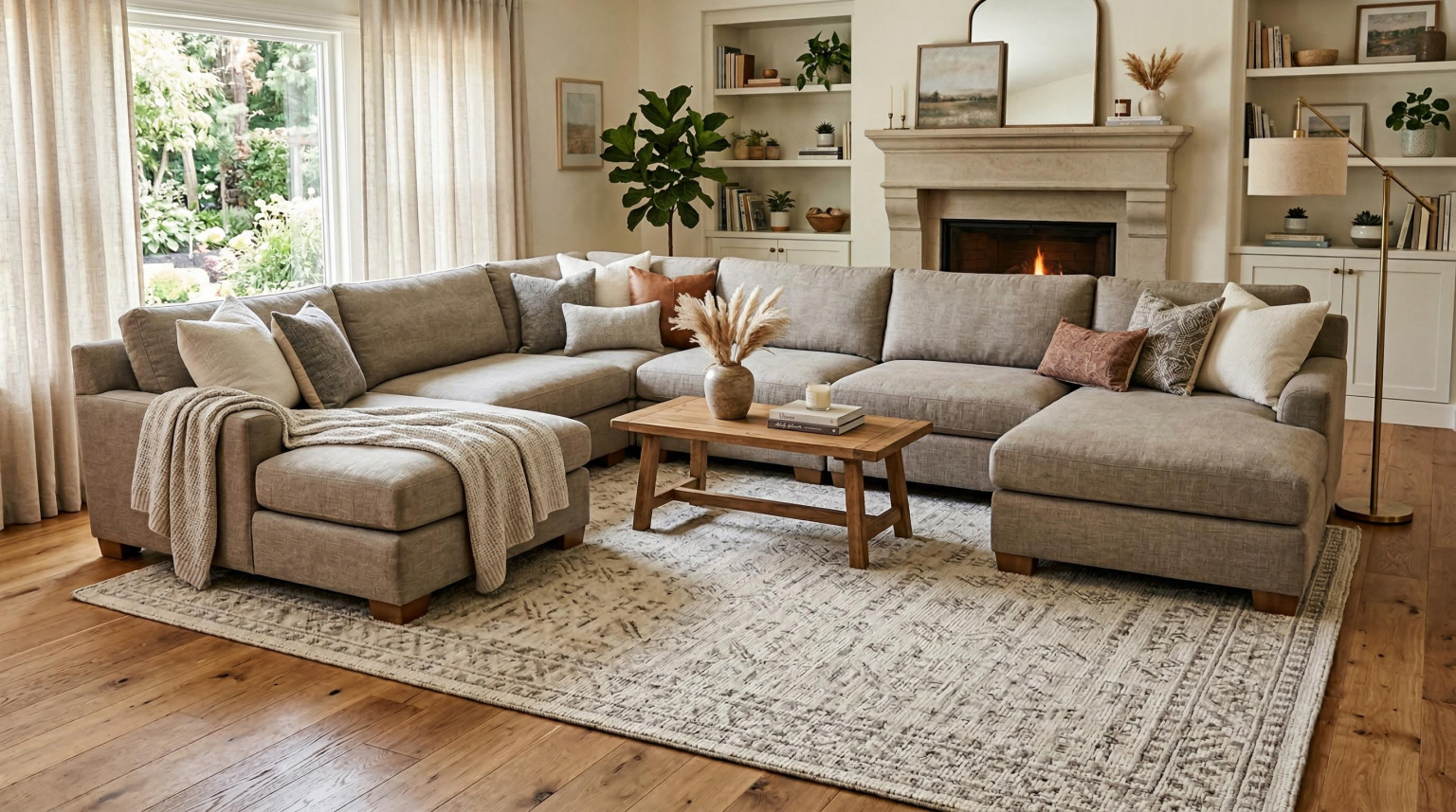
- 9' x 12': Ideal for larger rooms, sectionals, or open-concept spaces where you want the living area to feel grounded.
- 10' x 14': For truly big rooms, or when you want all furniture legs fully on the rug with breathing room.
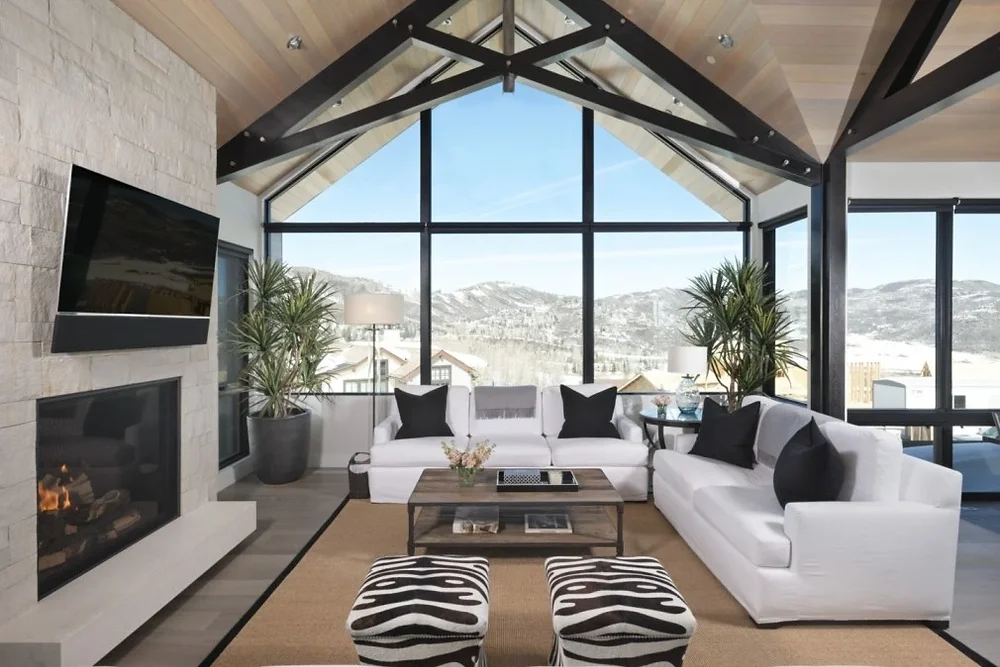
How to measure
Here’s the approach I use on real projects, including those charmingly awkward rooms with radiators, door swings, and that one corner that refuses to cooperate.
Step 1: Pick a placement style
Choose front legs on (most common) or all legs on (if you’ve got space and budget).
Step 2: Measure the seating footprint
Measure the width and depth of the area where your sofa and chairs sit, including the space between pieces. This gives you the “conversation zone” rectangle.
Step 3: Add a border (starting points)
For an anchored look, a good starting point is for the rug to extend:
- About 6 to 12 inches beyond each side of the sofa.
- About 12 to 18 inches past the front of the sofa, so the front legs rest comfortably on it.
If your chairs sit farther out, or you want a more expansive feel, bump those numbers up. The goal is always the same: the seating reads like one team.
Step 4: Leave a floor frame (when you can)
If possible, leave about 8 to 18 inches of bare floor between the rug edge and the walls. In smaller rooms, that frame might be slimmer, and that’s okay. Prioritize connection over perfection.
Pro tip: Tape it out. Painter’s tape on the floor lets you “live with” the size for a day. Your eyes will tell you immediately if it feels generous or skimpy.
Best size by layout
Sofa + two chairs
This is the classic living room setup. Most of the time, an 8' x 10' gives you that satisfying, pulled-together feeling. If your room is larger or your chairs sit farther out, step up to 9' x 12'.
Sectional
Sectionals are rug-hungry. If you want the rug to look intentional, plan on an 9' x 12' in many rooms, and don’t be surprised if 10' x 14' is the real winner in larger spaces. Ideally, the rug should extend beyond the outer edges of the sectional so it frames the whole shape.
Small spaces and open plans
Small apartment living room
If your space is tight, the instinct is to size down. Often, that makes the room feel even smaller. A slightly larger rug can visually “stretch” your square footage.
- Try 6' x 9' or 8' x 10' even in small rooms, as long as you can keep a slim floor border.
- Prioritize getting the front legs of the sofa on the rug. That alone changes everything.
Open concept living area
When your living room flows into the dining area, the rug becomes a boundary line. Go larger than you think so the living zone reads as a distinct space. A 9' x 12' is often the sweet spot, with furniture fully or partially on it.
If your sofa backs up to a dining area, keep a comfortable walkway between the rug edge and dining furniture. A practical target is about 30 to 36 inches for main paths, but your home’s traffic patterns get the final vote.
Round and odd sizes
Round rugs and “in-between” sizes follow the same logic: they should connect the seating, not just decorate the coffee table.
- Round rugs: Aim for the front legs of the sofa and chairs to land on the rug. A 7' round can work in a compact conversation area; 8' or 9' round is often better for standard seating.
- Odd sizes: If you’re choosing between sizes, sizing up usually looks more intentional than sizing down.
Orientation tips
In general, run the rug’s long side parallel to the sofa or the longest wall. That tends to calm the room visually.
- If your room is narrow, aligning the rug with the room’s length can make it feel longer.
- If a door swing or traffic path is fighting the layout, rotating the rug can solve the problem without changing sizes.
Common mistakes
Postage stamp rug
A tiny rug under only the coffee table makes everything feel disconnected.
Fix: Size up until at least the front legs of your main seating land on the rug.
Rug stops short of the sofa
If the rug ends several inches before the sofa, your eye reads a gap and the room feels unfinished.
Fix: Pull the rug forward and under the sofa legs, or choose a deeper rug.
Rug blocks a door or traffic path
A rug that catches a door or creates a tripping edge is a daily annoyance.
Fix: Rotate the rug, shift it a few inches, or choose a slightly smaller size while keeping the front-legs-on placement.
Choosing based on sofa length only
Rugs are about the whole seating conversation, not just one piece.
Fix: Measure the entire seating footprint and select a rug that frames it.
Where it should land
Under the sofa
For most rooms, aim for the rug to tuck about 6 to 12 inches under the front of the sofa. It looks secure and intentional, like the sofa belongs there.
Under the coffee table
The coffee table should sit comfortably on the rug with breathing room. A good target is about 12 to 18 inches of rug showing on all sides of the table, if space allows.
With chairs
If you’ve got accent chairs, the ideal is front legs on. If the chairs move a lot, consider all four legs on so you’re not constantly catching chair legs on the rug edge.
Near a media console
It’s okay if the rug doesn’t reach the media console. Your seating area is the priority. If the console is within the conversation zone, bring the rug far enough forward that it still feels connected.
Layering and vintage
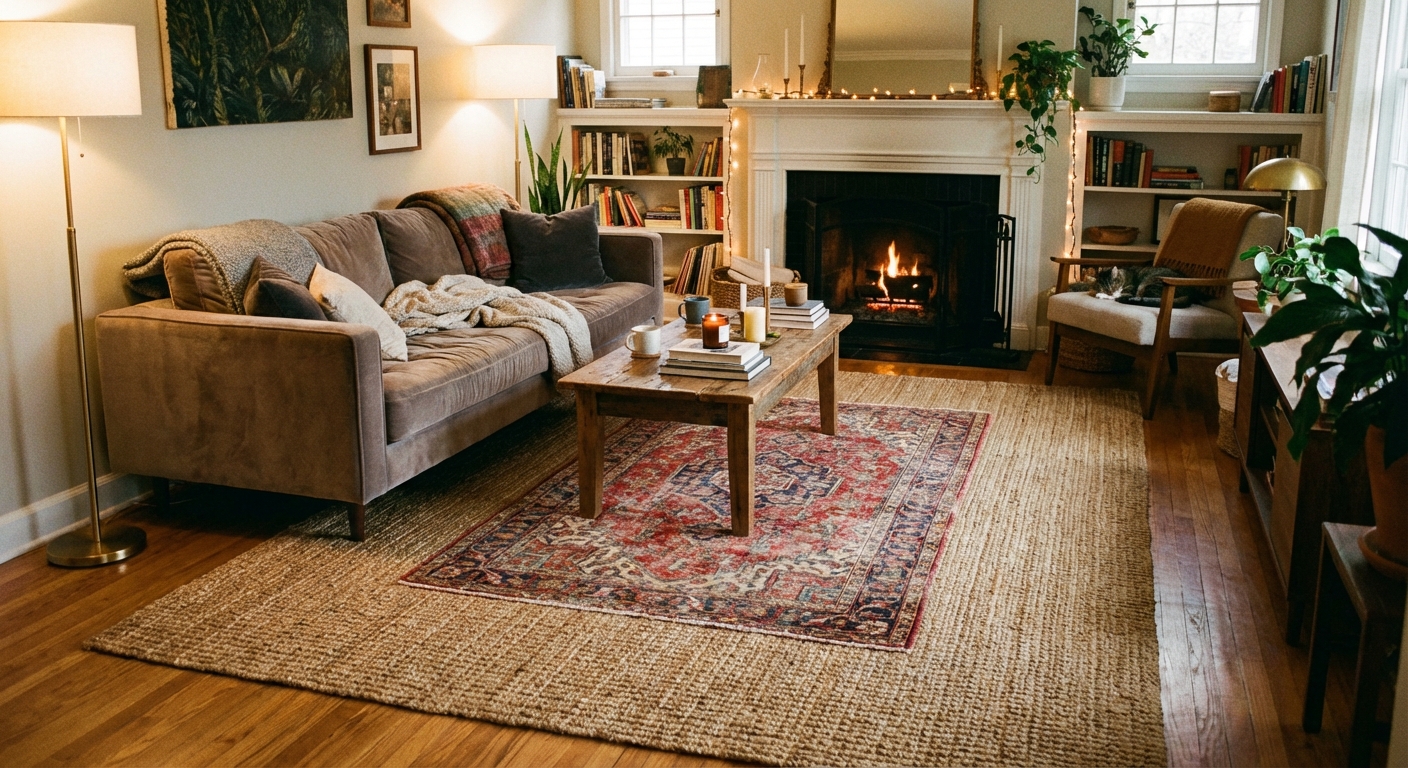
If you’re working with a limited budget or you’ve fallen for a smaller vintage rug (I get it, those faded roses and inky navies are hard to resist), layering is your best friend.
- Start with a larger, simple base like jute, sisal, or a low-pile neutral.
- Place the smaller vintage rug on top, centered under the coffee table area.
- Keep the base rug doing the anchoring work, while the vintage rug brings the soul.
Material and pile
Size is the headline, but material affects how your rug behaves in a living room that’s actually lived in.
- Low pile or flatweave: Great for under coffee tables, easy to vacuum, ideal if you move chairs often.
- Medium to plush pile: Cozy underfoot but can make coffee tables feel a little wobbly if the pile is thick and the table legs are small. A firmer pad or wider table legs can help.
- Wool: Durable, naturally resilient, and hides wear well. A classic for high-traffic living rooms.
- Vintage rugs: Often thinner and forgiving, with beautiful patina. Use a good pad to keep them from creeping.
No matter what you choose, don’t skip the rug pad. It helps with grip, comfort, and longevity, especially on hardwood.
Pad note: If you’ve got doors that swing over the rug, go thinner. If you want more cushion under a flatweave, go a bit thicker, but keep furniture stability in mind.
Quick cheat sheet
- Most living rooms: 8' x 10' with front legs of seating on the rug.
- Sectionals and open concept: 9' x 12' (or bigger) to truly define the zone.
- Small rooms: Don’t automatically size down. A slightly larger rug can make the room feel bigger.
- Best look: Rug extends roughly 6 to 12 inches past sofa sides, with a comfortable floor frame near walls when possible.
Final gut check
After the measuring tape and the painter’s tape, I always do one last test: stand in the doorway to the room. If your eye reads one cohesive seating area, you nailed it. If your furniture looks like it’s hovering around a tiny rectangle, go bigger.
Your living room deserves to feel grounded and welcoming, like it’s holding you gently at the end of the day. The right rug size does that quietly, beautifully, and every single time you walk in.