Acrylic and Polyester Sofa Fabric Care

Clara Townsend
Clara Townsend is an interior stylist, vintage furniture enthusiast, and the creative voice behind Velvet Abode. With over a decade of experience transforming both cramped city apartments and sprawling fixer-uppers, she believes that a beautiful home is built on personal stories rather than massive budgets. When she isn't hunting for the perfect brass sconce at a local flea market, she can usually be found rearranging her living room for the third time this month.
Acrylic and polyester upholstery get a bad rap because they are “synthetic,” but honestly? These fabrics are workhorses. They resist fading, hold color beautifully, and survive real life better than many delicate naturals. The tricky part is that they can also show shine marks (from heat or friction) and mat down (from body oils, residue, or aggressive rubbing). The goal is simple: clean in a way that keeps the fibers standing up, not laying flat like a polished path.
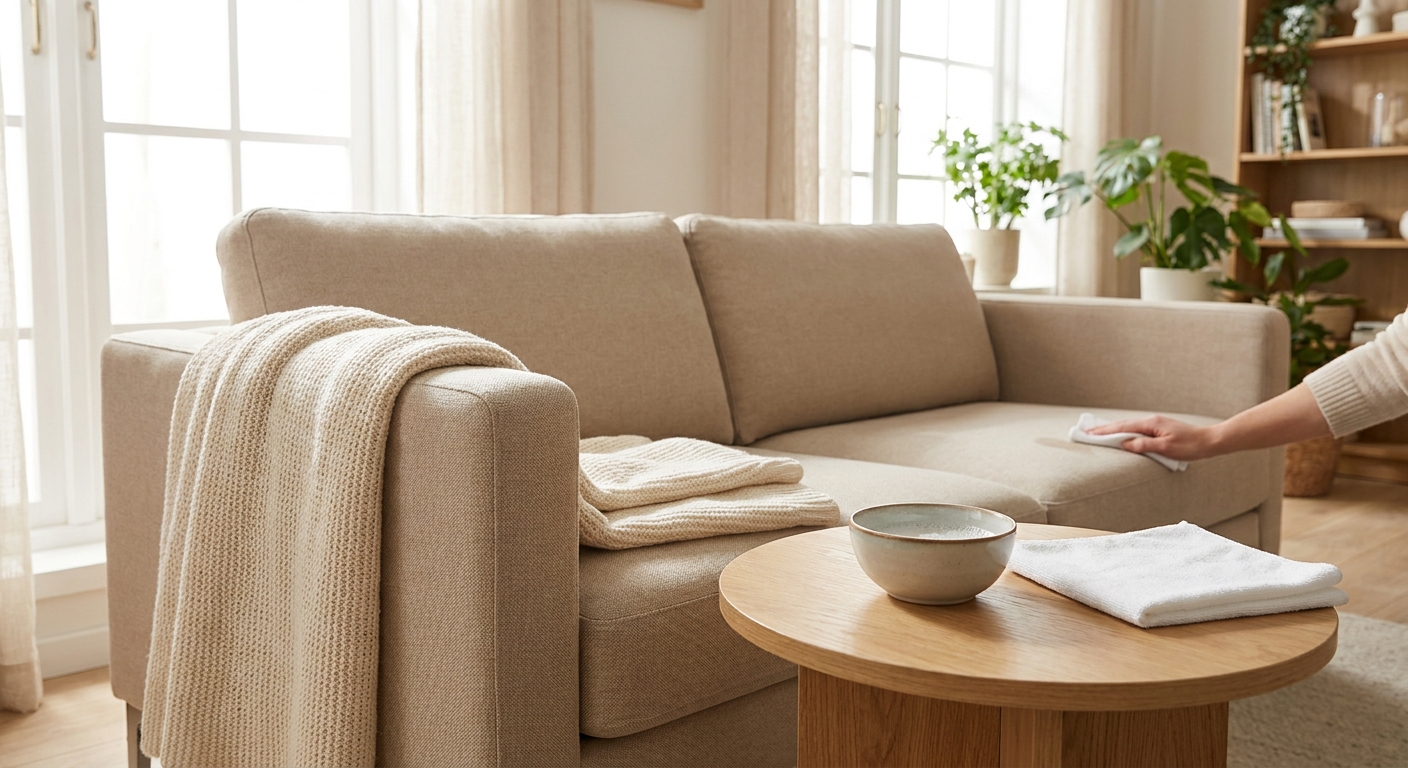
This guide focuses on what acrylic and polyester do best, where they misbehave, and how to handle common stains without leaving that dreaded slick spot that catches the light every time you walk by.
Know your fabric
Most “poly” and acrylic sofas use woven or knit fabrics, microfiber, or a velour-like pile. The fiber itself is resilient, but the surface texture is what gets altered by cleaning.
- Polyester: strong, colorfast, and often blended with other fibers. It can hold onto oily residue, which leads to dulling and matting over time.
- Acrylic: often used to mimic wool or create soft, cozy textures. It can pill and can flatten if you scrub aggressively.
- Microfiber (often polyester): fantastic stain resistance, but it can show water rings or nap changes if you do not dry uniformly or if minerals and residue are left behind.
Quick label check: Look for the cleaning code tag, usually under a seat cushion or along the frame. These codes are manufacturer-provided and helpful, but they are not a free pass to use any cleaner. Finishes and dyes can still react, so test first.
- W: water-based cleaners are generally safe.
- S: solvent-based cleaning only (no water). Use an upholstery-safe solvent and follow manufacturer guidance. Some people use isopropyl alcohol on certain microfibers, but not all “S” fabrics tolerate it, so test in a hidden area.
- WS: water or solvent is acceptable (still test first).
- X: vacuum only. No water, no solvent. Use dry methods only and call a pro for stains.
Also check for removable covers: Some polyester cushion covers are machine washable. If your covers zip off, read the sewn-in care label and follow it exactly (and skip hot water and high heat drying unless it explicitly says it is safe).
One more caution: Blends matter. Acrylic or polyester mixed with rayon or viscose can be more water-sensitive and more prone to rings. When in doubt, go gentler than you think you need to.
Blot, do not rub
If you only take one thing from this page, let it be this: rubbing is what creates shine and matting. Friction presses fibers down and can even melt or glaze them if there is heat involved (including heat from a hair dryer held too close or from repeated scrubbing).
How to blot like a pro
- Move fast: lift liquid before it travels deeper.
- Use a white cloth: microfiber or plain cotton. Colored towels can transfer dye.
- Press and lift: no circular scrubbing.
- Work from the outside in: prevents a spreading halo.
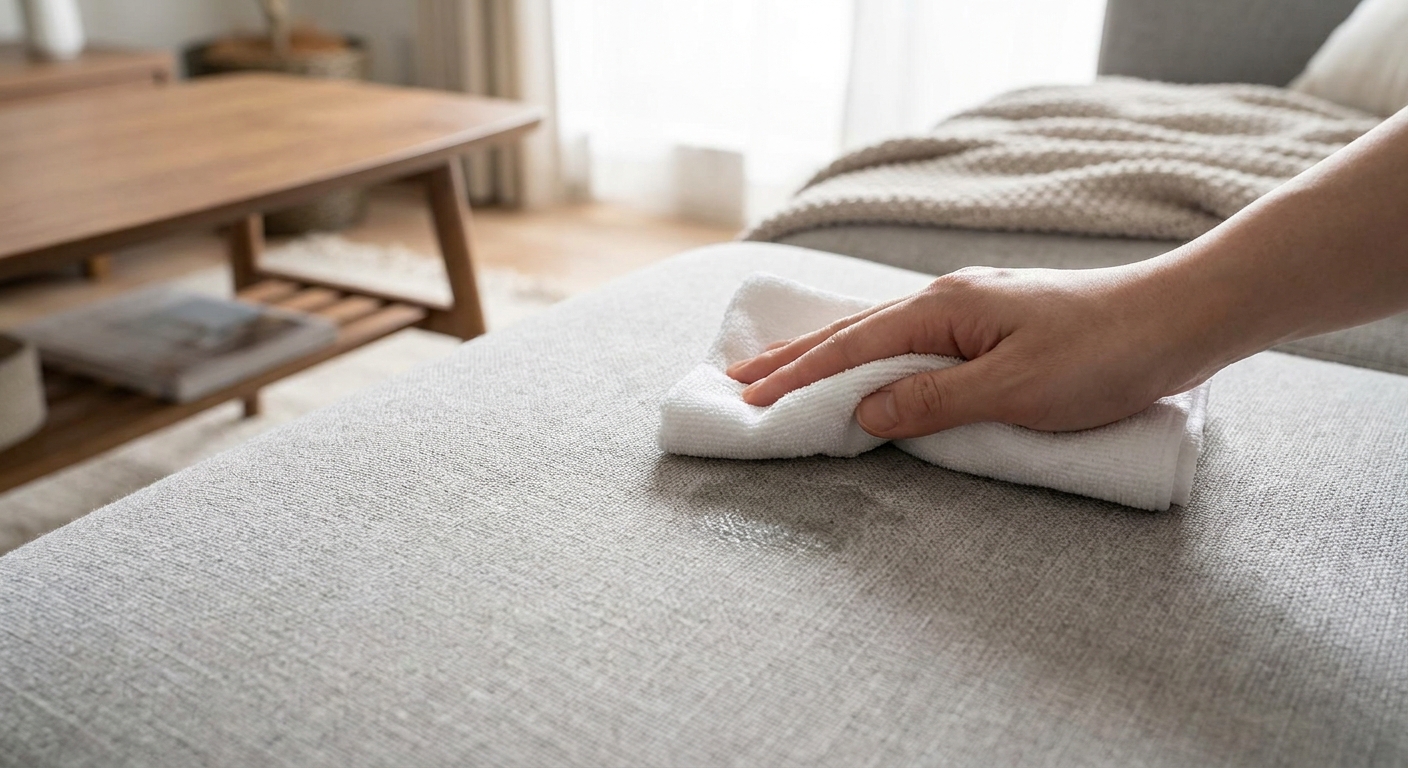
Tip: I keep a small stack of clean white cloths in a basket near the living room. It sounds dramatic until you spill coffee once and feel like a hero.
Simple cleaning kit
You do not need twelve sprays. You need a few dependable, low-residue options that will not leave your sofa feeling crunchy or looking glossy.
Gentle basics
- Vacuum with upholstery attachment: your first step, always.
- Distilled water: reduces mineral rings, especially on microfiber.
- Mild dish soap: use a tiny amount, heavily diluted.
- 70% isopropyl alcohol: useful on some microfiber and oily marks and dries fast. Not universal. Test first and use minimally.
- Upholstery-safe dry-cleaning solvent: a good alternative for some S-coded fabrics if alcohol is not a fit.
- Soft upholstery brush: for resetting the nap after cleaning.
What to avoid
- Bleach or harsh alkaline cleaners: can weaken fibers and strip finishes.
- Strong degreasers: they can leave residue that attracts more grime.
- Too much soap: leftover suds are dirt magnets.
- High heat tools used aggressively: heat plus pressure can flatten pile and create shine. Steam can be helpful on some synthetics, but use caution, keep it moving, do not press down, and always test first.
Whatever you use, the “secret” is low moisture, low friction, and a residue-free finish.
Routine refresh
Most acrylic and polyester sofas look tired because of a slow buildup of dust and body oils, not because of one dramatic spill.
1) Vacuum slowly
Vacuum cushions, seams, and under cushions. Go slower than you think you need to. This lifts grit that acts like sandpaper when you sit and shift.
2) Check for shiny paths
If you already have a shiny area, do not chase it with scrubbing. Plan to clean lightly, then lift the fibers back up once dry.
3) Light surface clean (W or WS)
- Mix 1 to 2 drops of mild dish soap into 2 cups of distilled water.
- Dampen a cloth so it is not dripping.
- Blot and gently wipe in one direction, following the fabric grain.
- Use a second cloth dampened with plain distilled water to “rinse” by blotting.
4) Dry uniformly
Press with a dry towel to pull out moisture. Then let air circulate. A fan pointed across the sofa (not directly blasting one spot) helps prevent rings.
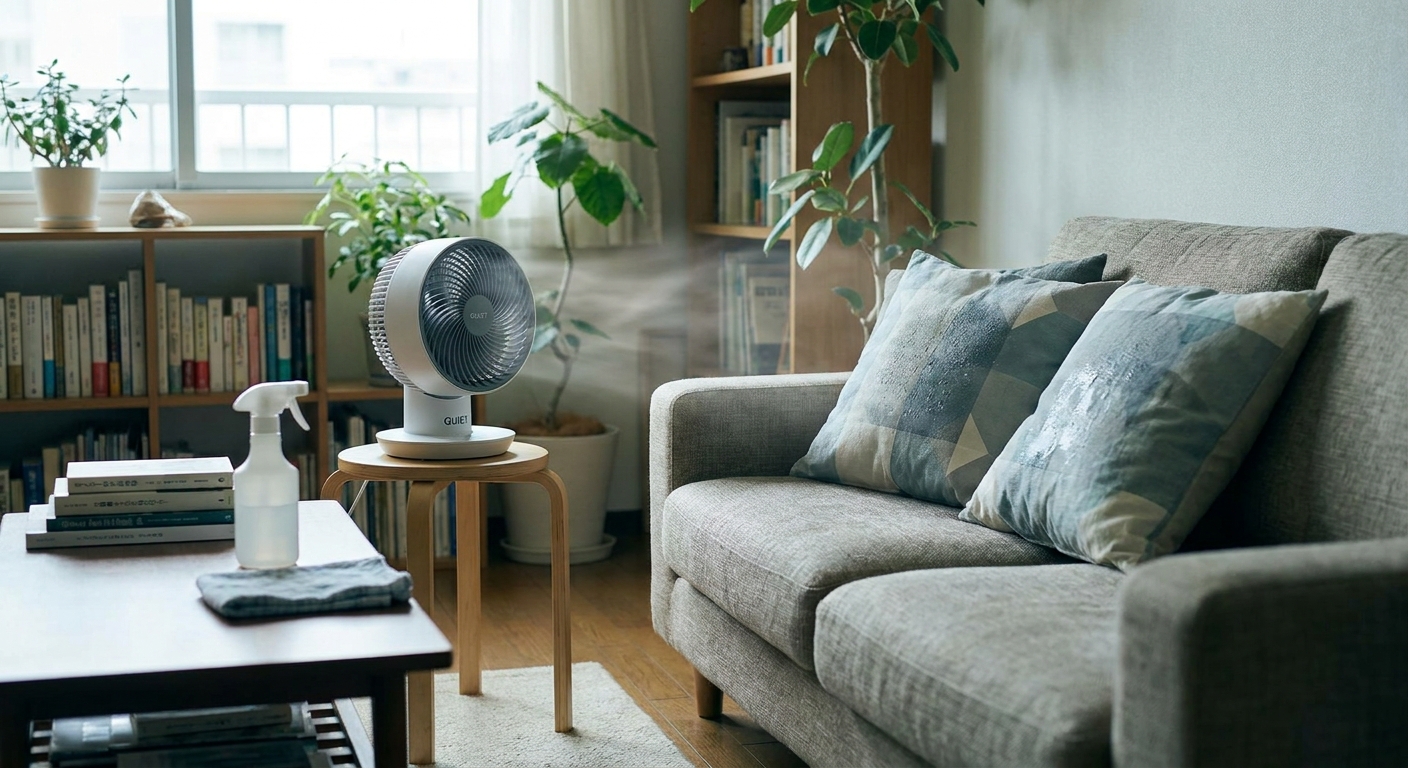
5) Reset the nap
When fully dry, use a soft brush to lift the fibers. On microfiber, even a clean, dry terry cloth can help reset the texture.
Water-based stains
Water stains feel simple, but they can leave a ring if the fabric dries unevenly or if minerals remain on the surface.
What to do
- Blot immediately with a dry cloth.
- For W or WS fabrics, blot with distilled water to dilute the spill.
- If color remains, use the mild soap dilution and blot again.
- “Rinse” by blotting with a clean cloth dampened with distilled water.
- Dry the whole damp zone with towel pressure and airflow so it finishes at the same time.
If you get a ring: lightly dampen a slightly larger area around the ring with distilled water and blot outward to feather the moisture. The goal is uniform drying, not soaking.
Oil-based stains
Oils are the real matting culprits. They glue dust to the fibers and create those darker headrest zones and shiny arm paths.
Fresh oil spill
- Blot gently.
- Sprinkle a small amount of cornstarch or baking soda to absorb oil.
- Let it sit 15 to 30 minutes, then vacuum thoroughly.
Set-in oil or body oil buildup
On some polyester microfibers, 70% isopropyl alcohol is a lifesaver because it cuts oil and dries quickly. It is often used on S or WS coded microfiber, but it is not guaranteed safe for every fabric or dye, so go slow and test first. If you see dye transfer on your cloth or the texture starts changing, stop and switch to a manufacturer-approved upholstery solvent or call a pro.
- Ventilate the room.
- Lightly mist alcohol onto a cloth (not directly onto the sofa if you can avoid it).
- Blot the area, rotating to a clean part of the cloth often.
- Use a light hand. This is blotting, not buffing.
- Let it dry completely, then brush to restore texture.
Important: Alcohol is flammable. Keep it away from candles, fireplaces, and heat sources.
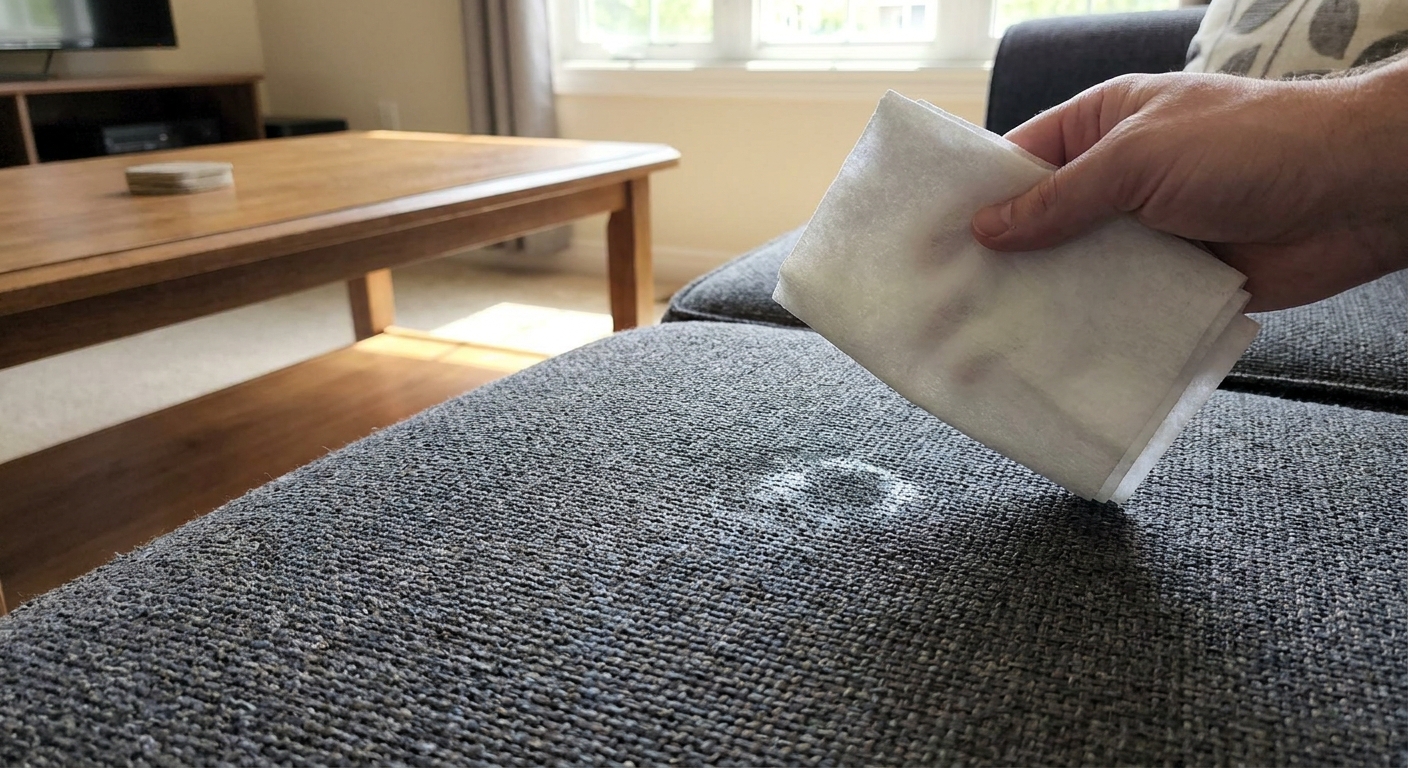
Sticky stains
Sticky messes tempt you to scrub. Resist.
- Harden first: place an ice pack in a thin towel and press until the sticky material firms up.
- Lift carefully: use a spoon edge to lift, not scrape aggressively.
- Remove residue: for WS or S fabrics, a small amount of upholstery-safe solvent (or alcohol on compatible microfiber) on a cloth can help. For W fabrics, try mild soap water first.
- Blot with distilled water to remove leftover cleaner (if water is allowed), then dry with airflow.
Pet messes and odor
Acrylic and polyester can hold onto odor if you leave any residue behind. The goal is to remove the source, then neutralize lightly, without soaking the cushion core.
For fresh accidents
- Blot up as much as possible with dry towels.
- Use a small amount of distilled water to dilute, then blot again (only if your code allows water).
- If your fabric code allows water, use an enzyme cleaner made for upholstery, following directions exactly.
- Do not over-wet: apply sparingly and keep working the moisture back out with clean towels. If you can, press firmly to extract as much liquid as possible.
- Finish with airflow until fully dry. Lingering dampness is what causes wicking and “the smell came back” problems.
Skip heavy fragrance sprays. They can mix with lingering odor and create a weird “perfume plus mystery” situation that never feels clean.
Shine marks
Shine usually comes from compressed fibers, residue, or heat. Polyester in particular can develop a slightly glossy burnished look when rubbed hard.
Prevent it
- Blot and gently wipe in one direction.
- Avoid high heat to speed-dry.
- Remove soap residue with a clean damp cloth (if water is allowed), then dry with airflow.
- Brush the nap once fully dry.
If you already have a shiny patch
- Vacuum first to remove grit.
- Lightly clean to remove oils and residue (soap water for W, manufacturer-approved solvent for S, alcohol only on compatible microfiber and only after testing).
- Let it dry completely.
- Brush gently in multiple directions to lift fibers back up.
If the shine is from heat damage or permanently melted fibers, cleaning will not fully reverse it. At that point, a professional may be able to re-nap the surface or advise on a slipcover strategy.
Drying and airflow
Many “cleaning disasters” are really drying disasters. Slow, uneven drying can leave rings and stiff spots.
- Press with towels to pull out moisture before air-drying.
- Promote airflow: a fan across the area is ideal.
- Avoid direct heat: no close hair dryers, no space heaters aimed at one cushion.
- Wait to sit: let cushions dry fully so you do not compress damp fibers.
X code basics
If your tag says X, treat your sofa like it is allergic to liquids.
- Vacuum regularly using an upholstery attachment.
- Use a soft brush to lift the nap and remove surface dust.
- If a spill happens, blot immediately with a dry cloth and keep blotting. Do not add water or solvent.
- For anything beyond a tiny surface incident, call a professional upholstery cleaner.
Prevent future wear
- Vacuum weekly if you have pets, kids, or a favorite seat. Otherwise, every 2 weeks is a solid rhythm.
- Rotate and flip cushions (if reversible) to avoid shiny “paths.”
- Use washable throws on headrests and arms if body oil and hair products are a thing in your house. No judgment, it is a thing in mine too.
- Address oils early: the longer they sit, the more they glue dust into the fibers.
When to call a pro
Sometimes the most budget-friendly move is not experimenting.
- Your tag says X, or you cannot find a code and the fabric feels delicate or highly textured.
- The stain is large, soaked into cushion cores, or has odor that keeps returning.
- You have significant shine or matting across multiple areas.
- The sofa is a treasured vintage piece with unknown upholstery history.
Ask a cleaner if they have experience with microfiber and synthetic upholstery, and whether they use low-moisture methods to prevent rings and texture change.
Quick cheat sheet
- Spill: blot, do not rub.
- Water stains: distilled water, light soap if needed, rinse-blot, dry with airflow.
- Oil stains: absorb with powder, vacuum, then a tested solvent method (often alcohol on compatible microfiber).
- Texture looks off: let it dry fully, then brush the nap back up.
- Shine risk: friction, heat, and residue are the enemies.
If you want, tell me your sofa’s cleaning code and the type of stain, and I will help you pick the safest exact method for your fabric.