Accordion and Bifold Closet Doors: Re-Hang, Align, and Quiet the Track

Clara Townsend
Clara Townsend is an interior stylist, vintage furniture enthusiast, and the creative voice behind Velvet Abode. With over a decade of experience transforming both cramped city apartments and sprawling fixer-uppers, she believes that a beautiful home is built on personal stories rather than massive budgets. When she isn't hunting for the perfect brass sconce at a local flea market, she can usually be found rearranging her living room for the third time this month.
Accordion and bifold doors are the unsung heroes of small spaces. They save swing room, hide visual clutter, and when they work, they quietly get out of your way. When they do not work, they make themselves very known: scraping on the floor, popping off the track, refusing to latch or stay folded, or sounding like a pocketful of coins every time you open the closet.
The good news is that these doors are usually fixable with a screwdriver, a little patience, and the right kind of lubrication. The trick is diagnosing what type of hardware you have and then making tiny, deliberate adjustments instead of wrestling the whole thing like it is a stubborn bookshelf.
Before you touch a screw
- Clear the closet floor so you can fully open and close the doors without catching on shoes or baskets.
- Support the door if you are loosening brackets or pivot hardware. A folded towel, shim, or book under the bottom edge prevents sudden drops and pinched fingers.
- Have a helper nearby if the door is wide or heavy. Bifolds are awkward, not impossible.
- Grab a flashlight. Most alignment issues live in the track, where shadows hide.
- Protect yourself: eye protection is smart when using sprays, pliers, or when you are looking up into a dusty track.
- Tools that help: Phillips screwdriver, flathead screwdriver, small adjustable wrench or pliers, level, tape measure, vacuum with crevice tool, and a clean rag.
If your door is scraping the floor, put a folded towel under the bottom edge as you work. It protects your flooring and keeps the door from swinging while you adjust.
Identify the hardware
Most “bifold problems” are really “hardware type” problems. You cannot fix a top-hung system the same way you fix a pivot system, even if the symptom looks similar.
Pivot-hung bifold doors (very common)
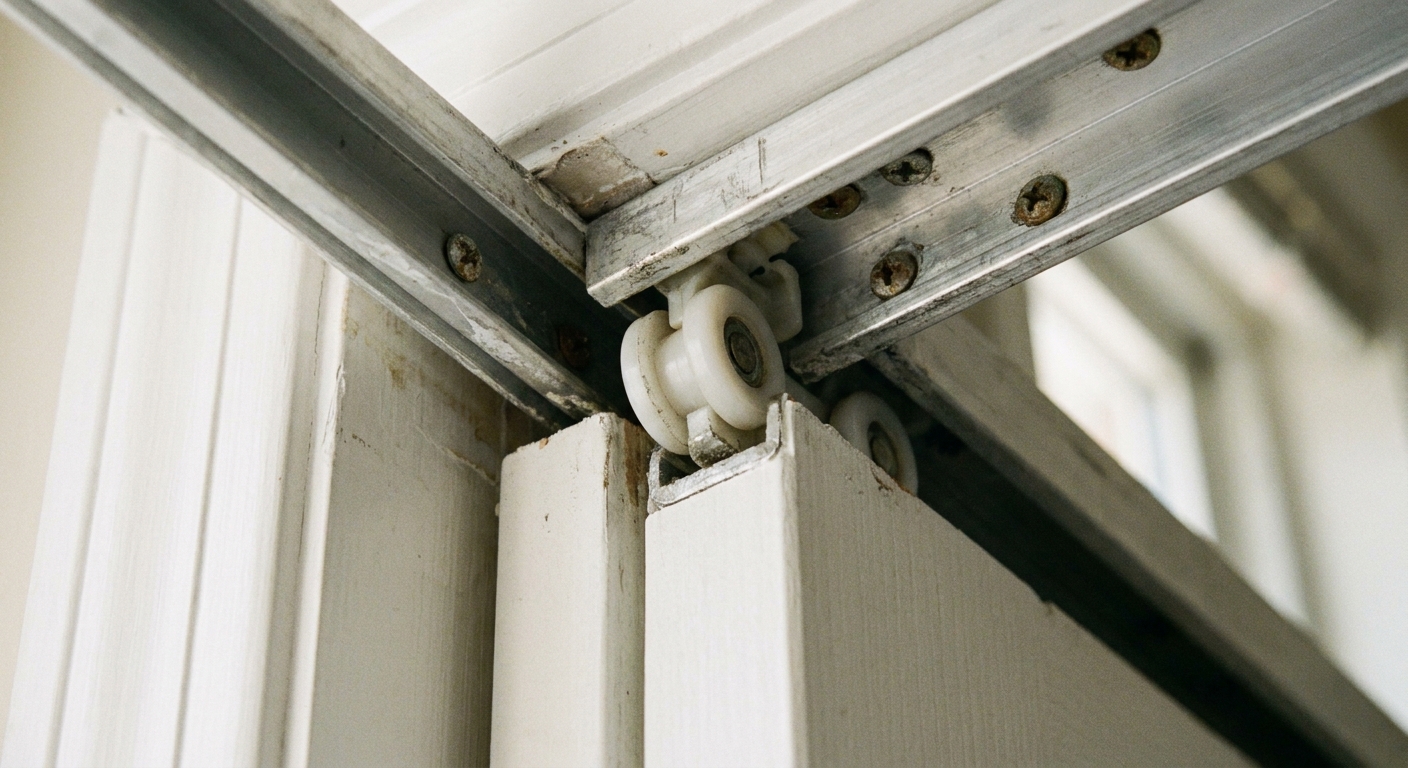
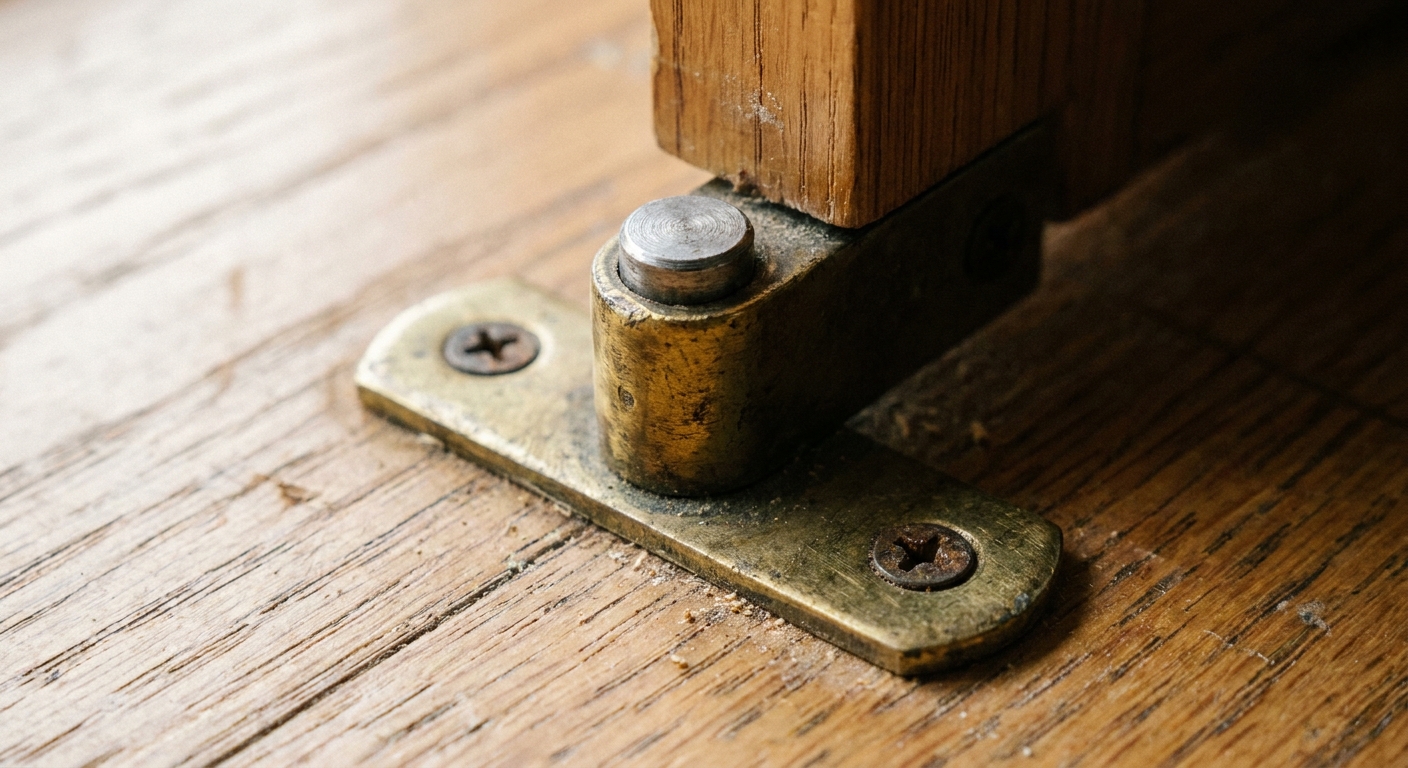
These doors carry much of their weight on a bottom pivot that sits in a floor bracket (or a jamb bracket near the floor). At the top, you usually have a pivot pin on one side and a roller on the other side.
- Clue: You can see a pin going into a bracket at the bottom corner of the door.
- Typical failures: bottom bracket shifts, pivot pin height drifts, pivot shoe cracks, door scrapes floor or rubs jamb.
Top-hung (top track) systems
These doors are supported primarily by rollers in the top track. The bottom usually has a guide to keep the door from swinging, and in some systems it may carry a tiny amount of stabilizing load, but it is not designed to do the heavy lifting.
- Clue: The top rollers look beefy and do most of the work, and the bottom guide looks like a simple plastic fin, U-shape, or a small floor channel.
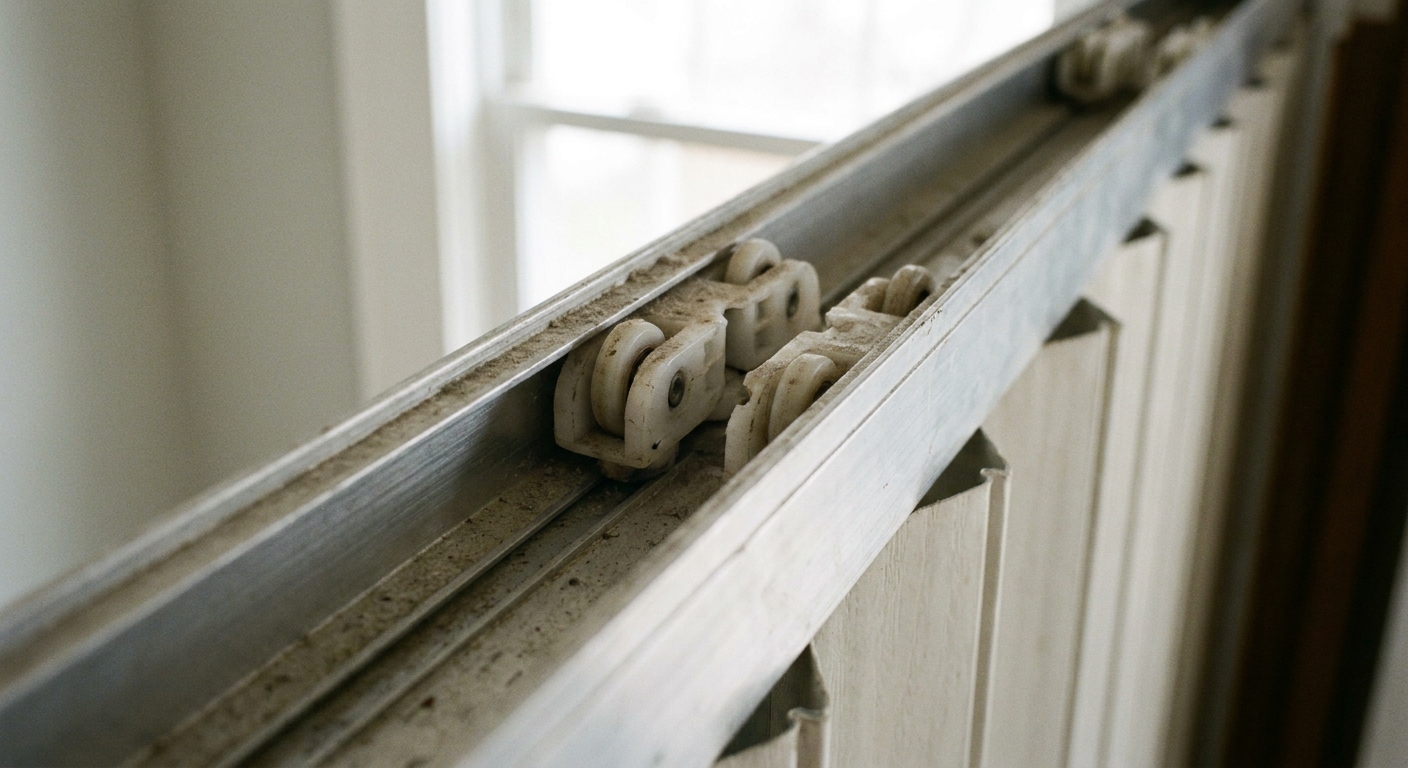
- Typical failures: rollers flat-spot, track gets gunked up, hanger brackets loosen, anti-jump clips are missing or disengaged, door sways or will not fold evenly.
Accordion doors are their own category, but many use a similar idea to top-hung systems: a head track with glides or rollers, plus a floor guide.
Diagnose the symptom
Open and close the door slowly and watch what it is trying to tell you.
- Scrapes the floor: door is sagging, bottom pivot pin is too low, bottom bracket shifted, hinges are loose, or the door is out of plumb. Also check whether carpet, a threshold, or an uneven floor is stealing your clearance.
- Rubs the jamb (side frame): bottom bracket position is off, top pivot bracket is off, or the door is twisted.
- Pops out of the track: roller guide is worn, track is bent, pivot pin is not seated, hanger height is off, or an anti-jump clip is not engaged.
- Will not stay closed : misalignment, worn catch hardware (magnetic catch, ball catch, or spring clip), or the door is biased due to bracket placement.
- Rattles or squeals: dry rollers, dirty track, loose hinges between panels, loose bracket screws, or cracked pivot shoe.
Clean first
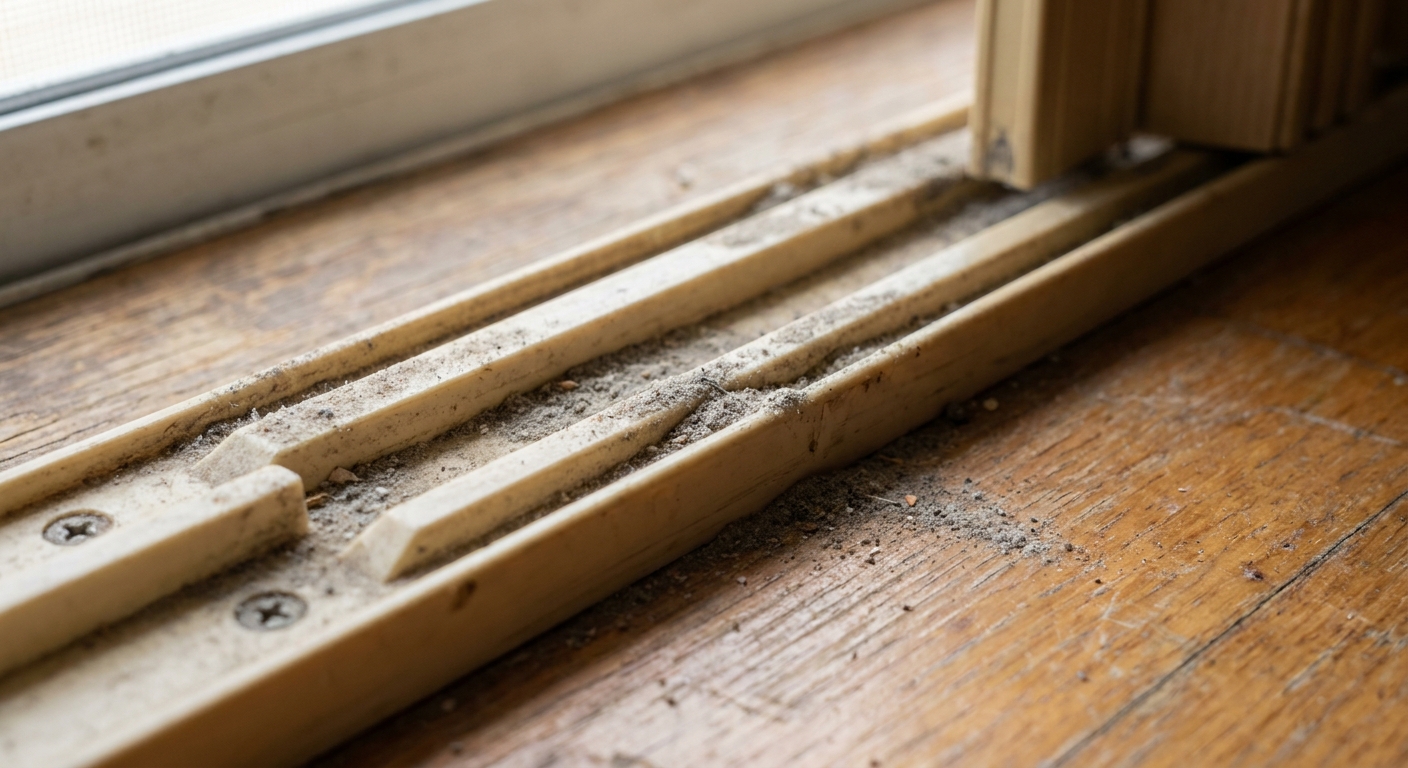
If your track sounds crunchy, do not lubricate yet. Lubricating over dust is like putting lotion on sand. You will create a paste that collects more grime and makes everything louder over time.
How to clean the track (bifold or accordion)
- Vacuum the top track thoroughly using a crevice tool.
- Wipe inside the track with a barely damp rag, then follow with a dry rag.
- Look for paint drips, drywall dust, pet hair, or bent sections of track.
- Tighten any visible track screws. A slightly loose track can click with every pass of a roller.
If you find a bent lip in the track, you can often coax it back with gentle pressure from pliers. Go slow. Small bends make big noise.
Re-hang a door
If the door is off the track, the goal is to get the pins and rollers seated correctly before you start adjusting for perfection.
Pivot-hung bifold re-hang
- Fold the door like a book and stand it in the opening.
- Seat the bottom pivot into the floor or jamb bracket first. Most brackets have a little cup or slot where the pin drops in.
- Lift and guide the top pin into its top bracket (the pivot side).
- Set the roller into the track on the opposite top corner. Sometimes you need to pull down the spring-loaded roller pin to pop it into the track channel.
- Test the swing gently. If it binds immediately, stop and check that the bottom pivot is fully seated and the hinges are not fighting you.
Top-hung bifold re-hang
- Find the hangers at the top of the door. They usually hook into or clip onto the track.
- Hook the top first, then align the bottom guide into its floor guide channel.
- Check anti-jump clips (if your system has them). These small tabs or clips keep the rollers from bouncing out of the track.
- Test the glide. If the door wobbles, the bottom guide may be missing, installed backward, or the hanger hardware is loose.
If a door feels too heavy to hold in place while you seat the top hardware, slide a thin shim or book under the bottom edge to hold it at a comfortable height while you work.
Align and adjust
Alignment is a dance between three things: height, side-to-side position, and plumb (whether the door stands straight).
1) Tighten hinges first
Before you chase bracket adjustments, check the hinge screws that connect the bifold panels. Loose hinges can mimic sag, cause rattles, and make a door fold unevenly.
- Snug screws firmly, but stop when you feel real resistance. Over-tightening strips soft wood fast.
- If a hinge screw spins, fix the hole with wood glue and a toothpick (or two), let it dry, then re-drive the screw.
2) Adjust height
On many pivot-hung bifolds, the bottom pivot pin is adjustable. Look for a pin that screws in and out or a pin with an adjustment nut.
- If the door scrapes the floor: raise the door by turning the bottom pivot pin to shorten the drop, or adjust the top pivot bracket (depending on your model).
- If the top rubs the track: lower slightly so the roller and pin sit naturally without force.
Make adjustments in small turns, then test. One full turn can be the difference between quiet and why is it shaving my hardwood.
On many top-hung systems, the hanger has a threaded adjuster (often a small screw or nut) that raises or lowers the door. Adjust in small increments, then confirm the bottom guide is centered in its channel.
3) Shift the door left or right
The bottom bracket often has slotted holes, which means you can loosen screws and slide the bracket a bit.
- Door rubs the jamb: shift the bottom bracket slightly away from the rub point.
- Door gap looks uneven: shift bracket to even out the reveal (the visible gap) along the side.
Pro tip: lightly pencil-mark the bracket’s current position before moving it. That way you can always return to home base.
4) Fine-tune the top pivot bracket
The top pivot bracket (on the pivot side) also frequently has slotted holes for micro-adjustments. If the door looks like it is leaning, this is your quiet little hero.
- Loosen screws just enough to nudge the bracket.
- Re-tighten and test the fold.
- Watch the meeting point where the panels fold. You want a clean, even fold without the door pushing itself open.
Quiet the track
This is where a lot of well-intentioned fixes go sideways. Traditional oily sprays can attract dust, hair, and closet lint, which turns your track into a sticky little dirt runway.
Best choices for closet door tracks
- Dry silicone spray : good for rollers and tracks, dries slick without staying wet.
- PTFE (Teflon) dry lubricant: excellent for plastic glides and metal tracks, low residue.
- Paste wax (very sparingly): can work on clean metal track lips where rollers contact, applied thin and buffed well. If it looks hazy or starts to build up, you used too much.
What to avoid (most of the time)
- Grease: stays sticky and collects grit.
- Heavy oil sprays: can drip, stain, and attract dust.
- WD-40 as a long-term lubricant: WD-40 is primarily a cleaner, penetrant, and water-displacer. It can be helpful to free stuck parts or flush grime, but for lasting smooth travel, a dedicated dry lube is usually the better choice.
How to lubricate without making a mess
- Clean first (vacuum and wipe).
- Spray lubricant onto a rag rather than directly into the track, then wipe the track lightly.
- If using a spray directly, use short bursts and immediately wipe excess.
- Open and close the door several times, then wipe again. You want slick, not wet.
When pivot shoes wear out
If you have a pivot-hung bifold and it still sags, grinds, or pops after cleaning and adjusting, the issue is often a worn pivot shoe or worn roller guide.
Signs your pivot shoe is done
- Visible cracks or missing plastic chunks.
- The pivot pin feels sloppy in the shoe, like it has too much play.
- The door drops suddenly even after you adjust the pin.
- You hear a sharp clicking or snapping as the door moves.
Replacing a pivot shoe
- Take a photo of the hardware before disassembly. Future-you will be grateful.
- Remove the door by lifting it off the bottom pivot and unseating the top roller or pin.
- Pull the old shoe from the bottom corner (some slide out, some are screwed in).
- Match the part at the hardware store. Bring the old shoe and the pivot pin if possible. There are many nearly identical styles.
- Install the new shoe, then re-hang and re-adjust.
If the door is older and the holes are stripped where the hardware screws in, you can often fix it by moving the bracket to fresh wood, using slightly longer screws, or filling the hole with wood glue and a toothpick, then re-screwing once dry.
Accordion door fixes
Accordion doors love to act dramatic when the bottom guide is off by even a whisper. Most accordion systems have a top track with glides and a bottom guide that keeps the door panels from swinging out.
If your accordion door drags
- Check the floor guide: it may be loose, cracked, or clogged with fuzz.
- Check the lead edge (the side you pull): the handle area can loosen and pull the top glide off-angle.
- Inspect the glides: worn plastic runners can flatten and start catching.
Quieting accordion track noise
Use the same dust-safe approach: clean thoroughly, then apply a dry silicone or PTFE lubricant lightly. Accordion doors often have plastic parts, so dry lubricants tend to behave better than oils here.
Quick troubleshooting
- Door will not stay closed: adjust alignment so panels meet squarely, tighten hinges, check for a worn catch or magnetic closer.
- Door folds unevenly: tighten hinges, then tweak the top pivot bracket and bottom bracket in small moves.
- Door pops off when you open fast: roller guide worn, track lip bent, anti-jump clip missing, or the roller pin is not fully seated.
- Rattle in the middle: tighten hinge screws between panels, check for a loose snugger (spring clip or door stop in the track) that should hold the folded door in position.
- Scrape only happens in humid months: the door may be swelling slightly. Raise the pivot pin a touch and confirm the floor, carpet, or threshold has not changed clearance seasonally.
Repair or replace?
I love a good repair, but there are moments when replacing the hardware, or the door itself, is the most peaceful choice.
- Track is badly bent along multiple sections.
- Door panels are warped so the fold can never sit square.
- Multiple hardware points are stripped and will not hold screws securely.
- The opening is out of square from settling, and you need more advanced carpentry adjustments.
- Plastic hardware is brittle everywhere (pivot shoes, guides, rollers). If one piece crumbles, the rest may be close behind. A full hardware kit replacement is often smarter than chasing failures one by one.
If you do replace parts, consider upgrading to higher-quality rollers or glides. It is one of those small, invisible improvements that makes your home feel calmer every single day.
One last tip
Once your doors are gliding quietly, take one extra minute to tighten the handle screws and wipe fingerprints off the panels. It sounds silly, but that last little polish is what makes a repaired door feel intentional, not merely functional. A closet door you touch every day deserves to feel nice.