7 Ways to Mix Vintage and Modern Decor Without Looking Cluttered

Clara Townsend
Clara Townsend is an interior stylist, vintage furniture enthusiast, and the creative voice behind Velvet Abode. With over a decade of experience transforming both cramped city apartments and sprawling fixer-uppers, she believes that a beautiful home is built on personal stories rather than massive budgets. When she isn't hunting for the perfect brass sconce at a local flea market, she can usually be found rearranging her living room for the third time this month.
Mixing vintage and modern is my favorite kind of design alchemy. It's how a home stops feeling like a showroom and starts feeling like yours. But if you've ever brought home one more “perfect” thrifted lamp and suddenly your room feels busy, not beautiful, you're not alone.
The secret isn't owning fewer things (although, sometimes yes). It's choosing a clear framework so your pieces look collected with purpose, not collected in a panic. Here are seven ways to blend old and new while keeping your space airy, edited, and deeply personal.
Quick note on terms: I use “vintage” for older pieces (often 20+ years) and “antique” for the truly old stuff (often 100+ years). In real homes, both can work beautifully together, so don't get hung up on the label.
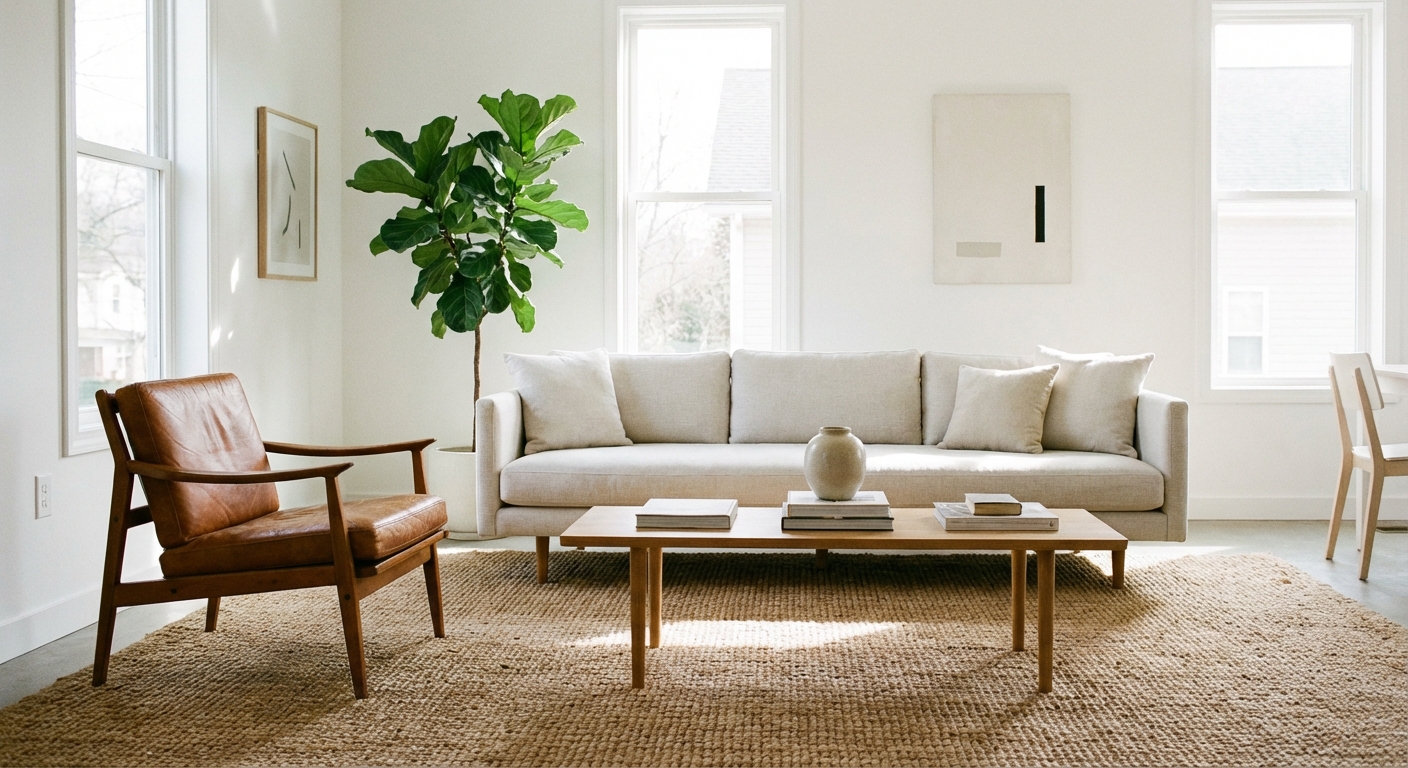
1) Start with a quiet base
If your foundation is calm, your vintage pieces get to shine without turning the room into visual noise. Think of your base as the soft linen shirt that lets the statement jewelry feel intentional.
Try this
- Keep the largest surfaces neutral: walls, big rug, main sofa, curtains.
- Choose one “bridge” tone that works with both eras, like warm white, camel, tobacco, or soft black.
- Let vintage provide the texture: patinated wood, aged brass, worn leather, handwoven textiles.
When your background is steady, a sculptural modern coffee table can sit next to a 1940s side chair and nobody argues.
2) Use the 80/20 rule
Clutter usually shows up when everything is shouting at the same volume. A simple ratio helps you decide what gets to be the “main storyline” of the room.
A helpful designer rule of thumb is 80 percent one style, 20 percent the other. In practice, that could mean a mostly modern room with a few truly special vintage pieces, or a mostly vintage room with modern lighting and a streamlined sofa.
Try this
- Count your big anchors first: sofa, bed, dining table, rug, and large storage pieces (dressers, credenzas).
- Decide which era will lead in that room.
- Use the other era as accent and punctuation: lighting, art, one chair, a mirror, hardware.
And yes, you can break the rule. Just make sure you're breaking it on purpose.
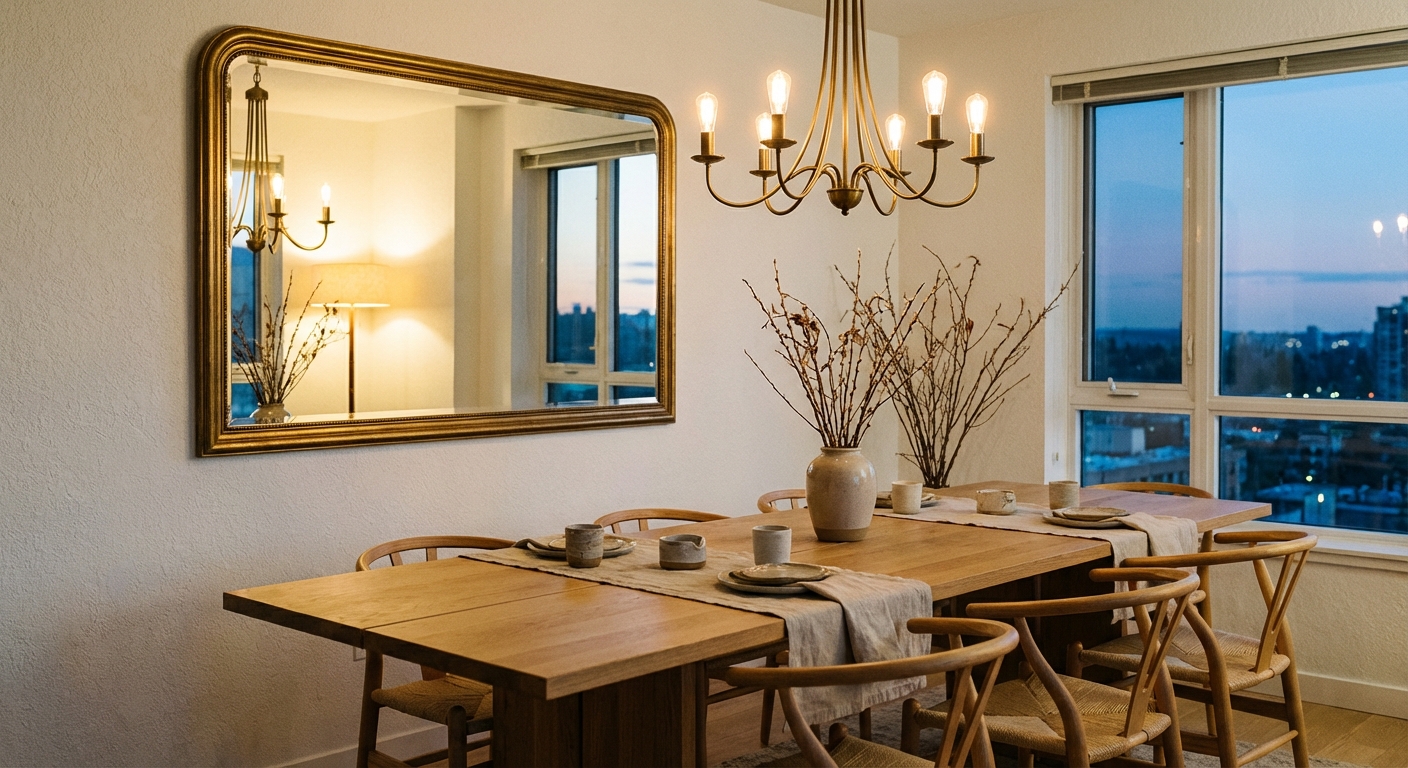
3) Repeat a finish 3 times
This is my styling cheat code for mixing decades. When a finish repeats, the eye reads it as a plan.
Vintage and modern can clash because their metals and woods feel like they belong to different families. Repetition introduces harmony without forcing a perfect match.
Try this
- Pick one metal to repeat: aged brass, polished nickel, matte black, chrome.
- Place it in three spots around the room: a sconce, a frame, a lamp base, cabinet pulls.
- Do the same with one wood tone if you can: walnut, oak, painted black, bleached ash.
4) Give vintage room to breathe
Vintage has detail. Carved legs, ornate edges, beautiful wear, subtle dings that tell a story. Modern tends to be visually quiet. If you crowd your vintage pieces together, the room can start to feel like a shop display instead of a home.
Try this
- One hero per zone: one antique cabinet on that wall, not three small antique things competing.
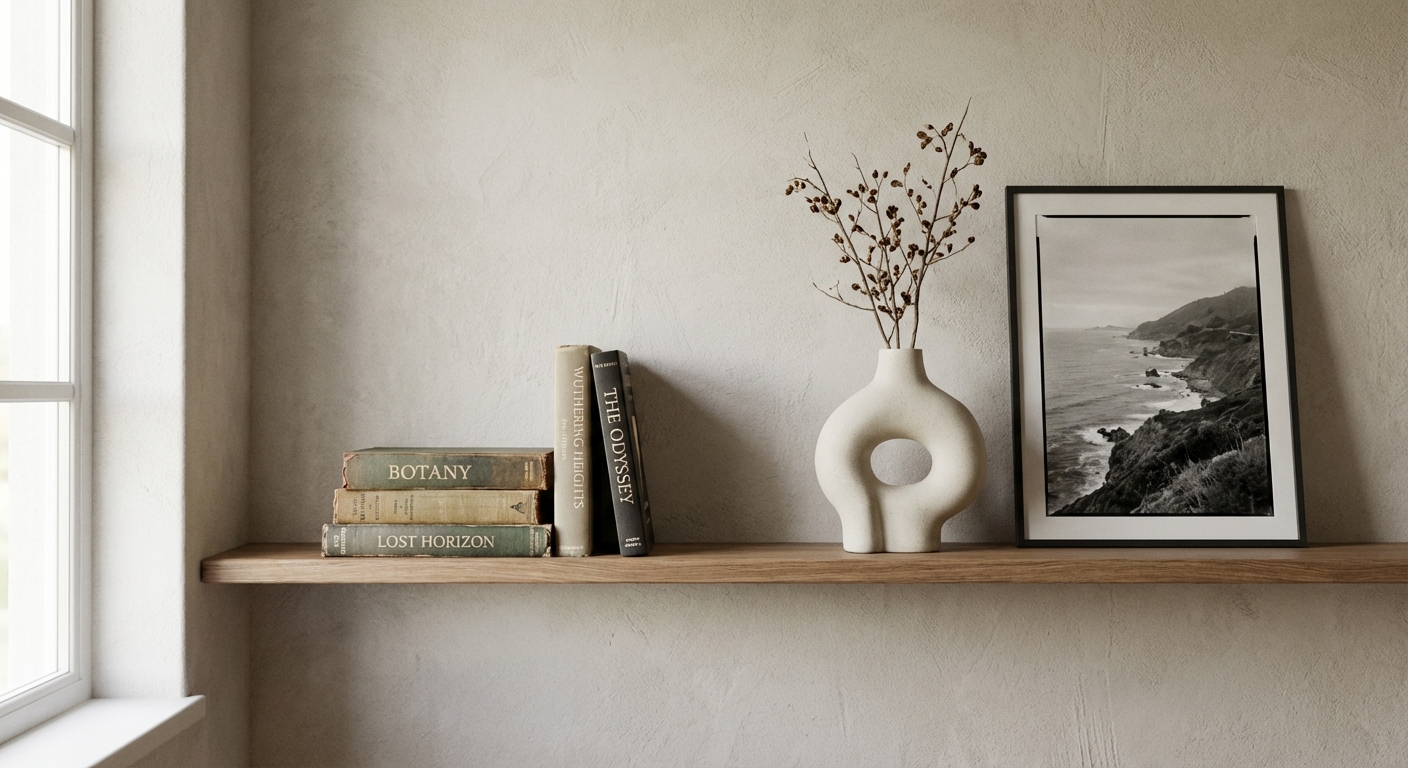
- Leave negative space: a clear patch of wall above a console, a bare corner, a calm shelf.
- Use fewer, larger accessories instead of many tiny ones.
If you're unsure, remove one object from a surface. If the room immediately exhales, you have your answer.
5) Mix eras, match scale
One of the fastest ways a room reads cluttered is when everything is different in size and visual weight. You can absolutely mix a mid-century credenza with a contemporary sofa, but the scale should feel like they live in the same world.
Try this
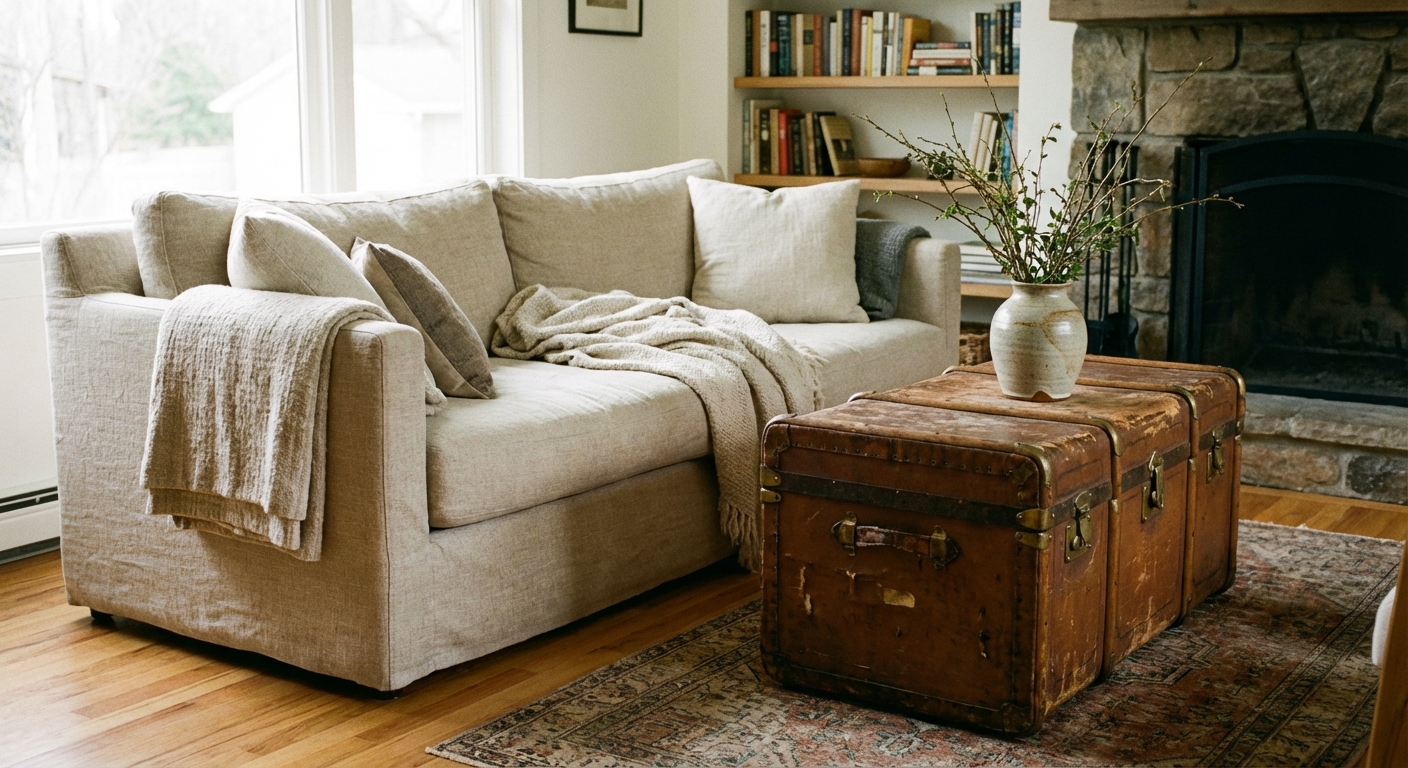
- Pair sleek with substantial: a modern low sofa looks great with a sturdy antique trunk as a coffee table.
- Avoid stacking multiple “small busy” pieces together (petite vintage side tables, tiny frames, little knickknacks) unless they're tightly edited.
- Check seat heights: dining chairs and tables should still feel comfortable together even if they're from different eras.
6) Modern art + lighting
If your vintage pieces lean ornate or traditional, bring in modern elements that feel crisp. The easiest two? Art and lighting. They update a space without erasing its history.
Try this
- Hang one large, simple contemporary print above an antique dresser instead of a cluster of small frames.
- Swap in clean-lined shades on vintage lamps (linen drum shades are a miracle worker).
- Add a modern floor lamp beside a tufted vintage chair to create contrast and better reading light.
Think of it as giving your antiques a fresh haircut. Same personality, just a little more current.
Quick safety note: if you're using vintage lighting, get it rewired (or at least checked) before plugging it in. And if you're restoring very old painted furniture, be mindful of possible lead paint and take the right precautions.
7) Curate the little things
Most clutter isn't furniture. In many homes, it's the tiny objects that don't know where they belong. Vintage lovers are especially vulnerable here because the small stuff is charming and inexpensive and somehow follows you home.
Try this
- Group by type: a small stack of vintage brass candlesticks looks collected. A random mix of tiny items looks scattered.
- Use trays and bowls to contain: one stone tray on the coffee table, one ceramic bowl by the door.
- Limit open-shelf color: pick 2 to 3 colors and let the rest be texture (wood, glass, paper, ceramic).
- Edit seasonally: rotate pieces the way you rotate clothes. The room stays fresh, and you still get to enjoy your finds.
Color: pick one repeatable accent
A neutral foundation doesn't mean boring. It just means you get to choose your color on purpose, then repeat it so the mix feels calm.
Try this
- Pick one accent color you love (ink blue, olive, rust, oxblood, terracotta).
- Repeat it 2 to 4 times: a pillow, a piece of art, a vase, a vintage textile.
- Keep the rest of the palette in the same temperature family (warm neutrals with warm woods, cool whites with cooler metals).
Quick pairings by room
Living room
- Modern sofa + vintage rug
- Vintage chair + modern floor lamp
- Antique trunk + clean, simple styling on top
Bedroom
- Modern bed + antique nightstands
- Vintage dresser + oversized contemporary art
Dining room
- Modern table + vintage chandelier
- Vintage table + modern chairs in one consistent finish
5-minute reset
If your space feels “off” but you can't tell why, try this quick reset I do before people come over (and yes, before my own friends arrive).
- Clear one surface completely (coffee table or console).
- Put back only three things: something tall, something sculptural, something personal.
- Remove one extra chair if the room feels tight. Store it elsewhere for a week and see if you miss it.
- Turn on two lamps and turn off the overhead. Better lighting can make a room feel calmer fast.
Common clutter triggers
Too many small vintage pieces
Instead: choose one larger vintage piece, then support it with modern, simple companions.
Mixed metals with no repetition
Instead: pick one dominant metal and repeat it three times, then let the rest be quiet.
Everything has a pattern
Instead: use one statement pattern and keep the rest solid, textured, or subtly striped.
All the vintage lives in one corner
Instead: sprinkle vintage throughout the room so it feels integrated, not like a themed vignette.
Final thought
Mixing vintage and modern without clutter isn't about perfection. It's about clarity. Let a few pieces carry the story of your home, then give them the space and supporting cast they deserve.
Start with one hero vintage piece you truly love, decide whether the room is mostly vintage or mostly modern, and build outward from there. You'll be surprised how quickly everything clicks.