7 Entryway Essentials for a Welcoming, Clutter-Free Foyer

Clara Townsend
Clara Townsend is an interior stylist, vintage furniture enthusiast, and the creative voice behind Velvet Abode. With over a decade of experience transforming both cramped city apartments and sprawling fixer-uppers, she believes that a beautiful home is built on personal stories rather than massive budgets. When she isn't hunting for the perfect brass sconce at a local flea market, she can usually be found rearranging her living room for the third time this month.
Your entryway is your home’s handshake. It’s the first glow of lamplight you see after a long day and the place your guests decide, in two seconds flat, whether your home feels calm or chaotic.
The good news is you do not need a grand foyer or built-ins worthy of a magazine spread. A welcoming, clutter-free entry is really just a handful of hardworking pieces that give your everyday stuff a “yes, you live here” home.
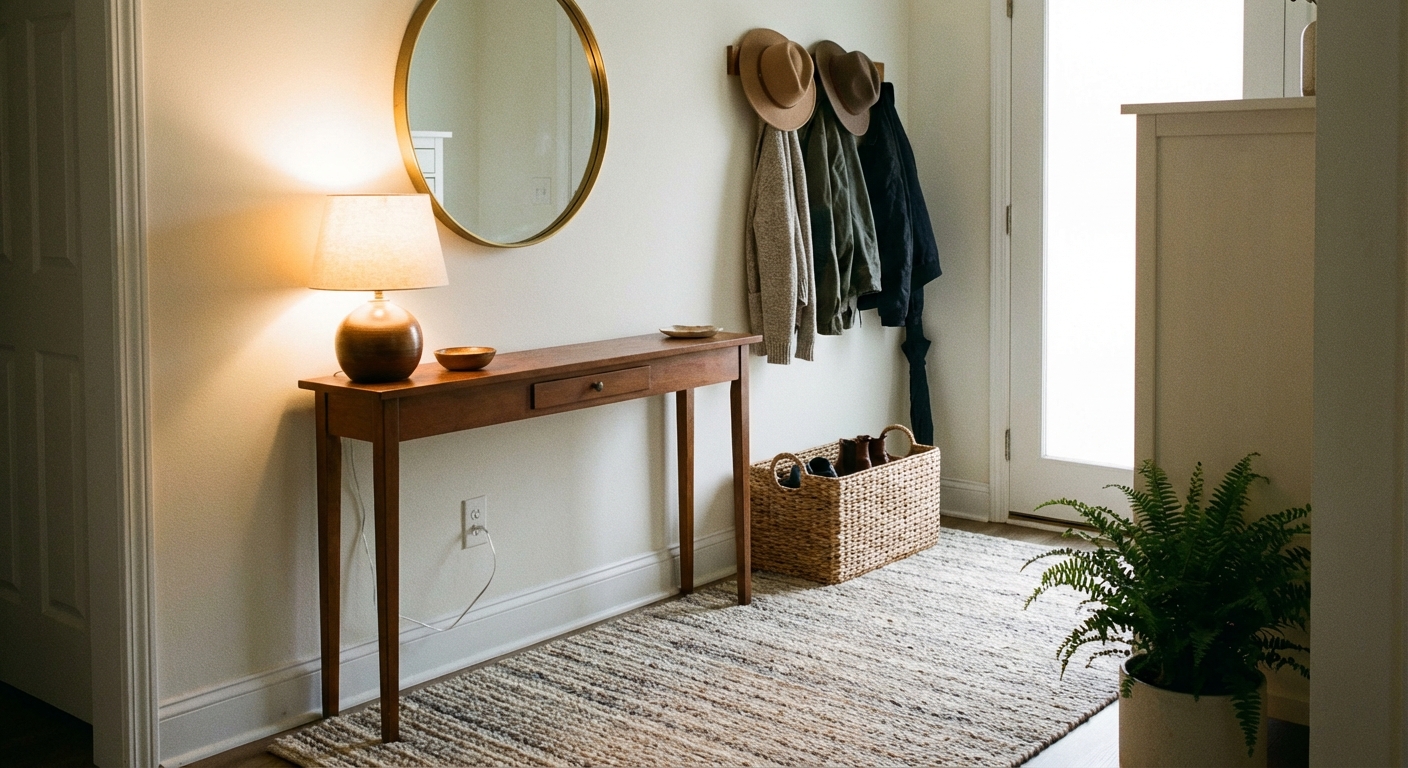
Below are my seven essentials, plus the tiny styling moves that make them feel intentional instead of like you shoved everything against the wall five minutes before company arrived.
1) A landing spot that fits your space
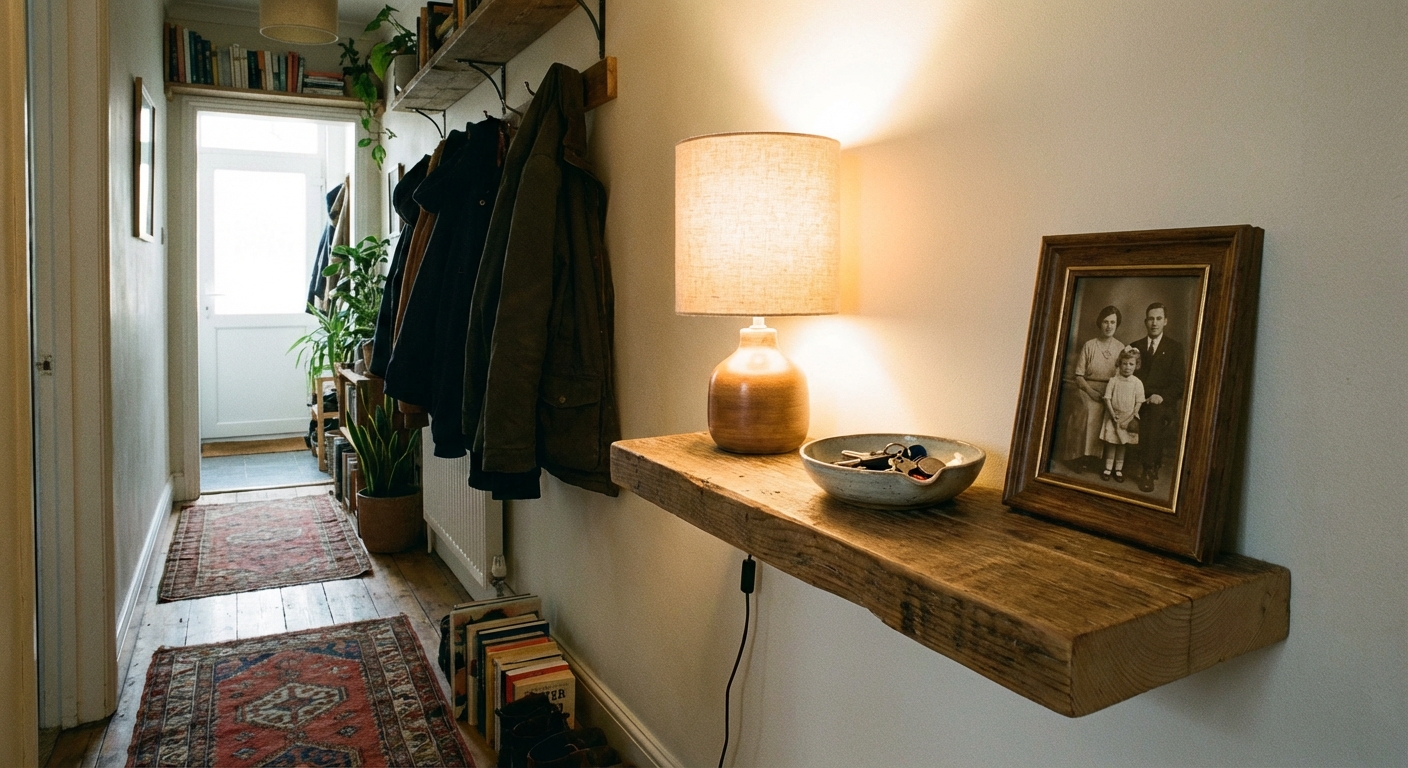
If you add just one piece of furniture, make it a landing spot. This is where keys, sunglasses, mail, and the “what is this screw from?” mysteries go so they do not migrate across your kitchen counter.
Choose the right type
- Skinny console table: Works in almost any entry, including small ones, as long as it stays slim. Look for 10 to 14 inches deep so it does not eat your walkway or fight with the door swing.
- Floating shelf: Perfect for narrow hall entries or apartment doors that open straight into the living room.
- Small demilune table: A rounded front is a lifesaver for tight corners and kinder on hips.
Styling tip
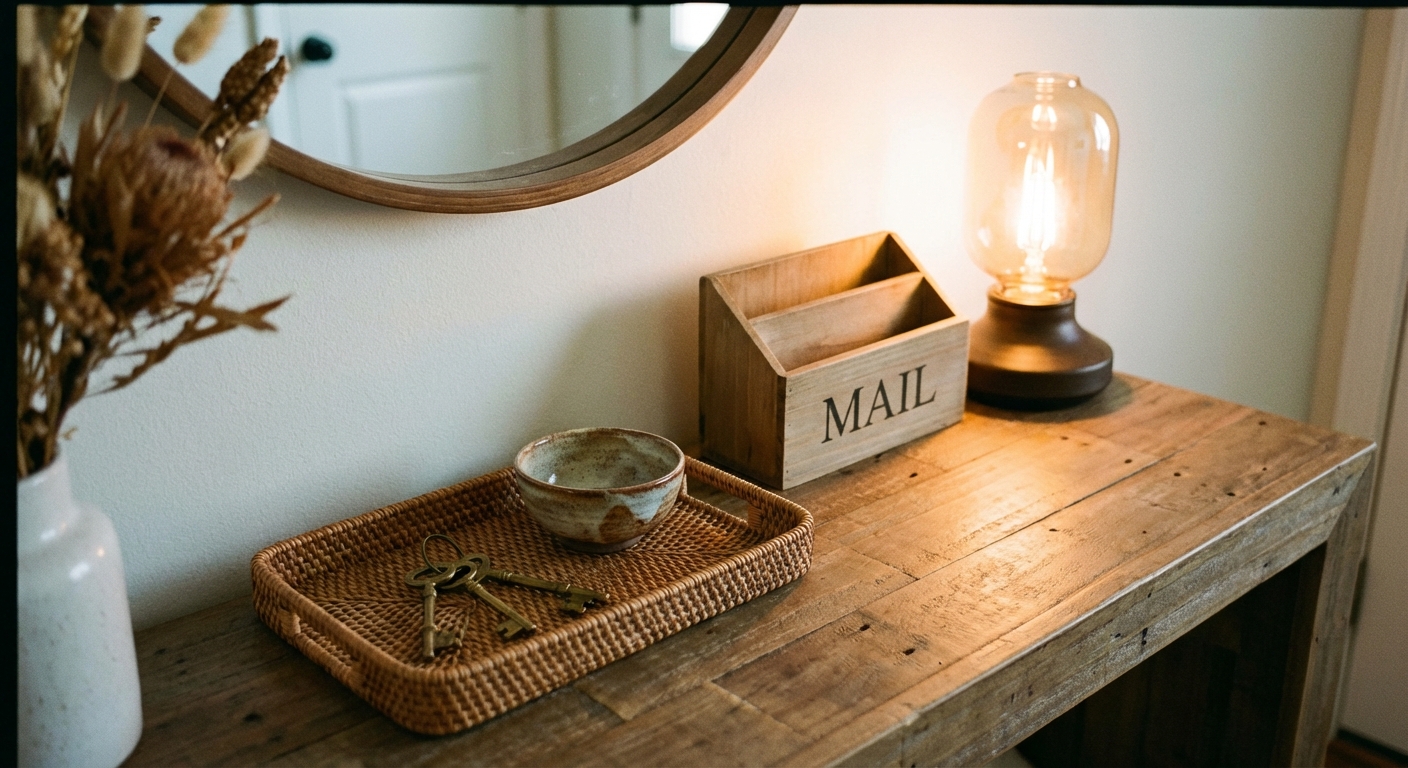
Aim for a clean “three things” moment on top: a lamp, a catchall, and one personal touch (a framed photo, a small vase, or a favorite vintage find). Too many objects turns into visual lint fast.
2) Closed storage for the not-pretty stuff
Open baskets are lovely, but closed storage is what keeps an entryway feeling restful. Think of it as the difference between “curated” and “we are doing our best.”
What to look for
- A cabinet or console with doors: Ideal for dog leashes, sunscreen, extra masks, and random mail.
- A storage bench with a lift top: Great if you need shoe storage and a place to sit.
- A lidded basket tucked underneath: The simplest budget version, especially under an open console table.
My golden rule
Store by category, not by item. One bin for “out-the-door” stuff, one for “returns,” one for “seasonal gear.” If you need a concrete example: leashes, poop bags, and treats all live together in one “dog” bin. Labels are optional, but a quick mental map is not.
3) A hook zone for daily grab-and-go
Coats on chairs are an entryway’s villain origin story. Hooks stop the pile before it begins, and they make guests feel instantly cared for.
Hook placement that works
- Adult hooks: 60 to 66 inches from the floor is a typical comfortable range. Adjust up or down based on your household height and what your wall allows (trim, switches, art, and all the real-life obstacles).
- Kid hooks: Add a lower row around 42 to 48 inches if you have little ones.
- Bag-friendly spacing: Leave a few inches between hooks so straps do not tangle.
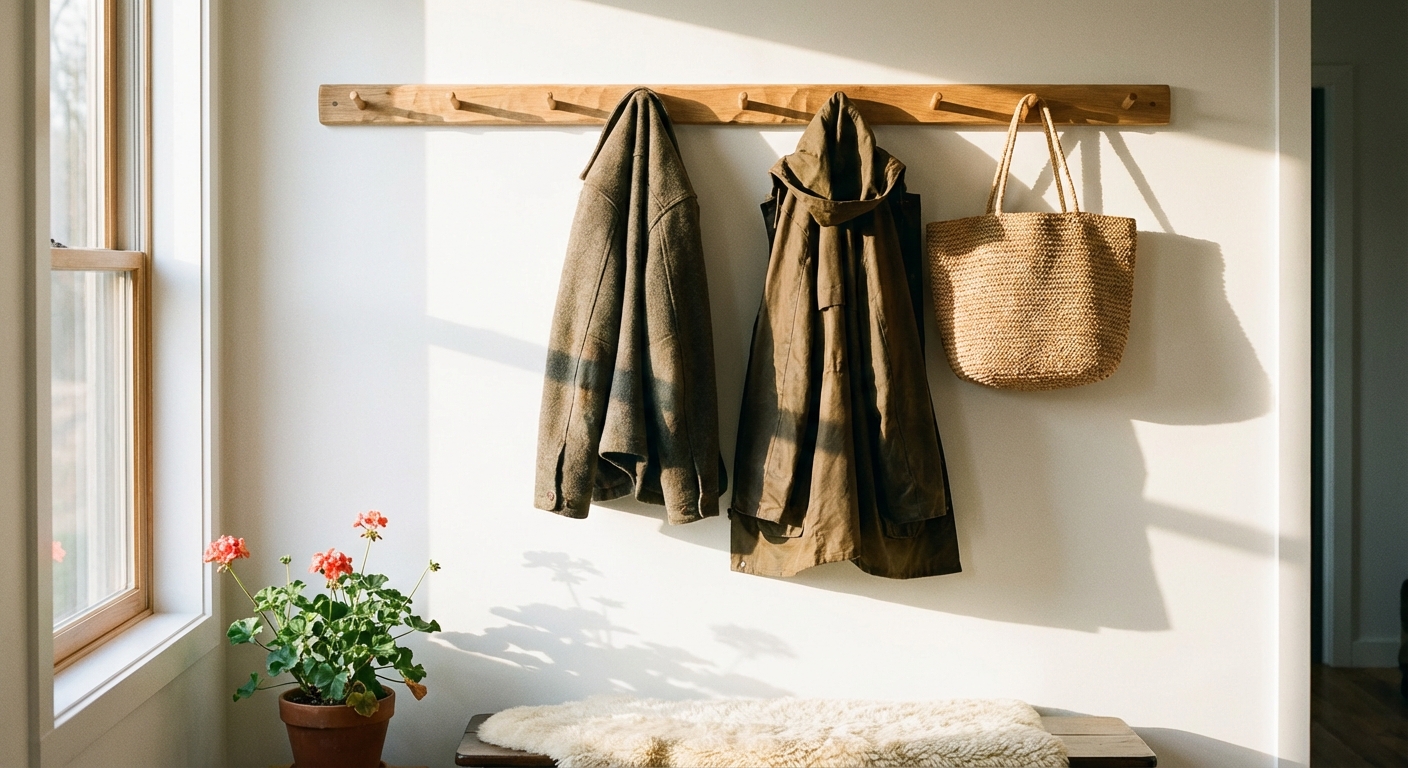
If wall space is tight, a peg rail is your best friend. It reads calm and classic, and you can style it with one pretty market tote to make it feel intentional.
4) A mirror for light and a last check
A mirror in the entryway is practical, yes, but it is also a little design magic trick. It reflects light, visually expands a tight space, and gives you that final “lipstick, lint, and confidence” check before you step out.
Picking the right mirror
- Over a console: A common rule of thumb is a mirror about two-thirds the width of the table. Consider it a starting point, not a law.
- Without a console: A taller mirror can act as the whole moment on its own.
- Vintage lovers: Look for patina, bevels, or an imperfect frame. Those tiny flaws add soul.
If your entryway is dim, try a mirror opposite or adjacent to a light source. Even a nearby lamp glow becomes twice as warm.
5) A runner or mat that does heavy lifting
Rugs in the entryway are not just decorative. They are a dirt-trapping, noise-softening, mood-setting layer that makes the space feel finished.
Material matters here
- Vintage wool: Beautiful and forgiving, but consider a rug pad and regular vacuuming.
- Low-pile cotton: Easy to wash in some cases, great for lighter traffic.
- Indoor-outdoor: My top pick for rainy climates and muddy boots.
Size cheat sheet
- Small entry: A sturdy doormat plus one small accent rug can work.
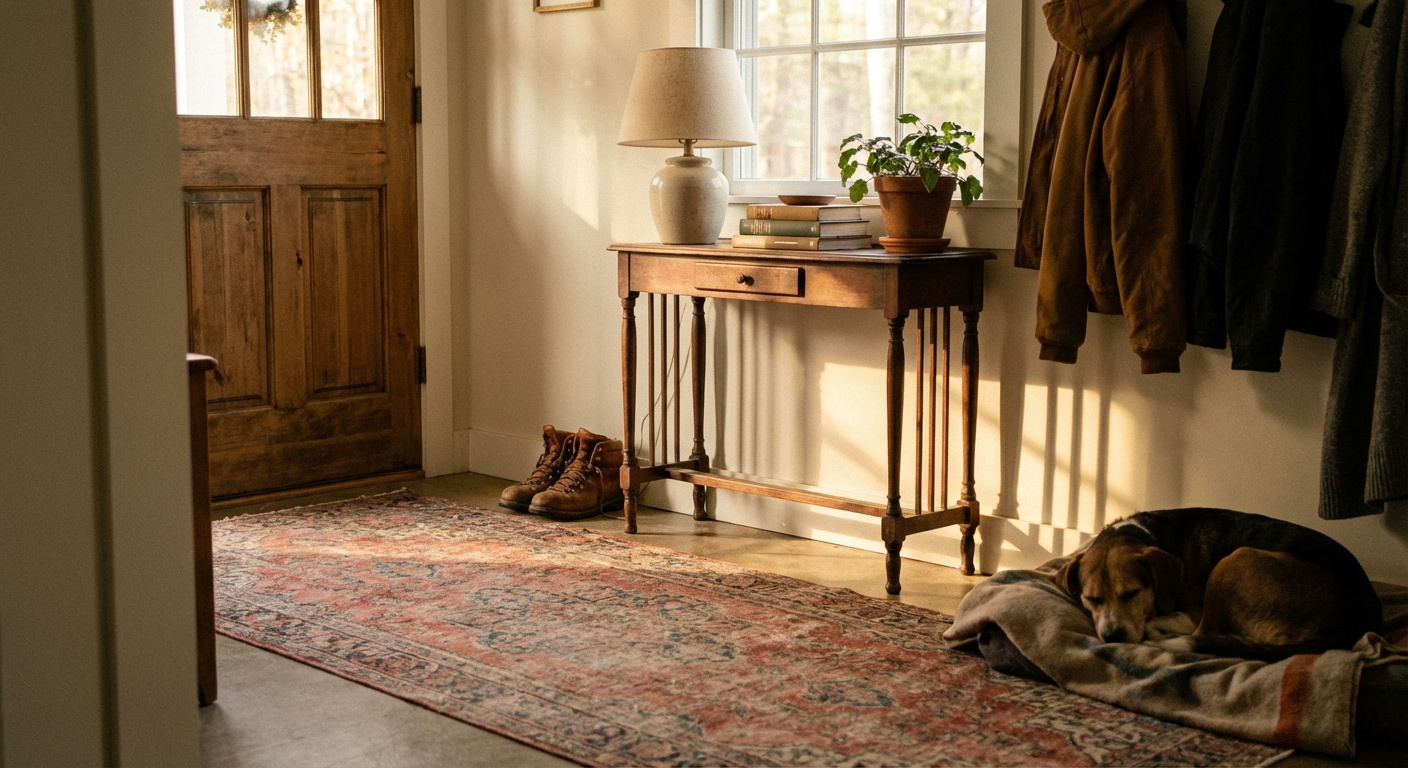
- Hall entry: A runner (2'6" x 7' or 2'6" x 9') keeps things streamlined. Those are common sizes, so they are easier to find.
Keep about 3 to 5 inches of floor visible at the edges, ideally on each side if possible. That border of breathing room makes the rug look intentional, not crammed.
If you deal with wet shoes, add a simple boot tray or a low-profile rubber mat near the door. It is not glamorous, but it is wildly effective.
6) Lighting that says “come in”
Entryways often get the worst lighting in the house, which is unfair because they set the emotional tone. A warm light makes the space feel friendly, even if the rest of your day has been a bit of a mess.
Options for any setup
- Overhead fixture: Swap builder-grade for something with character. A little brass, a little glass, even a simple linen shade.
- Table lamp: Instant coziness on a console. Bonus points if you put it on a timer so it glows when you get home.
- Sconce: Great for narrow entries where you cannot spare surface space. Renters, look for plug-in sconces or battery picture lights for a similar vibe.
Go warm: 2700K is a great everyday “soft hug” glow, but anywhere in the 2200 to 3000K range can feel cozy depending on your finishes and preferences. Bright white bulbs can make an entryway feel like a waiting room.
7) A catchall system that prevents the pile
The secret to a clutter-free entryway is not perfection. It’s a system that is easier than dropping everything anywhere.
Build your mini system
- One tray or bowl: Keys and small essentials live here. I love a vintage brass dish or a chunky ceramic bowl.
- One spot for mail: A slim wall pocket, a lidded box, or a vertical file on the console.
- One “launch pad” for tomorrow: A designated hook, basket, or shelf for the thing you cannot forget (gym bag, library books, returns).
Two tiny habits that change everything
- The 30-second reset: When you come home, put away what you can before you take off your shoes. It is annoyingly effective.
- The weekly sweep: Once a week, empty the catchall, toss receipts, and return mystery items to their homes.
Quick layout ideas
If your entry is tiny
- Floating shelf + mirror + 3 hooks + durable doormat
- Add one lidded basket or a slim shoe tray on the floor if you have space
If you have a standard foyer
- Console table + lamp + mirror
- Closed storage cabinet or bench for shoes
- Runner rug + hook rail for coats and bags
If your door opens into the living room
- Create a visual “zone” with a runner and a small console behind the sofa or on the nearest wall
- Use a mirror and lamp to signal, “this is the landing spot”
Safety and renter-friendly notes
- Keep the path clear: Make sure your landing spot does not block the door swing or narrow the walkway. A few inches of clearance can be the difference between “welcoming” and “constant shoulder check.”
- Anchor what you can: If you have kids, pets, or a high-traffic entry, secure tall mirrors, cabinets, and freestanding shelves to the wall where appropriate.
- Renters: Removable hooks and adhesive rails can be surprisingly sturdy for lightweight items. For heavier coats and bags, use stud-mounted hooks when possible, or a floor coat rack if your lease is strict.
Finishing touches
Once the essentials are doing the work, you can add one or two details that feel like you.
- Something living: A vase of branches, a pothos on a shelf, or a tiny bud vase.
- Something personal: A framed snapshot, a thrifted painting, or a postcard from a trip.
- Something tactile: A linen runner, a woven basket, or a vintage tray with patina.
If you are stuck, ask yourself: “What do I want to feel when I walk in?” Then choose textures and light that match that feeling. Calm. Cheerful. Cozy. Collected. You get to decide.
Entryway checklist
- Landing spot (console, shelf, or small table)
- Closed storage (cabinet, bench, or lidded basket)
- Hooks (or a peg rail)
- Mirror
- Rug or runner
- Warm lighting
- Catchall system (tray, mail spot, launch pad)
With these seven pieces in place, your entryway stops being a dumping ground and starts being a welcome. The kind that says: come in, exhale, you are home.