15 Small Bedroom Ideas to Maximize Space and Style

Clara Townsend
Clara Townsend is an interior stylist, vintage furniture enthusiast, and the creative voice behind Velvet Abode. With over a decade of experience transforming both cramped city apartments and sprawling fixer-uppers, she believes that a beautiful home is built on personal stories rather than massive budgets. When she isn't hunting for the perfect brass sconce at a local flea market, she can usually be found rearranging her living room for the third time this month.
If your bedroom is small, you don’t need to live like you’re camping in a closet. You just need a few strategic moves that create breathing room, plus details that make the space feel intentional, not temporary. Think of this as styling, not shrinking.
I’ve worked with plenty of tiny bedrooms where the only “extra” space was the walkway to the door. The good news is that small rooms respond quickly to the right choices. Below are 15 ideas I return to again and again, because they make the room function better and look more like you.
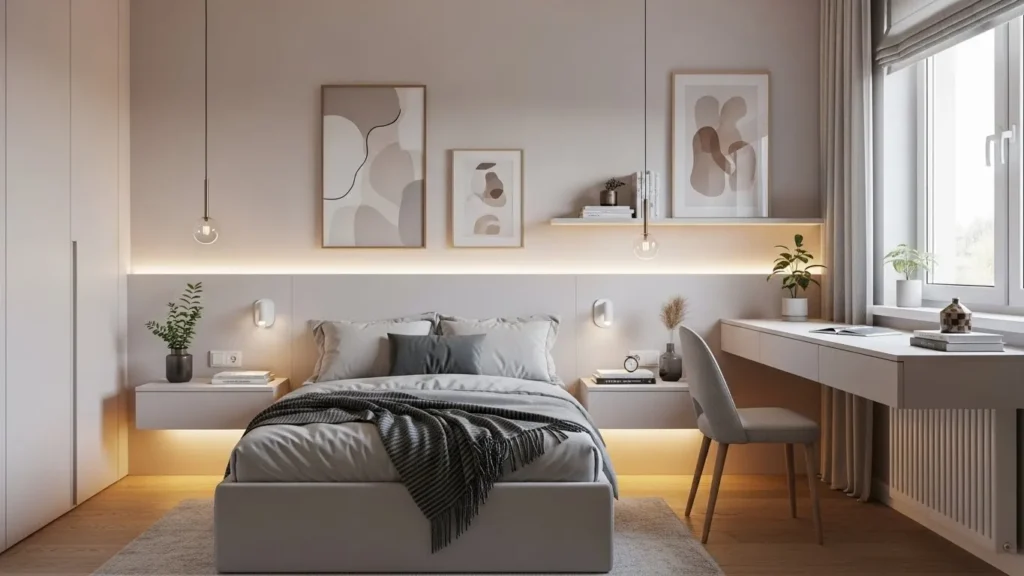
Start with layout
1) Float the bed if it earns its keep
Many people automatically shove the bed into a corner. Sometimes that’s right. But if pulling the bed 6 to 10 inches off the wall creates a useful service gap for a slim console, a hamper, or even a row of lidded baskets, it’s worth experimenting. Just measure first so you don’t create a pinch point with the door or closet swing.
- Best for: Rooms with one awkward wall or a closet that blocks a full nightstand.
- Try this: Use a narrow “behind-the-bed” console (aim for 8 to 12 inches deep) for books, a lamp, and a charging tray.
2) Choose a bed that shows some leg
A bed with visible legs makes the room feel lighter because your eye can travel underneath it. The “floating” effect is subtle but powerful, especially in rooms that already feel dense with furniture.
- Look for: Aim for 6 to 8 inches of clearance under the frame, if your layout allows.
- Avoid: Overly bulky footboards that visually chop the room in half.
- Quick note: If you need serious storage, a platform bed with drawers can be the better trade. The goal is choosing intentionally, not following a rule.
3) Swap bulky nightstands for wall shelves
A tiny shelf at the right height can hold exactly what you need: a glass of water, a book, and a lamp. You gain floor space, which makes the whole room feel less cramped and easier to clean.
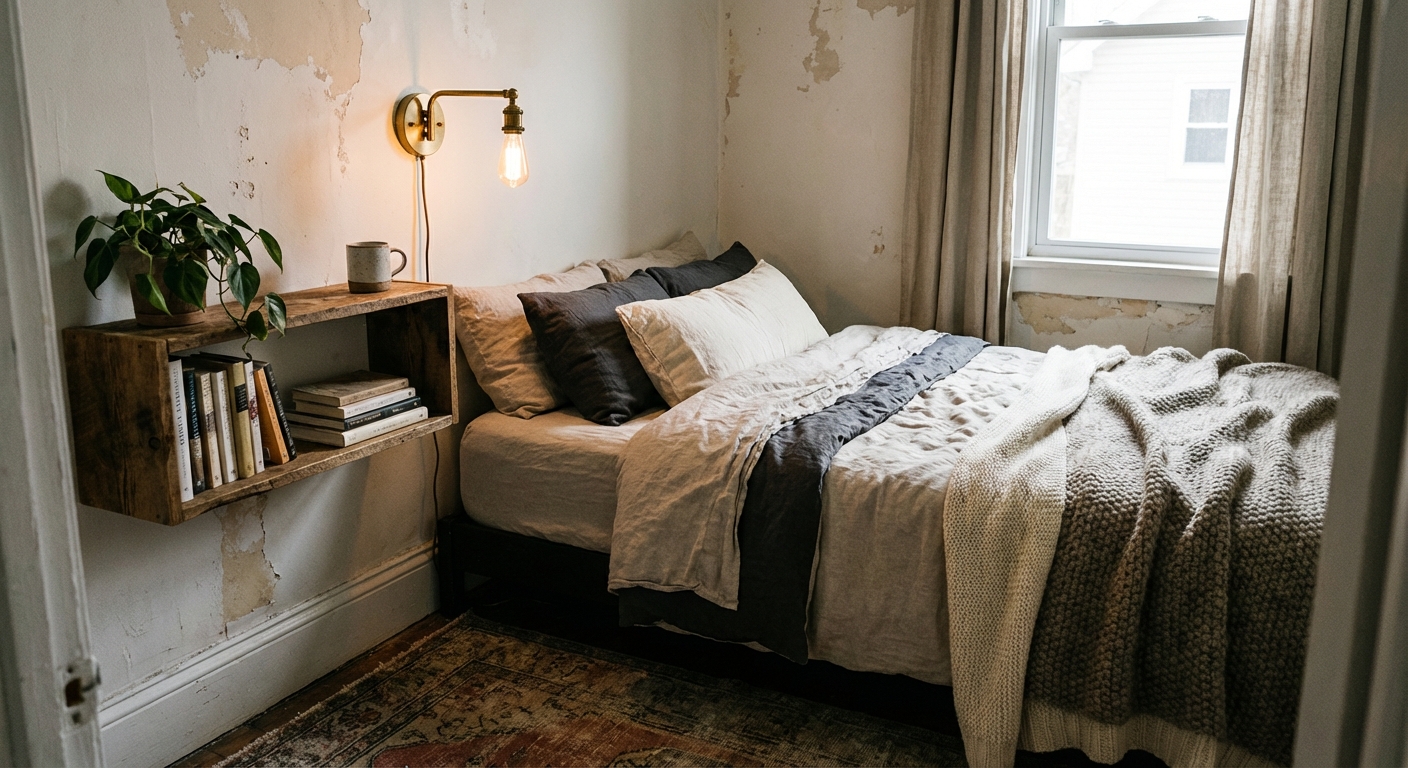
Storage that hides
4) Go vertical with a tall dresser
In small bedrooms, floor space is precious and wall height is underused. A tall dresser or lingerie chest gives you a lot of storage without stealing your walkway.
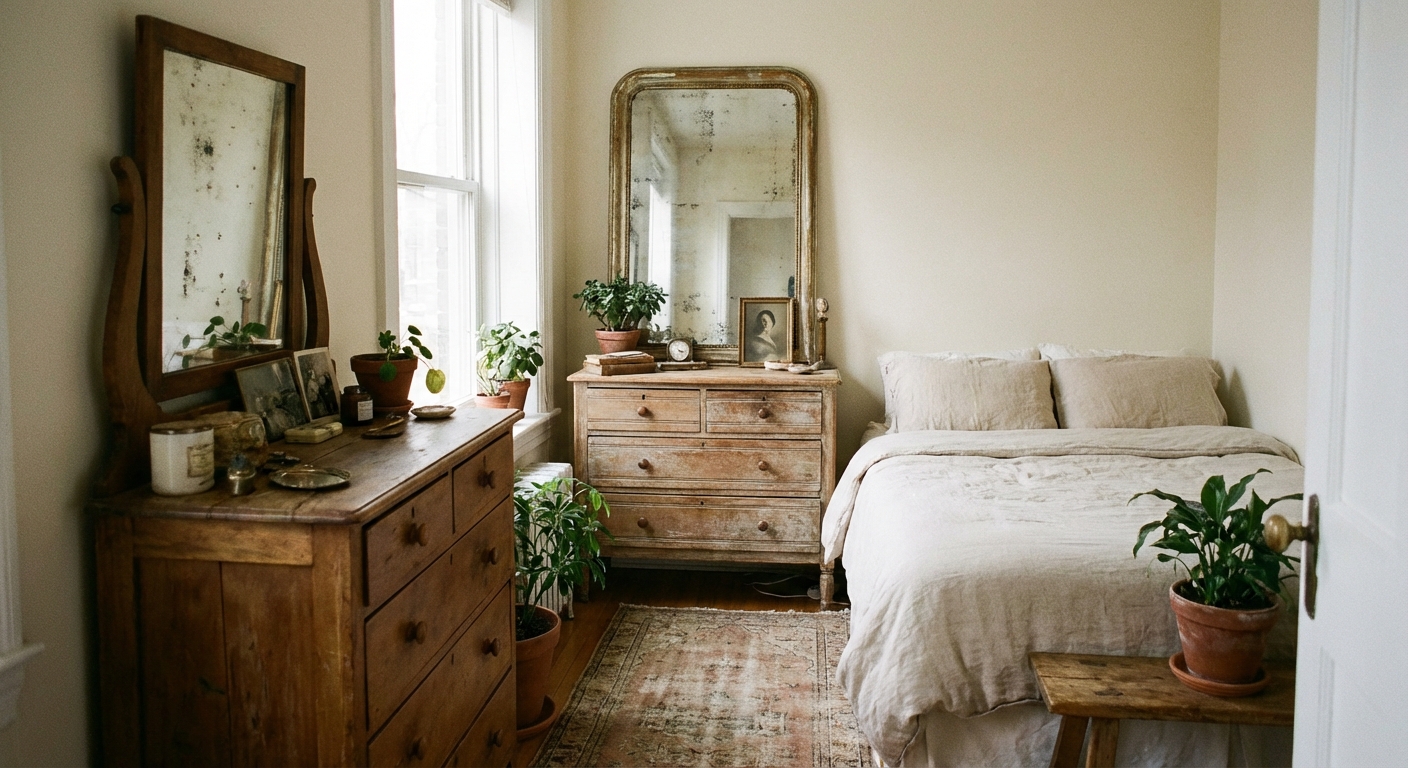
- Styling tip: Keep the top surface calm. One lamp, one catchall, one personal object.
- Vintage note: Mid-century tallboys are often perfect for this and easy to find secondhand.
5) Make under-bed storage look planned
Under-bed storage tends to feel stressful when it’s chaotic. Matching bins, labeled boxes, or low woven baskets make it feel intentional.
- Best for: Off-season clothes, extra bedding, shoes, memory boxes.
- Keep it tidy: Choose 2 to 4 identical containers instead of a random assortment.
6) Add storage at the headboard (or fake it)
A bookcase headboard can replace a nightstand entirely. If that feels too heavy, “fake” the effect with a slim picture ledge mounted behind the pillows.
- Try this: A 4-inch-deep ledge for framed photos, a candle, and a small plant.
- Placement tip: Mount it just above your pillow line so it’s useful but not a head-bump situation.
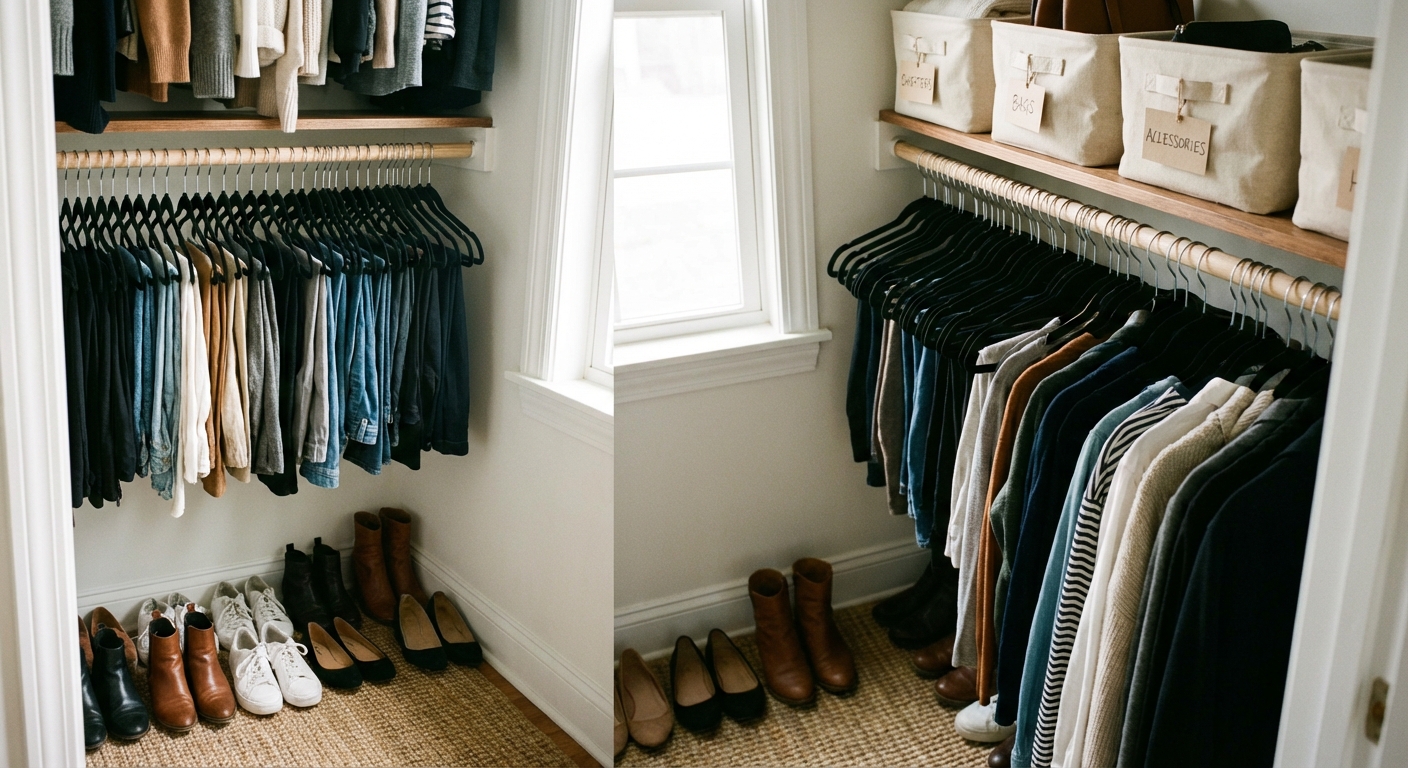
7) Put the closet on a system
I love a vintage wardrobe moment, but most of us are working with a standard closet. A second rod can often double your hanging space if most of what you own is shirts, jackets, and folded-length items. Keep a long-hang zone for dresses and coats, and use matching slim hangers so clothing takes up less visual and physical room.
- Add: Shelf dividers for sweaters, clear bins for accessories, and a door hook for tomorrow’s outfit.
- Rule: If it can’t be found in 10 seconds, it’s not really “stored.”
Paint and light
8) Paint walls and trim the same color
This is one of my favorite tiny-room illusions. When trim and walls match, the edges blur and the room feels calmer and a bit more expansive.
- Works beautifully with: Warm whites, clay beiges, dusty sage, smoky blues.
- Finish tip: Use the same color in different sheens if you want subtle definition.
9) Try a soft color drench
If you want your bedroom to feel like a comforting hug, go one step further and paint the walls, trim, and even the door in the same shade. It reduces visual breaks, which is especially helpful in small spaces.
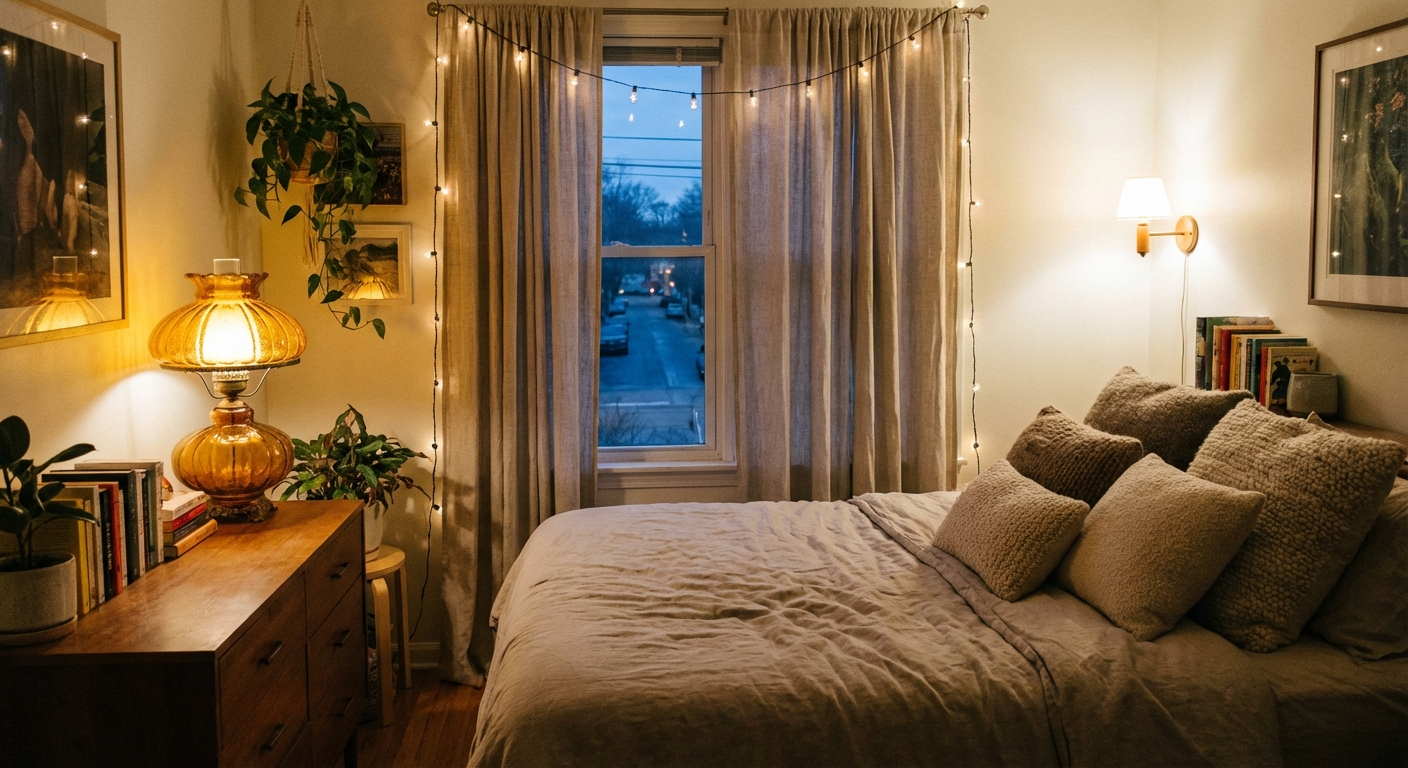
10) Layer lighting
One overhead light is one of the fastest ways to make a small bedroom feel flat. Add at least two more sources: a bedside lamp or sconce, plus a warm accent light across the room.
- My favorite combo: Plug-in sconces at the bed + an amber table lamp on the dresser.
- Bulb note: Warm bulbs (around 2700K) make everything feel softer, especially in the evening.
- Safety note: Plan for outlets and manage cords neatly with clips or a cord cover. Don’t run cords under rugs.
Furniture that saves space
11) Replace a nightstand with a stool
If your “nightstand” only needs to hold a book and a phone, a petite stool can do the job and visually opens up the floor. Bonus: it doubles as a spot to toss a sweater (in a charming way, not a chaotic way). Just choose something stable with a relatively flat top.
- Look for: A small vintage cane stool, a simple wood tabouret, or a tiny pedestal table.
12) Use a dresser as your bedside table
In very small rooms, a single piece that does double duty is a gift. Put a low dresser next to the bed and let it act as nightstand plus clothing storage.
- Proportion tip: Aim for a dresser height close to your mattress height for the most natural reach.
13) Choose a desk that can disappear
If your bedroom has to be a work zone too, consider a wall-mounted drop-leaf desk or a narrow console that can function as a vanity. The goal is avoiding a bulky chair-and-desk situation eating half the room. Measure your clearance so drawers, doors, and your chair still have room to move.
- Make it feel tidy: A tray for pens, a small lamp, and one lidded box for cords.
Style that feels finished
14) Hang curtains high and wide
This is the oldest trick in my styling book and it still works. Mount the curtain rod close to the ceiling and extend it past the window frame so the panels can sit mostly on the wall. You get more light, and the window looks bigger.
- Fabric love: Linen or linen-blend curtains that drape softly without feeling heavy.
- If curtains won’t work: A simple Roman shade is a great small-room alternative, especially near radiators or tight corners.
15) Use mirrors to bounce light
A mirror isn’t just “for making the room look bigger.” It’s for catching light and repeating it around the space. Place it opposite or adjacent to a window for the best effect. If you’re street-facing, consider privacy and glare before you commit.
- My favorite: A vintage mirror with a little patina, leaned on a dresser or hung above it.
- Keep it calm: One statement mirror is better than many small ones in a tight room.
Quick checklist
If you want the fast version, here’s what I’d do in order:
- Protect your pathways: Measure door swings and keep walkways comfortable whenever you can.
- Clear the floor: Wall-mount one bedside surface or swap in something smaller.
- Go vertical: Add one tall storage piece instead of multiple small ones.
- Edit the clutter: Give yourself one “landing zone” and keep the rest of the surfaces calm.
- Unify the paint: Same color on walls and trim for fewer visual breaks.
- Light in layers: Overhead + bedside + one warm accent lamp.
- Make storage pretty: Matching bins, baskets, and a simple closet system.
Your bedroom can be small and still feel like a sanctuary. The goal isn’t perfection. It’s ease. The kind where you can breathe when you walk in, and everything has a place to land.