12 Inspiring Home Office Setups

Clara Townsend
Clara Townsend is an interior stylist, vintage furniture enthusiast, and the creative voice behind Velvet Abode. With over a decade of experience transforming both cramped city apartments and sprawling fixer-uppers, she believes that a beautiful home is built on personal stories rather than massive budgets. When she isn't hunting for the perfect brass sconce at a local flea market, she can usually be found rearranging her living room for the third time this month.
If your home office currently feels like a laptop balancing act at the end of the dining table, you’re not alone. The good news is you don’t need a magazine-sized room or a designer budget to create a workspace that helps you focus. You just need a few ergonomic non-negotiables, a little visual calm, and a handful of personal details that make you want to sit down and begin.
Below are 12 home office setups I love, each one styled to feel inspiring without turning your workday into a performance. Think supportive seating, lighting that lets your eyes relax, and practical storage that keeps the chaos from creeping back in.
The basics (so it works)
Before we dive into the setups, here are the elements that quietly do the heavy lifting in every functional workspace. When these are right, styling becomes the fun finishing layer instead of a distraction.
- Chair height and support: Feet flat, knees near 90 degrees, lower back supported. Add a small lumbar pillow if your chair is vintage and charming but not exactly ergonomic.
- Screen position: Top of monitor roughly at eye level. A simple laptop stand or a stack of sturdy books works.
- Monitor distance: Aim for about an arm’s length, then adjust based on your screen size and comfort.
- Keyboard and mouse height: Keep elbows close to your sides and wrists in a neutral position. A separate keyboard and mouse help a lot if you use a laptop stand.
- Lighting in layers: Ambient (overall), task (desk lamp), and a soft accent (a small lamp or sconce) to prevent that harsh overhead feeling.
- Glare check: Natural light is lovely, but glare can be sneaky. Angle your screen away from direct sun and use sheers or a shade to diffuse bright light.
- Clear “landing zone”: A tray or small shelf where your essentials live so the desk stays open.
- Cable plan: A power strip mounted under the desk and a few clips instantly make the room feel calmer.
- Call-friendly sound: If you’re on video calls, add one soft element nearby (a rug, curtain, or fabric chair) to cut down echo.
- Micro-break reminder: Set a timer to look away regularly (even 20 seconds helps) and reset your posture.
1) Window-facing desk
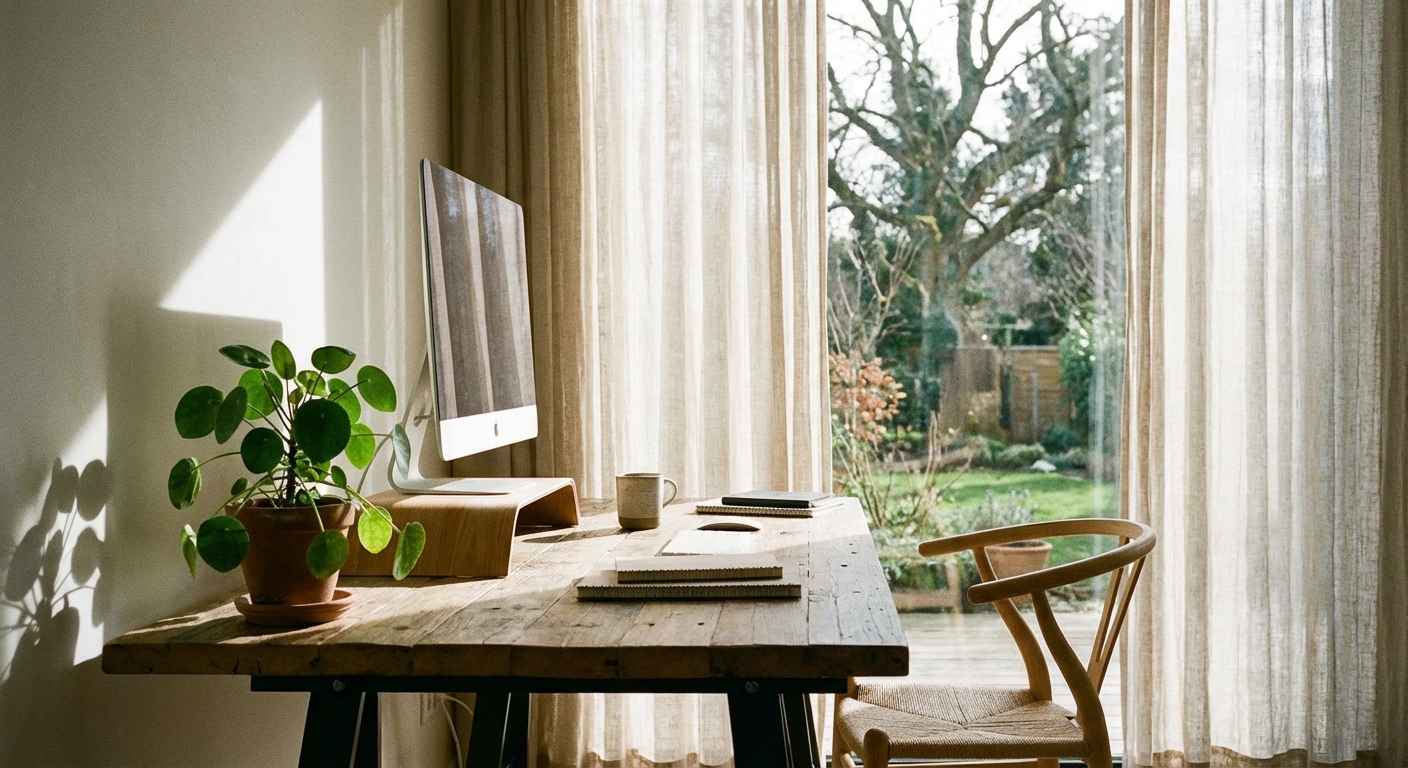
This is my forever favorite when you have the option. Facing a window gives you a visual “horizon,” which can feel grounding during long stretches of focus.
Why it works
- Natural light can support alertness and overall comfort.
- A simple view break can help you reset without reaching for your phone.
Style it
Keep the desk surface light: a linen blotter, a ceramic cup for pens, and one small plant. Add curtains that soften, not block, the light. If your view is less than dreamy, use a sheer and a bamboo shade for texture. Just make sure your screen isn’t catching direct glare.
2) Small focus nook
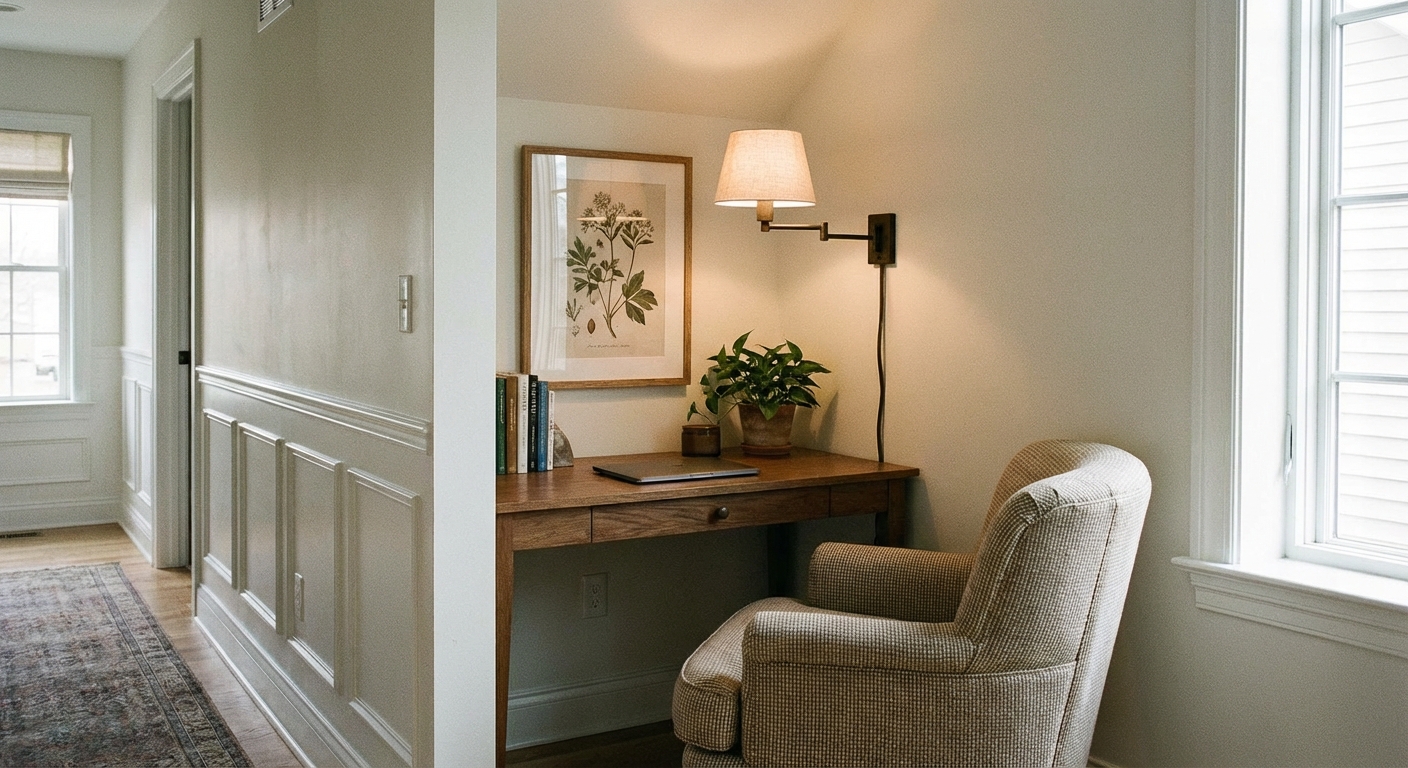
If your “office” is the end of a hallway or a spare corner, embrace it. A nook can feel like a little focus cocoon when it’s treated like a real zone, not an afterthought.
Why it works
- Clear boundaries help your brain switch into work mode.
- Less surface area means less mess can accumulate.
Style it
Hang one piece of art at eye level and add a plug-in sconce so the desk lamp doesn’t have to do everything. Choose a chair with a supportive seat and add a cushion if needed.
3) Library wall backdrop
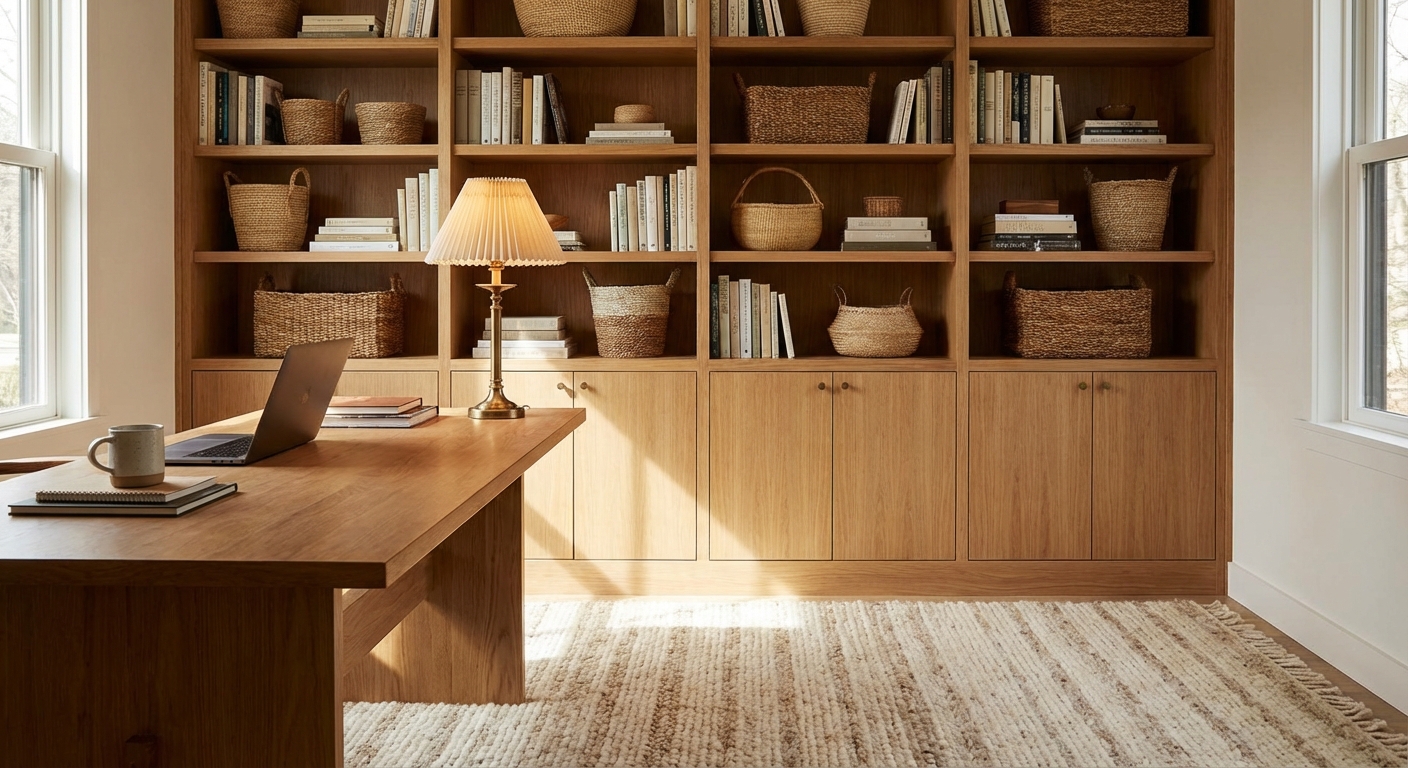
This setup is for anyone who wants their office to feel like a warm little study. A bookcase wall instantly reads as intentional, even if the rest of your day isn’t.
Why it works
- Storage stays vertical, freeing up floor space.
- A visually consistent background can reduce the urge to fidget with decor.
Style it
Mix books with a few sculptural objects, baskets, and framed photos. Keep the middle shelves calmer around your screen height. Add a picture light or a small lamp on a shelf for glow.
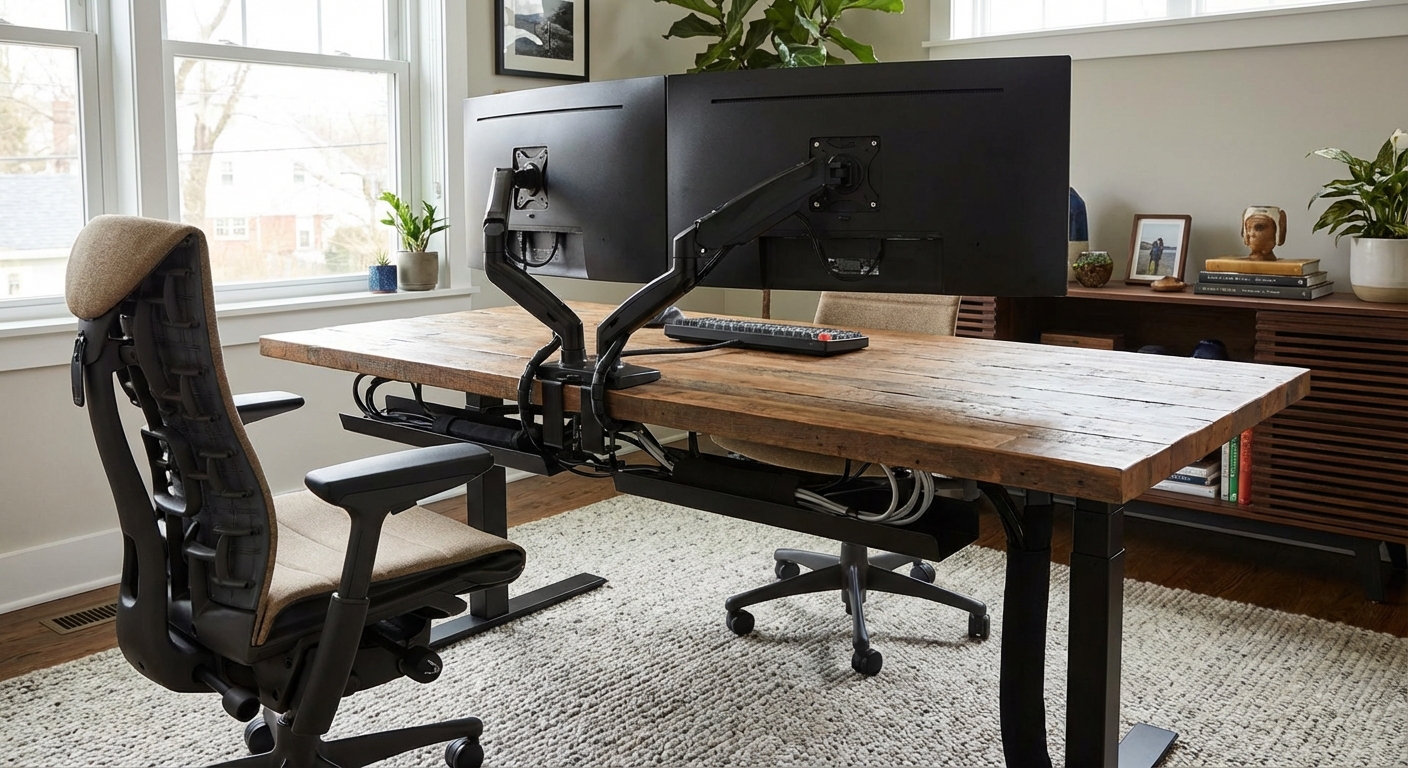
4) Ergonomic command center
Some of us need two monitors, a printer, and a headset. That doesn’t mean your office has to look like a fluorescent cubicle.
Why it works
- Everything has a place, which can reduce decision fatigue.
- Proper screen height and chair support help protect your body long-term.
Style it
Warm up sleek gear with texture: a wool rug, a wood desk, and a soft pinboard. Use matching monitor arms and a cable tray so the setup looks intentional. Add a small hook for a headset so it doesn’t live on the desktop.
5) Vintage desk, modern comfort
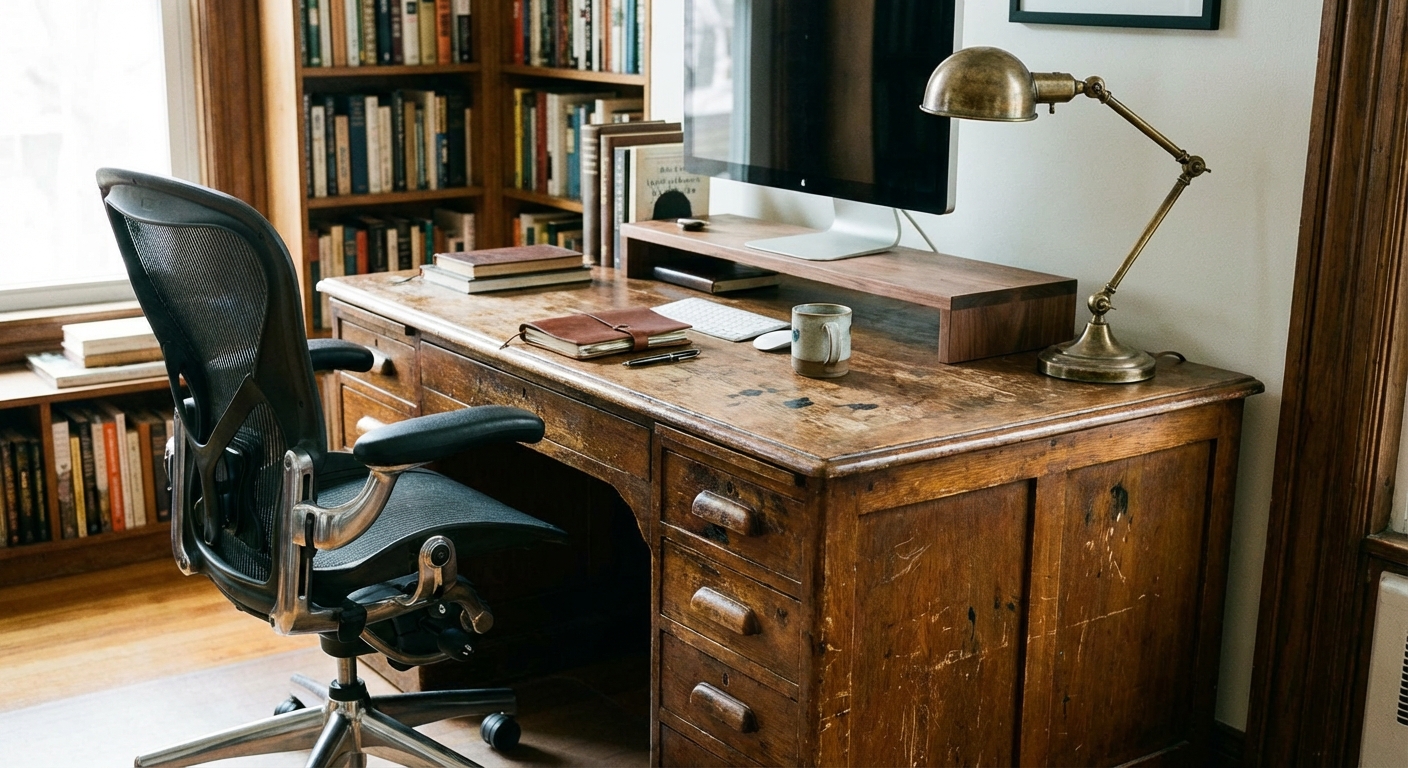
I’m a vintage furniture person, so yes, I’ll always encourage the old desk with the beautiful patina. The trick is pairing it with upgrades that make it feel good to use every day.
Why it works
- Character boosts your emotional attachment to the space.
- Modern accessories solve comfort and workflow.
Style it
Add a slim keyboard, a monitor riser that matches the wood tone, and a supportive chair. If the desk is shallow, mount a floating shelf above for supplies.
6) Dining table setup
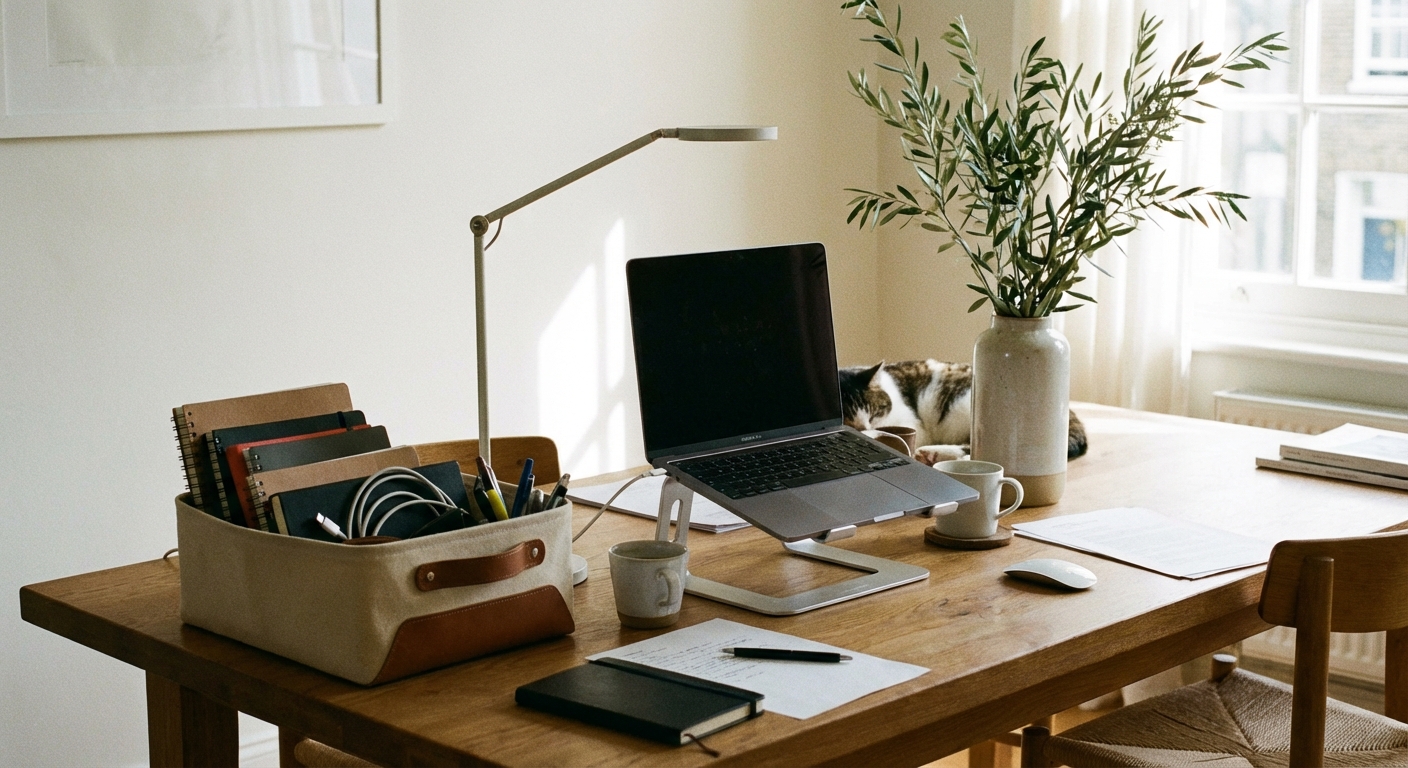
When your workspace needs to share, the goal is a setup that packs up quickly and looks lovely the rest of the time.
Why it works
- An end-of-day reset can reduce mental clutter.
- Portable tools keep the table functional for meals.
Style it
Use a pretty lidded box for cables and small tech. Choose one tray that holds your daily essentials. Add a cordless lamp (or a small table lamp if an outlet is nearby) to create a “work bubble” without rearranging the whole room.
7) Neutral, textured studio
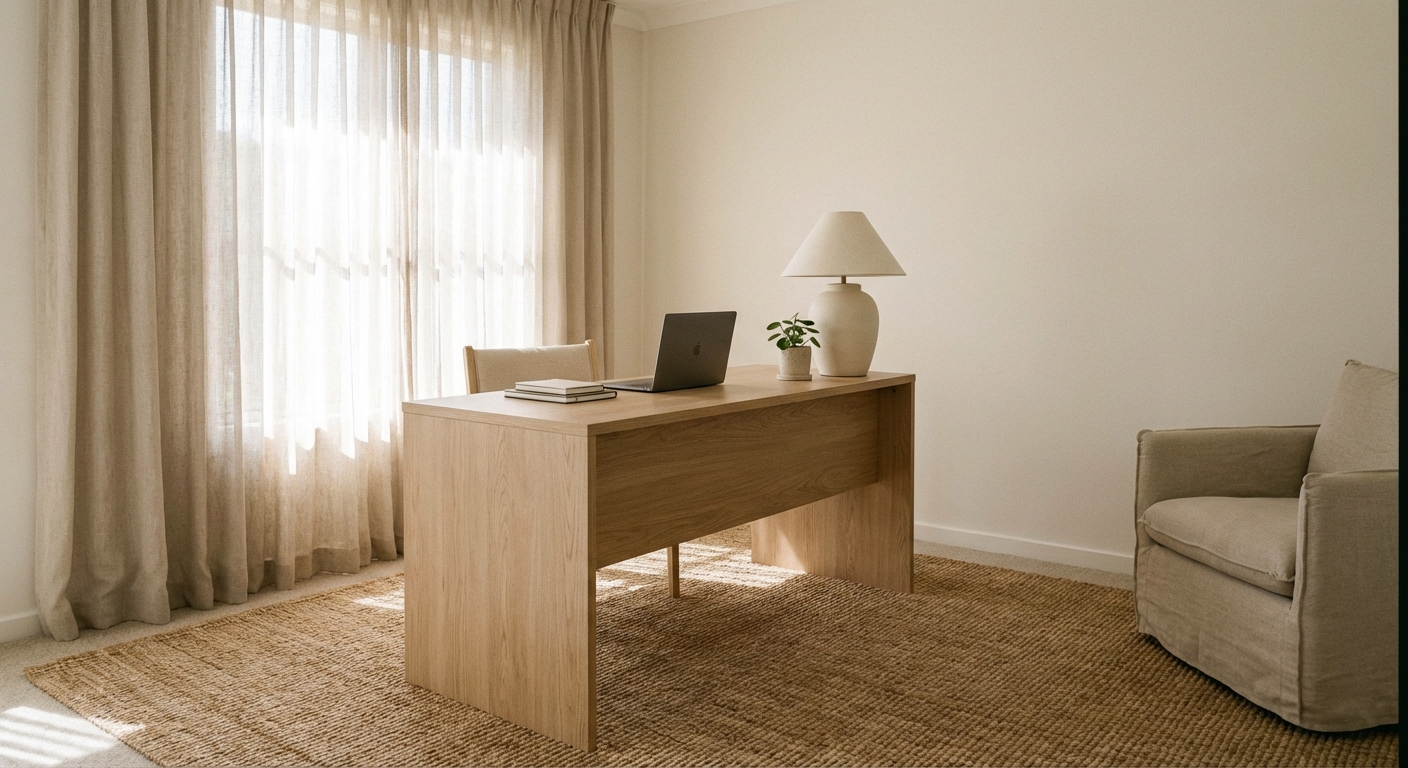
Neutrals get a bad rap when they feel flat. Done well, a neutral office is like noise-canceling headphones for your eyes.
Why it works
- Low visual contrast can improve focus for some people.
- Texture replaces clutter as the “interest.”
Style it
Layer a jute or wool rug, a linen curtain, and a matte ceramic lamp. Keep accessories in a tight palette, then add one warm accent like brass or amber glass.
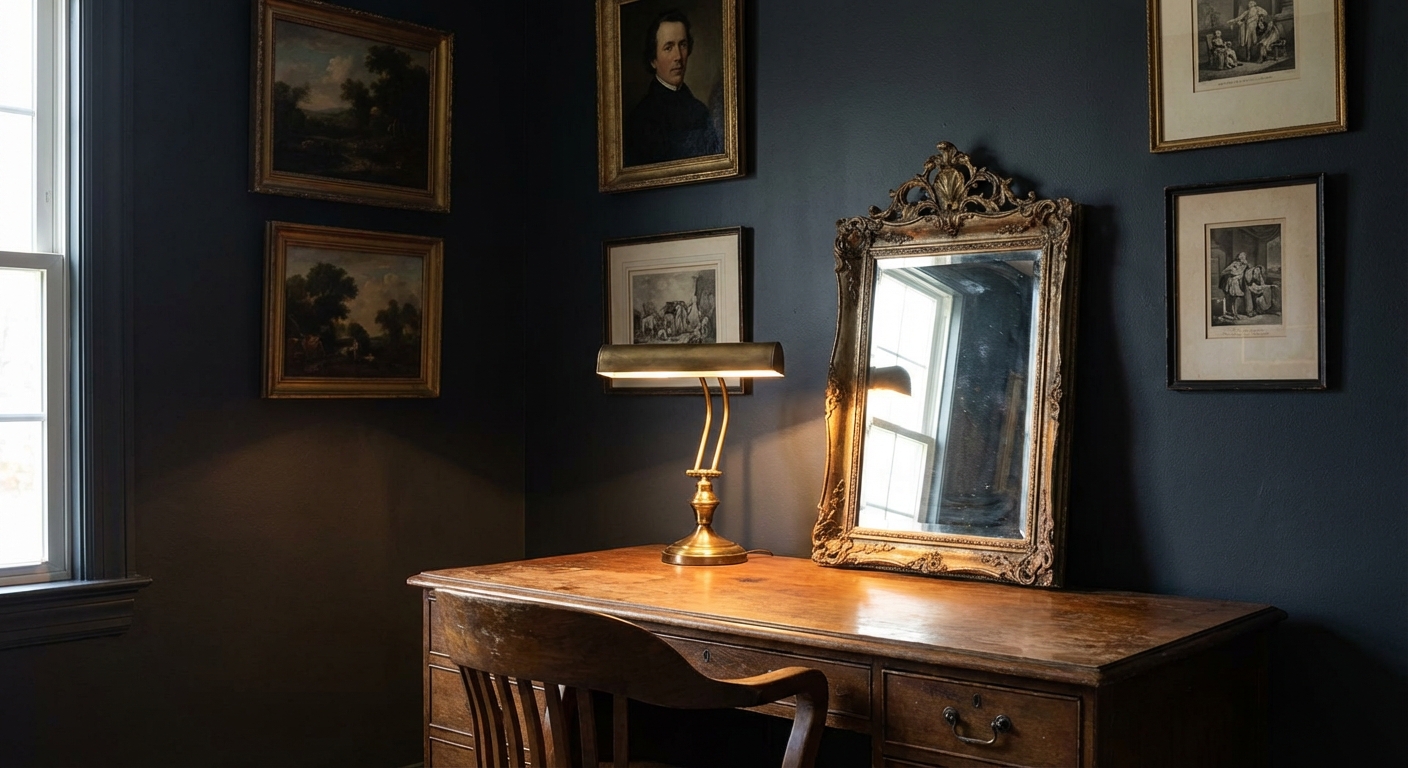
8) Dark, moody den
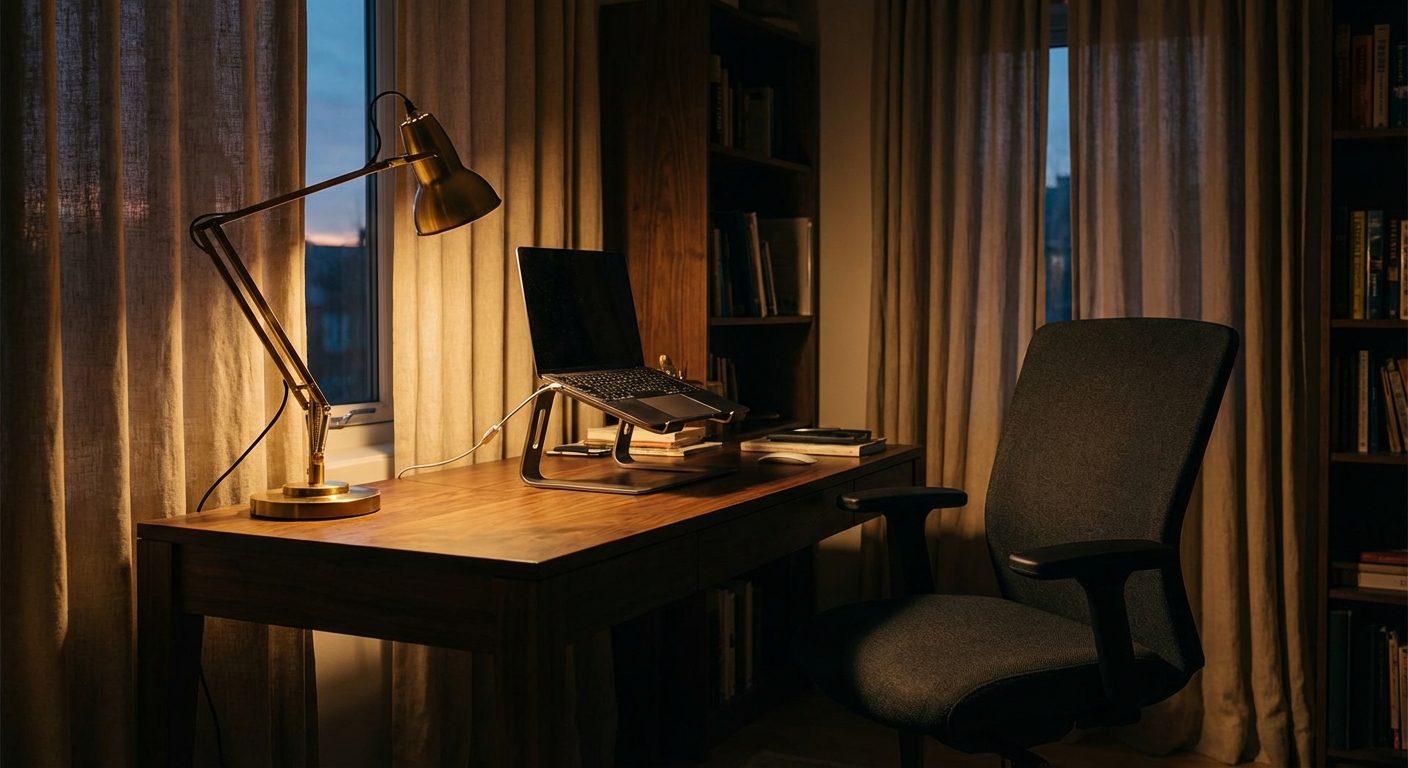
If you feel calmer in a cozy, cocooned space, a darker office can be incredibly productive. It’s a little more “quiet room” than “bright studio,” and that’s the point.
Why it works
- Controlled lighting can help reduce harsh contrast and screen discomfort.
- A contained, intimate mood can reduce distractions.
Style it
Paint the walls a deep olive, ink, or chocolate, and choose a matte or eggshell finish to help keep reflections down. Bring in warm lighting from two sources, like a desk lamp plus a small floor lamp, and aim them away from your screen. Add one reflective surface like an antique mirror to bounce a little glow.
9) Pinboard studio
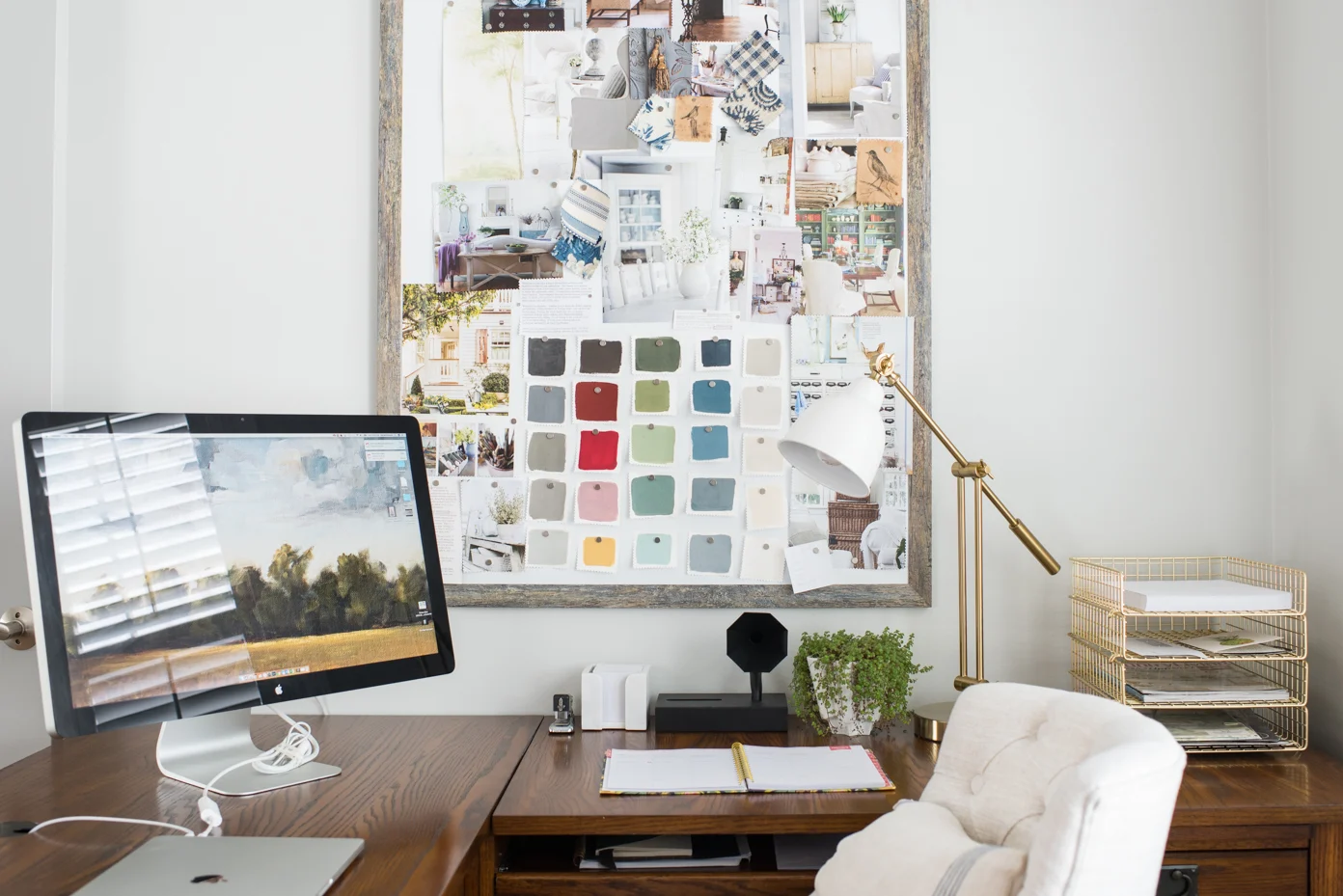
This one is for the visual thinkers. A pinboard wall lets you externalize ideas so they stop floating around your brain at 2 a.m.
Why it works
- Projects stay visible and organized.
- It encourages planning without stacks of paper on the desk.
Style it
Choose a large linen-wrapped pinboard or a cork wall section. Keep your “inspiration” area curated and rotate monthly so it doesn’t become wallpaper. Add a slim shelf below for washi tape, clips, and notebooks.
10) Plant-filled office
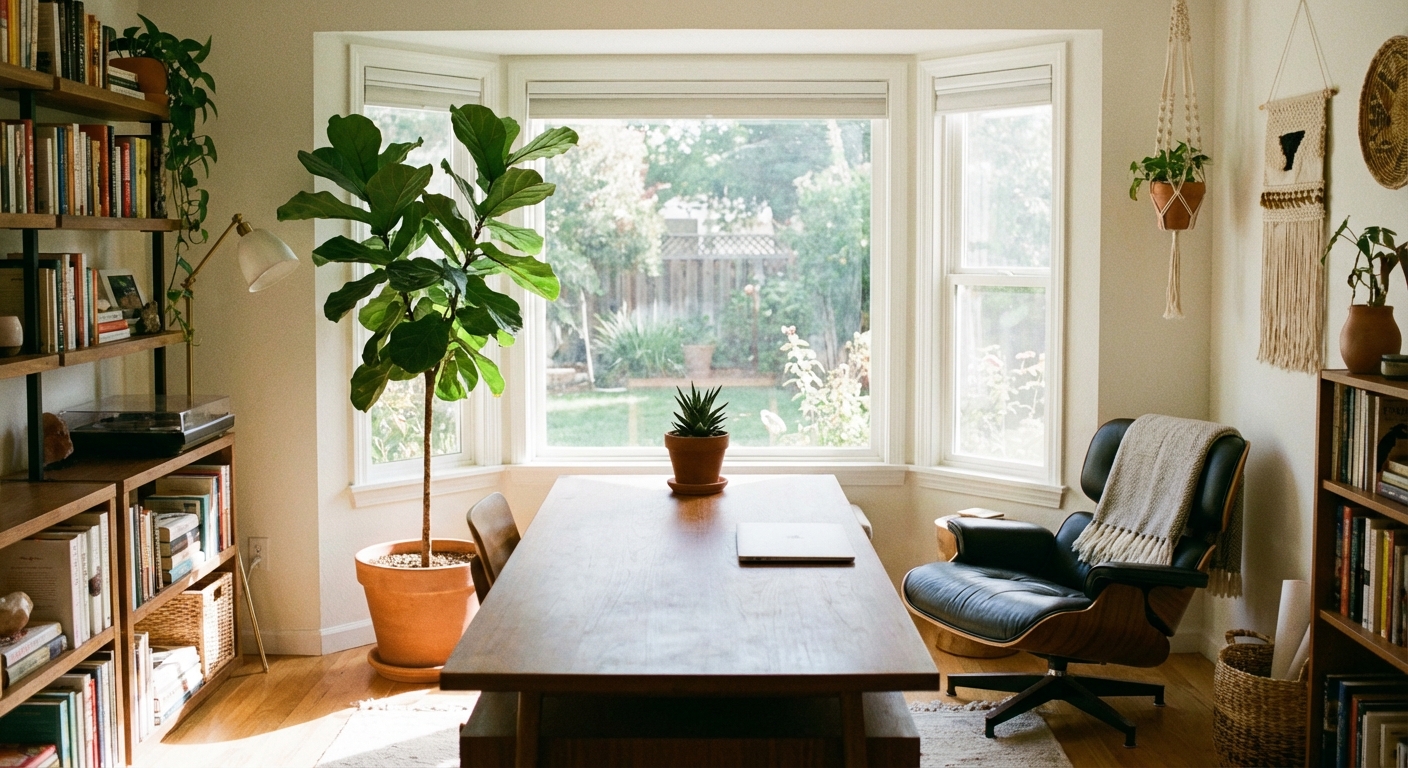
Plants aren’t just pretty. They add softness, color, and a tiny rhythm to your day when you water and trim and notice new growth.
Why it works
- Greenery can make a space feel more restorative.
- Plants visually break up tech-heavy areas.
Style it
Pick two or three easy plants: pothos, snake plant, ZZ plant. Use one larger floor plant and one smaller desk plant, then stop there. Too many tiny pots can feel busy.
11) Closet office
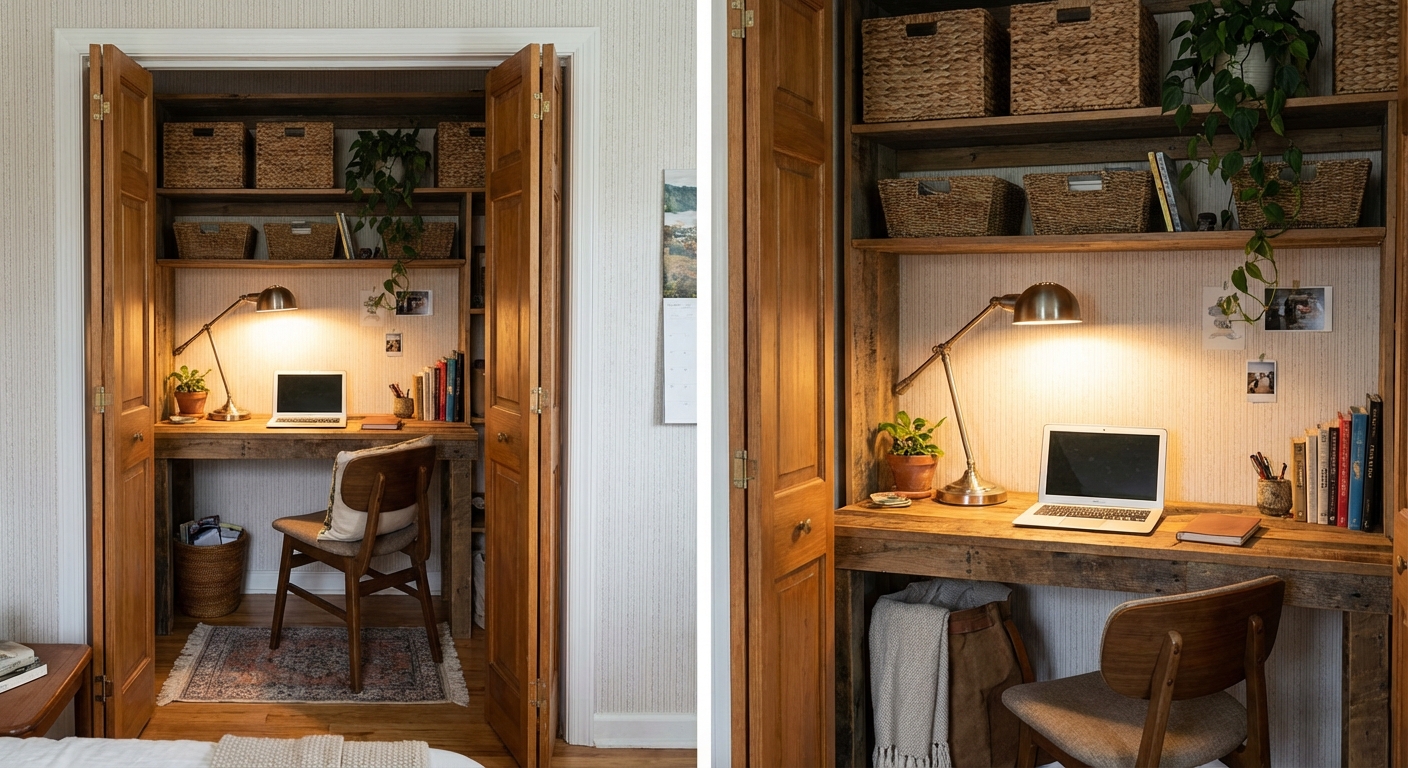
A closet office is wildly satisfying when done right. It’s also one of the best options for small apartments because you can close the doors and be done.
Why it works
- Instant visual reset at the end of the day.
- Built-in boundaries help with focus.
Style it
Add a wall-mounted desk or a narrow console. Install a bright, warm light overhead and a small task lamp. Paint the inside a color that makes you happy, even if it’s just a soft clay pink or a calm sage.
12) Living room corner desk
If your office must live in your living space, the design goal is simple: make the desk look like furniture, not equipment.
Why it works
- It helps maintain the cozy vibe of your main room.
- It encourages tidying because everything is visible.
Style it
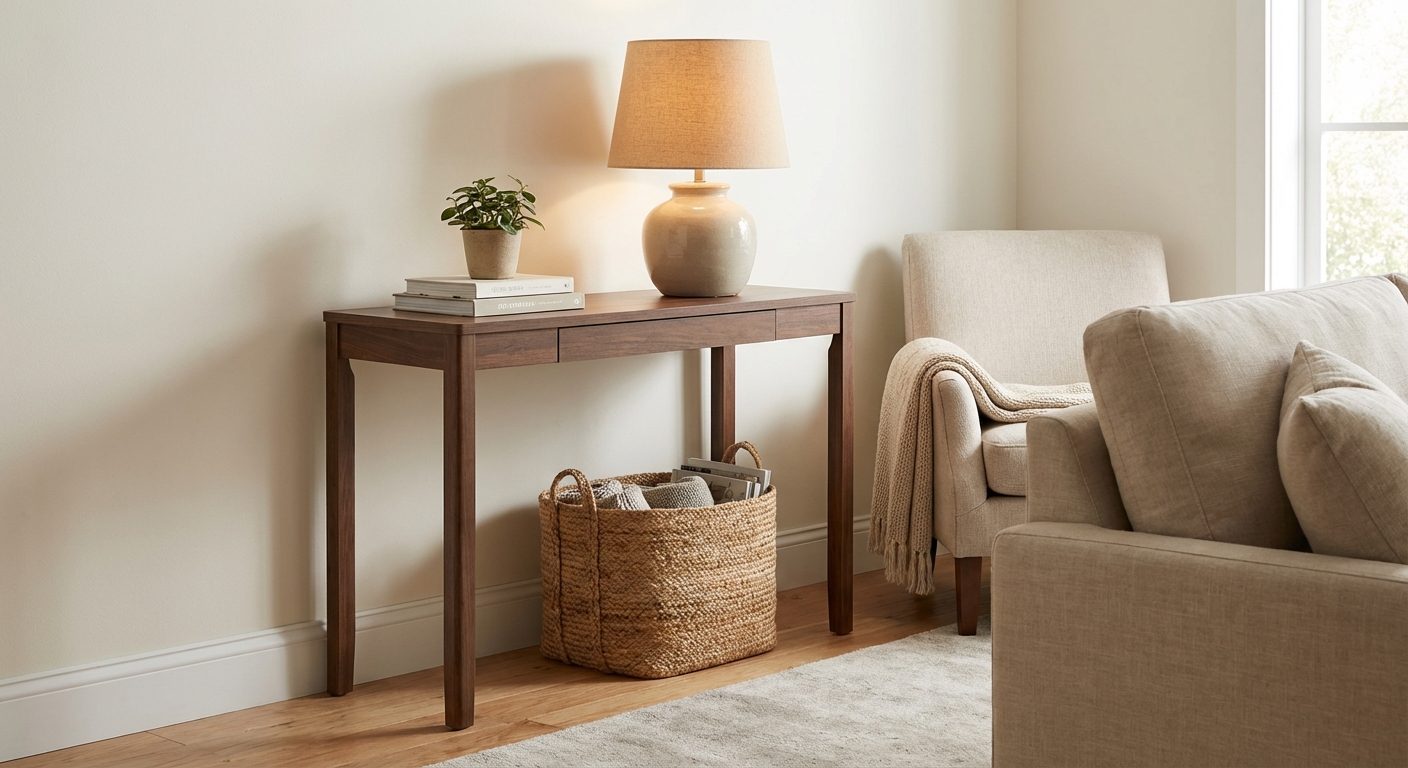
Choose a desk that could pass as a console. Add a table lamp instead of a harsh task light, then supplement with a discreet clip-on light if you need it for detailed work. Hide supplies in a lidded basket and keep one beautiful object on the desk, like a stone dish for rings or a vintage paperweight.
Quick finishing touches
- Pick one metal and repeat it twice: Brass lamp plus brass frame, or black hardware plus a black tray.
- Use a rug to define the zone: Even a small one makes the office feel placed.
- Add one soft thing: A linen curtain, a wool throw on the chair, or a cushion for your lower back.
- Aim for a mostly clear desktop: My simple benchmark is about 70 percent clear, but do what feels realistic for you.
- Try a signature scent: A candle or diffuser can signal “work mode.” If you use a candle, never leave it unattended, and skip fragrance if you’re sensitive or sharing the space.
Before you commit
If you’re unsure which setup fits you, ask yourself:
- Do I need deep focus or frequent collaboration calls?
- Will I leave this setup out all day, or pack it away?
- Do I work best with visual stimulation, or visual quiet?
- What hurts after a long work day: neck, wrists, lower back?
- Am I set up for power and internet where I’m working (outlets, surge protection, router distance)?
Answer those honestly, then borrow the styling ideas from the setup that matches your real life. A productive home office isn’t about perfection. It’s about comfort, clarity, and a space that feels like it belongs to you.